
Market Report · July 22, 2026

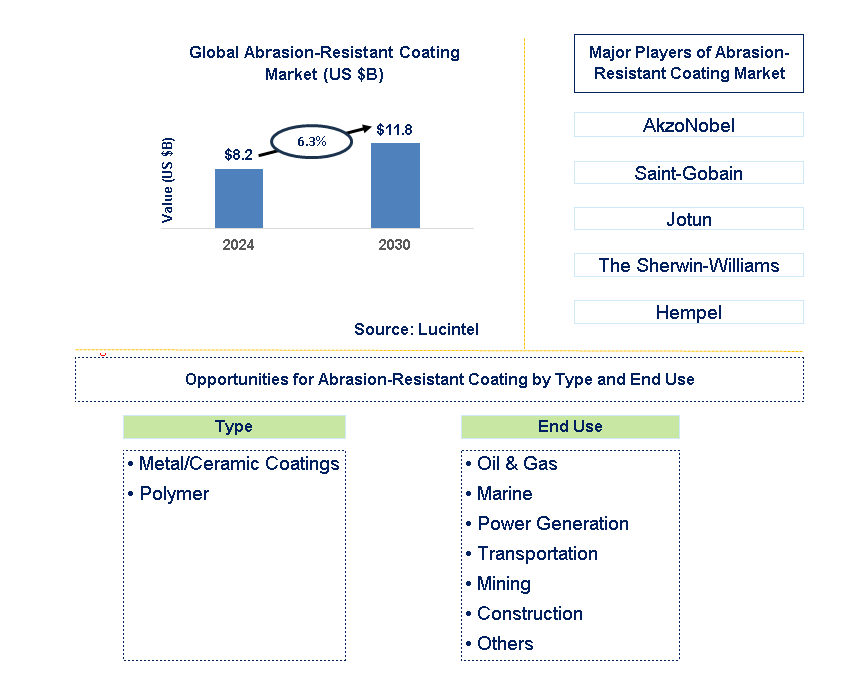
Key data points: The market size in 2030 = $11.8 billion, growth forecast = 6.3% annually for the next 6 years. Scroll below to get more insights. This market report covers trends, opportunities, and forecasts in the global abrasion-resistant coating market to 2030 by type (metal/ceramic coatings and polymer), end use (oil & gas, marine, power generation, transportation, mining, construction, and others), and region (North America, Europe, Asia Pacific, and the Rest of the World)
We'll send your sample report shortly.
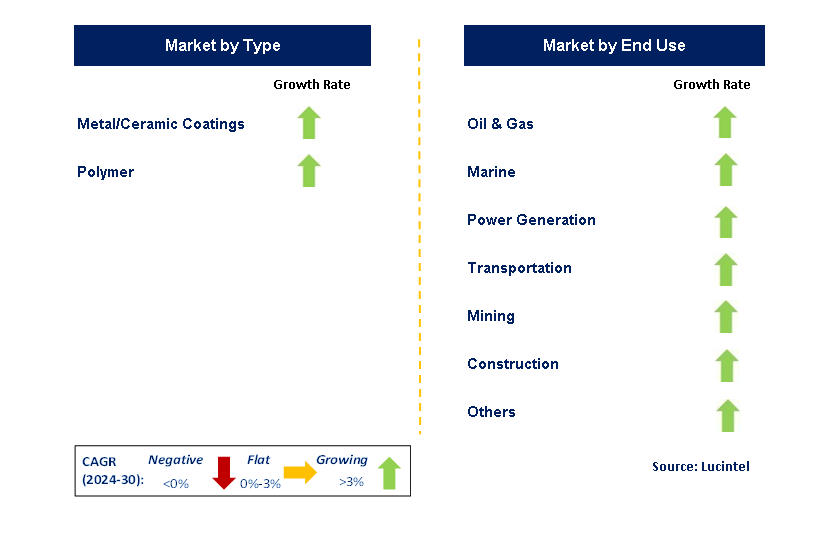
• Lucintel forecasts that, within the type category, metal/ceramic coating will remain the largest segment over the forecast period.
• Within the end use category, power generation is expected to witness the highest growth over the forecast period.
• In terms of regions, Europe will remain the largest region over the forecast period. Gain valuable insights for your business decisions with our comprehensive 150+ page report.
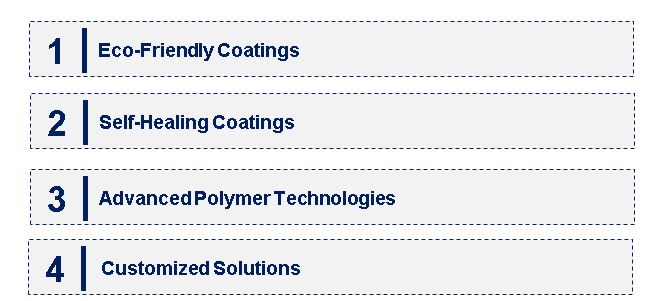
• Eco-Friendly Coatings: The market is shifting towards eco-friendly, abrasion-resistant coatings that reduce environmental impact. Innovations include water-based and low-VOC (volatile organic compounds) formulations that offer high abrasion resistance without compromising sustainability. This trend has been driven by regulations and a growing understanding of environmental hazards, resulting in the adoption of greener substitutes across various sectors.
• Self-Healing Coatings: Self-healing coatings are emerging as a significant trend, incorporating materials that autonomously repair minor damage. These coatings protect surfaces from scratches and other forms of wear over extended periods without intervention. For instance, maintaining automotive surface integrity in high-wear situations—where performance and safety are crucial—illustrates the technology's application in such cases.
• Advanced Polymer Technologies: Advances in polymer chemistry are leading to the development of coatings with enhanced abrasion resistance. High-performance polymers and composites are being used to create coatings that withstand extreme conditions and heavy use. For example, industries such as construction and manufacturing are benefiting from these developments because clients require robust solutions that provide reliable protection.
• Customized Solutions: There is a growing demand for customized, abrasion-resistant coatings tailored to specific industrial needs. Innovations include coatings designed for unique environmental conditions or application requirements, offering enhanced performance and adaptability. A wide range of industries is now seeking specialized solutions, leading to the emergence of more advanced coating technologies. Emerging trends in the abrasion-resistant coating market highlight advancements in nanotechnology, eco-friendly formulations, and self-healing technologies. The shift towards advanced polymers and customized solutions reflects the industry's focus on improving durability, sustainability, and application specificity. These trends are reshaping the market by enhancing coating performance, addressing environmental concerns, and meeting the evolving needs of various industrial sectors, driving continued innovation and growth in the industry.
• Development of High-Performance Polymers: The abrasion resistance of coatings has been enhanced through advanced polymer technologies. Polyurethanes, epoxies, and other high-performance polymers now offer better wear resistance and flexibility. This development enables coatings to remain effective for longer in harsh environmental conditions, withstanding mechanical stresses. Consequently, maintenance costs can be reduced, while the service life of coated parts—such as those used in the automobile or aviation industries—may be prolonged.
• Integration of Nanotechnology: Abrasion-resistant coatings are being transformed by nanotechnology, using nanoparticles to improve hardness and scratch resistance. This has made it possible to create nanocomposite coatings that are more durable without sacrificing flexibility or adding weight. It helps produce high-performance, wear-resistant coatings for heavy-duty applications like manufacturing machinery or high-traffic areas. Such technology facilitates the production of hard-wearing coatings, thereby enhancing overall effectiveness and extending the lifecycle of products.
• Development of Eco-Friendly Coatings: There is growing interest in eco-friendly abrasion-resistant coatings today. Water-based paints with low VOCs have been developed to minimize environmental damage while maintaining premium quality standards. For instance, these protective coatings comply with stringent regulations set by industries to ensure sustainability. This adoption reflects global trends toward greener practices, reducing the industrial ecological footprint.
• Advancements in Application Techniques: Electrostatic spraying, along with advanced curing processes, are examples of new techniques being applied to make abrasion-resistant coatings more efficient and of higher quality. These methods promote increased adhesiveness, reduced wastage, and uniformity during coating applications. They also improve the performance and consistency of coated products, reducing defects and ensuring that they can endure tough conditions. Recent advancements in materials science and application technologies are evident in the developments within the abrasion-resistant coating market. High-performance polymers, nanotechnology, eco-friendly formulations, advanced application techniques, and self-healing capabilities have transformed coatings into solutions with improved durability, efficiency, and eco-friendliness.
• Automotive Industry: The automotive industry offers significant opportunities for expansion due to the demand for coatings that improve the durability and appearance of vehicles. Advanced abrasion-resistant coatings, which resist damage from harsh weather conditions and mechanical wear, are being developed. These coatings extend the lifespan of car parts as well as outdoor vehicle surfaces, driving growth in the motor industry and increasing demand for high-performance coatings.
• Aerospace Sector: In the aerospace industry, there is a growing need for strong coatings resistant to high temperatures and friction. Abrasion-resistant coatings for aircraft components are being tailored to help protect them while improving performance. The reduction in maintenance costs and increased reliability of aerospace systems, in particular, has contributed to the development of this sector.
• Construction and Infrastructure: For building construction, road repair, and heavy machinery usage in infrastructure projects, long-lasting protective coatings are essential. Abrasion-resistant coatings shield surfaces from wear and environmental hazards. The growing focus on infrastructure development and maintenance has driven the rising demand for such coatings, reducing the frequency of repairs and opening up new business opportunities.
• Industrial Machinery: Industrial machinery requires specialized paints that can withstand high levels of fire tempering and grinding processes. Innovations in abrasion-resistant coatings are making these machines more durable and efficient. This opportunity is driven by the need for cost-effective solutions that enhance equipment life cycles while minimizing downtime, contributing to further industrial growth. Strategic growth opportunities have developed within the automotive, aerospace, construction, infrastructure, industrial machinery, and marine industries, among other key applications of abrasion-resistant coatings. These sectors require strong, high-performance protective coatings, thus fostering innovation and expanding market sizes. These opportunities are key driving forces behind emerging market trends, shaped by industry preferences and advancements in coating technologies, which are paving the way for the future of this sector.
• Technological Advancements: Advances in coatings technology are a pivotal driver, leading to the development of more efficient abrasion-resistant coatings. Ongoing research is focused on areas such as nanotechnology, advanced polymers, and self-healing materials, with the goal of improving paint system performance. Technical upgrades provide an edge over competitors who fail to adequately address wear and tear challenges during the product lifecycle.
• Increasing Demand for Durability: Market growth is driven by the increasing need for long-lasting, high-performance paints across diverse industries. Therefore, the provision of coatings that can withstand harsh conditions, such as those in the automotive industry, brings us closer to this goal. Furthermore, the demand for improved durability leads to more investment and innovation in anti-wear coatings, resulting in an expanded market.
• Sustainability: Market forces are increasingly being influenced by regulatory pressures to adopt environmentally friendly coatings. The need for low-VOC and eco-friendly formulations is driving demand for sustainable coating solutions. Market trends are shaped by the enforcement of environmental regulations and the growing focus on sustainable alternatives. Challenges in the abrasion-resistant coating market include:
• High Production Costs: One challenge is the high production costs associated with advanced abrasion-resistant coatings. The cost of raw materials, manufacturing processes, and technology development can affect profitability and pricing. Companies must strike a balance between cost and performance while remaining competitive in the market.
• Competition from Alternative Technologies: Competition from alternative coating technologies and materials poses a significant challenge to the abrasion-resistant coating market. Innovations in other protective solutions may offer equal or even superior performance at a lower cost. To stay competitive, companies must continuously innovate and differentiate their products in the marketplace.
• Stringent Regulatory Requirements: Meeting stringent regulatory requirements, such as environmental standards or safety codes for coatings, can be complex. Compliance incurs additional expenses due to the technical expertise required. As a result, firms must navigate through complicated regulatory landscapes that determine how their products should conform to specific standards, thus influencing both growth and current market dynamics. Technological advancements, coupled with the increasing demand for durability, are driving the push toward sustainable principles. Hence, key drivers shaping the abrasion-resistant coating sector include technological advancements, the growing demand for durability, and regulatory pressures for sustainability. However, challenges like high production costs, competition from alternative technologies, and stringent regulatory requirements also influence this space.
• AkzoNobel
• Saint-Gobain
• Jotun
• The Sherwin-Williams
• Hempel
• Praxair Surface Technologies
• Sika
• Metal/Ceramic Coatings
• Polymer
• Oil & Gas
• Marine
• Power Generation
• Transportation
• Mining
• Construction
• Others
• Energy
• Processing Industries
• Transportation
• Others
• North America
• Europe
• Asia Pacific
• The Rest of the World
• United States: Advanced polymer-based abrasion-resistant coatings have been targeted in the United States. The latest advancements include the integration of nanotechnology to increase hardness and wear resistance of the coatings. Innovation within the automotive industry, as well as the aerospace sector, necessitates coating products that can endure severe environmental conditions and mechanical stresses. As highlighted above, these recent developments help improve the durability of critical components by reducing maintenance costs, aligning with global trends towards high-performance materials.
• China: In China, the use of abrasion-resistant coatings is increasing rapidly, especially in the construction and manufacturing sectors. This has led to the introduction of eco-friendly coating systems characterized by an elevated level of abrasion resistance with minimal environmental degradation. Such advancements have boosted coating performance through the introduction of superior application technologies, such as electrostatic spraying techniques. These shifts reflect rising industrialization rates coupled with infrastructure expansion, thus emphasizing the need for long-lasting, eco-friendly materials.
• Germany: Germany produces advanced abrasion-resistant coatings that can be used in industries operating under high operational loads. Recent breakthroughs include enhanced heat resistance and chemical tolerance levels, which arise from constant exposure to extreme environments. The automotive industry and machinery sector are key drivers, with coatings being designed to prolong the life of equipment and reduce downtime, without affecting productivity, which is highly valued in Germany's engineering and manufacturing sectors.
• India: Affordable abrasion-resistant coatings for various applications are the focus in India. Recent developments have been made using indigenous raw materials to reduce costs while maintaining high performance. This has been achieved through protective coatings that prevent surfaces from being damaged by wear and corrosion due to harsh environmental factors. These advancements are facilitating extensive infrastructure projects and mineral extraction activities across the Indian subcontinent.
• Japan: In Japan, advanced nanomaterials and polymers are used in producing coating technologies. Recently, self-healing coatings have been invented, which can fix minor damages automatically, thus prolonging the lifespan of coated surfaces. The electronics and automotive sectors have embraced this development, as they require coatings with such properties to protect them from damage during use. All these innovations align with Japan’s culture of technological advancement and its commitment to high production standards.
• AkzoNobel
• Saint-Gobain
• Jotun
• The Sherwin-Williams
• Hempel
• Praxair Surface Technologies
• Sika Q6. Which abrasion-resistant coating market segment will be the largest in future? Answer: Lucintel forecasts that, within the type category, metal/ceramic coating will remain the largest segment over the forecast period. Q7. In abrasion-resistant coating market, which region is expected to be the largest in next 5 years? Answer: In terms of regions, Europe will remain the largest region over the forecast period. Q.8 Do we receive customization in this report? Answer: Yes, Lucintel provides 10% customization without any additional cost.


Choose a license that fits your team. Instant PDF delivery.
Prices exclude taxes. Instant delivery. Custom licensing available on request.
Market Report · July 22, 2026
Market Report · July 15, 2026
Market Report · June 30, 2026
Trusted partner for strategic intelligence and business growth


Receive a complimentary market analysis tailored to your industry. Our analysts will identify key growth opportunities and competitive dynamics specific to your business.

Market size, growth rate, and key trend analysis for your specific sector.

Top competitor positioning and market share analysis.

Strategic recommendations backed by data-driven insights.
Get curated market intelligence and competitive moves straight to your inbox.
By subscribing, you agree to receive our monthly insights. Unsubscribe anytime.
Receive a complimentary market analysis tailored to your industry. Our analysts will identify key growth opportunities and competitive dynamics specific to your business.
Market size, growth rate, and key trend analysis for your specific sector.
Top competitor positioning and market share analysis.
Strategic recommendations backed by data-driven insights.
Get curated market intelligence, emerging trends, and competitive moves straight to your inbox each month.
By subscribing, you agree to receive our monthly insights. Unsubscribe anytime.
We'll send your sample report shortly.