Close Lucintel Chat
Didn't Find What You're Looking for?
Call us at +1972 636 5056 or write at helpdesk@Lucintel.com
Ask an Expert Provide Custom Requirements Download Sample Report Search Available Reports
  • helpdesk@Lucintel.com
  • |
  • Call Lucintel +1 972 636 5056
  • |
  • Login
  • |
  • Register
  • |
  • Search
  • |
'
...

The Impact of COVID-19 is included in 3D Metal Printing Machine Market in Australia. Buy it today to get an advantage.

Request the impact of COVID-19 on your product or industry


3D Metal Printing Machine in Australia Trends and Forecast

The future of the 3D metal printing machine market in Australia looks promising with opportunities in the automotive, academic institution, healthcare and dental, and aerospace markets. The global 3D metal printing machine market is expected to reach an estimated $14.0 billion by 2031 with a CAGR of 21.2% from 2025 to 2031. The 3D metal printing machine market in Australia is also forecasted to witness strong growth over the forecast period. The major drivers for this market are the increased usage of 3D metal printing in industries such as aerospace, automotive, healthcare, and manufacturing, continuous advancements in 3D printing technology, including increased build volumes, accuracy, speed, and material options, along with the improvement in the production efficiency and customization.

• Lucintel forecasts that, within the product type category, the selective laser melting segment will remain the largest segment over the forecast period because it provides exceptional precision and surface quality, as well as, the strong lasers used by SLM machines to accurately control the melting and fusing of metal powder, creating products with smooth surfaces and fine details.
• Within the application category, automotive will remain the largest segment because automobile manufacturers may reduce weight without compromising strength or safety owing to 3D metal printing, which allows them to create complicated lightweight structures and optimum designs.


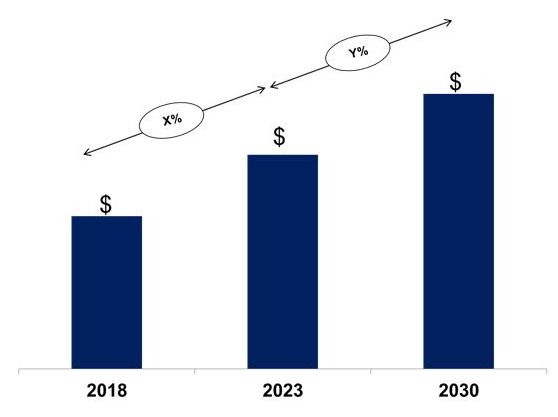
3D Metal Printing Machine Market in Australia Trends and Forecast

Emerging Trends in the 3D Metal Printing Machine Market in Australia

The Australian 3D metal printing machine market is expanding as sectors such as aerospace, automotive, and healthcare venture into additive manufacturing technologies. These technologies hold the promise of enhancing product design freedom, minimizing material loss, and optimizing production processes. With advancements in material science, speed, and accuracy, 3D metal printing presents exclusive benefits for the production of intricate geometries and personalized components. These new trends are transforming the way businesses approach manufacturing, making it possible to achieve more efficient and cost-saving solutions.

• Advances in material choices: The industry is witnessing greater innovation in high-performance materials, such as titanium alloys, stainless steel, and even niche metals for particular industries. These materials offer greater strength, durability, and resistance to corrosion, making 3D metal printing more valuable for industries such as aerospace and medicine. The growing list of materials is opening up new avenues for customized and high-performance parts.
• Industrial 4.0 integration: As Industry 4.0 revolutionizes production, 3D metal printers are increasingly integrated with Industry 4.0 technologies like smart devices, IoT, and AI. These technologies allow real-time tracking of equipment status, predictive equipment maintenance, and more streamlined manufacturing processes. Optimizing designs, improving quality monitoring, and reducing downtime become feasible, and there is increased overall productivity along with lower operating costs.
• On-demand and customization production: The growth of 3D metal printing in Australia is fueled by the need for customized and personalized products. Everything from personalized implants in medicine to customized auto parts, 3D metal printing enables manufacturers to produce on demand, minimizing lead time and inventory. The fact that parts can be prototyped and made quickly according to specific customer needs is changing production models.
• Cost saving and waste reduction: 3D metal printing allows manufacturers to create parts using less material waste than conventional subtractive manufacturing techniques. This efficiency is especially desirable for industries with high material costs, like aerospace. With the ability to cut both material and labor expenses, businesses are finding it more desirable to invest in 3D metal printing technology for cost-efficient production.
• Adoption in aerospace and automotive sectors: Australia’s automotive and aerospace sectors are increasingly utilizing 3D metal printing to produce lightweight, high-performance components. With the use of additive manufacturing, both sectors can develop complex geometries that are not possible or only possible with traditional manufacturing methods. This is contributing to the growing demand for 3D metal printing machines to enable companies to fulfill industry calls for innovation, weight savings, and material minimization.

These trends are propelling the evolution of the 3D metal printing machine market in Australia. The increasing range of materials, the incorporation of intelligent technologies, the demand for customization, and cost-saving opportunities are transforming the manufacturing environment. The use of 3D metal printing in aerospace and automotive industries reflects the vast potential of this technology in manufacturing high-performance, lightweight components. In total, these trends are enhancing production efficiency, lowering costs, and facilitating more flexible, sustainable manufacturing options.

Recent Developments in the 3D Metal Printing Machine Market in Australia

The Australian 3D metal printing machine market is experiencing incredible advancements as technology improves and industries realize the capabilities of additive manufacturing in creating high-performance parts. The market is being influenced by emerging materials, higher automation, and strategic investments by major players. These advancements are allowing Australian manufacturers to improve production capacity and minimize dependence on conventional manufacturing techniques.

• Hybrid manufacturing technologies emergence: Australian manufacturers have become more inclined to use hybrid technologies that bring together additive and subtractive manufacturing. These enable the exploitation of both approaches’ best aspects, enhancing accuracy and making it possible to produce larger and more complex parts. Hybrid solutions are assisting businesses in breaking through the constraints of conventional 3D metal printing technologies.
• Aerospace applications expansion: The Australian aerospace sector is adopting 3D metal printing for manufacturing lightweight, high-strength components. Advancements in material science and print speed are pushing the adoption of manufacturing-critical components using 3D printing technologies. These advancements are enhancing production effectiveness in the aerospace sector.
• Enhanced post-processing methods: The post-processing phase of 3D metal printing in Australia has been revolutionized with the advancements being made. Businesses are investing in faster and more accurate methods of removing support structures and enhancing surface finishes. These advances allow manufacturers to produce end products of better quality that comply with industry requirements.
• Greater investment from dominant players: Major players in Australia are heavily investing in 3D metal printing technologies, such as creating new machines and increasing production capacity. These investments are pushing the use of 3D metal printing in several industries, including healthcare, automotive, and defense, and making Australia a competitive force within the international market.
• Focus on sustainability and material efficiency: With a growing emphasis on sustainability, companies in Australia are focusing on reducing material waste in manufacturing processes. 3D metal printing allows for precise material deposition, significantly minimizing waste. This is particularly important in industries like aerospace, where reducing material usage is essential for cost-effective and sustainable production.

The recent advancements in the 3D metal printing machine industry in Australia showcase ongoing innovation and the embrace of new technology. The addition of hybrid manufacturing systems, enhanced post-processing advancements, and more investments are making Australia a center for 3D metal printing. These trends are enhancing the efficiency, quality, and sustainability of manufacturing processes in a number of industries.

Strategic Growth Opportunities for 3D Metal Printing Machine Market in Australia

The Australian market for 3D metal printing machines has immense opportunities to grow as industries within Australia adopt additive manufacturing technologies. With the capacity to create complex, high-performance components and lower production expenses, 3D metal printing is poised to be a major contributor in diverse industries. The most prominent growth opportunities are in healthcare, aerospace, automotive, defense, and sustainability solutions.

• Medical and personalized implants: Australia’s healthcare industry is adopting 3D metal printing for individualized implants and prosthetics. This technique enables the creation of patient-specific devices to enhance treatment outcomes. The possibility of printing intricate shapes using medical-grade metals offers new development opportunities for the sector, making it demand advanced 3D metal printing equipment.
• Aerospace and lightweight parts: The aerospace industry is likely to benefit from 3D metal printing as it seeks to eliminate weight and increase the performance level of its components. 3D printing offers the ability to create lightweight, yet durable components that have a high level of performance. It is one growth opportunity for the sector as it tries to make its fuel use more efficient at lower costs.
• Automotive and rapid prototyping: Australian automotive producers are applying 3D metal printing to the production of prototypes and specialty parts. This supports quicker design iteration, lower production lead times, and cost benefits. The potential to make high-quality, low-volume parts at the point of need is a strategic growth initiative for the automotive industry, with customization growing more significant.
• Defense and advanced manufacturing: 3D metal printing is being increasingly applied by the defense sector to create intricate and high-performance parts. Due to the requirement for precision and innovation in defense technology, 3D metal printing provides the opportunity to create parts that are strong, light, and customizable. This creates huge growth opportunities for the industry, especially in advanced weapons and aerospace applications.
• Eco-friendly and sustainable manufacturing: With increased focus on sustainability, 3D metal printing provides a greener manufacturing choice by minimizing waste and energy use. Australian businesses are using 3D printing to maximize the use of resources and minimize carbon footprints. The potential for producing parts with less waste is a key growth area for industries based on sustainable practices.

These strategic opportunities for growth in healthcare, aerospace, automotive, defense, and sustainability are propelling the uptake of 3D metal printing in Australia. By facilitating the manufacture of tailored, high-performance components, 3D metal printing is facilitating industries’ enhancement of their design flexibility, cost reduction, and achievement of sustainability objectives. With advances in technology ongoing, these opportunities are dictating the future of manufacturing in Australia.

3D Metal Printing Machine Market in Australia Driver and Challenges

The Australian market for 3D metal printing machines is impacted by a set of technological, economic, and regulatory drivers. Some of these drivers include pressure for cost-competitive, personalized solutions, though issues like costly materials and the limitations of available technologies remain on the list of drivers affecting growth in the industry. Knowledge about these drivers is important for businesses looking to embrace 3D printing technologies in their production methods.

The factors responsible for driving the 3D metal printing machine market in Australia include:
• Customization demand: Increasing demand for customized, high-performance components is seen in industries like healthcare, aerospace, and automotive. 3D metal printing enables the production of complex geometries and patient-specific products, fueling demand for these technologies. Meeting specific customer demands is a key driver for the market.
• Material efficiency and waste reduction: 3D metal printing enables manufacturers to create parts with minimal waste. This efficiency is especially important in industries such as aerospace, where material is expensive. The lower waste and reduced material usage push companies to implement 3D printing technologies, providing cost savings as well as sustainability advantages.
• Technological advances: New technologies in 3D metal printing, like advances in printing speed, quality of materials, and machine accuracy, are contributing to market expansion. These new technologies make large-scale industrial use of 3D printing possible, opening it up to even more industries.
• Speed and cost savings: 3D metal printing enables manufacturers to save on lead times and production costs, making it a desirable choice for companies that want to optimize their production processes. The capability to produce prototypes and low-volume parts in a short time is especially useful in industries such as automotive and aerospace, where quick iteration is essential.
• Industry 4.0 and automation: The combination of 3D metal printing with Industry 4.0 technologies like AI, IoT, and automation is enhancing manufacturing efficiency. These technologies facilitate real-time monitoring, predictive maintenance, and more efficient workflows, further boosting the usage of 3D metal printing.

Challenges in the 3D metal printing machine market in Australia are:
• High initial investment: The price of purchasing 3D metal printing machines may be exorbitant for certain firms. Although the technology has long-term cost benefits, the initial investment in machines, materials, and training acts as a barrier to entry for small firms.
• Material constraints: While material options for 3D metal printing are increasing, they remain restricted compared to other manufacturing methods. Certain industries like aerospace demand specially designed metals which might not yet be compatible with all 3D metal printing technologies.
• Post-processing issues: Post-processing is an important stage in 3D metal printing, and attaining the optimum surface finish is difficult. Requiring extra operations like heat treatment, polishing, or machining increases the time and cost of the manufacturing process.

The Australian 3D metal printing machine market is influenced by technology growth, customization needs, and material saving. There are issues like high capital investment, material constraints, and the need for post-processing that must be overcome for mass adoption. By overcoming these challenges, businesses can realize the full benefits of 3D metal printing to enhance manufacturing processes, save costs, and satisfy customers.

List of 3D Metal Printing Machine Market in Australia Companies

Companies in the market compete on the basis of product quality offered. Major players in this market focus on expanding their manufacturing facilities, R&D investments, infrastructural development, and leverage integration opportunities across the value chain. Through these strategies, 3D metal printing machine companies cater to increasing demand, ensure competitive effectiveness, develop innovative products & technologies, reduce production costs, and expand their customer base. Some of the 3D metal printing machine companies profiled in this report include:
• Company 1
• Company 2
• Company 3
• Company 4
• Company 5
• Company 6
• Company 7
• Company 8
• Company 9
• Company 10

3D Metal Printing Machine Market in Australia by Segment

The study includes a forecast for the 3D metal printing machine market in Australia by product type and application.

3D Metal Printing Machine Market in Australia by Product Type [Analysis by Value from 2019 to 2031]:


• Selective Laser Melting
• Powder Bed Fusion
• Electron Beam Melting
• Others

3D Metal Printing Machine Market in Australia by Application [Analysis by Value from 2019 to 2031]:


• Automotive
• Academic Institution
• Healthcare and Dental
• Aerospace
• Others

Lucintel Analytics Dashboard

Features of the 3D Metal Printing Machine Market in Australia

Market Size Estimates: 3D metal printing machine in Australia market size estimation in terms of value ($B).
Trend and Forecast Analysis: Market trends and forecasts by various segments.
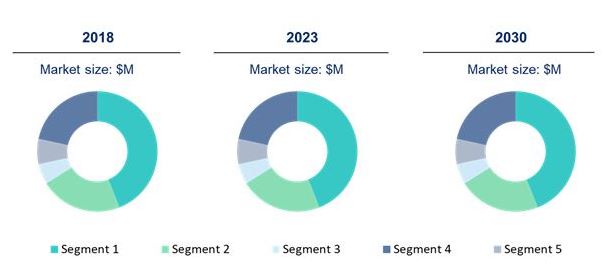
Segmentation Analysis: 3D metal printing machine in Australia market size by product type and application in terms of value ($B).
Growth Opportunities: Analysis of growth opportunities in different product type and application for the 3D metal printing machine in Australia.
Strategic Analysis: This includes M&A, new product development, and competitive landscape of the 3D metal printing machine in Australia.
Analysis of competitive intensity of the industry based on Porter’s Five Forces model.

If you are looking to expand your business in this or adjacent markets, then contact us. We have done hundreds of strategic consulting projects in market entry, opportunity screening, due diligence, supply chain analysis, M & A, and more.
Lucintel Consulting Services

FAQ

Q1. What are the major drivers influencing the growth of the 3D metal printing machine market in Australia?
Answer: The major drivers for this market are the increased usage of 3D metal printing in industries such as aerospace, automotive, healthcare, and manufacturing, continuous advancements in 3D printing technology, including increased build volumes, accuracy, speed, and material options, along with the improvement in the production efficiency and customization.
Q2. What are the major segments for 3D metal printing machine market in Australia?
Answer: The future of the 3D metal printing machine market in Australia looks promising with opportunities in the automotive, academic institution, healthcare and dental, and aerospace markets.
Q3. Which 3D metal printing machine market in Australia segment will be the largest in future?
Answer: Lucintel forecasts that selective laser melting segment will remain the largest segment over the forecast period because it provides exceptional precision and surface quality, as well as, the strong lasers are used by SLM machines to accurately control the melting and fusing of metal powder, creating products with smooth surfaces and fine details.
Q4. Do we receive customization in this report?
Answer: Yes, Lucintel provides 10% customization without any additional cost.

This report answers following 10 key questions:

Q.1. What are some of the most promising, high-growth opportunities for the 3D metal printing machine market in Australia by product type (selective laser melting, powder bed fusion, electron beam melting, and others), and application (automotive, academic institution, healthcare and dental, aerospace, and others)?
Q.2. Which segments will grow at a faster pace and why?
Q.3. What are the key factors affecting market dynamics? What are the key challenges and business risks in this market?
Q.4. What are the business risks and competitive threats in this market?
Q.5. What are the emerging trends in this market and the reasons behind them?
Q.6. What are some of the changing demands of customers in the market?
Q.7. What are the new developments in the market? Which companies are leading these developments?
Q.8. Who are the major players in this market? What strategic initiatives are key players pursuing for business growth?
Q.9. What are some of the competing products in this market and how big of a threat do they pose for loss of market share by material or product substitution?
Q.10. What M&A activity has occurred in the last 5 years and what has its impact been on the industry?
For any questions related to 3D Metal Printing Machine Market in Australia, 3D Metal Printing Machine Market in Australia Size, 3D Metal Printing Machine Market in Australia Growth, 3D Metal Printing Machine Market in Australia Analysis, 3D Metal Printing Machine Market in Australia Report, 3D Metal Printing Machine Market in Australia Share, 3D Metal Printing Machine Market in Australia Trends, 3D Metal Printing Machine Market in Australia Forecast, 3D Metal Printing Machine Companies, write Lucintel analyst at email: helpdesk@lucintel.com. We will be glad to get back to you soon.

                                                            Table of Contents

            1. Executive Summary

            2. 3D Metal Printing Machine Market in Australia: Market Dynamics
                        2.1: Introduction, Background, and Classifications
                        2.2: Supply Chain
                        2.3: Industry Drivers and Challenges

            3. Market Trends and Forecast Analysis from 2019 to 2031
                        3.1. Macroeconomic Trends (2019-2024) and Forecast (2025-2031)
                        3.2. 3D Metal Printing Machine Market in Australia Trends (2019-2024) and Forecast (2025-2031)
                        3.3: 3D Metal Printing Machine Market in Australia by Product Type
                                    3.3.1: Selective Laser Melting
                                    3.3.2: Powder Bed Fusion
                                    3.3.3: Electron Beam Melting
                                    3.3.4: Others
                        3.4: 3D Metal Printing Machine Market in Australia by Application
                                    3.4.1: Automotive
                                    3.4.2: Academic Institution
                                    3.4.3: Healthcare and Dental
                                    3.4.4: Aerospace
                                    3.4.5: Others

            4. Competitor Analysis
                        4.1: Product Portfolio Analysis
                        4.2: Operational Integration
                        4.3: Porter’s Five Forces Analysis

            5. Growth Opportunities and Strategic Analysis
                        5.1: Growth Opportunity Analysis
                                    5.1.1: Growth Opportunities for the 3D Metal Printing Machine Market in Australia by Product Type
                                    5.1.2: Growth Opportunities for the 3D Metal Printing Machine Market in Australia by Application
                                   
                        5.2: Emerging Trends in the 3D Metal Printing Machine Market in Australia
                        5.3: Strategic Analysis
                                    5.3.1: New Product Development
                                    5.3.2: Capacity Expansion of the 3D Metal Printing Machine Market in Australia
                                    5.3.3: Mergers, Acquisitions, and Joint Ventures in the 3D Metal Printing Machine Market in Australia
                                    5.3.4: Certification and Licensing

            6. Company Profiles of Leading Players
                        6.1: Company 1
                        6.2: Company 2
                        6.3: Company 3
                        6.4: Company 4
                        6.5: Company 5
                        6.6: Company 6
                        6.7: Company 7
                        6.8: Company 8
                        6.9: Company 9
                        6.10: Company 10
.

Buy full report or by chapter as follows

Limited Time Offer

Price by License Type:
[-] Hide Chapter Details
[Chapter Number] [Chapter Name] [Chapter Number Of Pages] [Chapter Price]
Title/Chapter Name Pages Price
Full Report: 3D Metal Printing Machine Market in Australia Full Report $ 2,990
150 - page report
Lucintel has been in the business of market research and management consulting since 2000 and has published over 1000 market intelligence reports in various markets / applications and served over 1,000 clients worldwide. This study is a culmination of four months of full-time effort performed by Lucintel's analyst team. The analysts used the following sources for the creation and completion of this valuable report:
  • In-depth interviews of the major players in this market
  • Detailed secondary research from competitors’ financial statements and published data 
  • Extensive searches of published works, market, and database information pertaining to industry news, company press releases, and customer intentions
  • A compilation of the experiences, judgments, and insights of Lucintel’s professionals, who have analyzed and tracked this market over the years.
Extensive research and interviews are conducted across the supply chain of this market to estimate market share, market size, trends, drivers, challenges, and forecasts. Below is a brief summary of the primary interviews that were conducted by job function for this report.
 
Thus, Lucintel compiles vast amounts of data from numerous sources, validates the integrity of that data, and performs a comprehensive analysis. Lucintel then organizes the data, its findings, and insights into a concise report designed to support the strategic decision-making process. The figure below is a graphical representation of Lucintel’s research process. 
 

Please sign in below to get report brochure - 3D Metal Printing Machine Market in Australia .

At Lucintel, we respect your privacy and maintain the confidentiality of information / data provided by you
(Please enter your corporate email. * These fields are mandatory )

Follow us on