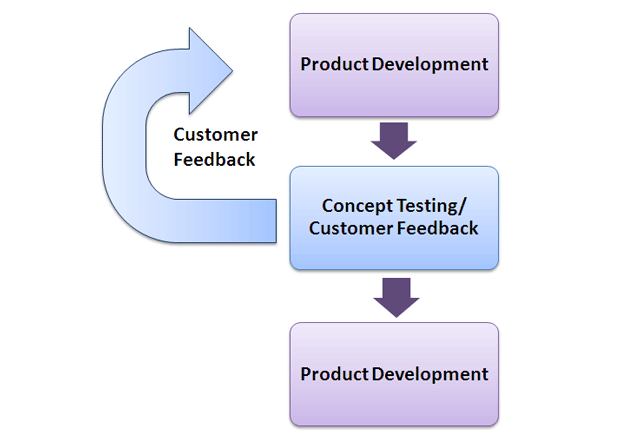
Concept testing is used for early identification of potentially
successful products. It takes into account customer reaction to a basic
idea of the product, helping make decisions such as pass/fail or go/no go.
Concept testing occurs before a product is marketed. Hence, while promising
a high probability of consumer acceptance, the attempt minimizes research and
development costs and marketing costs. Concept testing
has several purposes. It helps finalize the optimum market to introduce the product
While selecting among alternative concepts, it confirms
that the selected concept is most favorable. Concept testing also
lays the foundation upon which benchmarking can be carried out in the future. The
effort helps introduce new ideas into the concept. It forecasts the demand
and analyzes whether the product is actually ready to be launched. The process of concept testing should be considered
as a mechanism to refine, develop and nurture new ideas, thus increasing their chance
to penetrate the market successfully.
Concept testing results can be used to:
- Estimate price sensitivity and purchase likelihood
- Identify features and benefits that drive purchase likelihood
- Identify target consumer segments
- Assess how target consumers want to design and purchase the product