
Market Report · July 22, 2026

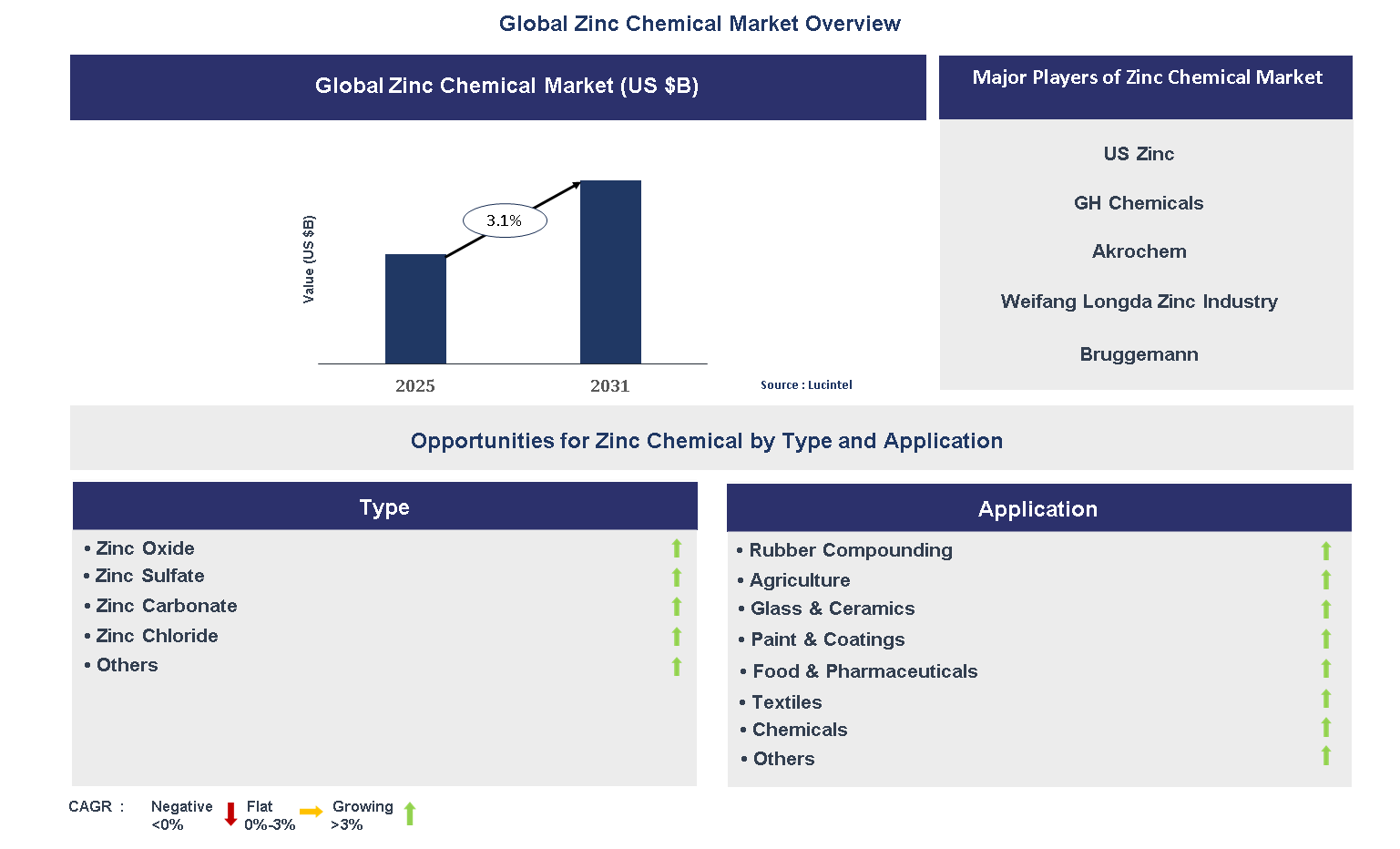
Key data points: The growth forecast = 3.1% annually for the next 7 years. Scroll below to get more insights. This market report covers trends, opportunities and forecasts in zinc chemical market to 2031 by type (zinc oxide, zinc sulfate, zinc carbonate, zinc chloride, and others), application (rubber compounding, agriculture, glass & ceramics, paint & coatings, food & pharmaceuticals, textiles, chemicals, and others), and region (North America, Europe, Asia Pacific, and the Rest of the World)
We'll send your sample report shortly.
• Lucintel forecasts that, within the type category, zinc oxide is expected to witness the highest growth over the forecast period.
• Within the application category, rubber compounding is expected to witness the highest growth.
• In terms of region, APAC is expected to witness the highest growth over the forecast period. Gain valuable insights for your business decisions with our comprehensive 150+ page report. Sample figures with some insights are shown below.
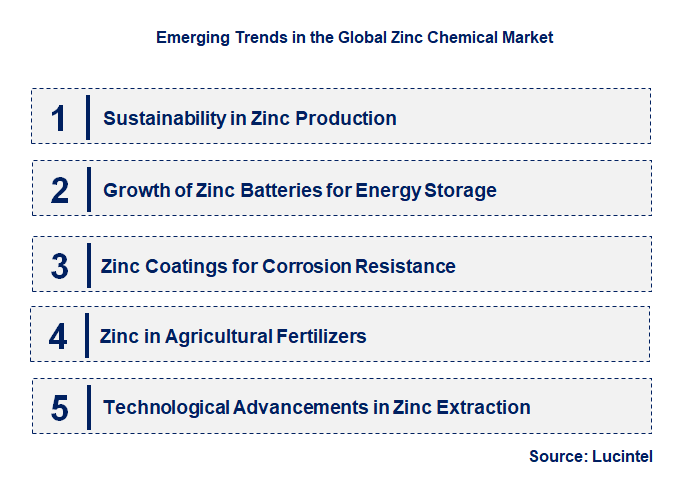
• Sustainability in Zinc Production: Sustainability has become a key focus in the zinc chemical market, as companies strive to reduce environmental footprints. Zinc is increasingly used in green technologies like solar panel coatings and energy storage solutions. Sustainable production practices, such as recycling and reducing emissions, are gaining momentum, making zinc a crucial element in achieving global sustainability goals.
• Growth of Zinc Batteries for Energy Storage: Zinc-based batteries, including zinc-ion and zinc-air, are gaining popularity as cost-effective and safe alternatives to lithium-ion batteries. These batteries are particularly suited for large-scale energy storage solutions, a crucial requirement for integrating renewable energy sources like wind and solar into the grid. Zinc’s growing role in energy storage offers a promising market expansion.
• Zinc Coatings for Corrosion Resistance: Zinc coatings are increasingly used in automotive, construction, and infrastructure sectors to prevent corrosion. As urbanization and infrastructure development expand, demand for durable, corrosion-resistant materials like galvanized steel is growing. Zinc’s role in protecting materials from environmental damage is critical in ensuring the longevity of buildings, vehicles, and industrial equipment.
• Zinc in Agricultural Fertilizers: Zinc is an essential micronutrient in agriculture, and its demand in fertilizers is growing. Zinc-based fertilizers improve soil health and crop yields, supporting the agriculture sector’s growth in emerging economies. As global food demand rises, the need for effective and sustainable farming practices increases, further driving the demand for zinc in agriculture.
• Technological Advancements in Zinc Extraction: New extraction methods, such as bioleaching and improved electrochemical processes, are making zinc production more efficient and environmentally friendly. These innovations are reducing energy consumption and lowering environmental impacts. As the demand for zinc increases across various industries, these advancements will help meet the rising supply needs without putting undue pressure on natural resources. The emerging trends in the zinc chemical market emphasize the industry’s move toward sustainability, technological innovation, and greater application in diverse sectors. From energy storage to agricultural applications, these trends highlight the growing importance of zinc in supporting global sustainability goals and industrial growth. They are reshaping the market, creating new opportunities and challenges for stakeholders across the value chain.
• Development of Zinc-Based Energy Storage: Zinc-based energy storage technologies, such as zinc-air and zinc-ion batteries, are seeing rapid development due to their lower costs and enhanced safety compared to lithium-ion alternatives. These batteries are ideal for large-scale energy storage solutions, particularly for renewable energy grids. This advancement positions zinc as a key player in the transition to cleaner, more sustainable energy systems.
• Improved Zinc Recycling Technologies: Zinc recycling is becoming more efficient, helping to reduce the environmental impact of zinc extraction. Technologies like hydrometallurgical and pyrometallurgical processes are being optimized to recover more zinc from scrap materials. As zinc demand grows, recycling helps ensure a sustainable supply chain while lowering the carbon footprint of production.
• Zinc’s Growing Role in Corrosion Protection: The use of zinc coatings to prevent corrosion is experiencing rapid growth in sectors like automotive, construction, and infrastructure. Zinc’s ability to protect steel and other metals from corrosion makes it essential in maintaining the longevity of structures and machinery. With increasing infrastructure development worldwide, the demand for zinc coatings is expected to continue growing.
• Advancements in Zinc Fertilizers for Agriculture: Zinc is becoming an increasingly important component of fertilizers, especially for addressing zinc deficiencies in soils. These fertilizers are improving crop yields and soil health, particularly in regions with nutrient-poor soils. With growing global demand for food, zinc-based fertilizers are crucial in supporting agricultural productivity and food security.
• Zinc in High-Performance Materials: Zinc is being used in advanced materials for a range of high-tech applications, including electronics, aerospace, and automotive industries. Zinc’s role in creating lightweight alloys, corrosion-resistant coatings, and efficient batteries is expanding, particularly in sectors driven by innovation and environmental goals. These developments are driving demand for high-performance zinc products. These key developments highlight the growing importance of zinc in diverse industries, from energy storage to agriculture and high-tech applications. Innovations in extraction, recycling, and application technologies are ensuring that zinc continues to play a vital role in supporting sustainable industrial practices and infrastructure development. These advancements are shaping the future of the zinc chemical market.
• Renewable Energy Storage Solutions: Zinc-based batteries, particularly zinc-air and zinc-ion, present a significant growth opportunity in energy storage. These batteries offer safety, cost-effectiveness, and scalability for large-scale energy storage, particularly for renewable energy sources like solar and wind. As the energy transition accelerates, zinc’s role in energy storage systems will expand, creating new market opportunities.
• Automotive and Electric Vehicle Batteries: The shift towards electric vehicles (EVs) is a key growth driver for zinc in the automotive sector. Zinc’s role in producing lightweight alloys and corrosion-resistant coatings is crucial for the durability and performance of EVs. Additionally, zinc-based batteries are emerging as a potential solution for EV energy storage, further boosting the demand for zinc in this sector.
• Agricultural Fertilizers and Soil Health: Zinc-based fertilizers are essential for improving crop yields and soil health. As global food demand rises, especially in developing economies, the demand for zinc fertilizers is expected to grow. This presents an opportunity to expand zincs role in agricultural sustainability, improving food security and supporting long-term farming practices.
• Corrosion Protection in Infrastructure: Zincs use in corrosion-resistant coatings for infrastructure, including bridges, roads, and buildings, presents a major growth opportunity. With the ongoing global focus on infrastructure development and urbanization, the need for durable, long-lasting materials is increasing. Zinc’s protective properties make it an ideal choice for ensuring the longevity of critical infrastructure.
• High-Tech Applications in Electronics: Zinc is increasingly being used in high-performance materials for the electronics industry. Zinc-based components, including batteries, semiconductors, and alloys, are essential for devices ranging from smartphones to renewable energy systems. As demand for advanced electronics grows, the need for efficient and sustainable zinc solutions will continue to rise. These strategic growth opportunities demonstrate the vast potential for zinc across multiple sectors. As demand for energy storage, electric vehicles, agricultural solutions, and infrastructure grows, zinc’s versatility and sustainability make it an essential material for future innovation. Capitalizing on these opportunities will be key for businesses seeking to expand their presence in the global zinc chemical market.
• US Zinc
• GH Chemicals
• Akrochem
• Weifang Longda Zinc Industry
• Bruggemann
• HAKUSUI TECH
• American Chemet
• Zochem
• Numinor
• Rubamin
• Zinc Oxide
• Zinc Sulfate
• Zinc Carbonate
• Zinc Chloride
• Others
• Rubber Compounding
• Agriculture
• Glass & Ceramics
• Paint & Coatings
• Food & Pharmaceuticals
• Textiles
• Chemicals
• Others
• North America
• Europe
• Asia Pacific
• The Rest of the World
• United States: The U.S. market for zinc chemicals is expanding due to the rising demand for zinc coatings in sectors like automotive and construction. Zinc’s corrosion-resistant properties are crucial in infrastructure development and manufacturing. Moreover, growing adoption of zinc-based batteries for energy storage and electric vehicles (EVs) is spurring innovation, aligning with the country’s sustainability goals.
• China: Chinas zinc chemical market is experiencing rapid growth, especially in the development of zinc-ion and zinc-air batteries. The governments focus on green technology and reducing emissions is accelerating zinc’s application in energy storage and renewable energy. Additionally, China continues to dominate global production, helping to meet rising demand for zinc in various industrial sectors like electronics and construction.
• Germany: In Germany, the zinc chemical market is advancing due to the shift toward sustainable solutions in the automotive and industrial sectors. Zinc coatings are increasingly used to protect against corrosion, while new research into zinc-based batteries for renewable energy storage is growing. Germany’s strong regulatory frameworks support the adoption of eco-friendly technologies, further boosting zincs role in green industries.
• India: Indias zinc chemical market is expanding as the country focuses on infrastructure development. Zinc-based coatings are crucial for protecting infrastructure from corrosion, especially in the rapidly growing construction sector. Additionally, India’s push for agricultural sustainability has led to increased demand for zinc fertilizers, supporting crop growth and soil health across rural regions.
• Japan: Japan is at the forefront of zinc chemical innovation, particularly in battery technology. With its strong emphasis on renewable energy and high-tech industries, Japan is exploring zinc-based batteries as a safer, cost-effective alternative to lithium-ion batteries. Furthermore, the automotive sector is utilizing zinc for lightweight alloys and corrosion-resistant coatings to meet environmental standards.


• US Zinc
• GH Chemicals
• Akrochem
• Weifang Longda Zinc Industry
• Bruggemann
• HAKUSUI TECH
• American Chemet
• Zochem
• Numinor
• Rubamin Q5. Which zinc chemical market segment will be the largest in future? Answer: Lucintel forecasts that, within the type category, zinc oxide is expected to witness the highest growth over the forecast period. Q6. In zinc chemical market, which region is expected to be the largest in next 5 years? Answer: In terms of region, APAC is expected to witness the highest growth over the forecast period. Q7. Do we receive customization in this report? Answer: Yes, Lucintel provides 10% customization without any additional cost.


Choose a license that fits your team. Instant PDF delivery.
Prices exclude taxes. Instant delivery. Custom licensing available on request.
Market Report · July 22, 2026
Market Report · July 22, 2026
Market Report · July 22, 2026
Trusted partner for strategic intelligence and business growth


Receive a complimentary market analysis tailored to your industry. Our analysts will identify key growth opportunities and competitive dynamics specific to your business.

Market size, growth rate, and key trend analysis for your specific sector.

Top competitor positioning and market share analysis.

Strategic recommendations backed by data-driven insights.
Get curated market intelligence and competitive moves straight to your inbox.
By subscribing, you agree to receive our monthly insights. Unsubscribe anytime.
Receive a complimentary market analysis tailored to your industry. Our analysts will identify key growth opportunities and competitive dynamics specific to your business.
Market size, growth rate, and key trend analysis for your specific sector.
Top competitor positioning and market share analysis.
Strategic recommendations backed by data-driven insights.
Get curated market intelligence, emerging trends, and competitive moves straight to your inbox each month.
By subscribing, you agree to receive our monthly insights. Unsubscribe anytime.
We'll send your sample report shortly.