
Market Report · July 31, 2026

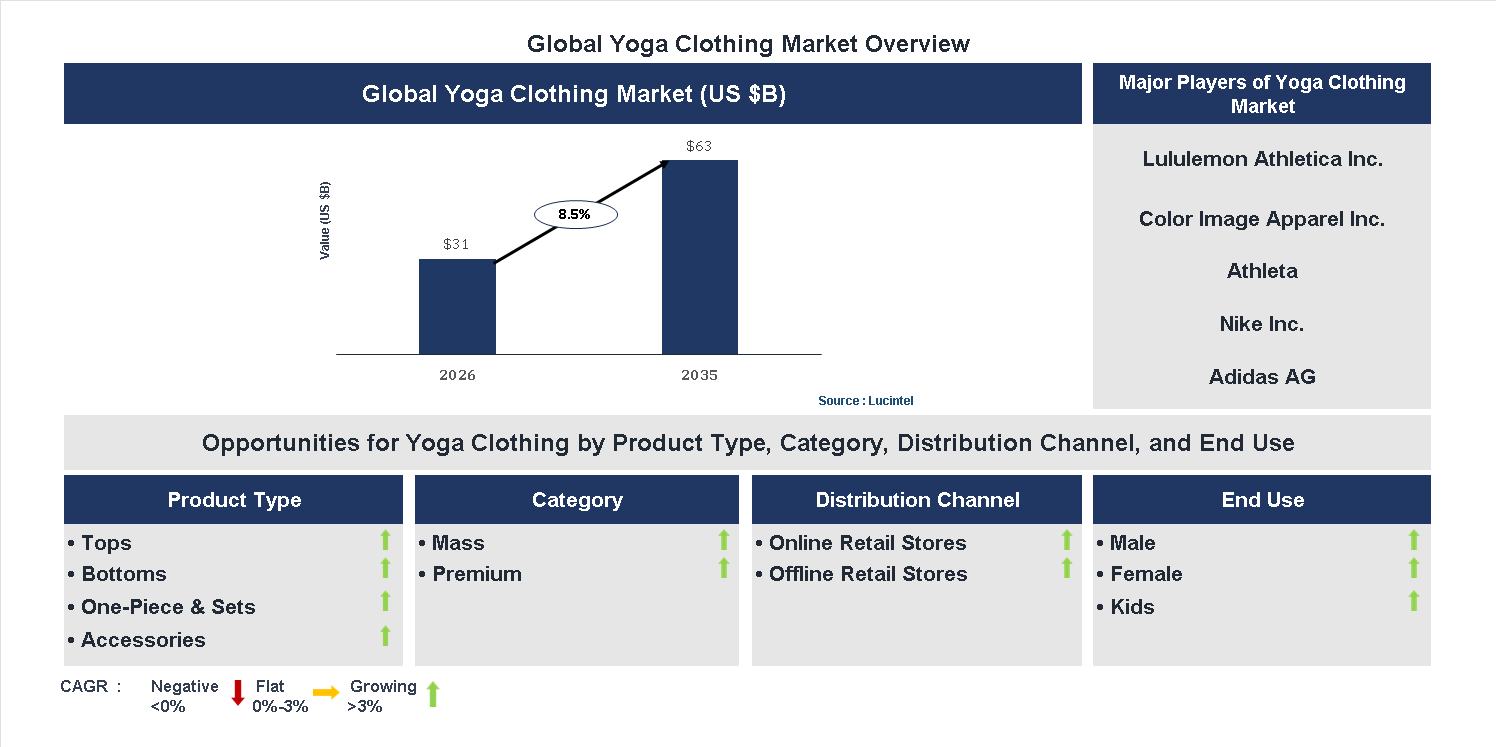
Key data points: The market size in 2035 = $63.0 billion, growth forecast = 8.5% annually for the next 8 years. Scroll below to get more insights. This market report covers trends, opportunities and forecasts in yoga clothing market to 2035 by product type (tops, bottoms, one-piece & sets, and accessories), category (mass and premium), distribution channel (online retail stores and offline retail stores), end use (male, female, and kids), and region (North America, Europe, Asia Pacific, and the Rest of the World)
We'll send your sample report shortly.
• Lucintel forecasts that, within the product type category, bottom is expected to witness the highest growth over the forecast period.
• Within the end use category, female is expected to witness the highest growth.
• In terms of region, North America is expected to witness the highest growth over the forecast period. Gain valuable insights for your business decisions with our comprehensive 150+ page report. Sample figures with some insights are shown below.
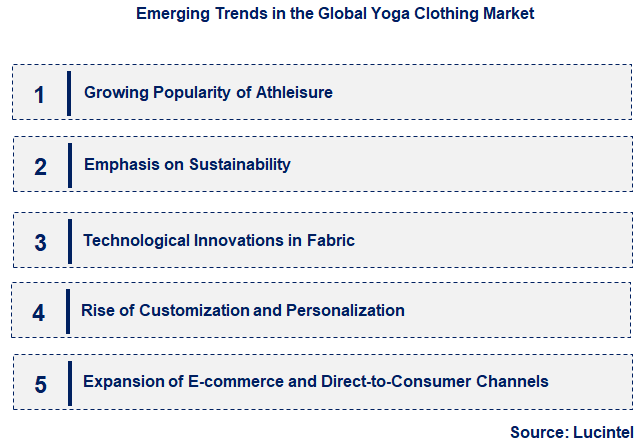
• Growing Popularity of Athleisure: The blending of athletic and casual wear is fueling demand for versatile yoga clothing that can be worn both during workouts and in everyday settings. Consumers prefer stylish, comfortable pieces that transition seamlessly from gym to street, expanding market reach and increasing sales. This trend encourages brands to innovate with fashionable designs, enhancing brand loyalty and broadening target demographics beyond traditional fitness enthusiasts.
• Emphasis on Sustainability: Eco-friendly materials such as organic cotton, recycled polyester, and bamboo are gaining prominence in yoga apparel. Consumers are increasingly conscious of environmental impacts and prefer brands that prioritize sustainability. This shift influences manufacturing processes, packaging, and supply chains, prompting companies to adopt greener practices, which not only appeal to eco-conscious buyers but also differentiate brands in a competitive market.
• Technological Innovations in Fabric: Advanced textiles with moisture-wicking, anti-odor, and stretchable properties are enhancing performance and comfort. Innovations like seamless construction and breathable fabrics improve fit and durability, attracting serious practitioners and casual wearers alike. These technological advancements enable brands to offer high-performance products that meet the demands of diverse yoga styles and climates, boosting consumer confidence and satisfaction.
• Rise of Customization and Personalization: Consumers seek personalized options such as custom fits, colors, and designs to express individual style. Brands are leveraging digital platforms and on-demand manufacturing to offer tailored products, fostering stronger customer engagement. This trend enhances brand loyalty and allows companies to cater to niche markets, making yoga clothing more inclusive and reflective of personal identity.
• Expansion of E-commerce and Direct-to-Consumer Channels: Online sales channels are becoming dominant, providing wider access to a global customer base. E-commerce platforms enable brands to showcase extensive product ranges, offer personalized shopping experiences, and gather valuable consumer data. This shift reduces reliance on traditional retail outlets, lowers costs, and accelerates product launches, making yoga apparel more accessible and affordable for consumers worldwide. In summary, these emerging trends are reshaping the yoga clothing market by fostering innovation, emphasizing sustainability, and enhancing consumer engagement. The integration of fashion, functionality, and eco-consciousness is creating a more dynamic, inclusive, and competitive landscape, ultimately driving growth and redefining industry standards.
• Growing Demand for Sustainable Materials: The shift towards eco-friendly products is transforming the yoga clothing market. Consumers increasingly prefer brands that use organic, recycled, and sustainable fabrics, reducing environmental impact. This trend encourages manufacturers to innovate with eco-conscious textiles, boosting brand loyalty and attracting environmentally aware customers. The emphasis on sustainability is also aligning with regulatory pressures, fostering long-term growth and differentiation in a competitive landscape.
• Technological Advancements in Fabric Innovation: Cutting-edge fabric technologies are enhancing performance and comfort in yoga apparel. Moisture-wicking, anti-odor, and stretchable fabrics improve user experience, making products more appealing. These innovations enable brands to offer high-performance clothing suitable for intense workouts and everyday wear. As technology advances, the market benefits from increased product differentiation, higher consumer satisfaction, and the ability to meet diverse customer needs, driving overall market expansion.
• Rising Popularity of Athleisure Fashion: The blending of athletic and casual wear is fueling demand for versatile yoga clothing. Consumers seek stylish, functional apparel that can transition seamlessly from gym to daily activities. This trend broadens the target market beyond traditional fitness enthusiasts, attracting fashion-conscious consumers. Brands that capitalize on this trend by offering trendy, multi-purpose designs are experiencing increased sales, expanding market reach, and reinforcing the importance of aesthetic appeal alongside functionality.
• Expansion into Emerging Markets: Developing economies present significant growth opportunities due to rising disposable incomes and increasing health awareness. Urbanization and changing lifestyles are driving demand for comfortable, fashionable activewear. Companies expanding into these regions benefit from less saturated markets and the potential for early brand establishment. Strategic investments and localized marketing are essential to capture market share, fostering global growth and diversification of the yoga clothing industry.
• Digital Transformation and E-commerce Growth: The rise of online shopping platforms is revolutionizing how consumers access yoga apparel. E-commerce offers a wider product selection, convenience, and personalized shopping experiences. Digital marketing strategies, including social media and influencer collaborations, enhance brand visibility and engagement. This shift enables brands to reach a broader audience, reduce distribution costs, and gather valuable consumer data. The ongoing digital transformation is crucial for market expansion, innovation, and maintaining a competitive advantage in a rapidly evolving landscape. These developments are significantly transforming the yoga clothing market by fostering innovation, expanding consumer bases, and emphasizing sustainability. Technological advancements, digital channels, and emerging markets are creating new growth avenues, while evolving consumer preferences for eco-friendly and versatile apparel are shaping product offerings. Collectively, these opportunities are driving market expansion, increasing competitiveness, and positioning the industry for sustained growth in a dynamic, global environment.
• Growing Popularity of Yoga and Athleisure Wear: The rising global interest in yoga and fitness activities is fueling demand for specialized clothing that combines comfort, flexibility, and style. Consumers prefer versatile apparel suitable for both exercise and casual wear, boosting sales of yoga clothing. The trend towards athleisure as everyday fashion further propels market growth, encouraging brands to innovate and expand their product offerings to meet evolving consumer preferences.
• Innovation in Fabric Technologies Enhances Functionality: Advances in fabric technology, such as moisture-wicking, anti-odor, and stretchable materials, are transforming yoga clothing. These innovations improve comfort, durability, and performance, attracting more consumers. Eco-friendly and sustainable fabrics are gaining popularity, aligning with consumer values. Companies investing in R&D to develop high-performance, sustainable textiles are gaining competitive advantages, driving market expansion and product differentiation.
• Rising Demand for Sustainable and Eco-Friendly Products: Consumers are increasingly prioritizing environmentally responsible products, prompting brands to adopt sustainable manufacturing practices. Use of organic, recycled, and biodegradable materials in yoga apparel appeals to eco-conscious buyers. Certifications and transparency about supply chains further influence purchasing decisions. This shift towards sustainability not only enhances brand reputation but also opens new market segments, fostering long-term growth opportunities for companies committed to environmental stewardship.
• Expansion into Emerging Markets Presents Growth Opportunities: Developing economies with rising disposable incomes and growing health awareness are becoming key markets for yoga clothing. Urbanization and increasing adoption of Western lifestyles contribute to market penetration. Localized marketing strategies and affordable product lines are essential for capturing these markets. International brands expanding into these regions can leverage untapped demand, establishing brand presence and driving revenue growth through tailored offerings suited to diverse consumer needs.
• Strategic Collaborations and Brand Endorsements Drive Market Penetration: Collaborations between yoga brands and fitness influencers, celebrities, or fashion designers enhance brand visibility and credibility. Endorsements and co-branded collections attract new customer segments and boost sales. Strategic partnerships with retail chains and online platforms expand distribution channels, increasing market reach. These initiatives foster brand loyalty and stimulate demand, enabling companies to differentiate themselves in a competitive landscape and accelerate overall market growth. The overall impact of these opportunities is a robust, innovative, and expanding yoga clothing market. Companies that capitalize on technological advancements, sustainability trends, and strategic collaborations are positioned for sustained growth. As consumer preferences evolve towards comfort, style, and environmental responsibility, the market is expected to witness continued diversification and increased competitiveness, ultimately benefiting both consumers and industry stakeholders.
• Technological Innovation: Advancements in fabric technology, such as moisture-wicking, stretchability, and eco-friendly materials, are significantly enhancing product performance. These innovations meet consumer demands for comfort, durability, and sustainability, thereby boosting sales. Companies investing in R&D to develop innovative textiles are gaining a competitive edge, attracting health-conscious and environmentally aware consumers. Moreover, technological integration in manufacturing processes improves efficiency and reduces costs, enabling brands to offer high-quality products at competitive prices. As consumers become more aware of fabric benefits, the adoption of innovative materials is expected to further accelerate market growth.
• Rising Health and Wellness Trends: Increasing awareness about health, fitness, and wellness is fueling demand for yoga apparel. Consumers are adopting healthier lifestyles, leading to higher participation in yoga and related activities. This trend encourages the purchase of specialized clothing that offers comfort, flexibility, and support during exercise. The growing popularity of fitness influencers and wellness communities on social media also promotes yoga apparel brands. As a result, manufacturers are expanding their product lines to cater to a broader demographic, including beginners and advanced practitioners, which sustains market growth and diversifies offerings.
• E-commerce Expansion: The proliferation of online shopping platforms has transformed the distribution landscape for yoga clothing. E-commerce provides consumers with easy access to a wide range of brands, styles, and price points, fostering increased sales. Digital marketing strategies, including influencer collaborations and targeted advertising, enhance brand visibility and consumer engagement. The convenience of home delivery and easy return policies further encourage online purchases. Small and emerging brands leverage e-commerce to reach niche markets and build brand loyalty without significant brick-and-mortar investments. This digital shift is expected to continue driving market expansion globally.
• Sustainability and Eco-Friendly Practices: Growing environmental awareness among consumers is pushing brands to adopt sustainable manufacturing practices and eco-friendly materials. Organic cotton, recycled polyester, and biodegradable fabrics are increasingly preferred, aligning with consumer values of environmental responsibility. Regulatory pressures and certifications also incentivize companies to improve their sustainability credentials. This shift not only enhances brand reputation but also appeals to a conscious customer base willing to pay premium prices for sustainable products. As sustainability becomes a key differentiator, the market is likely to see increased innovation and investment in green manufacturing processes.
• Demographic and Cultural Shifts: The expanding popularity of yoga across different age groups, genders, and cultures is broadening the market base. Younger consumers seek stylish, functional, and affordable yoga wear, while older demographics prioritize comfort and health benefits. Cultural acceptance and integration of yoga into mainstream lifestyles have increased demand for diverse and inclusive product offerings. Additionally, the influence of Western fashion trends on yoga apparel has led to more fashionable and versatile clothing options. These demographic and cultural shifts are creating new opportunities for brands to innovate and diversify their product lines to meet varied consumer preferences. The challenges facing the yoga clothing market include:
• Intense Competition: The market is highly competitive, with numerous established brands and new entrants vying for consumer attention. Differentiating products in a crowded marketplace is challenging, especially as many brands offer similar styles and features. Price wars and promotional activities can erode profit margins, making it difficult for smaller players to sustain operations. Additionally, rapid product cycles and changing consumer preferences require continuous innovation and marketing efforts. Maintaining brand loyalty amidst fierce competition demands significant investment in branding, quality, and customer engagement strategies, which can strain resources.
• Supply Chain Disruptions: The global supply chain faces ongoing disruptions due to geopolitical tensions, pandemics, and logistical challenges. Sourcing sustainable and high-quality raw materials can be complex and costly, impacting production timelines and costs. Manufacturing in different regions introduces risks related to quality control, labor practices, and compliance with regulations. Delays in shipping and customs can lead to stock shortages and missed sales opportunities. These disruptions increase operational costs and complicate inventory management, ultimately affecting profitability and market responsiveness.
• Regulatory and Certification Challenges: Increasing regulatory requirements around product safety, labeling, and environmental standards pose compliance challenges for manufacturers. Obtaining certifications for organic, recycled, or eco-friendly materials can be time-consuming and expensive. Non-compliance risks legal penalties, reputational damage, and market restrictions. As regulations evolve, companies must continuously adapt their processes and documentation, which can divert resources from core innovation activities. Navigating diverse regulatory landscapes across regions adds complexity, especially for brands aiming for global expansion, potentially hindering growth prospects. In summary, the yoga clothing market is driven by technological advancements, health trends, e-commerce growth, sustainability initiatives, and demographic shifts, all of which foster expansion and innovation. However, it faces significant challenges from intense competition, supply chain vulnerabilities, and regulatory complexities. These factors collectively influence market dynamics, requiring stakeholders to innovate strategically, optimize supply chains, and ensure compliance to sustain growth. The interplay of these drivers and challenges will shape the future landscape, demanding agility and resilience from industry participants to capitalize on emerging opportunities while mitigating risks.
• Lululemon Athletica Inc.
• Color Image Apparel Inc.
• Athleta
• Nike Inc.
• Adidas AG
• Under Armour Inc.
• Puma SE
• Columbia Sportswear
• Wolverine Worldwide
• Manduka LLC
• Tops
• Bottoms
• One-Piece & Sets
• Accessories
• Mass
• Premium
• Online Retail Stores
• Offline Retail Stores
• Male
• Female
• Kids
• North America
• Europe
• Asia Pacific
• The Rest of the World
• United States: The US market has seen rapid growth, driven by rising health awareness and the athleisure trend. Major brands are expanding their product lines with sustainable fabrics and innovative designs. E-commerce sales have surged, making yoga apparel more accessible. Influencer marketing and social media campaigns are boosting brand visibility. Additionally, premium and luxury yoga wear segments are gaining popularity among affluent consumers. The focus on inclusivity and size diversity is also prominent, with brands offering a wider range of sizes and styles to cater to diverse demographics.
• China: The Chinese yoga clothing market is expanding quickly, fueled by increasing urbanization and a growing middle class interested in wellness. Domestic brands are gaining ground by offering affordable, stylish, and functional apparel. International brands are entering the market, leveraging e-commerce platforms like Tmall and JD.com. There is a rising demand for eco-friendly and sustainable products, aligning with global trends. The government’s promotion of fitness and wellness initiatives is further supporting market growth. Young consumers are particularly interested in trendy, performance-oriented yoga wear, blending fashion with functionality.
• Germany: Germany’s market is characterized by a strong emphasis on sustainability and eco-conscious products. Consumers prefer high-quality, durable, and ethically produced yoga clothing. The market is driven by a well-informed customer base that values transparency and environmental responsibility. Local brands are innovating with organic and recycled materials. The rise of boutique fitness studios and yoga centers has increased demand for specialized apparel. Online retail channels are expanding, and collaborations with designers are enhancing product appeal. Overall, Germany’s market reflects a mature, environmentally aware consumer base prioritizing quality and sustainability.
• India: The Indian yoga clothing market is witnessing rapid growth, supported by the country’s deep-rooted yoga culture and increasing health consciousness. Affordable and functional apparel is in high demand, with a focus on comfort and breathability. Domestic brands are expanding their presence through online platforms and retail outlets. International brands are also entering the market, offering premium options. The trend towards sustainable and eco-friendly fabrics is gaining traction among urban consumers. The rise of fitness influencers and social media marketing is further boosting awareness and sales. The market is expected to continue growing as yoga remains integral to the Indian lifestyle and wellness practices.
• Japan: Japan’s yoga clothing market is evolving with a focus on innovation, comfort, and minimalism. Consumers prefer high-quality, technologically advanced fabrics that offer moisture-wicking and stretchability. The market is driven by a health-conscious population that values functional and stylish apparel. Local brands are emphasizing eco-friendly materials and sustainable production methods. The popularity of boutique yoga studios and wellness centers is increasing the demand for specialized clothing. E-commerce platforms are expanding their offerings, and collaborations with fashion designers are enhancing product appeal. Overall, Japan’s market reflects a sophisticated consumer base prioritizing quality, sustainability, and innovative design.


• Lululemon Athletica Inc.
• Color Image Apparel Inc.
• Athleta
• Nike Inc.
• Adidas AG
• Under Armour Inc.
• Puma SE
• Columbia Sportswear
• Wolverine Worldwide
• Manduka LLC Q6. Which yoga clothing market segment will be the largest in future? Answer: Lucintel forecasts that, within the product type category, bottom is expected to witness the highest growth over the forecast period. Q7. In yoga clothing market, which region is expected to be the largest in next 5 years? Answer: In terms of region, North America is expected to witness the highest growth over the forecast period. Q8. Do we receive customization in this report? Answer: Yes, Lucintel provides 10% customization without any additional cost.


Choose a license that fits your team. Instant PDF delivery.
Prices exclude taxes. Instant delivery. Custom licensing available on request.
Market Report · July 31, 2026
Market Report · July 31, 2026
Market Report · July 31, 2026
Trusted partner for strategic intelligence and business growth


Receive a complimentary market analysis tailored to your industry. Our analysts will identify key growth opportunities and competitive dynamics specific to your business.

Market size, growth rate, and key trend analysis for your specific sector.

Top competitor positioning and market share analysis.

Strategic recommendations backed by data-driven insights.
Get curated market intelligence and competitive moves straight to your inbox.
By subscribing, you agree to receive our monthly insights. Unsubscribe anytime.
Receive a complimentary market analysis tailored to your industry. Our analysts will identify key growth opportunities and competitive dynamics specific to your business.
Market size, growth rate, and key trend analysis for your specific sector.
Top competitor positioning and market share analysis.
Strategic recommendations backed by data-driven insights.
Get curated market intelligence, emerging trends, and competitive moves straight to your inbox each month.
By subscribing, you agree to receive our monthly insights. Unsubscribe anytime.
We'll send your sample report shortly.