
Market Report · July 22, 2026

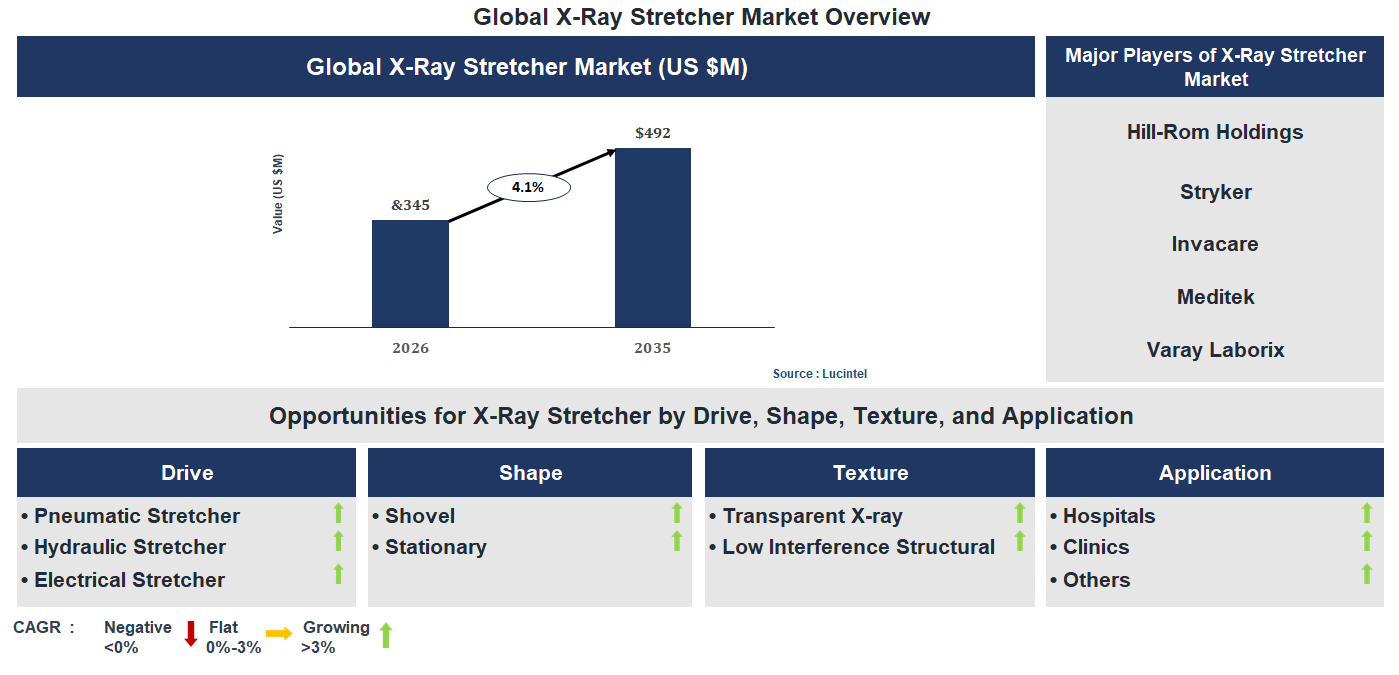
Key data points: The market size in 2035 = $492 million, growth forecast = 4% annually for the next 8 years. Scroll below to get more insights. This market report covers trends, opportunities and forecasts in X-ray stretcher market to 2035 by drive (pneumatic stretcher, hydraulic stretcher, and electrical stretcher), shape (shovel and stationary), texture (transparent X-ray and low interference structural), application (hospitals, clinics, and others), and region (North America, Europe, Asia Pacific, and the Rest of the World)
We'll send your sample report shortly.
• Lucintel forecasts that, within the drive category, electrical stretcher is expected to witness the highest growth over the forecast period.
• Within the application category, hospital is expected to witness higher growth.
• In terms of region, APAC is expected to witness the highest growth over the forecast period. Gain valuable insights for your business decisions with our comprehensive 150+ page report. Sample figures with some insights are shown below.
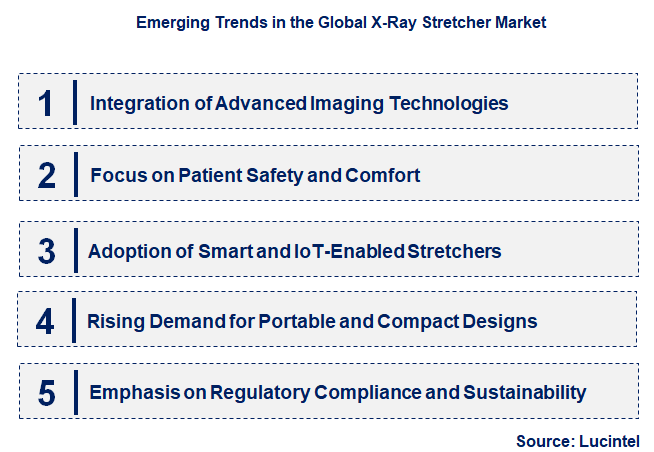
• Integration of Advanced Imaging Technologies: This trend involves incorporating cutting-edge imaging features directly into stretchers, such as digital X-ray capabilities and real-time imaging. It allows for immediate diagnostics without transferring patients, reducing movement risks, and saving time. The integration enhances workflow efficiency, accelerates diagnosis, and improves patient outcomes. As technology advances, these integrated stretchers are becoming more sophisticated, offering higher resolution images and seamless connectivity with hospital information systems, thus transforming traditional patient transport and imaging procedures.
• Focus on Patient Safety and Comfort: Manufacturers are prioritizing ergonomic designs, adjustable features, and safety mechanisms to improve patient experience. Features like padded surfaces, adjustable height, and secure straps ensure comfort and stability during transport. Additionally, safety enhancements such as anti-slip wheels and integrated brakes prevent accidents. This trend addresses increasing awareness of patient-centered care, reducing injury risks during transport, and complying with stringent safety standards. Enhanced comfort and safety are critical for patient satisfaction and are driving innovation in stretcher design and functionality.
• Adoption of Smart and IoT-Enabled Stretchers: The integration of Internet of Things (IoT) technology into X-ray stretchers is a notable trend. Smart stretchers equipped with sensors monitor vital signs, track location, and provide real-time data to healthcare providers. IoT connectivity facilitates remote diagnostics, predictive maintenance, and improved asset management. This technological shift enhances operational efficiency, reduces downtime, and ensures timely maintenance. The data-driven approach supports better decision-making, improves patient safety, and aligns with the broader digital transformation in healthcare facilities.
• Rising Demand for Portable and Compact Designs: The market is witnessing a surge in demand for lightweight, portable stretchers that can be easily maneuvered in various healthcare settings, including emergency scenes and small clinics. Compact designs facilitate quick deployment, storage, and transport, especially in emergency and field situations. This trend responds to the need for versatile equipment that can adapt to diverse environments while maintaining functionality. Innovations in materials and engineering are enabling the development of durable yet lightweight stretchers, expanding their usability and improving emergency response capabilities.
• Emphasis on Regulatory Compliance and Sustainability: Increasing regulatory standards for safety, hygiene, and environmental impact are shaping product development. Manufacturers are adopting eco-friendly materials, reducing energy consumption, and ensuring compliance with international safety standards. Sustainable stretchers contribute to hospital green initiatives and reduce long-term costs. Regulatory adherence ensures market access and enhances brand reputation. This trend underscores the importance of environmentally responsible manufacturing practices and compliance, which are becoming integral to product design and corporate strategy in the X-ray stretcher market. In summary, these emerging trends are collectively transforming the X-ray stretcher market by integrating advanced technology, prioritizing patient safety, embracing digital connectivity, enhancing portability, and emphasizing sustainability. These developments are leading to more efficient, safe, and patient-centric solutions, ultimately reshaping how healthcare providers approach patient transport and imaging, and setting new standards for innovation and quality in the industry.
• Growing demand for portable imaging solutions: The need for mobile X-ray stretchers that facilitate bedside imaging is increasing, enabling quicker diagnosis and treatment, especially in emergency and critical care settings. This trend improves patient comfort and reduces transfer times, leading to better clinical outcomes and operational efficiency.
• Technological innovations in stretcher design: Advanced features such as adjustable height, integrated imaging technology, and enhanced safety mechanisms are being incorporated into X-ray stretchers. These innovations improve image quality, reduce patient movement, and enhance safety for both patients and healthcare workers, driving market growth.
• Rising healthcare infrastructure investments: Governments and the private sector are investing heavily in healthcare facilities, expanding access to diagnostic services. This investment boosts demand for X-ray stretchers across hospitals, clinics, and diagnostic centers, supporting market expansion and technological adoption.
• Increasing focus on patient safety and comfort: Modern X-ray stretchers are designed with ergonomic features, smooth mobility, and safety restraints, prioritizing patient comfort and safety. This focus aligns with healthcare standards and regulations, encouraging adoption and fostering market growth.
• Expansion into emerging markets: Developing countries are rapidly improving their healthcare infrastructure, creating new opportunities for X-ray stretcher manufacturers. Increased healthcare spending and urbanization are driving demand, making these markets key growth areas for the industry. Conclusion (80 Words) – The recent developments in the X-ray stretcher market are significantly enhancing diagnostic efficiency, patient safety, and healthcare infrastructure. Technological innovations, increased investments, and expanding markets are collectively propelling growth, making X-ray stretchers more accessible and effective. These advancements are transforming healthcare delivery, improving patient outcomes, and creating lucrative opportunities for industry stakeholders worldwide. The market's trajectory indicates sustained growth driven by ongoing technological and infrastructural progress.
• Increasing Adoption of Advanced Imaging-Compatible Stretchers: The demand for stretchers compatible with modern X-ray and imaging equipment is rising, enabling seamless imaging procedures. These stretchers improve diagnostic accuracy, reduce patient transfer times, and enhance workflow efficiency. Hospitals are investing in specialized stretchers with features like adjustable height, radiolucent materials, and integrated imaging accessories, driving market growth and encouraging innovation in design and functionality.
• Growing Healthcare Infrastructure in Emerging Economies: Rapid development of healthcare facilities in countries like India, China, and Brazil is expanding access to diagnostic imaging services. This infrastructure growth necessitates the procurement of specialized stretchers that meet safety and quality standards. Increased government funding, urbanization, and rising healthcare awareness are fueling demand, creating opportunities for market players to expand their product portfolios and establish regional presence.
• Rising Prevalence of Chronic Diseases Requiring Frequent Imaging: The increasing incidence of chronic conditions such as cancer, cardiovascular diseases, and musculoskeletal disorders necessitates regular diagnostic imaging. This trend boosts demand for reliable, durable, and easy-to-clean stretchers that facilitate efficient patient handling during imaging procedures. Manufacturers are focusing on developing versatile stretchers with enhanced mobility and patient comfort to cater to this expanding need.
• Technological Innovations Enhancing Patient Safety and Comfort: Advances in materials, ergonomic design, and automation are improving stretcher functionality. Features like smooth-rolling wheels, adjustable supports, and integrated safety sensors reduce injury risks and improve patient experience. These innovations also enable better integration with hospital information systems, streamlining workflows. As patient-centered care becomes a priority, the market is driven to develop safer, more comfortable stretchers with smart features.
• Increasing Focus on Infection Control and Hygiene Standards: The COVID-19 pandemic highlighted the importance of infection prevention in healthcare settings. Market growth is driven by demand for stretchers with antimicrobial surfaces, easy-to-clean materials, and design features that minimize contamination risks. Manufacturers are innovating with disposable covers and antimicrobial coatings, aligning with strict hygiene protocols. This focus on infection control is expected to sustain demand for specialized stretchers in hospitals and clinics worldwide. The overall market outlook indicates that these growth opportunities will significantly enhance the adoption of innovative, safe, and efficient X-ray stretchers, fostering industry expansion and improved patient care standards globally.
• Technological Innovation: The rapid development of advanced imaging technologies, such as digital radiography and portable X-ray systems, enhances diagnostic accuracy and patient comfort. These innovations enable quicker, more precise imaging, which is crucial in emergency and critical care settings. As technology continues to evolve, manufacturers are investing heavily in R&D to develop more efficient, user-friendly, and cost-effective X-ray stretchers. This ongoing innovation drives market growth by meeting the increasing demand for high-quality imaging solutions and expanding application scopes across hospitals, clinics, and emergency services.
• Rising Healthcare Expenditure: Increasing healthcare spending worldwide, especially in emerging economies, boosts demand for advanced medical equipment, including X-ray stretchers. Governments and private healthcare providers are investing in upgrading their infrastructure to improve patient outcomes. The affordability and availability of high-quality imaging equipment are critical factors influencing procurement decisions. As healthcare budgets grow, there is a greater emphasis on acquiring technologically advanced and reliable X-ray stretchers, which in turn fuels market expansion and adoption across various healthcare settings.
• Growing Prevalence of Chronic Diseases and Accidents: The rising incidence of chronic illnesses such as cancer, cardiovascular diseases, and traumatic injuries necessitates frequent diagnostic imaging. X-ray stretchers are vital in emergency and routine diagnostics, facilitating quick and safe patient transport. The increasing burden of these health conditions globally leads to higher demand for efficient imaging solutions, thereby expanding the market. Additionally, the need for portable and versatile stretchers in emergency scenarios further propels market growth, as healthcare providers seek adaptable equipment to improve patient care.
• Regulatory Approvals and Standards: Stringent regulatory frameworks and approval processes influence the market by ensuring safety, efficacy, and quality standards for X-ray stretchers. Compliance with international standards such as FDA, CE, and ISO is essential for market entry and acceptance. While these regulations can pose barriers to rapid product launches, they also enhance product credibility and trust among healthcare providers. Navigating complex regulatory landscapes requires significant investment, but ultimately supports the development of safer, more reliable products, fostering market growth in compliant regions. The challenges facing this X-ray stretcher market include:-
• High Equipment Costs: The substantial capital investment required for advanced X-ray stretchers limits adoption, especially among small and mid-sized healthcare facilities. The high costs stem from sophisticated technology, manufacturing expenses, and regulatory compliance. This financial barrier restricts market penetration in developing regions and hampers widespread adoption. Additionally, maintenance and servicing costs further add to the overall expenditure, making affordability a critical concern for healthcare providers aiming to upgrade their diagnostic infrastructure.
• Regulatory and Certification Barriers: Navigating complex regulatory environments across different countries can delay product launches and increase costs. Stringent approval processes, varying standards, and lengthy certification procedures pose significant hurdles for manufacturers. These barriers can restrict market entry, especially for new entrants, and slow down innovation. Ensuring compliance requires substantial resources, which can impact pricing and availability, ultimately affecting market growth and accessibility.
• Supply Chain Disruptions: The global supply chain has faced significant disruptions due to geopolitical tensions, pandemics, and logistical challenges. These disruptions affect the availability of critical components and raw materials needed for manufacturing X-ray stretchers. Delays in production and distribution can lead to shortages, increased costs, and reduced market supply. Such uncertainties hinder the ability of manufacturers to meet rising demand and can slow overall market growth, especially in regions heavily dependent on imported components. In summary, the X-ray stretcher market is shaped by rapid technological advancements, increasing healthcare investments, and rising disease prevalence, which collectively drive growth. However, high costs, regulatory complexities, and supply chain issues present notable challenges. These factors influence market dynamics, requiring stakeholders to innovate, adapt, and strategize effectively. Overall, the market's future depends on balancing technological progress with overcoming economic and regulatory hurdles, ensuring broader access to essential diagnostic equipment, and improving patient care worldwide.
• Hill-Rom Holdings
• Stryker
• Invacare
• Meditek
• Varay Laborix
• Favero Health Projects
• Bryton Corporation
• Shree Hospital Equipments
• Joson-Care Enterprise
• Hongkong Medi
• Pneumatic Stretcher
• Hydraulic Stretcher
• Electrical Stretcher
• Shovel
• Stationary
• Transparent X-ray
• Low Interference Structural
• Hospitals
• Clinics
• Others
• North America
• Europe
• Asia Pacific
• The Rest of the World
• United States: The U.S. market has seen a surge in the adoption of advanced X-ray stretchers with integrated digital imaging capabilities, driven by the expansion of healthcare facilities and technological innovation. Hospitals are increasingly investing in portable and lightweight models to enhance emergency response and patient mobility. Regulatory approvals and government funding for healthcare modernization further support market growth. Additionally, the integration of AI and IoT technologies is improving imaging accuracy and operational efficiency.
• China: China’s market is rapidly expanding due to government initiatives to upgrade healthcare infrastructure and increase access to advanced medical devices. Local manufacturers are focusing on cost-effective, portable X-ray stretchers with enhanced imaging features. The rising prevalence of chronic diseases and an aging population are fueling demand. The government’s emphasis on healthcare digitization and the development of smart hospitals is also contributing to technological advancements in this sector.
• Germany: Germany’s market is characterized by high-quality, technologically sophisticated X-ray stretchers that meet strict safety and efficiency standards. The country’s focus on healthcare innovation and digital health integration has led to the adoption of smart stretchers with real-time imaging and data sharing capabilities. The emphasis on patient safety, ergonomic design, and compliance with European regulations is driving product development and market growth.
• India: The Indian market is witnessing rapid growth due to increasing healthcare infrastructure development and rising awareness of diagnostic imaging. Manufacturers are offering affordable, portable X-ray stretchers tailored to the needs of rural and urban healthcare facilities. The government’s initiatives to improve healthcare access and the growing private healthcare sector are key drivers. Technological innovations such as wireless connectivity and compact design are gaining popularity in this region.
• Japan: Japan’s market is characterized by advanced, high-precision X-ray stretchers integrated with cutting-edge imaging technology. The focus on aging population healthcare needs has led to innovations in ergonomic design and ease of use. The country emphasizes safety, reliability, and integration with hospital information systems. Government policies promoting healthcare innovation and the adoption of digital health solutions are further propelling market growth.


• Hill-Rom Holdings
• Stryker
• Invacare
• Meditek
• Varay Laborix
• Favero Health Projects
• Bryton Corporation
• Shree Hospital Equipments
• Joson-Care Enterprise
• Hongkong Medi Q5. Which X-ray stretcher market segment will be the largest in future? Answer: Lucintel forecasts that, within the drive category, electrical stretcher is expected to witness the highest growth over the forecast period. Q6. In X-ray stretcher market, which region is expected to be the largest in next 5 years? Answer: In terms of region, APAC is expected to witness the highest growth over the forecast period. Q7. Do we receive customization in this report? Answer: Yes, Lucintel provides 10% customization without any additional cost.


Choose a license that fits your team. Instant PDF delivery.
Prices exclude taxes. Instant delivery. Custom licensing available on request.
Market Report · July 22, 2026
Market Report · July 22, 2026
Market Report · July 22, 2026
Trusted partner for strategic intelligence and business growth


Receive a complimentary market analysis tailored to your industry. Our analysts will identify key growth opportunities and competitive dynamics specific to your business.

Market size, growth rate, and key trend analysis for your specific sector.

Top competitor positioning and market share analysis.

Strategic recommendations backed by data-driven insights.
Get curated market intelligence and competitive moves straight to your inbox.
By subscribing, you agree to receive our monthly insights. Unsubscribe anytime.
Receive a complimentary market analysis tailored to your industry. Our analysts will identify key growth opportunities and competitive dynamics specific to your business.
Market size, growth rate, and key trend analysis for your specific sector.
Top competitor positioning and market share analysis.
Strategic recommendations backed by data-driven insights.
Get curated market intelligence, emerging trends, and competitive moves straight to your inbox each month.
By subscribing, you agree to receive our monthly insights. Unsubscribe anytime.
We'll send your sample report shortly.