
Market Report · July 31, 2026

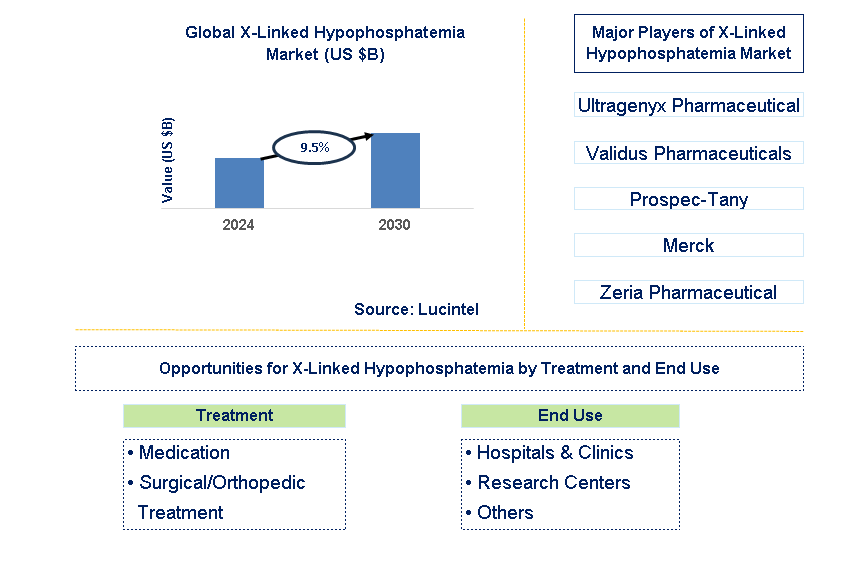
Key data points: The growth forecast = 9.5% annually for the next 6 years. Scroll below to get more insights. This market report covers trends, opportunities, and forecasts in the global x-linked hypophosphatemia market to 2030 by treatment (medication and surgical/orthopedic treatment), end use (hospitals & clinics, research centers, and others), and region (North America, Europe, Asia Pacific, and the Rest of the World)
We'll send your sample report shortly.
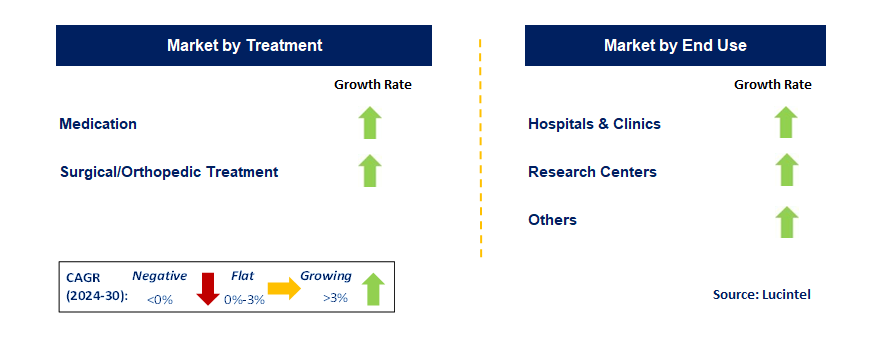
• Lucintel forecasts that, within the treatment category, medication segment is expected to witness higher growth over the forecast period.
• Within the end use category, research center will remain larger segment over the forecast period.
• In terms of regions, North America will remain the largest region over the forecast period. Gain valuable insights for your business decissions with our comprehensive 150+ page report.
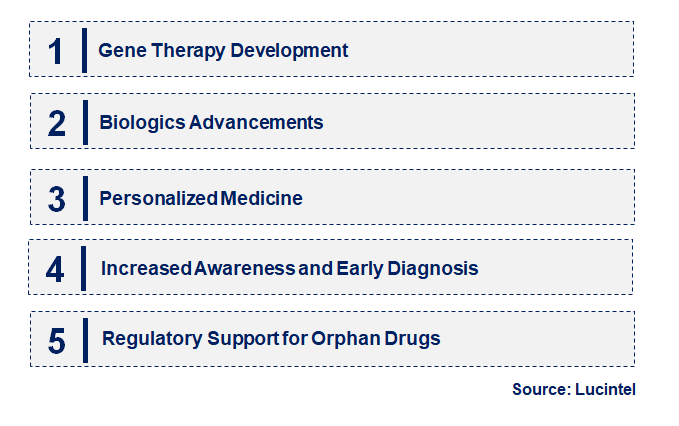
• Gene Therapy Development: Ongoing research into gene therapy for XLH offers a potential long-term solution to correct the genetic mutations causing the disease. This trend is gaining momentum, with several promising clinical trials underway, representing a major breakthrough in treatment approaches.
• Biologics Advancements: The rise of biologic therapies, particularly burosumab, is revolutionizing XLH treatment. These advanced treatments target the root cause of the disease by regulating phosphate metabolism, significantly improving patients' quality of life and providing new hope for long-term management.
• Personalized Medicine: The shift towards personalized medicine in the XLH market is allowing more tailored treatment plans based on individual patient needs and genetic profiles. This trend is improving therapeutic outcomes by ensuring that treatments are more effective and have fewer side effects.
• Increased Awareness and Early Diagnosis: Global awareness campaigns are enhancing early diagnosis rates for XLH, leading to timely interventions and better patient outcomes. This trend is crucial in preventing the severe skeletal deformities associated with the disease through early treatment.
• Regulatory Support for Orphan Drugs: Governments worldwide are offering incentives for the development of orphan drugs for rare diseases like XLH. This trend is encouraging pharmaceutical companies to invest in research and development, leading to more innovative therapies entering the market. These trends are reshaping the XLH market by advancing therapeutic options, improving patient care, and fostering innovation in disease management.
• Approval of Burosumab: The approval of burosumab (Crysvita) in multiple regions has been a game-changer for XLH treatment, providing patients with a targeted therapy that addresses phosphate regulation, significantly improving quality of life.
• Expansion of Clinical Trials: Global clinical trials focusing on gene therapy and other innovative treatments for XLH are expanding. These trials are essential for advancing the development of long-term therapeutic solutions for the disease, offering hope for a potential cure.
• Collaboration Between Pharma and Academia: Increased collaboration between pharmaceutical companies and academic research institutions is driving innovation in XLH treatment. These partnerships are accelerating the discovery of novel therapies and enhancing research efforts into the genetic basis of the disease.
• Government Support for Rare Diseases: Governments in regions like China and Japan are providing strong support for rare disease treatment initiatives, including funding for research and fast-tracking drug approvals. This development is improving access to advanced treatments for XLH patients.
• Patient Advocacy and Awareness Campaigns: The rise of patient advocacy groups and global awareness campaigns has led to better understanding and early diagnosis of XLH. These initiatives are helping to reduce the stigma around rare diseases and improve patient access to care. These developments are driving significant progress in the XLH market, enhancing treatment availability and improving outcomes for patients worldwide.
• Gene Therapy: Gene therapy represents a transformative growth opportunity in the XLH market. Ongoing research into correcting the genetic mutation responsible for the disease could offer a long-term solution, providing potential curative treatments and significantly changing the treatment landscape.
• Pediatric Care: Early intervention in pediatric patients presents a critical growth area. New therapies targeting children with XLH are being developed to prevent skeletal deformities and improve long-term outcomes, offering an opportunity for better quality of life through early-stage treatments.
• Orthopedic Treatments: The need for orthopedic interventions in XLH patients due to bone deformities offers a significant growth opportunity. As advanced therapies improve phosphate regulation, the demand for specialized orthopedic care, including surgery and physical therapy, is expected to rise.
• Home-Based Care: The trend towards home-based treatment for XLH, such as self-administered therapies like burosumab injections, presents an opportunity for growth in home healthcare solutions. This shift allows patients to manage their condition conveniently, improving adherence and outcomes.
• Telemedicine Solutions: Telemedicine is emerging as a key growth opportunity in managing XLH, especially in remote areas. By providing virtual consultations and monitoring, telemedicine can bridge the gap in care access, ensuring that patients receive timely and effective treatment. These growth opportunities are driving innovation and expanding the market for XLH treatments, improving patient outcomes and accessibility to care.
• Advances in Biologic Therapies: The development of biologic treatments like burosumab has revolutionized the XLH market by offering targeted solutions for managing phosphate metabolism, leading to better patient outcomes.
• Growing Awareness of Rare Diseases: Increased awareness of XLH and other rare diseases is driving early diagnosis and treatment, contributing to the market's expansion.
• Support for Orphan Drug Development: Regulatory incentives, including tax breaks and fast-tracking approvals for orphan drugs, are encouraging pharmaceutical companies to invest in XLH treatment development.
• Technological Innovation in Gene Therapy: The ongoing advancement of gene therapy is a major driver, as researchers aim to develop curative treatments for XLH by correcting the genetic mutation that causes the disease.
• Increased Collaboration Between Stakeholders: Partnerships between pharmaceutical companies, academic researchers, and patient advocacy groups are accelerating therapeutic advancements and expanding treatment access. Challenges in the X-linked hypophosphatemia market are:
• High Treatment Costs: The cost of advanced therapies for XLH, including biologics and potential gene therapies, remains a significant challenge, limiting access for many patients.
• Limited Access to Specialized Care: In many regions, access to specialized care for rare diseases like XLH is limited, creating disparities in treatment availability and patient outcomes.
• Regulatory Hurdles: Navigating the complex regulatory approval process for rare disease treatments can delay the availability of new therapies in key markets, slowing market growth. In conclusion, while technological innovations and regulatory support are driving growth in the XLH market, challenges such as high treatment costs and limited access to care continue to impede progress. The market's future depends on overcoming these obstacles while leveraging key drivers for further expansion.
• Ultragenyx Pharmaceutical
• Validus Pharmaceuticals
• ProSpec-Tany Technogene
• Merck
• Zeria Pharmaceutical
• Smith & Nephew
• Narang Medical
• Medication
• Surgical/Orthopedic Treatment
• Hospitals & Clinics
• Research Centers
• Others
• North America
• Europe
• Asia Pacific
• The Rest of the World
• United States: In the U.S., the approval of novel therapies such as burosumab (Crysvita) has significantly impacted the XLH market. Ongoing research into gene therapies is also gaining momentum, with clinical trials exploring long-term solutions for managing the condition.
• China: China has increased its focus on rare disease treatments, with growing investments in XLH research and clinical trials. Government support for orphan drug development is driving local pharmaceutical companies to explore innovative therapies, improving treatment access in the country.
• Germany: In Germany, advancements in early diagnosis and the availability of cutting-edge treatments, including recombinant therapies, have improved patient care. Collaborative research efforts with leading European institutions are fostering innovation in therapeutic development for XLH.
• India: India's XLH market is evolving, with increased awareness of rare diseases leading to better diagnosis rates. The country has seen a rise in partnerships between local pharmaceutical firms and global companies to bring advanced therapies to market, expanding treatment options.
• Japan: Japan has made significant strides in expanding access to XLH treatments, with government-supported initiatives promoting early diagnosis and therapy coverage. The adoption of burosumab has been a key development, offering patients an effective treatment option for managing the disease.


• Ultragenyx Pharmaceutical
• Validus Pharmaceuticals
• ProSpec-Tany Technogene
• Merck
• Zeria Pharmaceutical
• Smith & Nephew
• Narang Medical Q5. Which x-linked hypophosphatemia market segment will be the largest in future? Answer: Lucintel forecasts that medication segment is expected to witness higher growth over the forecast period. Q6. In x-linked hypophosphatemia market, which region is expected to be the largest in next 6 years? Answer: In terms of regions, North America will remain the largest region over the forecast period. Q.7 Do we receive customization in this report? Answer: Yes, Lucintel provides 10% customization without any additional cost.


Choose a license that fits your team. Instant PDF delivery.
Prices exclude taxes. Instant delivery. Custom licensing available on request.
Market Report · July 31, 2026
Market Report · July 31, 2026
Market Report · July 31, 2026
Trusted partner for strategic intelligence and business growth


Receive a complimentary market analysis tailored to your industry. Our analysts will identify key growth opportunities and competitive dynamics specific to your business.

Market size, growth rate, and key trend analysis for your specific sector.

Top competitor positioning and market share analysis.

Strategic recommendations backed by data-driven insights.
Get curated market intelligence and competitive moves straight to your inbox.
By subscribing, you agree to receive our monthly insights. Unsubscribe anytime.
Receive a complimentary market analysis tailored to your industry. Our analysts will identify key growth opportunities and competitive dynamics specific to your business.
Market size, growth rate, and key trend analysis for your specific sector.
Top competitor positioning and market share analysis.
Strategic recommendations backed by data-driven insights.
Get curated market intelligence, emerging trends, and competitive moves straight to your inbox each month.
By subscribing, you agree to receive our monthly insights. Unsubscribe anytime.
We'll send your sample report shortly.