
Market Report · July 20, 2026

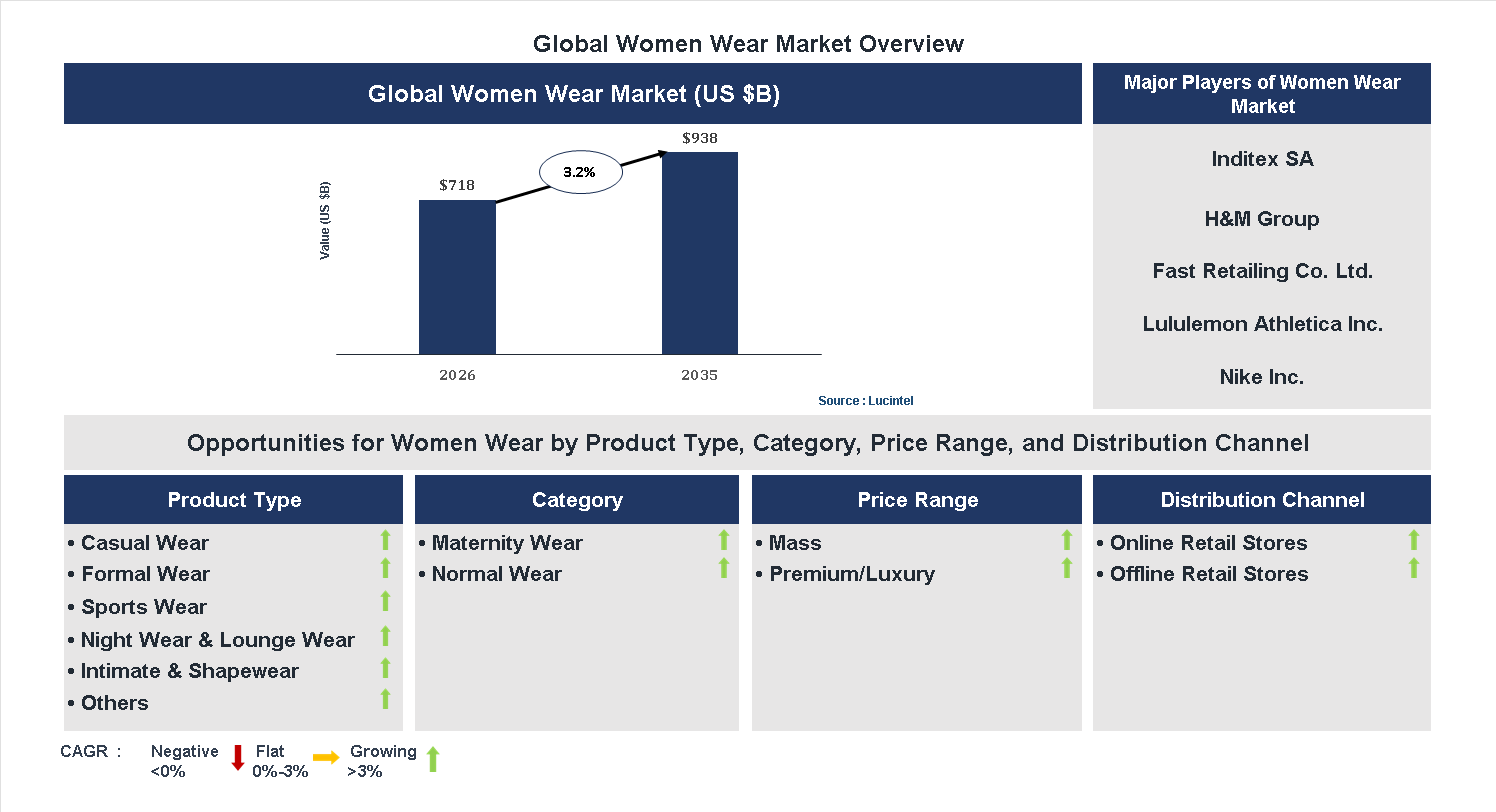
Key data points: The market size in 2035 = $938 billion, growth forecast = 3.2% annually for the next 8 years. Scroll below to get more insights. This market report covers trends, opportunities and forecasts in women wear market to 2035 by product type (casual wear, formal wear, sports wear, night wear & lounge wear, intimate & shapewear, and others), category (maternity wear and normal wear), price range (mass and premium/luxury), distribution channel (online retail stores and offline retail stores), and region (North America, Europe, Asia Pacific, and the Rest of the World)
We'll send your sample report shortly.
• Lucintel forecasts that, within the product type category, sports wear is expected to witness the highest growth over the forecast period.
• Within the distribution channel category, offline retail store is expected to witness higher growth.
• In terms of region, APAC is expected to witness the highest growth over the forecast period. Gain valuable insights for your business decisions with our comprehensive 150+ page report. Sample figures with some insights are shown below.
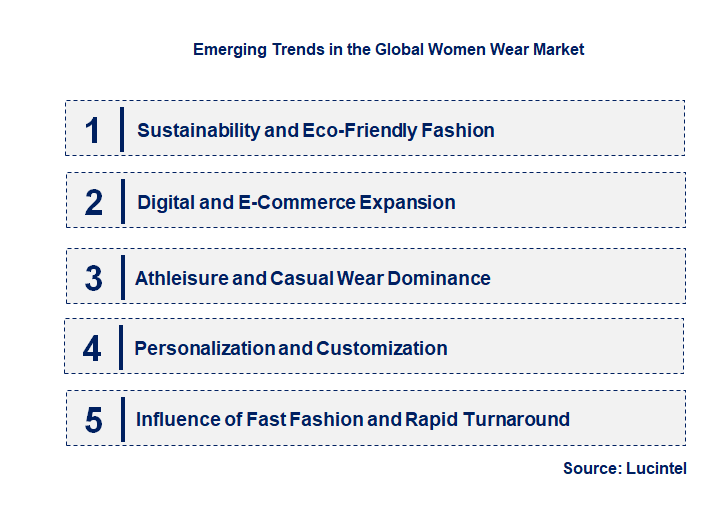
• Sustainability and Eco-Friendly Fashion : Growing consumer awareness about environmental issues is pushing brands to adopt sustainable practices. This includes using organic fabrics, reducing waste, and implementing ethical manufacturing processes. The demand for eco-friendly women’s wear is increasing, influencing product development and marketing strategies. Brands that prioritize sustainability are gaining a competitive edge, appealing to environmentally conscious consumers. This trend is reshaping supply chains and encouraging innovation in sustainable textiles, ultimately fostering a more responsible fashion industry.
• Digital and E-Commerce Expansion : The proliferation of online shopping platforms has transformed how women purchase apparel. E-commerce offers convenience, wider product choices, and personalized shopping experiences through AI and data analytics. Social media influencers and digital marketing are driving brand visibility and consumer engagement. This trend has led to the decline of traditional brick-and-mortar stores and increased direct-to-consumer sales. Companies investing in robust digital infrastructure are better positioned to capture market share, making e-commerce a central pillar of growth in the women wear market.
• Athleisure and Casual Wear Dominance : The shift towards comfort and versatility has popularized athleisure and casual wear among women. This segment now accounts for a significant portion of market sales, driven by lifestyle changes and health consciousness. Brands are innovating with performance fabrics and stylish designs to meet demand. The trend is blurring the lines between sportswear and everyday fashion, encouraging more frequent purchases. As work-from-home arrangements persist, casual and athleisure apparel continue to grow, influencing product offerings and marketing strategies across the industry.
• Personalization and Customization : Consumers are seeking unique, tailored fashion experiences. Brands are leveraging technology to offer customized products, from personalized fits to bespoke designs. This trend enhances customer engagement and loyalty, allowing brands to differentiate themselves in a competitive market. The rise of on-demand manufacturing and digital customization tools is making personalized fashion more accessible. As a result, the market is shifting towards more consumer-centric approaches, fostering innovation and creating new revenue streams for brands that embrace customization.
• Influence of Fast Fashion and Rapid Turnaround : Fast fashion continues to dominate with its ability to quickly translate runway trends into affordable apparel. This trend accelerates product cycles, enabling brands to respond swiftly to changing consumer preferences. The emphasis on rapid turnaround times increases market responsiveness but also raises concerns about sustainability and ethical practices. Brands that excel in supply chain agility can capitalize on trend cycles and boost sales. However, this trend is prompting a reevaluation of sustainability standards and pushing the industry towards more responsible practices. These trends are fundamentally reshaping the women wear market by emphasizing sustainability, digital innovation, comfort, personalization, and rapid trend adaptation. They are driving brands to rethink their strategies, adopt new technologies, and prioritize consumer preferences, ultimately creating a more dynamic, responsible, and customer-centric industry landscape.
• Sustainable Fashion Initiatives: Emphasis on eco-friendly materials and ethical production methods is gaining momentum, leading to increased consumer demand for sustainable women’s wear. Brands adopting green practices are enhancing their brand image and attracting environmentally conscious customers. This shift is also encouraging innovation in biodegradable fabrics and recycled textiles, which reduces environmental impact. The focus on sustainability is driving market growth, fostering brand loyalty, and opening new segments for eco-conscious consumers.
• E-Commerce Expansion and Digital Platforms: The rise of online shopping platforms has revolutionized how women’s wear is marketed and sold. E-commerce offers wider reach, personalized shopping experiences, and convenience, attracting a broader customer base. Digital marketing strategies, including social media and influencer collaborations, are boosting brand visibility. The growth of online sales channels is enabling brands to reduce costs and increase sales volume, significantly impacting overall market dynamics and consumer engagement.
• Customization and Personalization Trends: Consumers increasingly seek personalized fashion options that reflect their individual style. Advances in technology, such as AI and 3D printing, facilitate customized designs and fits. Brands offering bespoke services are gaining competitive advantage by enhancing customer satisfaction and loyalty. This trend is also encouraging innovation in product development, allowing for more diverse and inclusive sizing options. Personalization is thus transforming the market into a more customer-centric industry, fostering deeper brand connections.
• Inclusivity and Diversity in Fashion: The industry is shifting towards more inclusive sizing, diverse models, and representation of different cultures and body types. This movement broadens market appeal and addresses previously underserved segments. Brands embracing diversity are experiencing increased customer loyalty and positive brand perception. The focus on inclusivity is also influencing design choices, making fashion more accessible and representative. This development is expanding market reach and fostering a more equitable industry landscape.
• Technological Innovations in Fabric and Design: New materials and design technologies are enhancing comfort, durability, and aesthetic appeal of women’s wear. Smart fabrics with moisture-wicking, anti-odor, and temperature-regulating properties are gaining popularity. 3D knitting and digital patterning are streamlining production processes and enabling rapid prototyping. These innovations improve product quality and reduce waste, driving market growth. They also enable brands to offer cutting-edge, functional fashion that meets modern consumer needs, positioning the industry at the forefront of technological advancement. The overall impact of these developments is a more dynamic, sustainable, and consumer-focused women wear market. Increased innovation, digital integration, and inclusivity are expanding market opportunities and enhancing customer engagement. These trends are fostering growth, improving brand loyalty, and encouraging industry-wide sustainability efforts, ultimately shaping a more competitive and responsible market landscape.
• E-commerce Expansion Enhances Accessibility and Reach: The growth of online shopping platforms has revolutionized women’s fashion retail, enabling brands to reach global audiences efficiently. E-commerce offers convenience, personalized shopping experiences, and a broader product range, attracting tech-savvy consumers. As internet penetration increases and digital payment methods become more secure, online sales are expected to surge, providing brands with opportunities to expand their customer base, reduce overhead costs, and gather valuable consumer data for targeted marketing.
• Sustainable and Ethical Fashion Gains Consumer Preference: Increasing awareness of environmental and social issues is driving demand for sustainable women’s wear. Consumers are seeking eco-friendly fabrics, ethical manufacturing practices, and transparent supply chains. Brands adopting sustainable practices can differentiate themselves and build brand loyalty. The shift towards eco-conscious fashion also encourages innovation in biodegradable materials and circular economy models, opening new market segments and fostering long-term growth aligned with global sustainability goals.
• Fast Fashion Continues to Dominate with Rapid Turnaround: The fast fashion segment remains a significant growth driver by offering trendy, affordable women’s wear with quick turnaround times from design to retail. Consumers, especially younger demographics, prefer constantly updated collections that reflect current trends. Brands leveraging agile supply chains and digital design tools can capitalize on this demand, increasing sales volume and market share. However, balancing fast fashion with sustainability concerns is crucial for long-term success.
• Customization and Personalization Drive Consumer Engagement: Personalized fashion options are increasingly influencing purchasing decisions. Brands offering customization—such as tailored fits, personalized prints, or bespoke designs—can foster stronger customer loyalty and differentiate themselves in a competitive market. Advances in digital printing, AI, and data analytics facilitate personalized shopping experiences. This trend caters to consumers’ desire for unique, expressive clothing, creating opportunities for niche brands and premium segments to thrive.
• Athleisure and Comfort Wear Expand Market Horizons: The athleisure segment continues to grow as consumers prioritize comfort without sacrificing style. The blending of sportswear with everyday fashion appeals to a broad demographic, including working professionals and fitness enthusiasts. Innovations in fabric technology, such as moisture-wicking and stretch materials, enhance product appeal. Brands investing in stylish, functional, and versatile women’s activewear can tap into this expanding market, driven by health consciousness and lifestyle shifts emphasizing wellness and comfort. These strategic growth opportunities are shaping the women wear market by fostering innovation, sustainability, and consumer-centric approaches. Embracing digital transformation, ethical practices, and evolving fashion trends will enable brands to capitalize on emerging demand, ensuring sustained growth and competitive advantage in a dynamic industry landscape.
• Technological Innovation: The integration of advanced manufacturing techniques, such as 3D printing and AI-driven design, has enabled brands to create customized, trend-responsive products efficiently. E-commerce platforms and mobile shopping apps have expanded reach, providing consumers with seamless shopping experiences. Virtual fitting rooms and augmented reality tools enhance customer engagement, reducing return rates and increasing satisfaction. These technological advancements lower entry barriers for new entrants and foster innovation, ultimately driving market growth by meeting evolving consumer demands for personalized and convenient shopping options.
• Changing Consumer Preferences: Modern women increasingly seek fashion that reflects their individuality, comfort, and sustainability concerns. The rising popularity of athleisure, eco-friendly fabrics, and inclusive sizing demonstrates a shift towards more diverse and conscious consumption. Social media influencers and fashion bloggers significantly influence trends, accelerating the adoption of new styles. Consumers are also prioritizing quality and durability over fast fashion, prompting brands to innovate with sustainable materials and ethical production practices. These evolving preferences compel brands to adapt quickly, fueling innovation and expanding market segments.
• Economic Growth and Disposable Income: Economic stability and growth in key markets boost consumers’ purchasing power, enabling higher expenditure on women’s apparel. Rising disposable incomes in emerging economies like India and Southeast Asia have opened new avenues for market expansion. Additionally, economic recovery post-pandemic has increased consumer confidence, leading to higher spending on fashion and lifestyle products. Brands are capitalizing on this trend by launching premium and luxury collections, which further stimulate market growth. The overall economic environment thus plays a crucial role in shaping demand and investment strategies within the women wear industry.
• Global Supply Chain Optimization: Advances in logistics, manufacturing, and sourcing have streamlined supply chains, reducing costs and lead times. Countries specializing in textiles and apparel manufacturing, such as Bangladesh and Vietnam, benefit from favorable trade agreements and infrastructure improvements. Digital supply chain management tools enable better inventory control and demand forecasting, minimizing waste and overproduction. This efficiency allows brands to offer competitive pricing and rapid product launches, meeting consumer expectations for fast fashion and timely availability. Optimized supply chains are vital for maintaining profitability and agility in a highly competitive market.
• Sustainability and Ethical Practices: Growing awareness of environmental and social issues has driven demand for sustainable fashion. Brands adopting eco-friendly materials, transparent supply chains, and fair labor practices appeal to ethically conscious consumers. Regulations and certifications, such as GOTS and Fair Trade, encourage industry-wide compliance. Sustainability initiatives also foster innovation in biodegradable fabrics and recycling techniques. While these practices enhance brand reputation and customer loyalty, they often involve higher costs and complex logistics. Embracing sustainability is thus both a driver of differentiation and a challenge requiring strategic investment. The challenges facing the women wear market include:
• Regulatory and Compliance Pressures: Increasing regulations related to environmental standards, labor rights, and import-export policies pose significant hurdles. Compliance costs can be substantial, especially for small and medium-sized enterprises, impacting profitability. Variations across regions require brands to adapt their operations and supply chains, complicating international expansion. Non-compliance risks legal penalties, reputational damage, and market restrictions. Navigating these regulatory landscapes demands continuous monitoring and investment in compliance infrastructure, which can divert resources from core innovation and marketing efforts.
• Rapidly Changing Fashion Trends: The fast-paced nature of fashion trends creates pressure on brands to innovate constantly and reduce time-to-market. Failure to anticipate or respond swiftly can lead to excess inventory and financial losses. The proliferation of social media accelerates trend cycles, demanding real-time agility from companies. Smaller brands may struggle with resource constraints, while larger players face challenges in maintaining supply chain flexibility. This volatility necessitates significant investment in trend forecasting, agile manufacturing, and inventory management systems, increasing operational complexity.
• Economic Uncertainty and Market Volatility: Fluctuations in global economic conditions, such as inflation, currency fluctuations, and geopolitical tensions, impact consumer spending and supply chain stability. Economic downturns reduce discretionary spending, leading to decreased sales and increased discounting. Uncertainty hampers investment in new product lines and expansion plans. Additionally, rising raw material costs and transportation expenses squeeze profit margins. Companies must develop resilient strategies, diversify sourcing, and manage inventory prudently to mitigate risks associated with economic volatility, which remains a persistent challenge in maintaining steady growth. The women wear market is shaped by technological innovations, shifting consumer preferences, economic factors, supply chain efficiencies, and sustainability initiatives. While these drivers foster growth and innovation, challenges such as regulatory compliance, trend volatility, and economic uncertainties pose risks that require strategic agility. The overall impact is a dynamic, competitive landscape where adaptability and forward-thinking are essential for sustained success. Stakeholders must balance innovation with compliance and resilience to capitalize on emerging opportunities while navigating ongoing challenges.
• Inditex SA
• H&M Group
• Fast Retailing Co. Ltd.
• Lululemon Athletica Inc.
• Nike Inc.
• Adidas AG
• PVH Corp.
• Gap Inc.
• Shein Group Ltd.
• Boohoo Group PLC
• Casual Wear
• Formal Wear
• Sports Wear
• Night Wear & Lounge Wear
• Intimate & Shapewear
• Others
• Maternity Wear
• Normal Wear
• Mass
• Premium/Luxury
• Online Retail Stores
• Offline Retail Stores
• North America
• Europe
• Asia Pacific
• The Rest of the World
• United States: The US women wear market has seen a surge in sustainable fashion, with brands adopting eco-friendly materials and transparent supply chains. E-commerce platforms continue to grow, driven by technological integration and personalized shopping experiences. Athleisure remains dominant, blending comfort with style, while direct-to-consumer brands gain popularity. Additionally, there is a rising trend in inclusive sizing and gender-neutral collections, reflecting broader social shifts. Major retailers are investing in digital innovations like virtual fitting rooms to enhance customer engagement.
• China: China’s women wear market is rapidly expanding, fueled by a burgeoning middle class and increasing online shopping penetration. Local brands are gaining prominence through innovative designs and competitive pricing, often blending traditional aesthetics with modern trends. The adoption of live-streaming sales and social commerce has revolutionized retail, making instant purchasing commonplace. Sustainability initiatives are emerging, with brands exploring eco-friendly fabrics and ethical production. Fast fashion continues to thrive, but there is a growing segment focused on premium and luxury segments targeting affluent consumers.
• Germany: The German women wear market emphasizes quality, durability, and sustainability. Many brands are integrating eco-conscious materials and transparent supply chains to appeal to environmentally aware consumers. Digital transformation is evident through the expansion of online retail and virtual fitting solutions. There is a notable focus on minimalist and functional designs, aligning with European fashion sensibilities. The market also sees increased interest in ethical production practices and circular fashion initiatives, promoting reuse and recycling of garments. Retailers are investing in omnichannel strategies to enhance customer experience.
• India: India’s women wear market is experiencing rapid growth driven by urbanization, rising disposable incomes, and changing fashion preferences. Traditional textiles and craftsmanship are being integrated into contemporary designs, creating a unique fusion appeal. E-commerce platforms are expanding rapidly, making fashion more accessible across tier 2 and tier 3 cities. The market is witnessing increased demand for affordable, trendy apparel, along with a rising interest in sustainable and organic fabrics. Local brands are expanding their reach through digital marketing and collaborations with influencers. There is also a growing segment of premium and designer wear targeting affluent consumers.
• Japan: The Japanese women wear market is characterized by a focus on innovative, high-quality, and functional fashion. Minimalist and sophisticated styles remain popular, with an emphasis on comfort and practicality. The market is embracing technological advancements such as smart textiles and wearable tech. Sustainability is gaining importance, with brands adopting eco-friendly materials and production methods. The influence of street fashion and subcultures continues to shape trends, while online retail and personalized shopping experiences grow in prominence. Japanese brands are also exploring international markets, leveraging their reputation for craftsmanship and design excellence.


• Inditex SA
• H&M Group
• Fast Retailing Co. Ltd.
• Lululemon Athletica Inc.
• Nike Inc.
• Adidas AG
• PVH Corp.
• Gap Inc.
• Shein Group Ltd.
• Boohoo Group PLC Q6. Which women wear market segment will be the largest in future? Answer: Lucintel forecasts that, within the product type category, sports wear is expected to witness the highest growth over the forecast period. Q7. In women wear market, which region is expected to be the largest in next 5 years? Answer: In terms of region, APAC is expected to witness the highest growth over the forecast period. Q8. Do we receive customization in this report? Answer: Yes, Lucintel provides 10% customization without any additional cost.


Choose a license that fits your team. Instant PDF delivery.
Prices exclude taxes. Instant delivery. Custom licensing available on request.
Market Report · July 20, 2026
Market Report · July 15, 2026
Market Report · July 15, 2026
Trusted partner for strategic intelligence and business growth


Receive a complimentary market analysis tailored to your industry. Our analysts will identify key growth opportunities and competitive dynamics specific to your business.

Market size, growth rate, and key trend analysis for your specific sector.

Top competitor positioning and market share analysis.

Strategic recommendations backed by data-driven insights.
Get curated market intelligence and competitive moves straight to your inbox.
By subscribing, you agree to receive our monthly insights. Unsubscribe anytime.
Receive a complimentary market analysis tailored to your industry. Our analysts will identify key growth opportunities and competitive dynamics specific to your business.
Market size, growth rate, and key trend analysis for your specific sector.
Top competitor positioning and market share analysis.
Strategic recommendations backed by data-driven insights.
Get curated market intelligence, emerging trends, and competitive moves straight to your inbox each month.
By subscribing, you agree to receive our monthly insights. Unsubscribe anytime.
We'll send your sample report shortly.