
Country Research · May 18, 2026

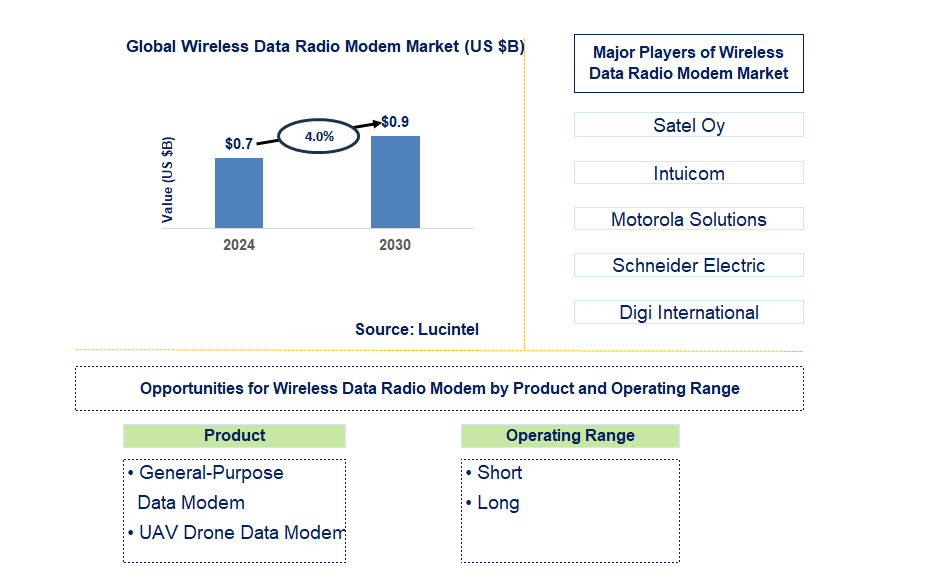
Key data points: The market size in 2030 = $0.92 billion, growth forecast = 4.0% annually for the next 6 years. Scroll below to get more insights. This market report covers trends, opportunities, and forecasts in the global wireless data radio modem market to 2030 by product (general-purpose data modem and UAV drone data modem), operating range (short and long), and region (North America, Europe, Asia Pacific, and the Rest of the World)
We'll send your sample report shortly.
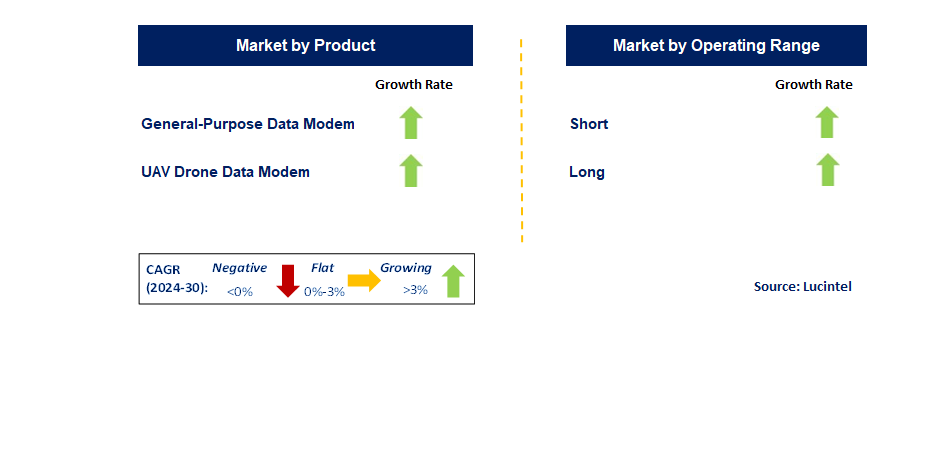
• Lucintel forecasts that, within the operating range category, long range will remain the larger segment over the forecast period as it provides extended line-of-sight (LOS) coverage.
• Within the product category, general-purpose data modem will remain the larger segment due to rising need for low infrastructure for facilitating communication and allowing the delivery of data in cost effective way.
• In terms of regions, APAC is expected to witness highest growth over the forecast period due to growth of industrialization. Gain valuable insights for your business decisions with our comprehensive 150+ page report.
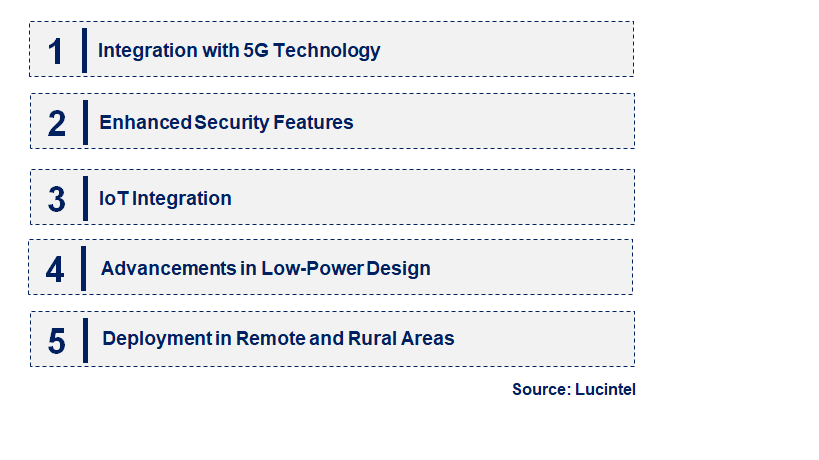
• Integration with 5G Technology: Wireless data radio modems are increasingly being integrated with 5G technology to enhance data transmission speeds and reduce latency. This integration supports high-speed connectivity, which is crucial for applications like autonomous vehicles, smart cities, and industrial automation. The ability to handle large volumes of data and support high-frequency bands improves overall performance and reliability. The adoption of 5G is driving innovations in modem design, enabling seamless and rapid communication across various sectors.
• Enhanced Security Features: With the rise in cyber threats, there is a growing emphasis on incorporating advanced security features into wireless data radio modems. Modern modems are equipped with encryption protocols, secure authentication mechanisms, and real-time threat detection capabilities to protect data integrity and confidentiality. Enhanced security measures are critical for applications in sensitive areas such as healthcare, finance, and critical infrastructure, where data protection is paramount.
• IoT Integration: The integration of wireless data radio modems with Internet of Things (IoT) devices is expanding market opportunities. These modems facilitate reliable communication between IoT devices, enabling real-time data transfer and remote monitoring. Applications in smart homes, industrial automation, and agriculture benefit from this trend, as it enhances connectivity and data exchange across diverse IoT ecosystems. The growth of IoT is driving demand for modems that support various communication protocols and standards.
• Advancements in Low-Power Design: There is a notable trend towards developing low-power wireless data radio modems that are energy-efficient and suitable for battery-operated devices. These advancements are driven by the need for longer battery life in remote and portable applications, such as environmental monitoring and wearable technology. Low-power designs reduce operational costs and extend device longevity, making them ideal for applications where power efficiency is critical.
• Deployment in Remote and Rural Areas: Wireless data radio modems are increasingly being deployed in remote and rural areas to improve connectivity and bridge the digital divide. This trend is supported by government initiatives and technological advancements that facilitate cost-effective deployment of communication infrastructure. Enhancing connectivity in underserved regions opens up new market opportunities and supports digital inclusion by providing access to internet services and applications that were previously unavailable. These emerging trends in the wireless data radio modem market highlight a shift towards higher speeds, improved security, and broader applications. The integration with 5G, enhanced security features, IoT support, low-power designs, and expansion into remote areas are reshaping the landscape of wireless communication. These developments are driving market growth, addressing evolving needs, and supporting the advancement of various industries reliant on robust and reliable wireless data transmission.
• Integration with 5G Networks: The integration of wireless data radio modems with 5G networks represents a significant development. This advancement enables higher data transfer speeds, lower latency, and increased network capacity. The enhanced performance of 5G modems supports applications requiring high-speed data, such as real-time video streaming, autonomous vehicles, and advanced industrial automation. By leveraging the benefits of 5G, these modems improve connectivity and operational efficiency, addressing the growing demand for faster and more reliable wireless communication.
• Enhanced Security Features: Recent advancements include the incorporation of advanced security features into wireless data radio modems. Enhanced encryption protocols, secure authentication methods, and real-time threat detection mechanisms are now standard in many modems. These features are crucial for protecting sensitive data and ensuring secure communication, particularly in sectors such as healthcare, finance, and critical infrastructure. Improved security measures help mitigate risks associated with data breaches and cyberattacks, reinforcing trust in wireless communication systems.
• Development of Low-Power Modems: The market is witnessing the development of low-power wireless data radio modems designed for energy efficiency. These modems are crucial for battery-operated and remote applications, where minimizing power consumption extends device life and reduces operational costs. Innovations in low-power technology cater to applications in environmental monitoring, wearable devices, and remote sensing, where energy efficiency is a key consideration. These advancements contribute to more sustainable and cost-effective solutions in wireless communication.
• Expansion into IoT Applications: Wireless data radio modems are increasingly being adapted for Internet of Things (IoT) applications. This development enhances connectivity between a wide range of IoT devices, enabling seamless data transfer and remote monitoring. Modems designed for IoT applications support various communication protocols and standards, facilitating integration with smart home systems, industrial automation, and agriculture. The growth of IoT drives demand for versatile and reliable modems that can handle diverse and interconnected device networks.
• Deployment in Remote and Rural Areas: There is a growing focus on deploying wireless data radio modems in remote and rural areas to improve connectivity. This development is driven by the need to bridge the digital divide and provide internet access to underserved regions. Recent initiatives and technological advancements have made it more feasible to deploy communication infrastructure in these areas, enhancing access to online services and applications. Improved connectivity in remote regions supports digital inclusion and fosters economic development by providing essential communication services. These recent developments in the wireless data radio modem market illustrate a trend toward higher performance, enhanced security, and broader applications. Integration with 5G, advanced security features, low-power designs, IoT compatibility, and expansion into remote areas are transforming the market landscape. These innovations not only address current demands but also pave the way for future advancements, ensuring that wireless data communication continues to evolve and meet the needs of a connected world.
• Industrial Automation: The growth of industrial automation presents a significant opportunity for wireless data radio modems. In manufacturing and process control, these modems enable real-time data transmission and equipment monitoring, enhancing operational efficiency and predictive maintenance. Advanced modems can support high-speed communication, low latency, and secure data exchange, which are crucial for automated systems. The integration of modems with IoT platforms and Industry 4.0 initiatives further drives demand, facilitating seamless connectivity and advanced analytics in industrial environments.
• Smart Agriculture: Wireless data radio modems are increasingly used in smart agriculture to improve efficiency and productivity. They enable remote monitoring and control of agricultural equipment, soil conditions, and crop health through IoT devices and sensors. Modems facilitate data transmission from various sensors to central systems, allowing farmers to make informed decisions and optimize resource use. This growth opportunity aligns with the push toward precision agriculture and sustainable farming practices, addressing the need for reliable communication in diverse and challenging environments.
• Smart Cities: The development of smart cities creates substantial growth opportunities for wireless data radio modems. These modems support a wide range of smart city applications, including traffic management, public safety, and environmental monitoring. They enable real-time data collection and communication between sensors, cameras, and central systems, enhancing urban infrastructure and services. By improving connectivity and data exchange, modems contribute to smarter, more efficient city management and infrastructure, aligning with global trends toward urbanization and digital transformation.
• Remote Sensing: In remote sensing applications, wireless data radio modems are essential for transmitting data from sensors and devices in inaccessible or harsh environments. These modems support applications such as environmental monitoring, disaster management, and resource exploration. They enable reliable communication over long distances and in challenging conditions, facilitating real-time data collection and analysis. The increasing focus on environmental protection and resource management drives demand for modems capable of robust performance in remote and rugged locations.
• Public Safety and Emergency Services: Wireless data radio modems play a crucial role in enhancing public safety and emergency services. They enable reliable communication between first responders, command centers, and other emergency personnel, supporting critical operations and coordination during incidents. Advanced modems can provide secure, high-bandwidth communication in challenging conditions, improving situational awareness and response times. The growing emphasis on disaster preparedness and emergency management drives the need for dependable and resilient communication solutions in this sector. The strategic growth opportunities in the wireless data radio modem market span various applications, including industrial automation, smart agriculture, smart cities, remote sensing, and public safety. Each application highlights the potential for innovation and expansion, driven by advancements in technology and increasing connectivity demands. By leveraging these opportunities, the market can address evolving needs and contribute to improved efficiency, productivity, and safety across diverse sectors.
• Technological Advancements: Ongoing innovations in wireless communication technologies significantly drive the wireless data radio modem market. Advances in radio frequency (RF) technologies, data transmission speeds, and integration with Internet of Things (IoT) platforms enhance modem performance and capabilities. Improved signal processing, reduced latency, and increased bandwidth contribute to more reliable and efficient communication solutions. These advancements enable modems to support complex applications across various industries, driving market growth as demand for high-performance communication solutions continues to rise.
• Growth of IoT and Smart Applications: The proliferation of IoT devices and smart applications fuels the demand for wireless data radio modems. As IoT systems become more prevalent in industries such as manufacturing, agriculture, and smart cities, the need for reliable, high-speed communication solutions grows. Modems are essential for connecting sensors, devices, and systems, enabling real-time data exchange and analytics. This trend drives the market by expanding the range of applications and increasing the demand for advanced modems that can handle diverse and high-volume data transmissions.
• Expansion of Industrial Automation: The rise of industrial automation is a key driver for the wireless data radio modem market. Automated systems and processes require robust communication infrastructure to ensure seamless data transfer between machines, control systems, and operators. Wireless data radio modems facilitate real-time monitoring, control, and data collection, enhancing operational efficiency and reducing downtime. The increasing adoption of automation in industries such as manufacturing, logistics, and energy drives the need for reliable and high-performance modems, supporting market growth.
• Increased Demand for Remote Monitoring: Remote monitoring applications are driving the demand for wireless data radio modems, particularly in sectors such as environmental monitoring, resource management, and infrastructure maintenance. The ability to collect and transmit data from remote or challenging locations without the need for extensive cabling or physical infrastructure is crucial. Modems enable real-time data transmission and analysis, supporting decision-making and operational efficiency in remote areas. This trend contributes to market growth by expanding the range of applications for wireless modems.
• Growing Focus on Public Safety and Emergency Services: The emphasis on enhancing public safety and emergency services is driving the adoption of wireless data radio modems. These modems provide reliable, secure communication solutions for first responders and emergency personnel, supporting critical operations during incidents. Advanced modems enable high-bandwidth, low-latency communication in challenging conditions, improving situational awareness and coordination. The increasing investment in disaster preparedness and emergency management contributes to the growth of the wireless data radio modem market. Challenges in the wireless data radio modem market are:
• Regulatory and Compliance Issues: The wireless data radio modem market faces challenges related to regulatory and compliance requirements. Different countries have varying standards and regulations governing wireless communication frequencies, power limits, and device certification. Navigating these regulations can be complex and costly for manufacturers. Compliance with local and international standards is essential to ensure market access and avoid legal issues. Adhering to diverse regulatory frameworks can impact the speed of market entry and increase operational costs.
• Security Concerns: Security concerns are a significant challenge in the wireless data radio modem market. As modems are used to transmit sensitive data, ensuring the security of communication channels is crucial. The risk of data breaches, unauthorized access, and cyber-attacks poses a threat to the integrity and confidentiality of transmitted information. Manufacturers must implement robust security measures, such as encryption and secure authentication protocols, to address these concerns. The need for enhanced security can increase development costs and impact market adoption.
• Interference and Signal Quality Issues: Wireless data radio modems are susceptible to interference and signal quality issues, which can impact performance and reliability. Factors such as environmental conditions, signal congestion, and physical obstructions can affect the quality of data transmission. Ensuring reliable communication in diverse and challenging environments requires advanced technologies and design considerations to mitigate interference. Addressing these issues is essential for maintaining high performance and user satisfaction, presenting a challenge for modem manufacturers. The growth of the wireless data radio modem market is influenced by technology stimulation, the rising IoT, industrial automation, remote surveillance, and the requirements of public safety. However, there are challenges such as compliance, security, and signal quality. Solving these drivers and challenges is essential for market actors to seize new development possibilities as well as create adequate answers to many different tasks.
• Satel Oy
• Intuicom
• Motorola Solutions
• Schneider Electric
• Digi International
• General-Purpose Data Modem
• UAV Drone Data Modem
• Short
• Long
• North America
• Europe
• Asia Pacific
• The Rest of the World
• United States: In the United States, recent developments in the wireless data radio modem market include the integration of advanced technologies such as 5G and IoT. US companies are focusing on enhancing data throughput and connectivity for smart cities, industrial automation, and telecommunications. The adoption of high-frequency bands and advanced modulation techniques is improving performance and reliability. Additionally, there is a growing emphasis on secure and reliable communication solutions to support critical infrastructure and large-scale data networks. The market is also seeing increased investment in research and development to drive innovation in wireless data communication.
• China: China is witnessing significant growth in the wireless data radio modem market, driven by the country’s ambitious plans for digital infrastructure and smart city projects. Chinese manufacturers are advancing their technology to support high-speed data transfer and robust connectivity across urban and rural areas. The focus is on integrating modems with 5G networks to enhance data rates and reduce latency. Additionally, there is a strong push toward developing cost-effective and scalable solutions to meet the growing demand from various sectors, including transportation, energy, and industrial automation, thereby expanding the market footprint.
• Germany: The wireless data radio modem market in Germany is experiencing advancements in terms of technology and application. The country is at the forefront of adopting advanced wireless communication technologies, including the integration of LTE and 5G. German companies emphasize high reliability and precision in their modems to support industrial applications, such as manufacturing and automation. Additionally, there is a notable focus on cybersecurity to safeguard data transmission. Germany's robust industrial sector and emphasis on smart manufacturing are driving the demand for sophisticated and high-performance wireless modems, fostering growth in the market.
• India: In India, the wireless data radio modem market is evolving with a focus on expanding connectivity and supporting various industrial applications. Recent developments include the deployment of wireless data modems in rural areas to enhance internet access and support digital inclusion initiatives. Indian companies are also working on integrating modems with emerging technologies like IoT and smart grid systems to improve efficiency and data management. The market is witnessing increased investment in infrastructure development, driven by government initiatives to boost digital connectivity and support industrial growth across the country.
• Japan: The wireless data radio modem market in Japan is characterized by advancements in high-speed data transmission and integration with next-generation networks. The country is focusing on enhancing wireless communication capabilities to support its advanced technological landscape, including smart cities and automated industries. Japanese companies are developing modems with high-frequency capabilities and low-latency features to meet the demands of sophisticated applications. There is also a strong emphasis on research and development to push the boundaries of wireless data technology, supporting Japan's leadership in innovation and maintaining its competitive edge in the global market.


• Satel Oy
• Intuicom
• Motorola Solutions
• Schneider Electric
• Digi International Q6. Which wireless data radio modem market segment will be the largest in future? Answer: Lucintel forecasts that long range will remain the larger segment over the forecast period as it provides extended line-of-sight (LOS) coverage. Q7. In wireless data radio modem market, which region is expected to be the largest in next 5 years? Answer: APAC is expected to witness highest growth over the forecast period due to growth of industrialization. Q.8 Do we receive customization in this report? Answer: Yes, Lucintel provides 10% customization without any additional cost.


Choose a license that fits your team. Instant PDF delivery.
Prices exclude taxes. Instant delivery. Custom licensing available on request.
Country Research · May 18, 2026
Trusted partner for strategic intelligence and business growth


Receive a complimentary market analysis tailored to your industry. Our analysts will identify key growth opportunities and competitive dynamics specific to your business.

Market size, growth rate, and key trend analysis for your specific sector.

Top competitor positioning and market share analysis.

Strategic recommendations backed by data-driven insights.
Get curated market intelligence and competitive moves straight to your inbox.
By subscribing, you agree to receive our monthly insights. Unsubscribe anytime.
Receive a complimentary market analysis tailored to your industry. Our analysts will identify key growth opportunities and competitive dynamics specific to your business.
Market size, growth rate, and key trend analysis for your specific sector.
Top competitor positioning and market share analysis.
Strategic recommendations backed by data-driven insights.
Get curated market intelligence, emerging trends, and competitive moves straight to your inbox each month.
By subscribing, you agree to receive our monthly insights. Unsubscribe anytime.
We'll send your sample report shortly.