
Market Report · July 31, 2026

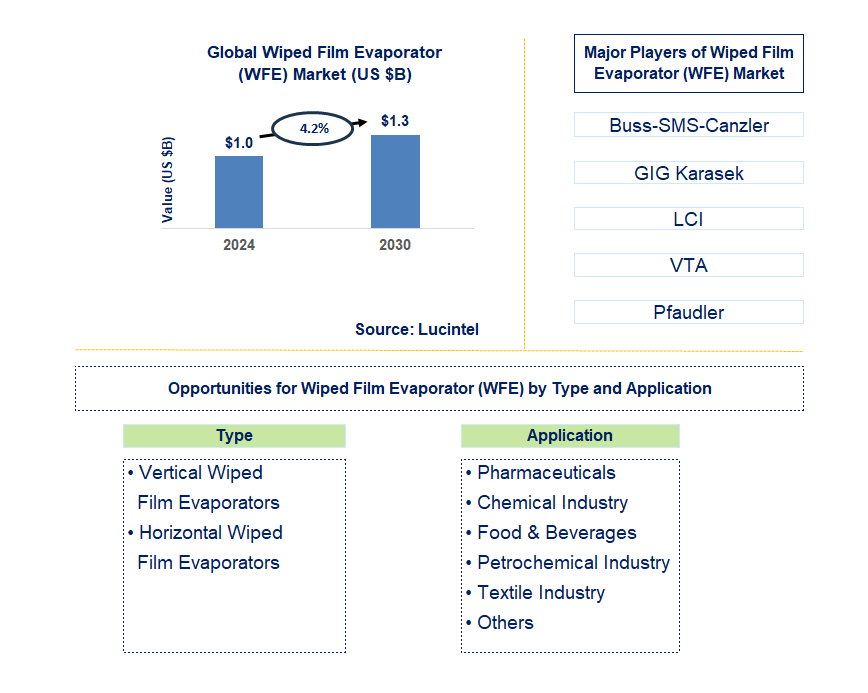
Key data points: The market size in 2030 = $1.3 billion, growth forecast = 4.2% annually for the next 6 years. Scroll below to get more insights. This market report covers trends, opportunities, and forecasts in the global wiped film evaporator (wfe) market to 2030 by type (vertical wiped film evaporators and horizontal wiped film evaporators), application (pharmaceuticals, chemical industry, food & beverages, petrochemical industry, textile industry, and others), and region (North America, Europe, Asia Pacific, and the Rest of the World)
We'll send your sample report shortly.
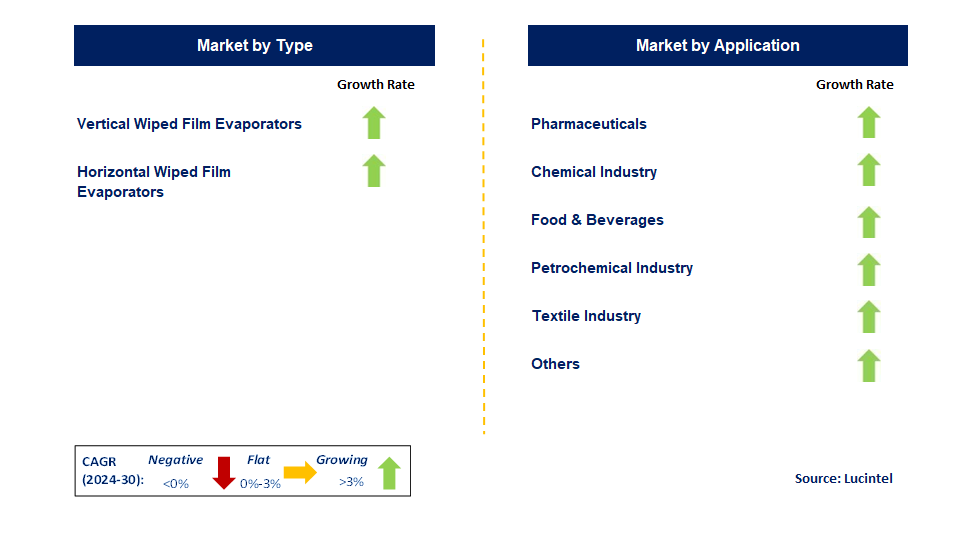
• Lucintel forecasts that, within the type category, vertical wiped film evaporators will remain a larger segment over the forecast period.
• Within the application category, pharmaceuticals is expected to witness the highest growth.
• In terms of regions, APAC is expected to witness highest growth over the forecast period due to rapidly growing pharmaceutical and nutraceutical industries. A more than 150-page report is developed to help in your business decisions.
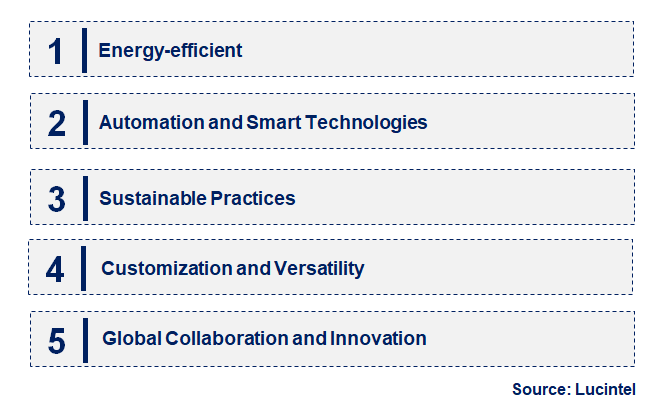
• Energy-Efficient: WFE systems are in demand as companies look to reduce operational costs. Innovations in heat exchange and recovery are gaining attention, ensuring greater efficiency, less energy usage, and lower greenhouse gas emissions. This trend has become more relevant in line with consumer expectations and strict environmental regulations on industries.
• Automation and Smart Technologies: Technology is revolutionizing the WFE market by introducing smart technologies that allow for real-time monitoring and control of process flows. Enhanced accuracy through advanced sensors and AI-driven analytics minimizes human error, leading to improvements in operational efficiency, optimized production, and fewer defects, resulting in greater profits.
• Sustainable Practices: Sustainability is becoming an increasingly vital aspect of the WFE market. Manufacturers are developing systems that incorporate greener materials and more environmentally friendly processes. This trend is driven by regulatory pressures and consumer demand for greener products. It addresses environmental concerns while also improving brand reputation and competitiveness in the market.
• Customization and Versatility: The demand for customized WFE solutions is growing, driven by diverse industries seeking tailored systems to meet specific processing needs. Modular designs are now being offered by manufacturers to various industries, from pharmaceuticals to food processing. This has allowed companies to maximize production and quickly gain ground in the market.
• Global Collaboration and Innovation: The WFE market is seeing innovative collaboration dynamics among industry leaders, research institutions, and technology providers, which drive technological advancements. Collaboration fosters knowledge sharing, inspiring innovative developments that enhance product quality and processing efficiency. This improves the competitive landscape. These trends are driving innovations focused on efficiency, sustainability, and customized solutions in the WFE market. Adaptation to these trends positions companies for growth in an increasingly competitive space.
• Advanced Energy Recovery Systems: Energy recovery systems have significantly improved the efficiency of the WFE process by further developing the technology. The thermal energy captured during the evaporation process is fed back into the system to increase reuse. This has drastically reduced energy consumption and, by lowering operational costs and environmental impact, has become a critical focus area for manufacturers looking toward sustainability in their processes.
• AI and IoT Integration: The integration of artificial intelligence and IoT in WFE systems is changing the standards within the industry. Smart technologies support real-time monitoring, predict maintenance needs, and enable automated control, resulting in stronger efficiency in processes and improved product quality. These developments reduce labor costs and enhance the reliability of WFE operations.
• Hybrid Systems Development: Hybrid WFE systems, which combine conventional wiped film technology with other separation techniques, are playing an increasingly important role. These innovative solutions allow for greater flexibility and efficiency, enabling the processing of feedstocks that were previously not possible. This development is particularly beneficial in sectors with high processing complexity, such as pharmaceuticals and specialty chemicals.
• Focus on High-Purity Applications: Manufacturers of WFE systems have started investing more in technologies that ensure excellent separation and purification. Improvements in the quality of distillates and residues are aimed at meeting the high standards required by sectors such as food, pharmaceuticals, and cosmetics. This focus presents a challenge for companies to remain competitive in the global market.
• Customization for Niche Applications: Customizing WFE systems for specific niche applications is becoming a growing trend. Manufacturers are developing tailored solutions that cater to the unique processing needs of different industries. The competitive advantage of this shift is that companies can better optimize production and respond quickly and effectively to market changes. These innovations are having a significant impact on the WFE market. Advances in efficiency, product quality, and adaptability will continue to drive market changes in the future. Strategic growth opportunities abound in the WFE market and will help define industry standards for the future.
• Pharmaceutical Applications: The pharmaceutical industry is one of the most important growth areas for WFE technology due to the demand for high-purity solvents and the efficient removal of impurities from solutions. Furthermore, as drug formulations become more complex, the demand for WFE systems that provide accurate separation and purification processes is growing. This business opportunity allows manufacturers to address the changing needs of pharmaceutical companies while maintaining the highest quality standards.
• Food and Beverage Industry: WFE systems are gaining increased applications in the food and beverage industry. Their flavor concentration capabilities, while ensuring the quality of essential oils, have made them increasingly popular. The high demand for natural and clean-label products presents significant opportunities for WFE technology. Manufacturers can capitalize on this trend by developing tailored food applications with improved processing efficiency and high-quality products.
• Specialty Chemicals: Due to the effectiveness of high-purity chemicals and intermediates that WFE technology offers, it has gained preference in the specialty chemicals industry. With its versatility in accommodating a wide range of feedstocks, WFE systems are helping meet the growing requirements for custom chemicals. This also provides avenues for manufacturers to launch new products and penetrate new markets.
• Renewable Energy: There is a growing connection between renewable energy and processing technology, driven by increasing demand in biofuels and other alternative energy sectors for efficient processing solutions. WFE systems can be used to separate and purify biofuels, offering manufacturers the opportunity to develop tailored solutions that meet the needs of the renewable energy market. This aligns with the global trend toward sustainability and energy transition.
• Cosmetic and Personal Care Products: WFE technology is widely embraced in the cosmetic and personal care industries for extracting and purifying active ingredients. Due to the growing demand for more potent, sustainable, and long-lasting products, WFE systems offer a solution for achieving high-quality formulations. This presents an opportunity for manufacturers to penetrate a niche market by providing innovative processing solutions that align with consumer preferences. Growth Opportunities for WFE Technology: Wiped Film Evaporators present significant growth opportunities across various applications. As industries focus on efficiency and quality standards, WFE systems are likely to meet the emerging demand and fuel market growth.
• Technological Advancement: Constant innovations in WFE technology are improving efficiency and reliability. Claims of better value-added products, made possible by smart monitoring, automation, and energy recovery improvements, allow manufacturers to develop more efficient processes by reducing operational costs. These improvements result in high-quality products and enhance competitiveness across industries, from pharmaceuticals to food processing.
• Increasing Demand for Higher-Purity Products: The pharmaceutical and specialty chemical industries, in particular, are increasingly demanding higher-purity products, requiring elevated separation levels. WFE systems are ideally positioned to meet these separation and purification requirements. This growing demand drives investment in advanced WFE technology, as companies seek to meet stringent regulatory standards and consumer expectations regarding product quality.
• Sustainability Focus: Sustainability remains a key focus in manufacturing processes. WFE technology helps achieve waste and energy reductions, aligning with corporate sustainability goals. Increased pressure from consumer groups and regulatory agencies regarding eco-friendly practices is also driving demand for WFE systems, enhancing their market appeal.
• Pressure on the Food and Beverage Sector to Meet High Safety and Quality Standards: The food and beverage sector is facing increasing pressure to meet high safety and quality requirements. WFE technology plays a crucial role in the efficient concentration of flavorings, extraction of valuable essential oils, and ensuring safety. This is one of the key justifications for investment in WFE systems.
• Globalization of Supply Chains: Supply chains are becoming increasingly globalized, creating a demand for more efficient processing technologies to handle diverse raw materials. WFE systems offer the necessary flexibility to suit different feedstocks and processing requirements. This makes WFE systems attractive to manufacturers seeking to access wider markets. Challenges in the wiped film evaporator (WFE) market include:
• High Initial Investment Costs: The upfront cost of purchasing WFE systems can be substantial, with high expenses, especially for small and medium-sized companies. Although WFE systems offer long-term cost savings, the high initial investment is likely to discourage investment in advanced technologies due to the significant financial burden.
• Operational Complexity: WFE systems can be complex to operate. These systems require skilled operators and considerable training for optimal performance. Maintenance and servicing can also be challenging, and poor management could result in operational inefficiencies and potential downtime.
• Regulatory Compliance: Navigating regulatory compliance can be a complex and time-consuming process, particularly for manufacturers. Maintaining WFE systems in accordance with multiple industry standards requires significant attention and resources over time, which can be a strain on smaller companies. The drivers and challenges impacting the Wiped Film Evaporators (WFE) market create a complex landscape for industry stakeholders. While technological advancements and a focus on sustainability present significant growth opportunities, challenges such as high initial costs and regulatory compliance must be carefully managed. By understanding and addressing these factors, companies can better position themselves for success in the evolving WFE market.
• Buss-SMS-Canzler
• GIG Karasek
• LCI
• VTA
• Pfaudler
• 3V Tech
• Sulzer
• Vertical Wiped Film Evaporators
• Horizontal Wiped Film Evaporators
• Pharmaceuticals
• Chemical Industry
• Food & Beverages
• Petrochemical Industry
• Textile Industry
• Others
• North America
• Europe
• Asia Pacific
• The Rest of the World
• United States: In the U.S., WFE technology has advanced significantly in terms of energy efficiency and cost savings. Companies are exploring automation, precision, and minimizing downtime. On the one hand, regulations encouraging greener technologies are prompting new developments, as companies start using more sustainable materials. Additionally, collaboration between major industry players and research institutions is contributing to the development of new WFE systems that can be applied to various industries.
• China: The WFE market in China is steadily growing. Two of the most influential drivers in this sector are the pharmaceutical and chemical industries. In recent years, new materials have been introduced that support advanced heat transfer and the production of high-quality products. Governmental projects promoting clean technologies are leading to higher investments in WFE systems. Local producers are upgrading their manufacturing capabilities, helping them compete successfully in international markets. The growing demand for high-purity products is also contributing to market growth.
• Germany: Precision engineering and quality continue to define Germany's leadership in WFE technology. Innovations that enhance process efficiencies and sustainability, such as energy recovery systems and smart monitoring technologies, are driving advancements. Custom solutions designed for specific industries are another area of focus for German manufacturers, directly contributing to a rise in exports. Environmental regulations continue to influence the adoption of more sustainable practices in the production of WFE systems.
• India: The WFE market in India is expanding, particularly in the food and beverage sectors. Recent trends include the implementation of digital technologies for better process control and optimization. Growing awareness of food safety and quality has led Indian manufacturers to invest in high-performance WFE systems that adhere to international standards. Government policies aimed at advancing manufacturing have also motivated local innovations relevant to WFE technology.
• Japan: The WFE market in Japan is focused on applications in high-tech, electronics, and pharmaceuticals. Recent developments include the creation of compact, efficient WFE systems for use in smaller production lines. Hybrid systems, which combine WFE with other technologies for enhanced efficiency, are currently being researched by Japanese firms. Further government support for advanced manufacturing processes is expected to open new opportunities for WFE technologies in the region.


• Buss-SMS-Canzler
• GIG Karasek
• LCI
• VTA
• Pfaudler
• 3V Tech
• Sulzer Q6. Which wiped film evaporator (WFE) market segment will be the largest in future? Answer: Lucintel forecasts that vertical wiped film evaporators will remain the larger segment over the forecast period. Q7. In wiped film evaporator (WFE) market, which region is expected to be the largest in next 6 years? Answer: APAC is expected to witness highest growth over the forecast period due to rapidly growing pharmaceutical and nutraceutical industries. Q.8 Do we receive customization in this report? Answer: Yes, Lucintel provides 10% customization without any additional cost.


Choose a license that fits your team. Instant PDF delivery.
Prices exclude taxes. Instant delivery. Custom licensing available on request.
Market Report · July 31, 2026
Market Report · July 31, 2026
Market Report · July 31, 2026
Trusted partner for strategic intelligence and business growth


Receive a complimentary market analysis tailored to your industry. Our analysts will identify key growth opportunities and competitive dynamics specific to your business.

Market size, growth rate, and key trend analysis for your specific sector.

Top competitor positioning and market share analysis.

Strategic recommendations backed by data-driven insights.
Get curated market intelligence and competitive moves straight to your inbox.
By subscribing, you agree to receive our monthly insights. Unsubscribe anytime.
Receive a complimentary market analysis tailored to your industry. Our analysts will identify key growth opportunities and competitive dynamics specific to your business.
Market size, growth rate, and key trend analysis for your specific sector.
Top competitor positioning and market share analysis.
Strategic recommendations backed by data-driven insights.
Get curated market intelligence, emerging trends, and competitive moves straight to your inbox each month.
By subscribing, you agree to receive our monthly insights. Unsubscribe anytime.
We'll send your sample report shortly.