
Wildlife Tourism Market Report: Trends, Forecast and Competitive Analysis to 2035

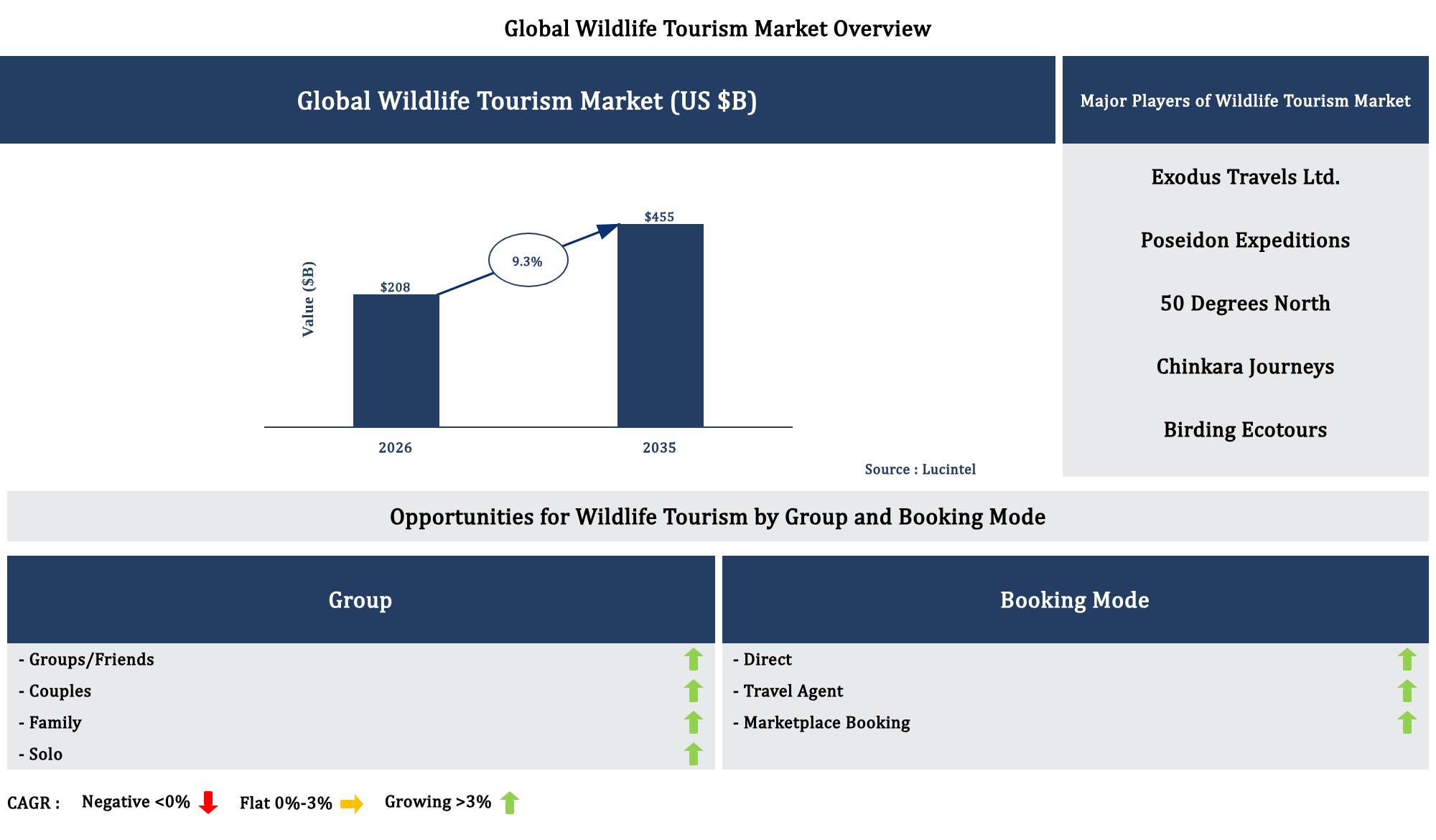
Key data points: The market size in 2035 = $455 billion, growth forecast = 9.3% annually for the next 8 years. Scroll below to get more insights. This market report covers trends, opportunities and forecasts in wildlife tourism market to 2035 by group (groups/friends, couples, family, and solo), booking mode (direct, travel agent, and marketplace booking), and region (North America, Europe, Asia Pacific, and the Rest of the World)

Publisher: Lucintel Last Updated: July 2026
See Pricing

Download Sample Report

| ✨ New Download Sample report — Get instant insights! | ✨ New Download Sample report — Get instant insights!

Wildlife Tourism Market Report: Trends, Forecast and Competitive Analysis to 2035

Wildlife Tourism Market

The future of the global wildlife tourism market looks promising with opportunities in the direct, travel agent, and marketplace booking markets. The global wildlife tourism market is expected to reach an estimated $455 billion by 2035 with a CAGR of 9.3% from 2026 to 2035. The major drivers for this market are the increasing interest in wildlife conservation tourism, the rising demand for nature adventure experiences, and the growing preference for eco friendly travel.

  • Lucintel forecasts that, within the group category, group/friend is expected to witness the highest growth over the forecast period due to the growing preference for shared travel experiences and cost savings.
  • Within the booking mode category, direct is expected to witness the highest growth due to the convenience, flexible planning, and lower booking service costs.
  • In terms of regions, North America is expected to witness the highest growth over the forecast period due to the increasing ecotourism interest and rising disposable income levels.

Gain valuable insights for your business decisions with our comprehensive 150+ page report. Sample figures with some insights are shown below.
Wildlife Tourism Market

Emerging Trends in the Wildlife Tourism Market

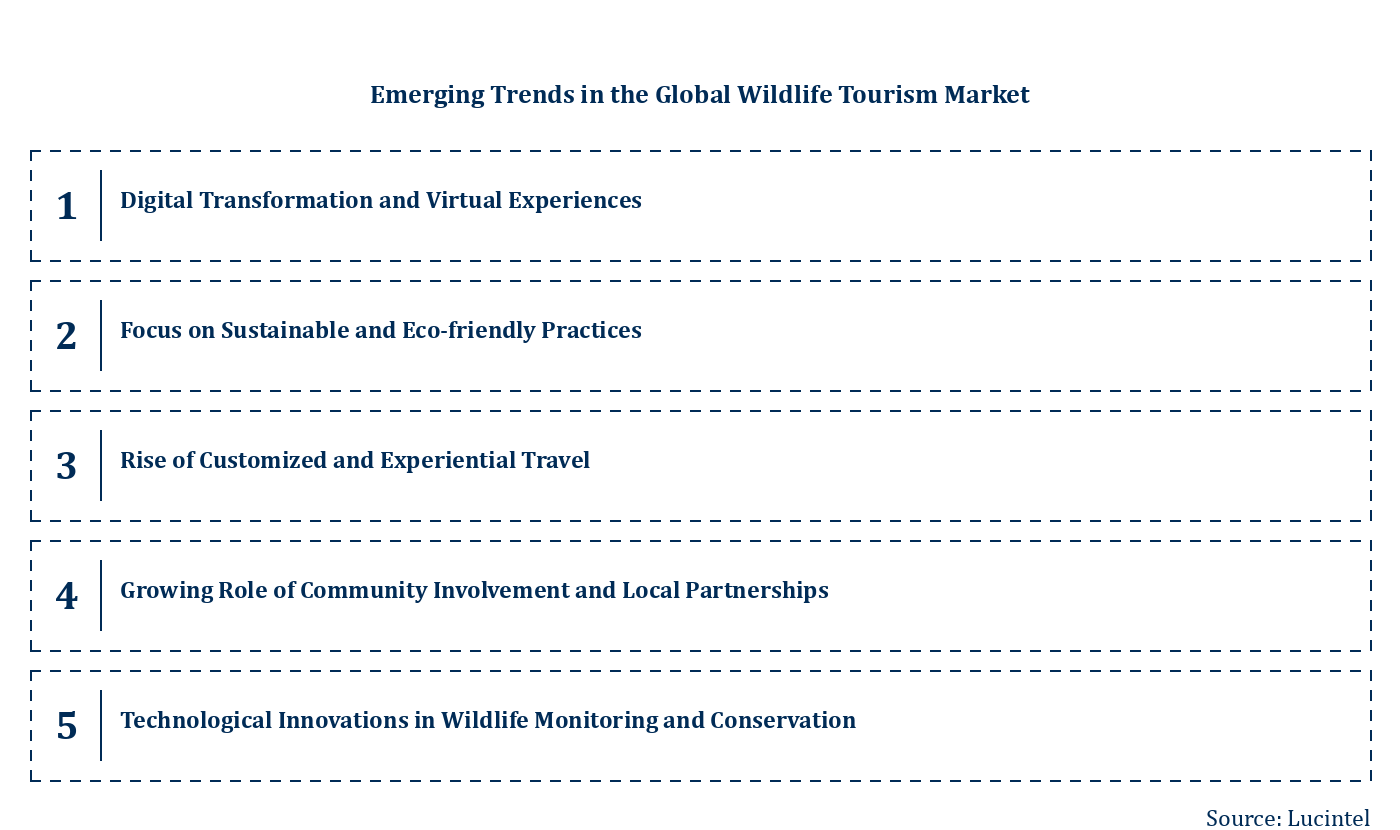
The wildlife tourism market is experiencing rapid transformation driven by technological advancements, changing traveler preferences, and increasing environmental awareness. As travelers seek more authentic and sustainable experiences, the industry is adapting to meet these demands through innovative offerings and eco-friendly practices. These emerging trends are not only shaping consumer behavior but also influencing market strategies, investment patterns, and conservation efforts. Understanding these key developments is essential for stakeholders aiming to capitalize on growth opportunities while promoting responsible tourism. The following five trends highlight the evolving landscape of wildlife tourism and its future trajectory.

  • Digital Transformation and Virtual Experiences: The integration of virtual reality (VR) and augmented reality (AR) technologies is revolutionizing wildlife tourism by offering immersive virtual safaris and wildlife encounters. These digital experiences allow travelers to explore remote habitats and endangered species from their homes, expanding access and engagement. This trend also supports conservation efforts by raising awareness and funds through virtual tours. As technology becomes more sophisticated and affordable, digital experiences are expected to complement physical trips, attracting a broader audience and enhancing educational outreach.
  • Focus on Sustainable and Eco-Friendly Practices: Increasing environmental consciousness among travelers is driving demand for sustainable wildlife tourism options. Operators are adopting eco-friendly practices such as low-impact tours, wildlife-friendly accommodations, and community-based conservation projects. Certification programs and eco-labels are gaining importance, helping consumers identify responsible providers. This trend promotes biodiversity preservation, reduces ecological footprints, and ensures local communities benefit economically. As sustainability becomes a key decision factor, market players are investing in green initiatives to differentiate themselves and meet regulatory standards.
  • Rise of Customized and Experiential Travel: Travelers are seeking personalized, authentic wildlife experiences that go beyond traditional safaris. This includes tailored itineraries, participatory conservation activities, and cultural interactions with local communities. Such experiential travel fosters deeper connections with nature and promotes responsible tourism. Operators are leveraging data and customer feedback to design bespoke packages, enhancing customer satisfaction and loyalty. This trend reflects a shift from generic tours to immersive, meaningful encounters that cater to individual preferences and educational interests.
  • Growing Role of Community Involvement and Local Partnerships: Engaging local communities in wildlife tourism is gaining prominence as a strategy for sustainable development. Partnerships with indigenous groups and local stakeholders help ensure equitable benefit sharing and cultural preservation. Community-led initiatives often result in more authentic experiences and better conservation outcomes. This approach also mitigates conflicts and fosters local stewardship of natural resources. As awareness of social responsibility increases, market players are forming alliances with local entities to promote inclusive growth and sustainable tourism practices.
  • Technological Innovations in Wildlife Monitoring and Conservation: Advances in drone technology, AI, and data analytics are enhancing wildlife monitoring and anti-poaching efforts. These tools enable real-time tracking of animal populations and habitat conditions, improving conservation strategies. They also facilitate better management of tourism activities to minimize ecological disturbance. The adoption of these innovations attracts eco-conscious travelers and investors interested in conservation impact. As technology continues to evolve, it will play a crucial role in balancing tourism growth with wildlife preservation, ensuring the long-term sustainability of the market.

These trends are collectively reshaping the wildlife tourism market by emphasizing sustainability, technological integration, personalized experiences, and community involvement. They are fostering a more responsible, innovative, and inclusive industry that benefits travelers, local communities, and wildlife conservation efforts alike.
Wildlife Tourism Market by country

Recent Developments in the Wildlife Tourism Market

The wildlife tourism market is experiencing rapid growth driven by increasing environmental awareness, technological advancements, and a global shift towards sustainable travel. As travelers seek authentic experiences that connect them with nature, the industry is evolving to meet these demands through innovative offerings and eco-friendly practices. These developments are reshaping the landscape, creating new opportunities for stakeholders, and fostering a deeper appreciation for biodiversity conservation worldwide.

  • Growing Eco-Tourism Demand: The rising global awareness of environmental issues has significantly increased demand for eco-friendly wildlife tourism experiences. Travelers now prioritize sustainable practices, leading operators to adopt eco-certifications and conservation initiatives. This shift not only boosts market growth but also promotes biodiversity preservation and community involvement. As a result, eco-tourism segments such as safaris, birdwatching, and marine tours are expanding rapidly, attracting a broader demographic committed to responsible travel.
  • Technological Innovations in Wildlife Observation: Advances in technology, including drone surveillance, virtual reality, and AI-powered guides, are transforming wildlife tourism. These tools enhance visitor experiences by providing immersive, educational, and safer interactions with wildlife. For example, virtual safaris allow remote exploration, reducing human impact on sensitive habitats. Such innovations increase accessibility, improve conservation awareness, and open new revenue streams, positioning the market at the forefront of digital transformation and expanding its global reach.
  • Expansion of Sustainable Infrastructure: Investment in sustainable infrastructure, such as eco-lodges, solar-powered facilities, and eco-friendly transportation, is gaining momentum. These developments reduce environmental footprints and appeal to eco-conscious travelers. Enhanced infrastructure also improves accessibility to remote wildlife destinations, encouraging longer stays and higher spending. This focus on sustainability fosters positive community relations, supports local economies, and aligns with global conservation goals, thereby strengthening the market’s long-term viability and appeal.
  • Increased Focus on Conservation and Community Engagement: Wildlife tourism operators are increasingly integrating conservation projects and community involvement into their offerings. This approach ensures the protection of habitats and species while providing economic benefits to local communities. Initiatives include wildlife monitoring, habitat restoration, and cultural exchanges. Such engagement enhances visitor experiences, builds trust with local populations, and promotes sustainable practices. This synergy between tourism and conservation is vital for the industry’s resilience and for fostering global biodiversity preservation efforts.
  • Rise of Customized and Niche Experiences: The market is witnessing a surge in personalized and niche wildlife tourism experiences, such as nocturnal safaris, photography tours, and endangered species encounters. These tailored offerings attract specific traveler segments seeking unique, memorable adventures. By catering to diverse interests, operators can command premium prices and foster loyalty. This trend encourages innovation, diversifies revenue streams, and helps sustain lesser-known wildlife destinations, ultimately broadening the market’s scope and appeal to a wider audience.

These developments are significantly transforming the wildlife tourism market by promoting sustainability, technological integration, and personalized experiences. They foster environmental conservation, support local communities, and enhance visitor engagement. As a result, the industry is becoming more resilient, innovative, and inclusive, attracting a broader demographic committed to responsible travel. Overall, these opportunities are driving growth, expanding market reach, and ensuring the long-term sustainability of wildlife tourism worldwide.

Strategic Growth Opportunities in the Wildlife Tourism Market

Wildlife tourism is experiencing rapid growth driven by increasing environmental awareness, a desire for authentic experiences, and global travel expansion. This sector offers significant opportunities for sustainable development, conservation funding, and local economic growth. As travelers seek immersive encounters with nature, innovative offerings and strategic investments can unlock new markets and enhance existing ones. Embracing technological advancements and eco-friendly practices will be crucial for long-term success and responsible growth in this dynamic industry.

  • Expanding Eco-Tourism and Sustainable Wildlife Experiences: Developing eco-friendly wildlife tours, conservation-focused safaris, and responsible travel packages can attract environmentally conscious travelers. These offerings promote conservation efforts, support local communities, and differentiate brands in a competitive market. Sub-segments include jungle safaris, marine wildlife tours, and birdwatching excursions, which appeal to niche audiences seeking authentic, low-impact experiences aligned with sustainability principles.
  • Leveraging Digital Platforms for Market Reach and Engagement: Utilizing online booking systems, virtual reality previews, and social media marketing can significantly increase visibility and customer engagement. Digital tools enable personalized experiences, real-time updates, and educational content that enhance visitor satisfaction. Sub-segments include mobile apps for guided tours, virtual safaris, and interactive wildlife education platforms, broadening access to global audiences and fostering loyalty.
  • Developing Community-Based Wildlife Tourism Initiatives: Collaborating with local communities to create participatory tourism models ensures economic benefits are shared and conservation efforts are supported. These initiatives empower residents, preserve cultural heritage, and promote sustainable practices. Sub-segments include community-led lodges, local guides, and cultural exchange programs, which foster authentic experiences and strengthen community resilience.
  • Investing in Conservation and Wildlife Protection Infrastructure: Upgrading habitats, establishing protected areas, and implementing anti-poaching measures are vital for sustaining wildlife populations. These investments attract eco-conscious travelers and demonstrate corporate responsibility. Sub-segments include wildlife corridors, research centers, and anti-poaching technology, which contribute to long-term ecological balance and market credibility.
  • Creating Niche and Themed Wildlife Tourism Offerings: Developing specialized experiences such as nocturnal safaris, photography tours, and conservation volunteering programs can cater to specific interests. These niche markets attract dedicated travelers seeking unique, memorable encounters. Sub-segments include birdwatching expeditions, marine life diving tours, and endangered species tracking, which diversify revenue streams and enhance market competitiveness.

These growth opportunities collectively position the wildlife tourism market for sustainable expansion, increased profitability, and positive environmental impact. Embracing innovation, community involvement, and conservation will be essential for capturing emerging demand and ensuring the sector’s resilience amid evolving global travel trends. Strategic focus on these areas can foster responsible growth and long-term success.

Wildlife Tourism Market Drivers and Challenges

The wildlife tourism market is influenced by a variety of technological, economic, and regulatory factors that shape its growth and sustainability. Advances in technology, such as digital marketing and eco-friendly transportation, enhance accessibility and awareness. Economic conditions, including disposable income levels and global travel trends, directly impact consumer participation. Regulatory frameworks, including conservation laws and tourism policies, influence operational practices and environmental impact. Additionally, societal awareness about conservation and sustainability plays a crucial role. These factors collectively determine the markets trajectory, presenting opportunities for expansion while also posing challenges related to environmental preservation and regulatory compliance. Understanding these drivers and challenges is essential for stakeholders aiming to capitalize on emerging trends and mitigate risks.

The factors responsible for driving the wildlife tourism market include:-

  • Technological Advancements: Digital platforms, virtual reality, and online booking systems have revolutionized wildlife tourism by making it more accessible and engaging. These innovations enable tourists to plan trips efficiently, access detailed information about wildlife sanctuaries, and share experiences globally. Moreover, eco-friendly transportation technologies reduce carbon footprints, aligning with sustainability goals. The integration of technology also facilitates conservation efforts through data collection and monitoring wildlife populations, fostering responsible tourism practices. As technology continues to evolve, it will further enhance visitor experiences and operational efficiencies, driving market growth.
  • Rising Environmental Awareness: Increasing global consciousness about environmental issues and wildlife conservation has significantly influenced consumer preferences. Tourists are now seeking eco-friendly and sustainable travel options that minimize ecological impact. This shift encourages operators to adopt responsible tourism practices, such as habitat preservation and community involvement. Governments and NGOs are also promoting awareness campaigns, which boost demand for wildlife tourism experiences that contribute to conservation funding. As awareness grows, so does the willingness of travelers to pay premiums for sustainable experiences, thereby expanding the market and encouraging responsible behavior.
  • Economic Growth and Disposable Income: Economic development in emerging markets has led to higher disposable incomes, enabling more people to afford wildlife tourism experiences. As middle-class populations expand globally, demand for adventure and nature-based tourism increases. This economic upliftment encourages travel to remote wildlife destinations, supporting local economies and creating employment opportunities. Additionally, the growth of luxury wildlife safaris and eco-resorts caters to affluent travelers seeking exclusive experiences. The overall economic stability and growth directly correlate with increased market participation and revenue generation within the wildlife tourism sector.
  • Government Policies and Conservation Initiatives: Supportive government policies, including wildlife protection laws, tourism incentives, and conservation funding, play a vital role in market expansion. Many countries are establishing protected areas and national parks to attract eco-tourists, which helps preserve biodiversity. Regulatory frameworks ensure sustainable practices, preventing over-tourism and habitat degradation. International agreements and collaborations further promote responsible tourism and funding for conservation projects. These initiatives not only safeguard wildlife but also enhance the credibility and attractiveness of destinations, encouraging more tourists to participate in wildlife tourism activities.
  • Growing Preference for Experiential Travel: Modern travelers increasingly seek authentic, immersive experiences that connect them with nature and local cultures. Wildlife tourism offers unique opportunities for close encounters with wildlife, photography, and eco-education, fulfilling this demand. This trend drives the development of specialized tours, eco-lodges, and community-based tourism models that emphasize sustainability and cultural exchange. The desire for meaningful travel experiences boosts market growth, especially among younger demographics and adventure seekers. As experiential travel gains popularity, the market is expected to diversify and innovate, attracting a broader customer base.

The challenges facing the wildlife tourism market include:-

  • Environmental and Ecological Concerns: Despite its growth, wildlife tourism can pose significant threats to ecosystems if not managed sustainably. Overcrowding, habitat disturbance, and pollution can harm wildlife and degrade natural habitats. Unregulated tourism activities may lead to stress and behavioral changes in animals, affecting their survival. Additionally, infrastructure development to support tourism can encroach on protected areas, risking biodiversity loss. Balancing tourism growth with conservation efforts remains a critical challenge, requiring strict regulations, eco-friendly practices, and community involvement to ensure long-term sustainability.
  • Regulatory and Political Risks: The wildlife tourism sector is highly dependent on government policies and international agreements. Changes in regulations, such as stricter conservation laws or travel restrictions, can adversely impact market operations. Political instability or conflicts in certain regions may deter tourists and disrupt supply chains. Additionally, inconsistent enforcement of laws and corruption can undermine conservation efforts and operational transparency. Navigating complex legal frameworks and maintaining compliance is essential but challenging, especially in emerging markets with evolving policies.
  • Climate Change and Environmental Variability: Climate change poses a significant threat to wildlife habitats and migration patterns, directly impacting tourism activities. Rising temperatures, changing rainfall patterns, and extreme weather events can alter ecosystems, reduce wildlife populations, and make certain destinations less accessible or attractive. These environmental shifts threaten the sustainability of wildlife tourism and require adaptive management strategies. The unpredictability associated with climate change necessitates ongoing research, infrastructure resilience, and flexible planning to mitigate adverse effects and ensure the longevity of tourism activities.

The wildlife tourism market is shaped by technological innovations, increasing environmental awareness, economic growth, supportive policies, and a rising demand for experiential travel. However, it faces challenges such as ecological concerns, regulatory risks, and climate change impacts. These drivers and challenges collectively influence the markets growth trajectory, requiring stakeholders to adopt sustainable practices, innovative solutions, and adaptive strategies. Successfully navigating these factors will determine the future sustainability and profitability of wildlife tourism, ensuring it continues to contribute positively to conservation and local communities.

List of Wildlife Tourism Market Companies

Companies in the market compete on the basis of product quality offered. Major players in this market focus on expanding their manufacturing facilities, R&D investments, infrastructural development, and leverage integration opportunities across the value chain. Through these strategies wildlife tourism market companies cater increasing demand, ensure competitive effectiveness, develop innovative products & technologies, reduce production costs, and expand their customer base. Some of the wildlife tourism market companies profiled in this report include-

  • Exodus Travels Ltd.
  • Poseidon Expeditions
  • 50 Degrees North
  • Chinkara Journeys
  • Birding Ecotours
  • Elm Wildlife Tours
  • Frontiers North Adventures Inc.
  • Rockjumper Birding Ltd.
  • Absolute Zambia Safaris Ltd.
  • G Adventures

Wildlife Tourism Market by Segment

The study includes a forecast for the global wildlife tourism market by group, booking mode, and region.

  • Wildlife Tourism Market by Group [Value from 2019 to 2035]:
    • Groups/Friends
    • Couples
    • Family
    • Solo
  • Wildlife Tourism Market by Booking Mode [Value from 2019 to 2035]:
    • Direct
    • Travel Agent
    • Marketplace Booking
  • Wildlife Tourism Market by Region [Value ($B) from 2019 to 2035]:
    • North America
    • Europe
    • Asia Pacific
    • The Rest of the World

Country Wise Outlook for the Wildlife Tourism Market

The wildlife tourism market has experienced significant shifts driven by technological advancements, changing consumer preferences, and environmental concerns. Countries are increasingly focusing on sustainable practices, conservation efforts, and innovative experiences to attract tourists. The COVID-19 pandemic also influenced travel patterns, prompting a focus on local and eco-friendly tourism options. Governments and private sectors are investing in infrastructure, digital marketing, and conservation programs to boost this sector. These developments reflect a global trend toward responsible tourism that balances economic growth with ecological preservation. Below are recent updates specific to the United States, China, Germany, India, and Japan.

  • United States: The U.S. has seen a rise in eco-tourism and wildlife sanctuaries, with increased investment in national parks and conservation programs. Technological integration, such as virtual safaris and augmented reality experiences, enhances visitor engagement. There is a growing emphasis on sustainable practices and community-based tourism, promoting local economies while protecting wildlife habitats. Additionally, policies supporting wildlife protection and habitat preservation have strengthened, attracting eco-conscious travelers.
  • China: China is expanding its wildlife tourism through eco-parks and conservation zones, emphasizing biodiversity preservation. The government promotes eco-friendly travel initiatives and invests in digital platforms to boost domestic tourism. New wildlife sanctuaries and eco-resorts are emerging, offering immersive experiences. Efforts to combat illegal wildlife trade and promote awareness are also gaining momentum, aligning tourism with conservation goals. The country is leveraging technology to enhance visitor experiences and promote sustainable practices.
  • Germany: Germany continues to lead in sustainable wildlife tourism, with a focus on eco-friendly accommodations and responsible travel. The country has expanded its national parks and wildlife reserves, integrating digital tools for better visitor management. Conservation projects and educational programs are central to its strategy, fostering awareness and engagement. Germany’s emphasis on eco-certifications and green tourism initiatives attracts environmentally conscious travelers, supporting biodiversity and habitat preservation.
  • India: India is witnessing a surge in wildlife tourism, driven by its rich biodiversity and iconic national parks like Ranthambore and Kaziranga. The government promotes eco-tourism through initiatives like Project Tiger and wildlife sanctuaries. New eco-resorts and safaris offer immersive experiences, emphasizing conservation and community involvement. Digital marketing and mobile apps are enhancing accessibility and awareness. Efforts to reduce human-wildlife conflict and promote sustainable practices are integral to India’s evolving wildlife tourism landscape.
  • Japan: Japan is focusing on eco-tourism and wildlife conservation, particularly in its national parks and remote islands. Initiatives include wildlife observation tours and eco-friendly accommodations. The country emphasizes sustainable practices, such as reducing carbon footprints and conserving natural habitats. Technological innovations, including virtual tours and mobile apps, improve visitor engagement. Japan’s cultural emphasis on harmony with nature supports its efforts to promote responsible wildlife tourism, attracting eco-conscious travelers seeking authentic experiences.

Features of the Wildlife Tourism Market

  • Market Size Estimates: Wildlife tourism market size estimation in terms of value ($B).
  • Trend and Forecast Analysis: Market trends (2019 to 2025) and forecast (2026 to 2035) by various segments and regions.
  • Segmentation Analysis: Wildlife tourism market size by group, booking mode, and region in terms of value ($B).
  • Regional Analysis: Wildlife tourism market breakdown by North America, Europe, Asia Pacific, and Rest of the World.
  • Growth Opportunities: Analysis of growth opportunities in different groups, booking modes, and regions for the wildlife tourism market.
  • Strategic Analysis: This includes M&A, new product development, and competitive landscape of the wildlife tourism market.
  • Analysis of competitive intensity of the industry based on Porter’s Five Forces model.

Top 5 Companies

  • Exodus Travels Ltd.
  • Poseidon Expeditions
  • 50 Degrees North
  • Chinkara Journeys
  • Birding Ecotours

Table of Contents

1. Executive Summary
13.1 Competitive Analysis Overview

List of Figures

List of Tables

Methodology

Lucintel has been in the business of market research and management consulting since 2000 and has published over 1000 market intelligence reports in various markets / applications and served over 1,000 clients worldwide. This study is a culmination of four months of full-time effort performed by Lucintel's analyst team. The analysts used the following sources for the creation and completion of this valuable report:

  • In-depth interviews of the major players in this market
  • Detailed secondary research from competitors' financial statements and published data
  • Extensive searches of published works, market, and database information pertaining to industry news, company press releases, and customer intentions
  • A compilation of the experiences, judgments, and insights of Lucintel's professionals, who have analyzed and tracked this market over the years.

Extensive research and interviews are conducted across the supply chain of this market to estimate market share, market size, trends, drivers, challenges, and forecasts. Below is a brief summary of the primary interviews that were conducted by job function for this report.

Lucintel's methodology for market research

Thus, Lucintel compiles vast amounts of data from numerous sources, validates the integrity of that data, and performs a comprehensive analysis. Lucintel then organizes the data, its findings, and insights into a concise report designed to support the strategic decision-making process. The figure below is a graphical representation of Lucintel's research process.

Primary interviews by job function

Buy Now

Choose a license that fits your team. Instant PDF delivery.

Market Report

1 User PDF

$4,850
Buy Now

Market Report

2-5 Users PDF

$6,700
Buy Now

Market Report

Corporate PDF

$8,850
Buy Now

Market Report

Global PDF

$10,000
Buy Now

Prices exclude taxes. Instant delivery. Custom licensing available on request.

Frequently Asked Questions

What is the wildlife tourism market size?
The global wildlife tourism market is expected to reach an estimated $455 billion by 2035.
What is the growth forecast for wildlife tourism market?
The global wildlife tourism market is expected to grow with a CAGR of 9.3% from 2026 to 2035.
What are the major drivers influencing the growth of the wildlife tourism market?
The major drivers for this market are the increasing interest in wildlife conservation tourism, the rising demand for nature adventure experiences, and the growing preference for eco friendly travel.
What are the major segments for wildlife tourism market?
The future of the wildlife tourism market looks promising with opportunities in the direct, travel agent, and marketplace booking markets.
Who are the key wildlife tourism market companies?

Some of the key wildlife tourism companies are as follows:

  • Exodus Travels Ltd.
  • Poseidon Expeditions
  • 50 Degrees North
  • Chinkara Journeys
  • Birding Ecotours
  • Elm Wildlife Tours
  • Frontiers North Adventures Inc.
  • Rockjumper Birding Ltd.
  • Absolute Zambia Safaris Ltd.
  • G Adventures
Which wildlife tourism market segment will be the largest in future?
Lucintel forecasts that, within the group category, group/friend is expected to witness the highest growth over the forecast period.
In wildlife tourism market, which region is expected to be the largest in next 8 years?
In terms of region, North America is expected to witness the highest growth over the forecast period.
Do we receive customization in this report?
Yes, Lucintel provides 10% customization without any additional cost.

Key Questions

  • What are some of the most promising, high-growth opportunities for the wildlife tourism market by group (groups/friends, couples, family, and solo), booking mode (direct, travel agent, and marketplace booking), and region (North America, Europe, Asia Pacific, and the Rest of the World)?
  • Which segments will grow at a faster pace and why?
  • Which region will grow at a faster pace and why?
  • What are the key factors affecting market dynamics? What are the key challenges and business risks in this market?
  • What are the business risks and competitive threats in this market?
  • What are the emerging trends in this market and the reasons behind them?
  • What are some of the changing demands of customers in the market?
  • What are the new developments in the market? Which companies are leading these developments?
  • Who are the major players in this market? What strategic initiatives are key players pursuing for business growth?
  • What are some of the competing products in this market and how big of a threat do they pose for loss of market share by material or product substitution?
  • What M&A activity has occurred in the last 5 years and what has its impact been on the industry?
Why Choose Us

The Lucintel Advantage

Trusted partner for strategic intelligence and business growth

25+ Years Excellence

25+ Years Excellence

Quarter century of proven expertise in management consulting and market research across global markets.
Game-Changer Ideas

Game-Changer Ideas

Innovative strategies and actionable insights that help clients become the smartest in their industry.
Global Reach

Global Reach

Extensive coverage across 50+ industries and markets worldwide with localized expertise.
Start Your Growth Journey

Get Your Free
Market Intelligence
Briefing

Receive a complimentary market analysis tailored to your industry. Our analysts will identify key growth opportunities and competitive dynamics specific to your business.

Custom Market Snapshot

Market size, growth rate, and key trend analysis for your specific sector.

Competitive Landscape Overview

Top competitor positioning and market share analysis.

Growth Opportunity Identification

Strategic recommendations backed by data-driven insights.

Subscribe

Subscribe to our Newsletter

Get curated market intelligence and competitive moves straight to your inbox.

By subscribing, you agree to receive our monthly insights. Unsubscribe anytime.

Industry Trends Market Signals Opportunities Competitor Moves
