
Market Report · July 22, 2026

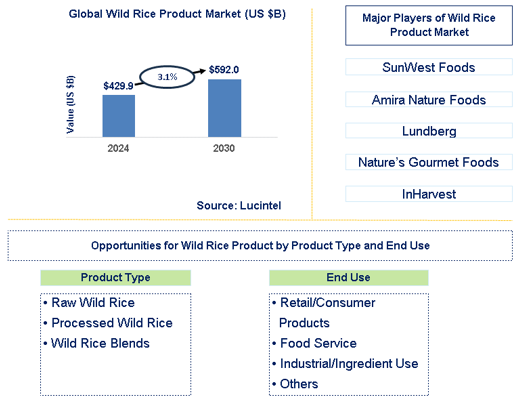
Key data points: The market size in 2030 = $592.0 million, growth forecast = 3.1% annually for the next 6 years. Scroll below to get more insights. This market report covers trends, opportunities, and s in the global wild rice product market to 2030 by product type (raw wild rice, processed wild rice, and wild rice blends), end use (retail/consumer products, food service, industrial/ingredient use, and others), and region (North America, Europe, Asia Pacific, and the Rest of the World)
We'll send your sample report shortly.
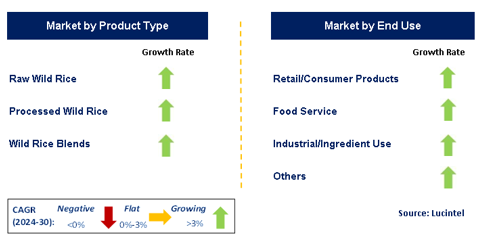
• Lucintel forecasts that, within the product type category, raw wild rice will remain the largest segment over the forecast period because it offers the richest flavor and nutritional profile owing to minimal processing.
• Within the end use category, retail/consumer products will remain the largest segment due to convenience and growing consumer interest in healthy and gourmet food options.
• In terms of regions, North America will remain the largest region over the forecast period due to long-standing tradition and cultural significance of wild rice, particularly in native American communities. Gain valuable insights for your business decisions with our comprehensive 150+ page report.
• Growing Health Awareness: The increasing health consciousness is resulting in the increased demand for wild rice because of its nutritional advantages, which include high protein levels and essential vitamins. Wild rice has become more popular with clients who are looking for a healthy substitute for conventional grains. This shift in demand patterns has made wild rice more visible in health food stores and resulted in product offerings highlighting its health benefits. The focus on wellness is increasing the growth of the wild rice market.
• Product Innovation: Increased innovation in the products made from wild rice means that there are more opportunities available in the market. Examples of new product developments include ready-to-eat foods, snacks, and gourmet choices to cater to different consumer tastes. Moreover, these companies are also experimenting with flavor mixtures and packaging solutions to enhance their appeal. As a result, these innovations make it easier to reach out to larger numbers of individuals, hence fostering faster growth and increasing market share.
• Market Expansion: The entry of wild rice into new markets is another notable direction. Increasing awareness about its value across various global regions beyond traditional markets has enabled them to begin considering this innovative grain product. Emerging economies like China, Russia, and Brazil show higher interest nowadays; accordingly, the majority of players have started expanding there. Therefore, this geographical diversification brings about new possibilities for producers and raises their global presence within the world trade system.
• Sustainable Farming Practices: One key trend that can be seen in the wild rice industry currently revolves around sustainable farming practices. Producers have embraced environmentally friendly techniques to make their operations sustainable when producing wild rice pellets (the type we consume). Some examples of such methods involve the reduction of water use, minimizing chemical inputs, and promoting biodiversity within this ecosystem. This development is driven by consumers’ increasing preference for eco-friendly organic products. Rising health consciousness, product innovation, market expansion, sustainable farming practices, and integration into diverse culinary applications are some of the recent developments shaping the wild rice product market today. These trends serve as growth drivers that improve offering quality and increase market penetration. As people continue searching for healthier and environmentally friendly food alternatives, the wild rice industry keeps adapting to those dynamic changes, thereby making it increasingly larger with time.

• Advancements in Cultivation Techniques: In recent years, there have been some improvements in wild rice farming through changes in cultivation techniques. Better water systems and genetic research have led to better quality crops with higher resilience than before. Therefore, because of these improvements, wild rice production is becoming more sustainable and cost-effective, leading to increased supply and availability in the market.
• Increased Global Demand: Wild rice demand globally has recently shot up due to health consciousness and increased interest in cooking. From a global perspective, people are interested in its health benefits and unique flavor. With such a strong increase, producers are encouraged to expand their business volume into diverse regions where potential markets exist.
• Product Diversification: The wild rice industry is increasingly embracing product diversification as a way forward. Some manufacturers have come up with different types of products like ready-to-eat meals, snack items, and gourmet food. This kind of diversification accommodates a variety of tastes of consumers, bringing in many more customers, thus fueling growth within different segments.
• Market Expansion: Wild rice is now entering new geographical markets like emerging Asian countries including China and Brazil, as well as many Eastern European areas like Poland and Ukraine, to mention but a few examples. Such market expansion is driven by increasing awareness among populations about the health benefits associated with consuming wild rice, coupled with its integration into different regional cuisines from around the world, therefore creating room for internationalization. These tendencies are reshaping the wild rice industry concerning recent developments in the wild rice products market, innovations in cultivation methods, increased demand worldwide, product diversification, entry into new untapped areas, and ensuring environmental soundness in marketing, among others. Such developments increase the appeal of supplies, hence pushing for market growth globally with penetration into traditional and new markets. In this regard, changing trends envision wild rice becoming one highly sought-after commodity throughout the world.
There are various strategic growth opportunities available across different sectors within the wild rice product market. These opportunities have been brought about by increasing consumer preference for healthy food, the emergence of new cooking styles, and the expansion of market regions. By taking advantage of these opportunities, stakeholders can enlarge their territories and invest or partner with other entrepreneurs to meet emerging customer needs.• Health Food Applications: The trend towards healthy eating opens up vast opportunities for manufacturers using whole wheat flour as an ingredient. With high protein content and fiber levels, it has become one key ingredient under focus when making health-related products such as meal replacements, while several others including health bars and dietary supplements could also be made from this same plant material.
• Wild Rice as Gourmet and Specialty Food: The special and rare taste of wild rice is being exploited in luxurious restaurants and specialized food products. High-end restaurant managers and sellers of niche foods have noticed this uniqueness that caters to the needs of high-end consumers. This trend also includes the development of premium wild rice dishes, artisanal products, and gourmet blends for the elite customer.
• Ready-to-Eat Wild Rice: Convenience is one reason why ready-to-eat wild rice products are on the rise. Thus, microwaveable meals and pre-cooked wild rice, among others, offer a quick, nutritious alternative to consumers with less time to prepare their own food. This segment has witnessed expansion through new offerings that focus on convenience as well as health benefits.
• Expanding into International Markets: Among the major growth opportunities for wild rice producers is international market expansion. New markets such as Asia, Europe, and Latin America present themselves with increased global recognition about the goodness of wild rice, which can be explored for the purpose of enlarging this product’s scope. Accordingly, this growth involves modifying products to suit local preferences alongside establishing distribution channels that target new customers. These strategic growth opportunities include health food applications, gourmet and specialty foods, ready-to-eat products, international market expansion, and sustainable offerings, which are shaping the future direction of the wild rice industry. Taking advantage of them allows stakeholders to improve their positions in markets, thereby growing in a competitive landscape.
The wild rice product market is influenced by different factors that affect its growth. These include increasing health consciousness, innovations in cultivation, and global demand. Supply chain complexities, environmental impacts, and market competition, to mention a few, are among the major challenges facing the wild rice product market. Therefore, it is important to understand these factors to effectively navigate this market. The factors responsible for driving the wild rice product market include:• Increasing health consciousness: Growing health consciousness among consumers is a major driver for the wild rice market. Consequently, the nutritional advantages of natural foods, such as high protein and fiber content in wild rice, have been highlighted by people who want to eat healthy foods only. This trend drives demand for wild rice products across health food segments and mainstream retail channels.
• Innovations in cultivation: Technological advancements in wild rice cultivation are enhancing production efficiency and quality. Notably, better water management systems and genetic research are some of the innovations made in this area of human endeavor. Yields have since increased, with costs reducing, making wild rice more affordable compared to other similar cereals.
• Rising global demand: The rise in global demand for wild rice is driven by its health benefits and unique culinary attributes. Henceforth, both traditional buyers and new players are demanding more products made from wild rice due to increased awareness among customers globally. Consequently, producers must respond by expanding their operations worldwide while seeking ways to profit from this growing demand for their commodities internationally. Challenges in the wild rice product market are:
• Wild rice supply chain complexities: Supply chain complexities pose challenges in the wild rice market. They can include transportation logistics, storage demands, and supply volatility, which all affect product availability and pricing. Therefore, a well-organized supply chain is important for maintaining uniformity and satisfying consumer needs.
• Environmental impact: One of the sustainability issues associated with wild rice farming is its environmental implications, such as water usage and habitat disruption. To reduce these negative effects, farmers should adopt eco-friendly procedures in agriculture. These practices will satisfy consumers' demand for environmentally friendly products. Key drivers, such as growing health consciousness, innovation in cultivation techniques, and higher worldwide demand, together with supply chain complications and environmental impacts, shape the wild rice product market. Thus, strategies for driving growth and ensuring sustainable development must consider these elements. Responding to market dynamics will help stakeholders overcome challenges while finding new paths that allow them to exploit opportunities within their unique competitive positions.
• Moose Lake Wild Rice
• SunWest Foods
• Amira Nature Foods
• Lundberg
• Nature’s Gourmet Foods
• InHarvest
• Lake of the Woods Wild Rice
• Gibbs Wild Rice
• Erickson Processing
• Coilws Com
• Raw Wild Rice
• Processed Wild Rice
• Wild Rice Blends
• Retail/Consumer Products
• Food Service
• Industrial/Ingredient Use
• Others
• North America
• Europe
• Asia Pacific
• The Rest of the World
• United States: Growth in the production of wild rice has been phenomenal, especially in the Upper Midwest region of America. Cultivation techniques are increasingly improving yields and quality through sustainable farming practices. This is supported by the U.S. government's commitment to targeting international markets as they export more due to increased global demands for such goods. Also becoming popular among health-conscious customers are instant meals and gourmet products made from wild rice.
• China: In China, this up-and-coming grain is becoming popular among the middle class, who are increasingly aware of their health. This has necessitated the importation of large amounts of premium foodstuffs rich in nutrients, like wild rice, primarily from North America. At home, local producers are also exploring how they can grow it to diversify their catalog. Additionally, traditional foods now incorporate wild rice, thus opening up new markets and experimenting with various culinary styles.
• Germany: Germany recognizes the dietary importance associated with the consumption of wild rice, paving the way for sales in health food stores and upscale restaurants. The German market is experiencing a high inflow of various types of wild rice as people seek different ways to maintain health while consuming diverse diets. Organic and specialty versions made with wild rice may hold a small but expanding group of potential buyers within this segment.
• Indian: Wild rice is relatively unknown in the Indian market, but it is gaining some level of popularity due to its perceived health benefits and nutritional content. There has also been an increase in imports and attempts to introduce wild rice into the local culinary scene. In traditional preparations, Indians are beginning to use wild rice similarly to other varieties, while health food enthusiasts and high-end stores are showing interest.
• Japan: In Japan, wild rice is respected for its unique characteristics and health benefits, contributing to its niche yet growing market. With increasing outlets, especially online food shopping sites and specialty shops, consumers in the Japanese market have ample choices when purchasing wild rice products. Some Japanese chefs have embraced the ingredient by incorporating it into both traditional and contemporary recipes, making it even more appealing to customers trying to lose weight through dieting. Further moves toward educating people about its nutritional values are evident here too.


• Moose Lake Wild Rice
• SunWest Foods
• Amira Nature Foods
• Lundberg
• Nature’s Gourmet Foods
• InHarvest
• Lake of the Woods Wild Rice
• Gibbs Wild Rice
• Erickson Processing
• Coilws Com Q6. Which wild rice product market segment will be the largest in future? Answer: Lucintel forecasts that raw wild rice will remain the largest segment over the forecast period because it offers the richest flavor and nutritional profile owing to minimal processing. Q7. In wild rice product market, which region is expected to be the largest in next 5 years? Answer: North America will remain the largest region over the forecast period due to long-standing tradition and cultural significance of wild rice, particularly in native American communities. Q.8 Do we receive customization in this report? Answer: Yes, Lucintel provides 10% customization without any additional cost.


Choose a license that fits your team. Instant PDF delivery.
Prices exclude taxes. Instant delivery. Custom licensing available on request.
Market Report · July 22, 2026
Market Report · July 22, 2026
Market Report · July 22, 2026
Trusted partner for strategic intelligence and business growth


Receive a complimentary market analysis tailored to your industry. Our analysts will identify key growth opportunities and competitive dynamics specific to your business.

Market size, growth rate, and key trend analysis for your specific sector.

Top competitor positioning and market share analysis.

Strategic recommendations backed by data-driven insights.
Get curated market intelligence and competitive moves straight to your inbox.
By subscribing, you agree to receive our monthly insights. Unsubscribe anytime.
Receive a complimentary market analysis tailored to your industry. Our analysts will identify key growth opportunities and competitive dynamics specific to your business.
Market size, growth rate, and key trend analysis for your specific sector.
Top competitor positioning and market share analysis.
Strategic recommendations backed by data-driven insights.
Get curated market intelligence, emerging trends, and competitive moves straight to your inbox each month.
By subscribing, you agree to receive our monthly insights. Unsubscribe anytime.
We'll send your sample report shortly.