
Market Report · July 22, 2026

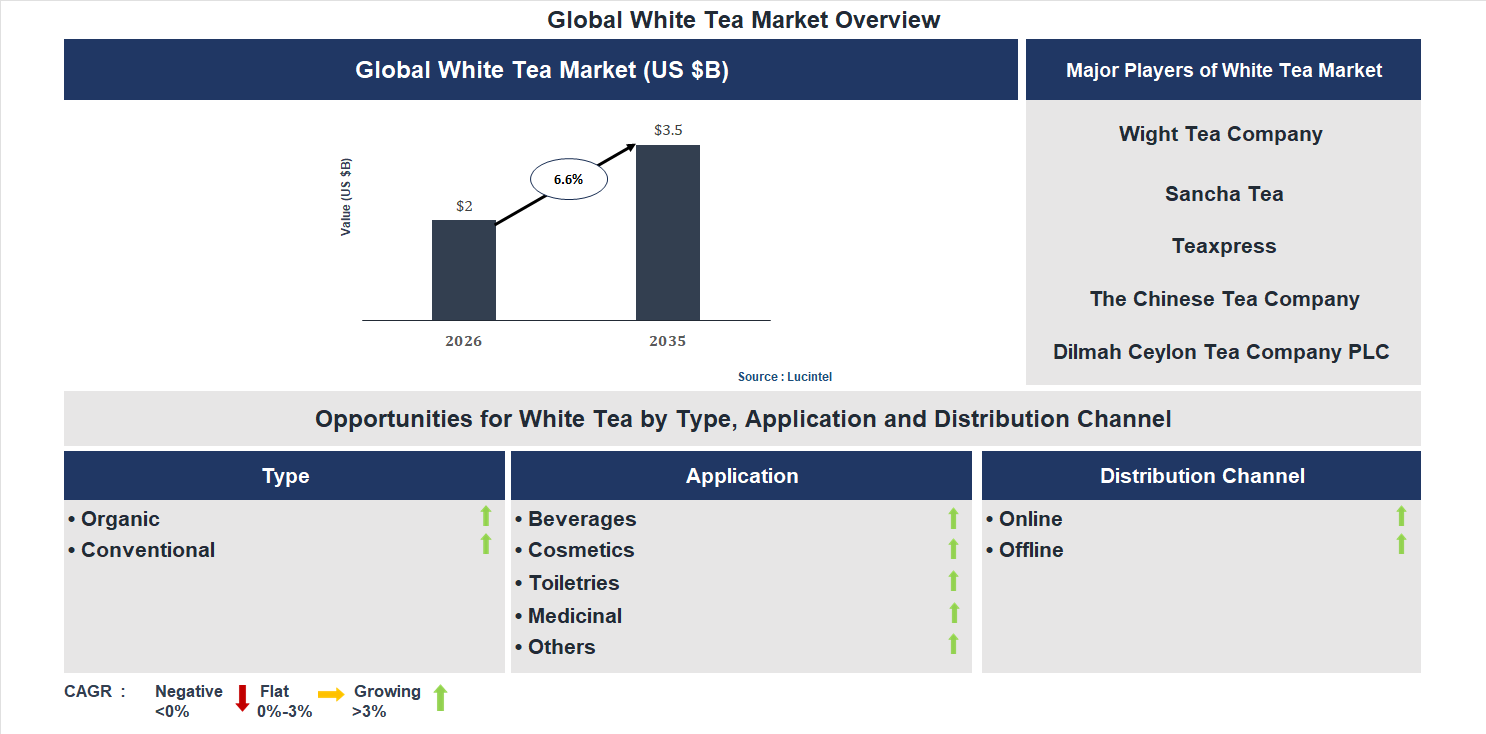
Key data points: The market size in 2035 = $3 billion, growth forecast = 6.6% annually for the next 8 years. Scroll below to get more insights. This market report covers trends, opportunities and forecasts in white tea market to 2035 by type (organic and conventional), application (beverages, cosmetics, toiletries, medicinal, and others), distribution channel (online and offline), and region (North America, Europe, Asia Pacific, and the Rest of the World)
We'll send your sample report shortly.
• Lucintel forecasts that, within the type category, conventional is expected to witness higher growth over the forecast period.
• Within the application category, beverage is expected to witness the highest growth.
• In terms of region, APAC is expected to witness the highest growth over the forecast period. Gain valuable insights for your business decisions with our comprehensive 150+ page report. Sample figures with some insights are shown below.
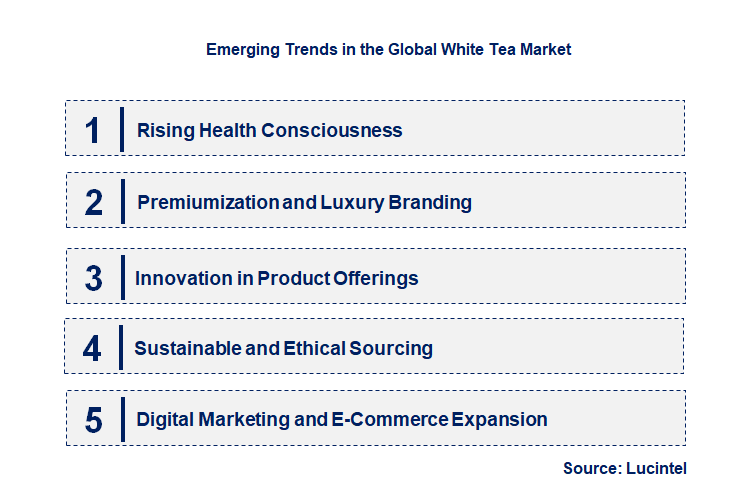
• Rising Health Consciousness: Consumers are increasingly prioritizing health and wellness, leading to higher demand for natural, antioxidant-rich beverages like white tea. White tea is perceived as a gentle, less processed option with numerous health benefits, including anti-aging and immune-boosting properties. This trend is encouraging brands to emphasize health benefits in marketing and develop products that cater to health-conscious demographics. As awareness grows, white teas positioning as a superfood is strengthening, expanding its consumer base beyond traditional tea drinkers and into wellness-focused markets.
• Premiumization and Luxury Branding: The white tea market is witnessing a shift towards premium and luxury segments, driven by consumers seeking high-quality, artisanal products. This trend involves offering rare, organic, and single-origin white teas that command higher prices. Brands are investing in storytelling, packaging, and certification to enhance perceived value. Premiumization not only boosts profit margins but also elevates the brand image, attracting affluent consumers and tea connoisseurs. This focus on quality and exclusivity is reshaping product development and marketing strategies within the industry.
• Innovation in Product Offerings: Companies are diversifying white tea products to include flavored, blended, and ready-to-drink options to cater to varied consumer preferences. Innovations such as infused white teas with herbs, fruits, and botanicals are gaining popularity. Additionally, functional white teas with added vitamins or adaptogens are emerging to meet demand for health-boosting beverages. These innovations help brands differentiate themselves in a competitive market, expand their customer base, and adapt to changing consumption patterns, including on-the-go lifestyles and convenience preferences.
• Sustainable and Ethical Sourcing: Consumers are increasingly concerned about environmental impact and ethical practices in production. The white tea market is responding by adopting sustainable farming practices, fair trade certifications, and eco-friendly packaging. Transparency in sourcing and production processes is becoming a key differentiator for brands. This trend not only appeals to environmentally conscious consumers but also encourages industry-wide improvements in sustainability standards. Ethical sourcing enhances brand reputation and fosters consumer loyalty, ultimately influencing purchasing decisions and market growth.
• Digital Marketing and E-commerce Expansion: The rise of digital platforms and e-commerce channels is transforming how white tea brands reach consumers. Online marketing, social media engagement, and direct-to-consumer sales are enabling brands to build global presence and educate consumers about white tea benefits. E-commerce provides convenience, wider product availability, and personalized shopping experiences. This trend is especially significant in reaching younger demographics and international markets, facilitating rapid growth and market penetration. Digital strategies are becoming essential for brand visibility, consumer engagement, and sales growth in the evolving white tea landscape. These trends are collectively reshaping the white tea market by emphasizing health benefits, premium quality, product innovation, sustainability, and digital engagement. They are expanding market reach, enhancing consumer experience, and fostering sustainable growth, positioning white tea as a prominent player in the global health and wellness beverage industry.
• Growing Consumer Awareness of Health Benefits: Increased focus on wellness has boosted demand for white tea, known for its antioxidants and low caffeine content, leading to expanded market reach and higher sales volumes.
• Premiumization and Product Innovation: Introduction of flavored and organic white teas appeals to niche markets, elevating brand value and encouraging premium pricing strategies.
• Expansion into Emerging Markets: Rising disposable incomes and changing lifestyles in Asia, Africa, and Latin America are opening new avenues for white tea sales, diversifying the market base.
• Advancements in Cultivation and Processing: Improved techniques enhance tea quality, flavor, and shelf life, strengthening consumer trust and enabling premium product offerings.
• Growth of Online Retail Channels: E-commerce platforms increase accessibility and visibility of white tea products, facilitating direct consumer engagement and expanding market penetration. These developments are significantly impacting the white tea market by increasing consumer interest, expanding geographic reach, and enabling premium product offerings. Enhanced cultivation methods and digital channels are driving growth, making white tea more accessible and desirable worldwide. As a result, the market is poised for sustained expansion, attracting new entrants and fostering innovation to meet evolving consumer preferences.
• Growing Consumer Awareness of Health Benefits: The increasing focus on wellness and natural products is boosting white tea consumption. Consumers perceive white tea as a healthier alternative due to its high antioxidant content and minimal processing. This trend encourages brands to emphasize health benefits in marketing strategies, expanding the customer base beyond traditional tea drinkers. As health consciousness rises globally, white teas positioning as a premium, healthful beverage creates substantial growth opportunities across markets.
• Expansion of Premium and Specialty Product Offerings: The demand for high-quality, unique white tea blends is rising among connoisseurs and premium consumers. Companies are innovating with rare varieties, organic certifications, and limited-edition products to attract discerning buyers. This focus on premiumization enhances brand value and allows for higher pricing strategies. The development of specialty products also caters to niche markets, fostering brand loyalty and encouraging repeat purchases, thereby driving overall market growth.
• Increasing Distribution Channels and Online Retail Presence: The proliferation of e-commerce platforms and specialty stores is facilitating wider access to white tea products. Online channels enable brands to reach global markets efficiently, offering detailed product information and consumer reviews that influence purchasing decisions. Retail partnerships and direct-to-consumer models are expanding market reach, especially in emerging economies. This diversification of distribution channels is crucial for capturing new customer segments and accelerating market penetration.
• Rising Demand for Sustainable and Ethically Sourced White Tea: Consumers are increasingly prioritizing sustainability and ethical sourcing in their purchasing decisions. Brands adopting eco-friendly cultivation practices, fair trade certifications, and transparent supply chains are gaining competitive advantage. This focus on sustainability not only appeals to environmentally conscious consumers but also supports premium pricing. As awareness of environmental impact grows, sustainable white tea sourcing is expected to become a key differentiator and growth driver in the market.
• Innovation in Packaging and Product Formats to Attract New Consumers: Modern, eco-friendly, and convenient packaging solutions are attracting a broader consumer base, including younger demographics. Single-serve sachets, resealable pouches, and innovative infusion formats enhance user experience and portability. Packaging that emphasizes freshness, quality, and sustainability appeals to health-conscious and environmentally aware consumers. These innovations help brands differentiate their offerings, increase shelf appeal, and expand market share by making white tea more accessible and appealing to diverse consumer preferences. The overall market outlook is positively influenced by these growth opportunities, which collectively enhance product appeal, expand consumer reach, and promote sustainable practices. Companies that strategically leverage these trends are poised to strengthen their market position, foster innovation, and capitalize on the increasing global demand for white tea. This dynamic environment promises continued growth and diversification within the white tea industry.
• Increasing Health Consciousness: Consumers are increasingly seeking natural, health-promoting beverages, which boosts demand for white tea due to its antioxidant properties and minimal processing. This trend is driven by rising awareness of wellness and preventive healthcare, encouraging consumers to opt for organic and minimally processed products. As a result, white teas reputation as a healthy alternative to traditional teas enhances its market appeal, leading to expanded consumer bases across regions. The growing popularity of functional beverages further amplifies this demand, fostering market growth.
• Technological Advancements in Cultivation and Processing: Innovations such as precision agriculture, improved harvesting techniques, and advanced drying methods have significantly enhanced white tea quality and yield. These technological improvements reduce production costs and enable consistent product standards, which are crucial for market expansion. Additionally, automation and quality control systems ensure better traceability and safety, meeting regulatory standards. Such advancements attract producers and investors, facilitating scalability and diversification of product offerings, thereby strengthening the overall market position.
• Rising Disposable Income and Urbanization: Economic growth in emerging markets has increased disposable incomes, allowing consumers to spend more on premium and specialty teas like white tea. Urbanization also influences lifestyle changes, with consumers seeking convenient, high-quality beverages. This shift results in higher demand for white tea in retail outlets, cafes, and online platforms. The expanding middle class and changing consumer preferences towards healthier, luxury products contribute to sustained market growth, especially in Asia-Pacific and North America.
• Growing Popularity of Organic and Sustainable Products: Consumers are increasingly prioritizing organic, ethically sourced, and environmentally friendly products. White tea, often associated with organic cultivation practices, benefits from this trend. Certification standards and eco-labels enhance consumer trust and product credibility, encouraging higher purchase rates. Producers adopting sustainable farming practices also gain competitive advantage and access to niche markets. This focus on sustainability not only boosts demand but also encourages industry players to innovate in eco-friendly packaging and supply chain transparency.
• Expansion of E-commerce and Global Distribution Channels: The proliferation of online retail platforms has made white tea more accessible to a global audience. E-commerce enables brands to reach consumers directly, offering detailed product information and personalized shopping experiences. This expansion reduces geographical barriers and facilitates market penetration in untapped regions. Additionally, collaborations with international distributors and retailers enhance brand visibility and availability. The convenience and variety offered by online channels significantly contribute to increased sales volumes and market expansion. The challenges facing the white tea market include:-
• Regulatory and Certification Barriers: Stringent regulations regarding organic certification, import-export policies, and quality standards can hinder market entry and expansion. Variations across countries create compliance complexities, increasing costs and delaying product launches. Additionally, inconsistent enforcement of standards may lead to market fragmentation, affecting consumer trust and brand reputation. Navigating these regulatory landscapes requires significant resources and expertise, posing a barrier for small and new entrants.
• Supply Chain Disruptions and Raw Material Scarcity: The white tea supply chain is vulnerable to disruptions caused by climate change, geopolitical tensions, and logistical issues. Limited cultivation regions and seasonal harvesting cycles can lead to raw material shortages, impacting production continuity. These disruptions increase costs and lead times, affecting product availability and pricing. Ensuring a stable supply chain is critical for maintaining market competitiveness and meeting consumer demand.
• Market Saturation and Intense Competition: As white tea gains popularity, the market faces increasing competition from other premium teas and beverage options. Established brands and new entrants compete for consumer attention, leading to price wars and marketing challenges. Differentiating products through branding, quality, and innovation becomes essential but also more difficult in a saturated market. This intense competition can limit profit margins and slow overall growth if not managed effectively. The white tea market is driven by health trends, technological innovations, economic growth, and sustainability preferences, which collectively foster expansion opportunities. However, regulatory hurdles, supply chain issues, and market saturation pose significant challenges that could impede growth if not addressed strategically. Overall, the markets future depends on how effectively stakeholders navigate these drivers and challenges, balancing innovation with compliance and supply stability to sustain long-term growth.
• Wight Tea Company
• Sancha Tea
• Teaxpress
• The Chinese Tea Company
• Dilmah Ceylon Tea Company PLC
• Vicony Teas
• White Cloud World Teas
• Rare Tea Company
• The East India Company LTD
• Goodricke Group Limited
• Organic
• Conventional
• Beverages
• Cosmetics
• Toiletries
• Medicinal
• Others
• Online
• Offline
• North America
• Europe
• Asia Pacific
• The Rest of the World
• United States: The U.S. white tea market has seen rapid growth, fueled by rising health consciousness and demand for organic products. Premium and specialty white teas are gaining popularity in health food stores and online platforms. Innovative packaging and marketing campaigns emphasizing purity and wellness are attracting younger consumers. Major brands are expanding their product lines to include flavored and blended white teas, while sustainable sourcing practices are becoming a key differentiator. The market is also witnessing increased retail distribution and e-commerce sales, contributing to overall growth.
• China: As the birthplace of white tea, China continues to lead in production and innovation. Recent developments include the adoption of eco-friendly cultivation methods and organic certification to meet global demand. New regional varieties and higher-quality grades are being introduced to cater to premium markets. The government is supporting sustainable farming practices and branding efforts to promote Chinese white tea internationally. Export volumes are rising, especially to Western markets, driven by increasing consumer interest in traditional and health-oriented teas. Domestic consumption remains strong, with a focus on heritage and authenticity.
• Germany: The German white tea market is characterized by a growing consumer base interested in health and wellness products. Retailers are expanding their offerings of organic and fair-trade white teas, emphasizing quality and sustainability. Innovative product formats, such as ready-to-drink and tea bags, are gaining popularity. The market benefits from strong distribution networks and a well-established tea culture. Consumer education campaigns about the health benefits of white tea are boosting demand. Additionally, Germanys focus on environmental sustainability influences sourcing and packaging choices, aligning with global trends.
• India: India is increasingly exploring white tea cultivation, primarily in regions with suitable climatic conditions. Recent developments include research into high-yielding and pest-resistant white tea varieties. The market is still emerging, with domestic consumption growing as awareness of white teas health benefits spreads. Local producers are experimenting with organic cultivation and sustainable practices to differentiate their products. Export opportunities are being explored, especially to Western markets, as Indian white tea gains recognition for quality and authenticity. The government is also promoting tea exports through various initiatives, supporting industry growth.
• Japan: Japans white tea market is expanding, driven by health-conscious consumers and a strong tradition of tea appreciation. Innovative blends and flavored white teas are being introduced to appeal to modern tastes. Japanese producers focus on high-quality, organic, and sustainably sourced white teas, emphasizing craftsmanship and purity. The market benefits from a robust domestic distribution network, including specialty stores and online platforms. Consumer education about the health benefits of white tea is increasing demand. Additionally, collaborations with wellness brands and the integration of white tea into traditional tea ceremonies are enhancing its cultural appeal.


• Wight Tea Company
• Sancha Tea
• Teaxpress
• The Chinese Tea Company
• Dilmah Ceylon Tea Company PLC
• Vicony Teas
• White Cloud World Teas
• Rare Tea Company
• The East India Company LTD
• Goodricke Group Limited Q6. Which white tea market segment will be the largest in future? Answer: Lucintel forecasts that, within the type category, conventional is expected to witness higher growth over the forecast period. Q7. In white tea market, which region is expected to be the largest in next 5 years? Answer: In terms of region, APAC is expected to witness the highest growth over the forecast period. Q8. Do we receive customization in this report? Answer: Yes, Lucintel provides 10% customization without any additional cost.


Choose a license that fits your team. Instant PDF delivery.
Prices exclude taxes. Instant delivery. Custom licensing available on request.
Market Report · July 22, 2026
Market Report · July 22, 2026
Market Report · July 22, 2026
Trusted partner for strategic intelligence and business growth


Receive a complimentary market analysis tailored to your industry. Our analysts will identify key growth opportunities and competitive dynamics specific to your business.

Market size, growth rate, and key trend analysis for your specific sector.

Top competitor positioning and market share analysis.

Strategic recommendations backed by data-driven insights.
Get curated market intelligence and competitive moves straight to your inbox.
By subscribing, you agree to receive our monthly insights. Unsubscribe anytime.
Receive a complimentary market analysis tailored to your industry. Our analysts will identify key growth opportunities and competitive dynamics specific to your business.
Market size, growth rate, and key trend analysis for your specific sector.
Top competitor positioning and market share analysis.
Strategic recommendations backed by data-driven insights.
Get curated market intelligence, emerging trends, and competitive moves straight to your inbox each month.
By subscribing, you agree to receive our monthly insights. Unsubscribe anytime.
We'll send your sample report shortly.