
Market Report · July 29, 2026

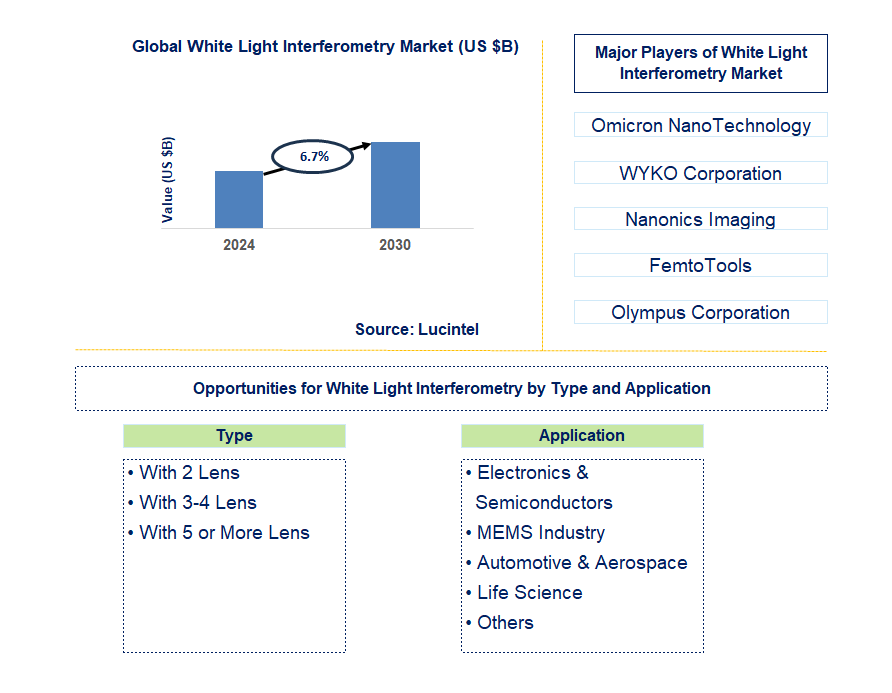
Key data points: The growth forecast = 6.7% annually next 6 years. Scroll below to get more insights. This market report covers trends, opportunities, and forecast in the global white light interferometry market to 2030 by type (with 2 lens, with 3-4 lens, and with 5 or more lens), application (electronics & semiconductors, mems industry, automotive & aerospace, life science, and others), and region (North America, Europe, Asia Pacific, and the Rest of the World)
We'll send your sample report shortly.
• United States: In the United States, the WLI market is experiencing significant growth driven by advancements in nanotechnology and manufacturing precision. Major U.S. firms are focusing on integrating WLI with machine learning algorithms to enhance measurement accuracy and data analysis. Key developments include the introduction of high-resolution systems capable of measuring complex surfaces with micron-level precision. Additionally, there is a surge in demand for WLI systems in the aerospace and defense sectors, where precision is critical. This trend is supported by substantial investment in research and development to push the boundaries of WLI applications and performance.
• China: China is rapidly advancing in the WLI sector, propelled by its large-scale investments in semiconductor manufacturing and high-tech industries. Recent developments include the deployment of WLI systems with enhanced capabilities for high-throughput inspections and improved resolution. Chinese companies are also focusing on cost-effective solutions, making WLI technology more accessible to a broader range of industries. Innovations such as compact, portable WLI devices are gaining traction, addressing the need for on-site measurements in challenging environments. The government’s support for technological advancement and infrastructure development is further accelerating the growth of the WLI market in China.
• Germany: German WLI market is characterized by its emphasis on precision engineering and high-quality manufacturing. German companies are leading the way in developing advanced WLI systems that integrate with Industry 4.0 technologies. Recent advancements include the integration of WLI with automated production lines and real-time quality control systems. Additionally, there is a strong focus on miniaturization and enhancing the flexibility of WLI systems to cater to the needs of the automotive and aerospace industries. Germany’s strong emphasis on research and collaboration between industry and academia is driving innovation in the WLI sector.
• India: In India, the WLI market is witnessing growth driven by increasing investments in infrastructure and electronics manufacturing. Recent developments include the adoption of WLI technology in research institutions and emerging industries. Indian companies are working on developing cost-effective WLI solutions tailored to local needs, including affordable systems for educational and industrial applications. There is also a growing focus on integrating WLI with other metrology technologies to improve measurement capabilities. The expansion of the semiconductor and automotive sectors in India is expected to further boost the demand for advanced WLI systems.
• Japan: In Japan, WLI market is marked by its strong focus on technological innovation and precision. Recent advancements include the development of high-speed WLI systems with enhanced accuracy and stability. Japanese companies are leading efforts to integrate WLI technology with robotics and automation for applications in electronics and automotive manufacturing. Additionally, there is a growing trend towards developing compact and user-friendly WLI systems for research and industrial use. Japan’s commitment to maintaining its technological edge and addressing the evolving needs of its high-tech industries is driving these advancements.
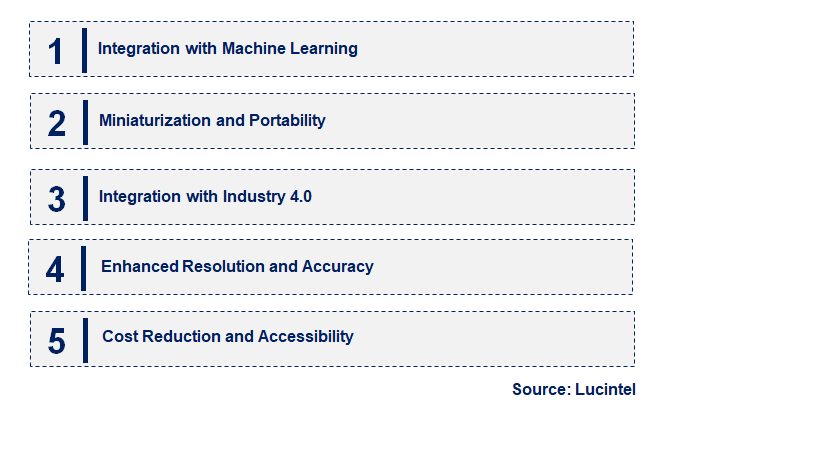
• Integration with Machine Learning: Machine learning integration is transforming WLI by enhancing data analysis and measurement accuracy. Advanced algorithms can process complex surface data more efficiently, providing deeper insights and improving error correction. This integration allows for real-time analysis and predictive maintenance, making WLI systems more effective in dynamic industrial environments. As machine learning models continue to evolve, they will further refine the capabilities of WLI systems, offering unprecedented levels of precision and reliability.
• Miniaturization and Portability: The trend toward miniaturization and portability of WLI systems is making high-precision measurements more accessible. Compact WLI devices are now available for on-site inspections and portable applications, expanding their usability across various industries. This development is particularly valuable for applications in field measurements, where traditional bulky equipment would be impractical. Miniaturized systems offer convenience without compromising measurement quality, driving adoption in sectors like aerospace, automotive, and semiconductor manufacturing.
• Integration with Industry 4.0: Integration with Industry 4.0 technologies is enhancing WLI systems by enabling seamless connectivity and automation. WLI systems are increasingly being incorporated into automated production lines and real-time quality control processes. This trend is leading to improved efficiency, reduced downtime, and better overall product quality. By connecting WLI systems with other smart manufacturing technologies, industries can achieve higher levels of precision and automation, aligning with the broader goals of Industry 4.0.
• Enhanced Resolution and Accuracy: Continuous advancements in optical technologies are pushing the boundaries of resolution and accuracy in WLI systems. New developments are enabling measurements at the nanometer scale, making WLI increasingly suitable for applications requiring extreme precision, such as semiconductor manufacturing and advanced materials research. Enhanced resolution allows for more detailed surface profiling and defect detection, driving innovation in industries that demand the highest levels of accuracy.
• Cost Reduction and Accessibility: Efforts to reduce the cost of WLI systems are making this technology more accessible to a wider range of industries. Innovations in manufacturing processes and materials are contributing to lower production costs, which are being passed on to customers. This trend is democratizing access to high-precision measurement technology, allowing smaller enterprises and research institutions to benefit from WLI capabilities. Increased affordability is expected to drive broader adoption and spur further advancements in the field. These emerging trends are reshaping the white light interferometry market by enhancing the technology's capabilities and expanding its applications. Integration with machine learning and Industry 4.0 is driving greater precision and efficiency, while miniaturization and cost reduction are making WLI systems more accessible. Enhanced resolution continues to push the boundaries of measurement accuracy, catering to high-tech industries' demands. Collectively, these trends are transforming WLI into a more versatile and essential tool across various sectors, driving innovation and improving the quality and efficiency of manufacturing and research processes.
• Development of High-Resolution Systems: Recent advancements in WLI technology include the development of high-resolution systems capable of measuring with unprecedented accuracy. These systems use advanced optical components and imaging techniques to achieve resolutions in the nanometer range. The ability to capture detailed surface profiles and detect minute defects is crucial for industries like semiconductor manufacturing and precision engineering. High-resolution WLI systems are enabling more accurate quality control and enhancing research capabilities across various fields.
• Integration with Automated Inspection Systems: Integration of WLI with automated inspection systems is revolutionizing quality control in manufacturing. Automated WLI systems are now capable of real-time surface profiling and defect detection on production lines. This development enhances production efficiency by providing instant feedback and reducing the need for manual inspections. Automation also allows for consistent and repeatable measurements, leading to higher product quality and reduced operational costs.
• Advancements in Miniaturization: The miniaturization of WLI systems has been a significant development, making high-precision measurements more portable and accessible. Compact WLI devices are now available for on-site inspections and field measurements, expanding their application range. This advancement is particularly valuable for industries that require portable and easy-to-use measurement tools, such as aerospace and automotive sectors. Miniaturized systems offer flexibility without compromising measurement accuracy.
• Enhanced Data Analysis Capabilities: Recent innovations in data analysis capabilities are improving the performance of WLI systems. Advanced software algorithms and machine learning techniques are being integrated to enhance data processing and interpretation. These developments allow for more accurate and detailed analysis of measurement data, facilitating better decision-making and quality control. Enhanced data analysis capabilities are driving the adoption of WLI systems in research and high-tech industries.
• Cost-Effective Solutions for Emerging Markets: The introduction of cost-effective WLI solutions is making this technology more accessible to emerging markets and smaller enterprises. Innovations in manufacturing and materials are reducing the cost of WLI systems, allowing broader adoption across various industries. Affordable WLI systems are helping to democratize access to high-precision measurement technology, supporting growth in sectors like electronics, automotive, and research in developing regions. These key developments in the white light interferometry market are significantly impacting the technology's capabilities and applications. Advances in resolution, automation, miniaturization, data analysis, and cost reduction are driving innovation and expanding the use of WLI systems across diverse industries. As these developments continue to evolve, they are enhancing the precision, accessibility, and efficiency of WLI technology, contributing to its growing importance in manufacturing, research, and quality control.
• Semiconductor Manufacturing: In semiconductor manufacturing, WLI offers precise surface profiling and thickness measurement crucial for fabricating advanced microelectronics. The increasing complexity of semiconductor devices requires extremely accurate measurement of thin film layers and surface features. WLI's ability to provide high-resolution data facilitates better control of manufacturing processes, improving the yield and performance of semiconductor components. Growth opportunities are driven by the need for precision in next-generation semiconductors and the expanding demand for smaller, more powerful electronic devices.
• Aerospace and Defense: The aerospace and defense industries benefit significantly from WLI’s precision in inspecting and analyzing components. WLI systems are used for evaluating the surface quality of critical aerospace parts, such as turbine blades and structural components. The high accuracy and ability to detect minute defects are essential for ensuring the reliability and safety of aerospace systems. As the industry moves toward more advanced materials and designs, WLI's role in quality assurance and performance evaluation presents substantial growth opportunities.
• Automotive Manufacturing: In automotive manufacturing, WLI technology is utilized for quality control and surface analysis of parts and components. The shift toward more complex designs and materials, such as lightweight composites, increases the demand for precise measurement techniques. WLI systems help in monitoring the quality of surface finishes, detecting defects, and ensuring that parts meet stringent specifications. The growth opportunity here lies in WLI's ability to support the automotive industry's push for innovation and high performance.
• Biomedical Research: Biomedical research is leveraging WLI for detailed imaging and characterization of biological samples and medical devices. WLI’s non-destructive measurement capabilities are valuable for studying the morphology of tissues and cells, as well as for assessing the quality of medical implants and devices. As biomedical research advances and the demand for personalized medicine increases, WLI’s application in this field is expanding, presenting opportunities for growth in research and diagnostic applications.
• Optics and Photonics: In optics and photonics, WLI plays a crucial role in characterizing optical components and systems. High-precision measurements of optical surfaces, coatings, and thin films are essential for developing and manufacturing advanced optical technologies. As the demand for high-performance optical systems grows in areas such as telecommunications and imaging, WLI's ability to provide accurate surface analysis and quality control creates significant growth opportunities in this sector. These strategic growth opportunities in semiconductor manufacturing, aerospace and defense, automotive manufacturing, biomedical research, and optics and photonics illustrate the expanding role of White Light Interferometry across diverse applications. By addressing the unique measurement challenges and requirements of each sector, WLI technology is poised to drive innovation and enhance precision, contributing to the advancement of these industries.
• Omicron NanoTechnology
• WYKO Corporation
• Nanonics Imaging
• FemtoTools
• Olympus Corporation
• Nanofocus
• Topcon Corporation
• With 2 Lens
• With 3-4 Lens
• With 5 or More Lens
• Electronics & Semiconductors
• MEMS Industry
• Automotive & Aerospace
• Life Science
• Others
• North America
• Europe
• Asia Pacific
• The Rest of the World
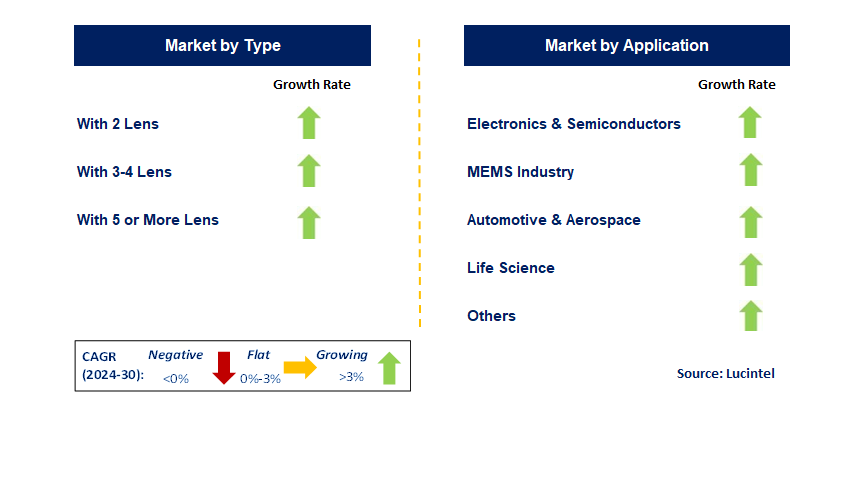
• Lucintel forecasts that, within the type category, with 2 lenses is expected to witness the highest growth over the forecast period due to it providing superior resolution, accuracy, and increased repeatability.
• Within the application category, automotive & aerospace are expected to witness the largest growth due to increasing demand for accuracy and precision in the manufacturing of various components used in automobiles and aircraft.
• In terms of regions, APAC is expected to witness the largest growth over the forecast period due to the presence of manufacturing industries.


• Omicron NanoTechnology
• WYKO Corporation
• Nanonics Imaging
• FemtoTools
• Olympus Corporation
• Nanofocus
• Topcon Corporation Q5. Which white light interferometry market segment will be the largest in the future? Answer: Lucintel forecasts that with 2 lenses is expected to witness the highest growth over the forecast period due to it providing superior resolution, accuracy, and increased repeatability. Q6. In the white light interferometry market, which region is expected to be the largest in the next 5 years? Answer: APAC will remain the largest region over the forecast period due to the presence of manufacturing industries. Q.7 Do we receive customization in this report? Answer: Yes, Lucintel provides 10% customization without any additional cost.


Choose a license that fits your team. Instant PDF delivery.
Prices exclude taxes. Instant delivery. Custom licensing available on request.
Market Report · July 29, 2026
Market Report · July 20, 2026
Market Report · July 20, 2026
Trusted partner for strategic intelligence and business growth


Receive a complimentary market analysis tailored to your industry. Our analysts will identify key growth opportunities and competitive dynamics specific to your business.

Market size, growth rate, and key trend analysis for your specific sector.

Top competitor positioning and market share analysis.

Strategic recommendations backed by data-driven insights.
Get curated market intelligence and competitive moves straight to your inbox.
By subscribing, you agree to receive our monthly insights. Unsubscribe anytime.
Receive a complimentary market analysis tailored to your industry. Our analysts will identify key growth opportunities and competitive dynamics specific to your business.
Market size, growth rate, and key trend analysis for your specific sector.
Top competitor positioning and market share analysis.
Strategic recommendations backed by data-driven insights.
Get curated market intelligence, emerging trends, and competitive moves straight to your inbox each month.
By subscribing, you agree to receive our monthly insights. Unsubscribe anytime.
We'll send your sample report shortly.