
Report Feature
Wheelchair Cushion Market Trends and Forecast
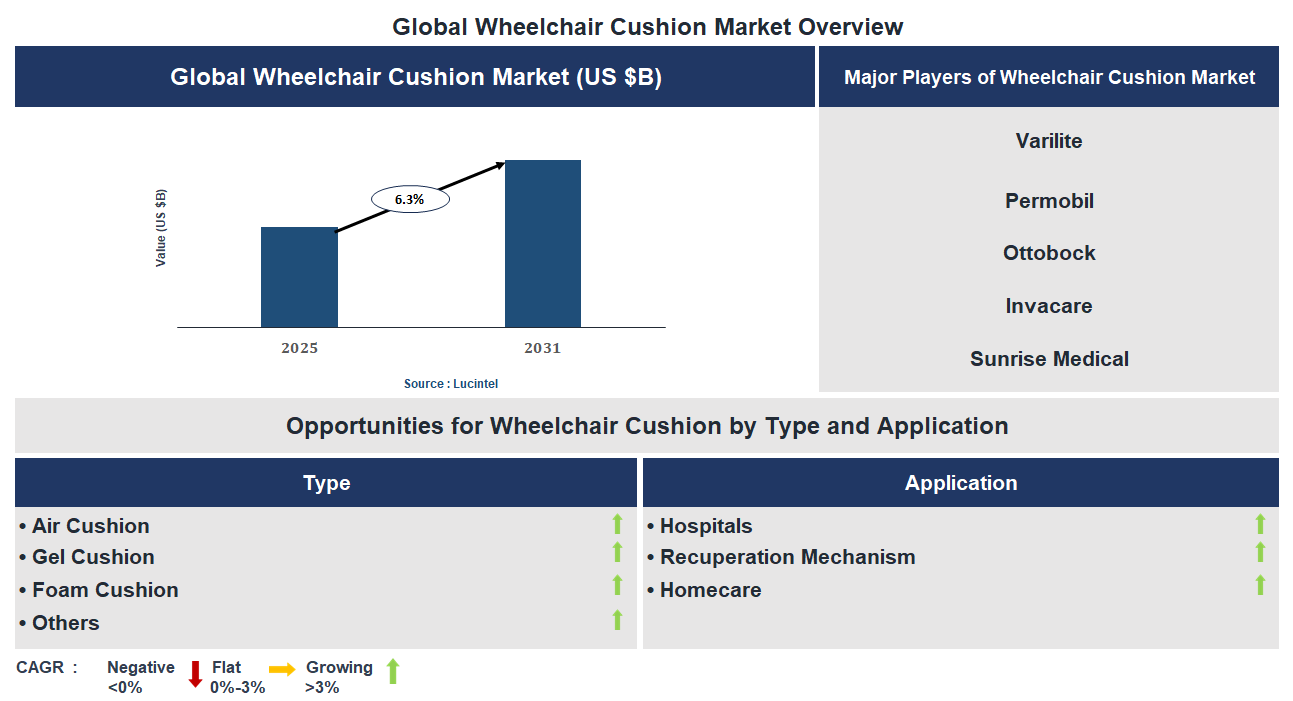
The future of the global wheelchair cushion market looks promising with opportunities in the hospital, recuperation mechanism, and homecare markets. The global wheelchair cushion market is expected to grow with a CAGR of 6.3% from 2025 to 2031. The major drivers for this market are the increasing number of people with disabilities, the rising awareness about pressure ulcer prevention, and the growing demand for comfort & mobility aids.• Lucintel forecasts that, within the type category, air cushion is expected to witness the highest growth over the forecast period.
• Within the application category, homecare is expected to witness the highest growth.
• In terms of region, APAC is expected to witness the highest growth over the forecast period. Gain valuable insights for your business decisions with our comprehensive 150+ page report. Sample figures with some insights are shown below.
Emerging Trends in the Wheelchair Cushion Market
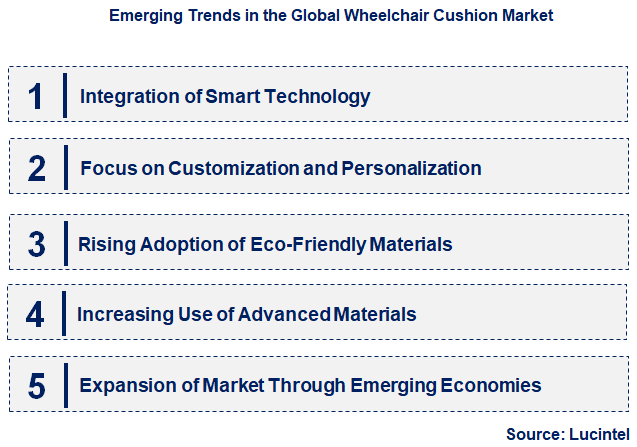
The wheelchair cushion market is experiencing rapid evolution driven by technological advancements, increasing awareness of comfort and health, and a growing aging population. As users demand more personalized, effective, and innovative solutions, manufacturers are focusing on developing products that enhance mobility, prevent pressure sores, and improve overall quality of life. These developments are reshaping the competitive landscape, encouraging innovation, and expanding market opportunities. The following key trends highlight the major shifts influencing this market, reflecting a move towards smarter, more comfortable, and sustainable wheelchair cushion solutions.• Integration of Smart Technology: The market is witnessing the incorporation of smart features such as pressure sensors and IoT connectivity into wheelchair cushions. These innovations enable real-time pressure monitoring, alerting users or caregivers to adjust positioning and prevent pressure ulcers. This trend enhances user safety, promotes proactive health management, and offers personalized comfort. As technology becomes more affordable and accessible, smart cushions are expected to become standard, transforming traditional cushioning into intelligent health management tools.
• Focus on Customization and Personalization: Increasing demand for tailored solutions is driving the development of customizable wheelchair cushions. Manufacturers are offering adjustable, modular, and customizable options to meet individual needs based on body shape, medical conditions, and comfort preferences. This trend improves user satisfaction, reduces discomfort, and enhances overall mobility. Personalized cushions also help in better pressure distribution, preventing skin breakdown and other complications, thus expanding market reach among diverse user groups.
• Rising Adoption of Eco-Friendly Materials: Sustainability is gaining importance in the wheelchair cushion market. Companies are shifting towards eco-friendly, biodegradable, and recyclable materials to reduce environmental impact. These sustainable options appeal to environmentally conscious consumers and comply with stricter regulations. The use of natural and recycled materials not only supports environmental goals but also enhances product safety and durability, positioning eco-friendly cushions as a preferred choice in the market and encouraging innovation in sustainable manufacturing practices.
• Increasing Use of Advanced Materials: The development of cushions using advanced materials such as memory foam, gel, and breathable fabrics is a significant trend. These materials offer superior pressure distribution, moisture management, and temperature regulation, improving comfort and skin health. The adoption of innovative materials also extends product lifespan and reduces maintenance needs. This trend caters to users seeking high-performance solutions, driving market growth and encouraging ongoing research into new, more effective materials for wheelchair cushions.
• Expansion of Market Through Emerging Economies: Growing awareness of mobility aids and increasing healthcare infrastructure in emerging economies are expanding the wheelchair cushion market. Rising disposable incomes and aging populations in regions like Asia-Pacific and Latin America are fueling demand. Local manufacturers are entering the market, offering affordable, quality options, and fostering innovation tailored to regional needs. This expansion not only broadens the market base but also encourages global competition, leading to more diverse product offerings and increased accessibility for a wider population. In summary, these trends are collectively transforming the wheelchair cushion market by integrating technology, emphasizing sustainability, personalizing user experience, and expanding geographically. They are driving innovation, improving product efficacy, and making mobility solutions more accessible and comfortable, ultimately enhancing the quality of life for users worldwide.
Recent Development in the Wheelchair Cushion Market
The wheelchair cushion market has experienced significant growth driven by technological advancements, increasing awareness of comfort and health, and a rising global aging population. As demand for improved mobility solutions grows, manufacturers are innovating to meet diverse needs, including pressure relief, durability, and customization. The market is also influenced by healthcare policies and the rising prevalence of chronic conditions requiring wheelchair use. These developments are shaping the competitive landscape, encouraging innovation, and expanding access to advanced wheelchair cushions worldwide. Understanding these key trends is essential for stakeholders aiming to capitalize on emerging opportunities and address evolving consumer needs effectively.• Technological Innovations: Integration of advanced materials and smart features has enhanced cushion performance. New materials like memory foam and gel layers provide better pressure distribution and comfort, reducing the risk of pressure ulcers. Smart cushions with sensors monitor pressure points and adjust in real-time, improving user health and safety. These innovations have increased market competitiveness and opened new avenues for product differentiation, attracting healthcare providers and consumers seeking high-tech solutions.
• Rising Demand for Customization: Consumers increasingly seek personalized wheelchair cushions tailored to individual needs. Manufacturers now offer adjustable and customizable options to accommodate specific pressure points, body types, and comfort preferences. This trend has expanded market segments, especially among users with unique medical conditions or preferences. Customization enhances user satisfaction and health outcomes, driving market growth and encouraging companies to develop versatile product lines.
• Growing Aging Population: The global increase in elderly populations has significantly impacted the wheelchair cushion market. Older adults often require specialized cushions to prevent pressure sores and improve comfort during prolonged sitting. This demographic shift has led to increased demand for ergonomic, pressure-relieving cushions. Healthcare providers are prioritizing these products, which has resulted in expanded distribution channels and increased sales, especially in developed countries with aging populations.
• Impact of Healthcare Policies and Reimbursement: Changes in healthcare policies and reimbursement schemes have influenced market dynamics. In some regions, insurance coverage and government programs now include advanced wheelchair cushions, making them more accessible. This has boosted demand, especially for high-quality, pressure-relief cushions. Conversely, policy restrictions or limited reimbursement can hinder market growth. Overall, policy developments are shaping product availability and affordability, impacting market expansion.
• Sustainability and Eco-Friendly Materials: Environmental concerns are prompting manufacturers to adopt sustainable materials in cushion production. Use of biodegradable foams, recycled fabrics, and eco-friendly manufacturing processes appeals to environmentally conscious consumers and healthcare providers. This shift not only enhances brand reputation but also aligns with global sustainability goals. The adoption of eco-friendly materials is expected to drive innovation and expand market share among environmentally aware buyers, influencing future product development and market trends. In summary, these developments are collectively transforming the wheelchair cushion market by fostering innovation, expanding consumer options, and aligning products with demographic and environmental trends. The market is becoming more competitive, diverse, and responsive to user needs, promising sustained growth and improved healthcare outcomes.
Strategic Growth Opportunities in the Wheelchair Cushion Market
The wheelchair cushion market is experiencing significant growth driven by increasing demand for comfort, safety, and improved mobility solutions across various applications. Technological advancements, rising healthcare awareness, and a growing aging population are fueling innovation and expansion in this sector. As the market evolves, key growth opportunities are emerging across different application segments, offering potential for manufacturers and stakeholders to capitalize on. These opportunities not only enhance user experience but also contribute to better health outcomes and cost efficiencies. Understanding these growth drivers is essential for strategic planning and investment in this dynamic market landscape.• Enhanced patient comfort and safety : The demand for advanced wheelchair cushions in hospitals and clinics is rising to improve patient comfort, prevent pressure ulcers, and ensure safety during prolonged use, driving innovation in medical-grade cushion materials and designs.
• Growing home healthcare adoption : As more individuals prefer home-based care, there is increased need for comfortable, easy-to-maintain cushions that support independence and reduce caregiver burden, expanding market opportunities in residential settings.
• Specialized cushions for active users : The development of high-performance, durable cushions tailored for sports and recreational activities is creating new markets, catering to active wheelchair users seeking comfort and stability during physical activities.
• Durable, high-performance cushions : Military applications demand rugged, long-lasting cushions that withstand harsh environments, leading to innovations in materials that enhance durability and user safety in demanding operational scenarios.
• Focus on pressure relief and comfort : The aging populations rising needs for pressure ulcer prevention and comfort are prompting the development of ergonomic cushions that improve quality of life and reduce healthcare costs in elderly care facilities. These growth opportunities are significantly impacting the wheelchair cushion market by expanding its scope, fostering innovation, and addressing specific user needs across diverse applications. This diversification is driving market growth, increasing competitiveness, and encouraging technological advancements that benefit end-users worldwide.
Wheelchair Cushion Market Driver and Challenges
The wheelchair cushion market is influenced by a variety of technological, economic, and regulatory factors that shape its growth and development. Advances in cushion materials and ergonomic designs enhance comfort and health benefits for users, driving demand. Economic factors such as increasing healthcare expenditure and aging populations contribute to market expansion. Regulatory standards ensure safety and quality, fostering consumer confidence. However, challenges like high product costs, regulatory complexities, and competition from alternative solutions pose obstacles. Understanding these drivers and challenges is essential for stakeholders to navigate the evolving landscape effectively and capitalize on emerging opportunities. The factors responsible for driving the wheelchair cushion market include:-• Technological Innovations: The development of advanced materials like memory foam, gel, and breathable fabrics has significantly improved cushion comfort, pressure distribution, and durability. These innovations meet the growing demand for customized and ergonomic solutions, especially for long-term wheelchair users. As technology continues to evolve, manufacturers can offer more sophisticated products that enhance user health and comfort, thereby expanding market reach. Additionally, integration of smart features such as pressure sensors is opening new avenues for market growth, making cushions more responsive and user-friendly.
• Aging Population and Rising Disability Rates: The global increase in aging populations and the prevalence of mobility impairments are major drivers. Older adults are more prone to conditions requiring wheelchair use, and as life expectancy rises, the demand for supportive seating solutions grows. This demographic shift results in higher healthcare needs and increased adoption of wheelchair cushions to prevent pressure ulcers and improve comfort. Governments and healthcare providers are investing more in assistive devices, further fueling market growth driven by demographic trends.
• Healthcare Infrastructure Expansion: The expansion of healthcare facilities and rehabilitation centers worldwide is boosting demand for wheelchair cushions. As hospitals and clinics adopt advanced mobility aids, the need for high-quality cushions becomes critical for patient care. Increased healthcare spending and government initiatives to improve disability support services contribute to this growth. Moreover, the rising awareness among healthcare professionals about the importance of pressure management and comfort in patient recovery processes propels the market forward.
• Regulatory and Quality Standards: Stringent regulatory frameworks and quality standards ensure the safety, efficacy, and reliability of wheelchair cushions. Compliance with these standards builds consumer trust and encourages manufacturers to innovate within safety parameters. Regulatory bodies also promote the adoption of eco-friendly and hypoallergenic materials, aligning market growth with sustainability goals. These standards can act as both a driver and a barrier, depending on the ability of manufacturers to meet evolving compliance requirements efficiently.
• Increasing Awareness and Adoption of Assistive Devices: Growing awareness about mobility aids and assistive devices among patients, caregivers, and healthcare providers is expanding market penetration. Educational campaigns and advocacy programs highlight the benefits of ergonomic cushions in preventing pressure sores and enhancing comfort. This increased awareness leads to higher adoption rates, especially in developing regions where assistive technology is gaining prominence. As acceptance grows, market players are motivated to innovate and offer diverse product ranges to meet varied consumer needs. The challenges facing this wheelchair cushion market include:-
• High Product Costs: Advanced wheelchair cushions often involve expensive materials and manufacturing processes, resulting in higher retail prices. This can limit accessibility for lower-income patients and healthcare providers operating under budget constraints. The cost barrier may slow market growth, especially in developing regions where affordability is a primary concern. Manufacturers need to balance innovation with cost-effectiveness to expand their customer base without compromising quality.
• Regulatory Complexities: Navigating diverse and evolving regulatory landscapes across different countries can be challenging for manufacturers. Compliance with safety, environmental, and quality standards requires significant investment in testing and certification processes. Delays and costs associated with regulatory approval can hinder product launches and market entry, especially for small and medium-sized enterprises. This complexity may restrict innovation and slow down the introduction of new cushion technologies.
• Market Competition and Substitute Products: The presence of numerous competitors and alternative solutions such as foam pads, gel overlays, and custom seating options intensifies market rivalry. Price wars and product differentiation become critical strategies, but intense competition can erode profit margins. Additionally, some users may opt for less expensive or non-specialized solutions, impacting demand for high-end cushions. Staying ahead in innovation and branding is essential to maintain market share amid this competitive environment. In summary, the wheelchair cushion market is driven by technological advancements, demographic shifts, healthcare infrastructure growth, regulatory standards, and increased awareness. However, high costs, regulatory hurdles, and intense competition pose significant challenges. These factors collectively influence market dynamics, requiring stakeholders to innovate strategically and address barriers effectively. Overall, the markets future growth hinges on balancing innovation with affordability and navigating regulatory complexities to meet the evolving needs of users worldwide.
List of Wheelchair Cushion Companies
Companies in the market compete on the basis of product quality offered. Major players in this market focus on expanding their manufacturing facilities, R&D investments, infrastructural development, and leverage integration opportunities across the value chain. With these strategies wheelchair cushion companies cater increasing demand, ensure competitive effectiveness, develop innovative products & technologies, reduce production costs, and expand their customer base. Some of the wheelchair cushion companies profiled in this report include-• Varilite
• Permobil
• Ottobock
• Invacare
• Sunrise Medical
• Winncare Group
• Action Products
• Yuwell
• Drive DeVilbiss
• Trulife
Wheelchair Cushion Market by Segment
The study includes a forecast for the global wheelchair cushion market by type, application, and region.Wheelchair Cushion Market by Type [Value from 2019 to 2031]:
• Air Cushion
• Gel Cushion
• Foam Cushion
• Others
Wheelchair Cushion Market by Application [Value from 2019 to 2031]:
• Hospitals
• Recuperation Mechanism
• Homecare
Wheelchair Cushion Market by Region [Value from 2019 to 2031]:
• North America
• Europe
• Asia Pacific
• The Rest of the World
Country Wise Outlook for the Wheelchair Cushion Market
The wheelchair cushion market has experienced significant growth driven by technological advancements, increasing awareness of comfort and health benefits, and a rising aging population worldwide. Innovations in materials, customization options, and ergonomic designs have enhanced user experience and safety. Governments and healthcare providers are investing more in accessible mobility solutions, further fueling market expansion. The markets evolution reflects a focus on improving quality of life for individuals with mobility challenges, with key players continuously innovating to meet diverse needs. As the market develops, regional differences in demand, regulatory standards, and technological adoption shape the landscape uniquely across major economies.• United States: The US market has seen rapid adoption of advanced wheelchair cushions, including gel and memory foam options, driven by aging demographics and increased healthcare spending. Innovations such as pressure redistribution and moisture-wicking materials are gaining popularity. Regulatory standards and insurance coverage improvements have facilitated wider access. Companies are focusing on lightweight, durable, and customizable cushions to meet diverse user needs. Telehealth and remote customization services are also emerging, enhancing user convenience. The US remains a leader in integrating smart technology into wheelchair cushions, improving monitoring and comfort.
• China: Chinas wheelchair cushion market is expanding due to a growing elderly population and increased healthcare infrastructure investments. Local manufacturers are developing affordable, functional cushions tailored to regional needs, emphasizing durability and ease of use. The government’s policies promoting accessible healthcare are boosting demand. There is a rising trend toward integrating basic ergonomic features and moisture control. International brands are entering the market, bringing innovative products and raising standards. E-commerce platforms are playing a crucial role in distribution, making products more accessible across urban and rural areas. The market is expected to grow steadily with ongoing urbanization and healthcare reforms.
• Germany: Germanys market is characterized by high-quality, technologically advanced wheelchair cushions, with a focus on ergonomic design and pressure relief. The country’s strict regulatory standards ensure safety and efficacy, fostering innovation. Sustainable and eco-friendly materials are increasingly used, aligning with environmental policies. German manufacturers emphasize customization and comfort, often integrating advanced foam and gel technologies. The healthcare system’s emphasis on preventive care and patient comfort drives demand. Additionally, Germany is investing in research collaborations to develop smart cushions with sensors for pressure monitoring. The market remains mature, with steady growth driven by aging populations and technological innovation.
• India: The Indian wheelchair cushion market is witnessing rapid growth due to increasing awareness, rising disability rates, and expanding healthcare infrastructure. Cost-effective, durable, and locally manufactured cushions are in high demand, especially in rural areas. Basic foam cushions are common, but there is a growing interest in ergonomic and pressure-relief options. Government initiatives promoting accessible healthcare and disability support are boosting market penetration. E-commerce and local distribution channels are expanding reach. The market is also seeing a rise in social enterprises and startups offering affordable solutions. As awareness and affordability improve, the market is poised for significant expansion in the coming years.
• Japan: Japans market is driven by an aging population requiring advanced, comfortable wheelchair cushions. Innovations focus on pressure distribution, moisture management, and lightweight materials. The country emphasizes high-quality, durable products with ergonomic features to enhance user comfort and health. Regulatory standards ensure safety and efficacy, encouraging technological advancements. Smart cushions with sensors for pressure monitoring and health tracking are gaining traction. Japan’s healthcare system supports the adoption of premium solutions, and there is a strong preference for eco-friendly and sustainable materials. The market is mature but continues to evolve with technological innovations aimed at improving quality of life for elderly users.

Features of the Global Wheelchair Cushion Market
Market Size Estimates: Wheelchair cushion market size estimation in terms of value ($B). Trend and Forecast Analysis: Market trends (2019 to 2024) and forecast (2025 to 2031) by various segments and regions. Segmentation Analysis: Wheelchair cushion market size by type, application, and region in terms of value ($B). Regional Analysis: Wheelchair cushion market breakdown by North America, Europe, Asia Pacific, and Rest of the World. Growth Opportunities: Analysis of growth opportunities in different types, applications, and regions for the wheelchair cushion market. Strategic Analysis: This includes M&A, new product development, and competitive landscape of the wheelchair cushion market. Analysis of competitive intensity of the industry based on Porter’s Five Forces model.
FAQ
Q1. What is the growth forecast for wheelchair cushion market? Answer: The global wheelchair cushion market is expected to grow with a CAGR of 6.3% from 2025 to 2031. Q2. What are the major drivers influencing the growth of the wheelchair cushion market? Answer: The major drivers for this market are the increasing number of people with disabilities, the rising awareness about pressure ulcer prevention, and the growing demand for comfort & mobility aids. Q3. What are the major segments for wheelchair cushion market? Answer: The future of the wheelchair cushion market looks promising with opportunities in the hospital, recuperation mechanism, and homecare markets. Q4. Who are the key wheelchair cushion market companies? Answer: Some of the key wheelchair cushion companies are as follows:• Varilite
• Permobil
• Ottobock
• Invacare
• Sunrise Medical
• Winncare Group
• Action Products
• Yuwell
• Drive DeVilbiss
• Trulife Q5. Which wheelchair cushion market segment will be the largest in future? Answer: Lucintel forecasts that, within the type category, air cushion is expected to witness the highest growth over the forecast period. Q6. In wheelchair cushion market, which region is expected to be the largest in next 5 years? Answer: In terms of region, APAC is expected to witness the highest growth over the forecast period. Q7. Do we receive customization in this report? Answer: Yes, Lucintel provides 10% customization without any additional cost.
Table of Contents
List of Figures
List of Tables
Methodology
- In-depth interviews of the major players in this market
- Detailed secondary research from competitors’ financial statements and published data
- Extensive searches of published works, market, and database information pertaining to industry news, company press releases, and customer intentions
- A compilation of the experiences, judgments, and insights of Lucintel’s professionals, who have analyzed and tracked this market over the years.


Buy Now
Choose a license that fits your team. Instant PDF delivery.
Prices exclude taxes. Instant delivery. Custom licensing available on request.
Key Questions
- • What are some of the most promising, high-growth opportunities for the wheelchair cushion market by type (air cushion, gel cushion, foam cushion, and others), application (hospitals, recuperation mechanism, and homecare), and region (North America, Europe, Asia Pacific, and the Rest of the World)?
- • Which segments will grow at a faster pace and why?
- • Which region will grow at a faster pace and why?
- • What are the key factors affecting market dynamics? What are the key challenges and business risks in this market?
- • What are the business risks and competitive threats in this market?
- • What are the emerging trends in this market and the reasons behind them?
- • What are some of the changing demands of customers in the market?
- • What are the new developments in the market? Which companies are leading these developments?
- • Who are the major players in this market? What strategic initiatives are key players pursuing for business growth?
- • What are some of the competing products in this market and how big of a threat do they pose for loss of market share by material or product substitution?
- • What M&A activity has occurred in the last 5 years and what has its impact been on the industry? For any questions related to Wheelchair Cushion Market, Wheelchair Cushion Market Size, Wheelchair Cushion Market Growth, Wheelchair Cushion Market Analysis, Wheelchair Cushion Market Report, Wheelchair Cushion Market Share, Wheelchair Cushion Market Trends, Wheelchair Cushion Market Forecast, Wheelchair Cushion Companies, write Lucintel analyst at email: helpdesk@lucintel.com. We will be glad to get back to you soon.


