
Market Report · May 18, 2026

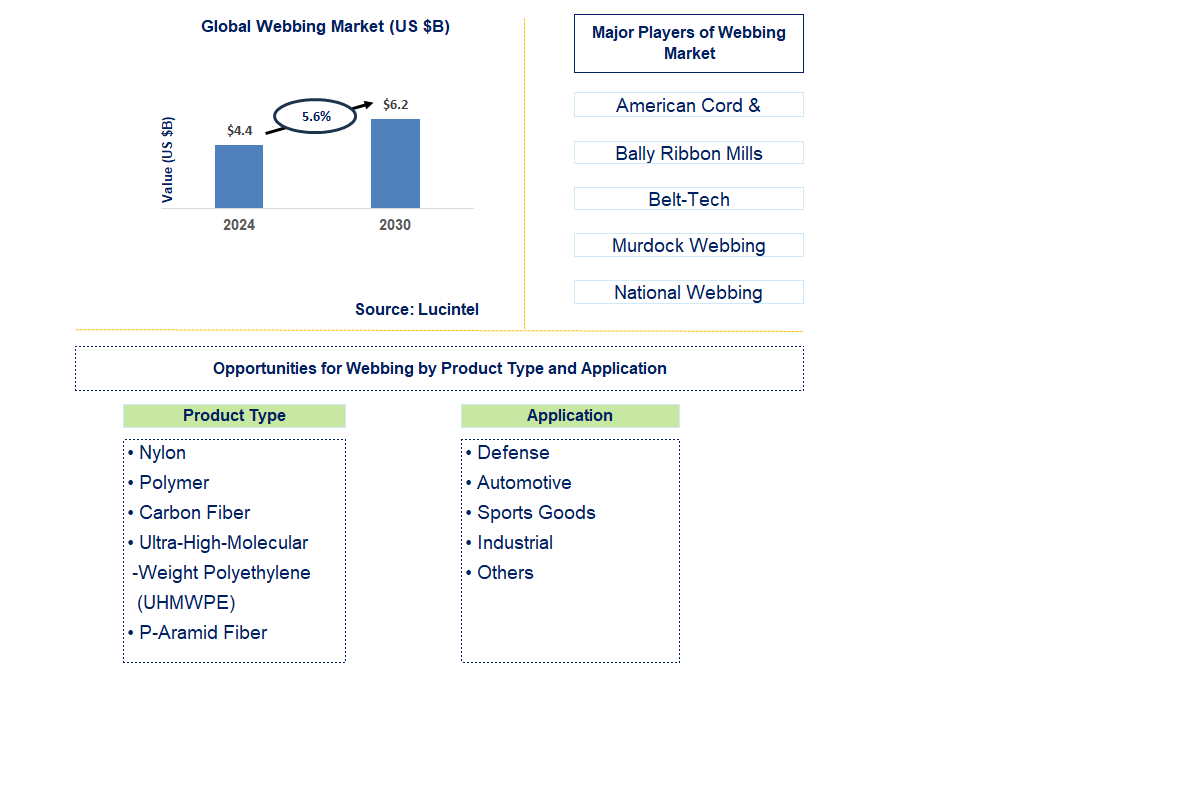
Key data points: The market size in 2030 = $6.2 billion, growth forecast = 5.6% annually for the next 6 years. Scroll below to get more insights. This market report covers trends, opportunities, and forecastss in the global webbing market to 2030 by product type (nylon, polymer, carbon fiber, ultra-high-molecular-weight polyethylene, and p-aramid fiber), application (defense, automotive, sports goods, industrial, and others), and region (North America, Europe, Asia Pacific, and the Rest of the World)
We'll send your sample report shortly.
• United States: The US market for webbing is developed in synthetic materials with strength and durability features, mainly for military and recreational use. Companies increasingly stress the importance of sustainable practices that reinforce their products with recycled materials at points of production. The regulatory compliance push still defines it, and innovations are focused on product safety and environmental impact. E-commerce has changed the way goods are distributed today, allowing manufacturers to reach broader audiences. Collaborations with tech companies boost the development of smart textiles, providing new applications in healthcare and the automotive industry.
• China: Due to its high production capacity and cost-effectiveness in the manufacturing sector, China leads the webbing market. Upgrades in automation and smart manufacturing are improving production efficiency and reducing lead times. The government's policy on sustainable practices is making China an eco-friendly hub for using environmentally friendly materials. Additionally, outdoor gear and automotive uses are driving market growth. Chinese manufacturers are exploring more advanced textiles with high product performance and expanding their global footprint.
• Germany: Germany is one of the major engineering countries, particularly for quality webbing material, fine texture, and technical textiles. The latest developments include the use of state-of-the-art fibers, such as aramid and carbon, which provide better strength for industrial products. Sustainability features are taken seriously in Germany through bio-based materials and recycling. German-backed innovation in manufacturing procedures, in line with safety and ecological considerations, creates conditions for compliance with EU standards. Germany’s ability to produce high-performance webbing solutions places it at the forefront of the market.
• India: The webbing market in India is experiencing rapid change. The Indian middle class, combined with improving infrastructure, continues to drive market growth. Higher-quality products are being demanded in the automotive and consumer product sectors. With advancements in manufacturing technology, the government is encouraging more domestic production. The demand for webbing products is further boosted by increased participation in outdoor activities and sports. Indian manufacturers are also preparing to export their products, positioning themselves as strong contenders in the international market.
• Japan: The Japanese webbing industry relies on quality and innovation. In recent years, advanced textile technologies with new functionality and high performance have been adopted. Sustainable production is strictly emphasized by manufacturers, as well as in the materials and processes used in manufacturing. Smart textiles are in high demand across different sectors, such as healthcare and automotive. Therefore, Japanese companies are focusing on these rising demands. New product development through collaboration between textile manufacturers and technology firms is another aspect that keeps Japan at the forefront of the webbing market.
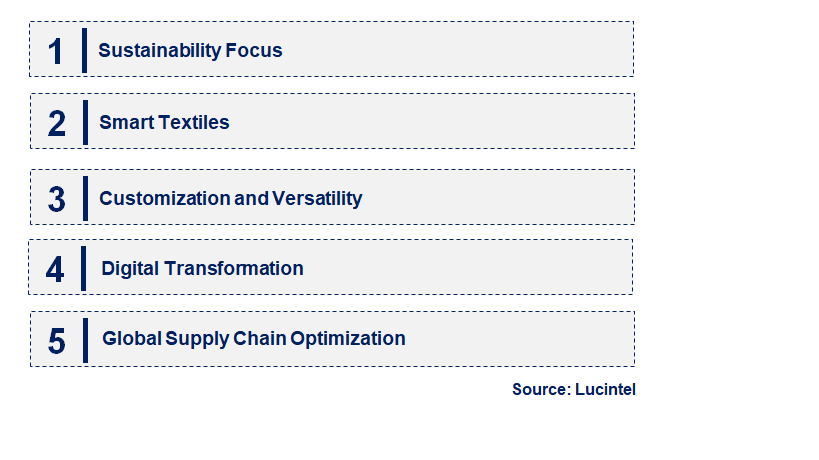
• Sustainability Focus: The demand for green materials in webbing production is increasing due to consumer awareness and regulatory pressures. Companies are adopting recycled fibers and processes aligned with sustainable practices to reduce their carbon footprint and attract environmentally conscious consumers.
• Smart Textiles: The integration of technology into webbing through the use of sensors and connectivity features leads to the development of more functional smart textiles. These advancements in healthcare, safety, and consumer goods offer new opportunities for contemporary consumers.
• Customization and Versatility: More manufacturers are offering custom webbing solutions, providing increased versatility to meet various consumer needs. This characteristic enhances competitiveness in the market by catering to diverse applications with tailored products.
• Digital Transformation: The integration of digital technologies into manufacturing processes is improving efficiency, while production costs are gradually declining. Operations are becoming simpler through the automation of processes using AI and data analytics, allowing for a faster response to market needs.
• Global Supply Chain Optimization: As a result of the pandemic, global supply chains are being reassessed with a focus on strategies that emphasize local sourcing and production. Companies are seeking to mitigate risks by diversifying suppliers and investing in domestic manufacturing capabilities. The webbing market is witnessing emerging trends driven by the increasing demand for lightweight, durable, and versatile materials across various industries, including automotive, outdoor recreation, and fashion. Innovations in synthetic fibers, such as nylon and polyester, are enhancing strength and weather resistance, making webbing suitable for a wider range of applications. Additionally, the trend toward eco-friendly and sustainable materials is gaining traction, with manufacturers exploring biodegradable and recycled options to meet environmental standards. The rise of e-commerce is also expanding market access and consumer choice, further propelling growth. Overall, these trends position the webbing market for robust expansion, catering to diverse needs while emphasizing performance and sustainability.
• Developments in Materials: New high-performance synthetic fibers, some of which have been recently discovered, have opened up new opportunities for webbing. These fibers offer greater strength and durability compared to natural fibers. Improved textile technology allows for the production of lighter yet stronger webbing, meeting demanding safety standards.
• Sustainable Manufacturing Practices: Increasing numbers of companies are adopting green methods, such as reusing materials and reducing waste generation. This approach meets regulatory requirements and caters to the growing consumer preference for sustainable products.
• Technological Integration: Webbing products are increasingly being integrated with smart technologies. Applications featuring embedded sensors and connectivity are gaining prominence in areas like safety and healthcare, opening up new market segments.
• Market Growth: Regions like Asia and Africa are rapidly emerging as significant markets for webbing products. Rising disposable income is also driving demand for outdoor recreational activities in these markets.
• E-commerce Growth: The growth of e-commerce is transforming distribution, allowing more manufacturers to reach a larger audience. This channel is driving more efficient sales strategies and better customer interaction through direct marketing methods. Recent developments in the webbing market are characterized by technological advancements and a growing focus on sustainability. Innovations in manufacturing techniques have led to the production of stronger, lighter, and more durable webbing materials, enhancing their applications in industries such as automotive, outdoor gear, and military equipment. Additionally, there is an increasing emphasis on eco-friendly alternatives, with companies investing in recycled and biodegradable fibers to meet rising consumer demand for sustainable products. The expansion of e-commerce platforms is also facilitating greater market reach and consumer engagement. Overall, these developments position the webbing market for continued growth and diversification, aligning with evolving industry standards and consumer preferences.
• Military: Webbing products are in high demand from the military sector, particularly for tactical gear and safety harnesses. Additionally, webbing products see growth due to sustained investments in defense and military modernization programs, which require high-performance and durable solutions.
• Automotive: In the automotive sector, major components such as safety belts and airbags have recently seen increased use of webbing products. The industry’s focus on enhanced safety features and lightweight materials opens up substantial opportunities in this segment.
• Outdoor and Recreational Gear: The trend towards increased outdoor activities and adventure sports boosts the demand for webbing in backpacks, tents, and climbing gear. Product developers can seize this opportunity by creating specialized webbing for these applications.
• Healthcare: Webbing is gaining popularity in medical devices, safety harnesses for patients, and other medical products. This trend, driven by a greater focus on patient care and safety, presents a significant market opportunity.
• Consumer Goods: The use of webbing in fashion and consumer goods has been increasing. As consumers seek practical yet stylish products, companies can develop webbing solutions that are both fashionable and widely appealing. The strategic growth of the webbing market is being driven by a combination of innovation, sustainability, and expanding applications across various sectors. Key strategies include developing advanced materials that offer improved strength and durability, catering to industries such as automotive, outdoor recreation, and industrial safety. Companies are increasingly focusing on sustainable practices, introducing eco-friendly options made from recycled or biodegradable materials to meet consumer demand for greener products. Additionally, strategic partnerships and collaborations are enhancing product offerings and market reach. As these trends continue to unfold, the webbing market is well-positioned for significant growth, driven by both performance enhancements and a commitment to environmental responsibility.
• Technological Advancements: Developments in textile technology, including smart fabrics and advanced manufacturing methods, have improved product performance and functionality. Such advancements have helped manufacturers meet various market demands and increase production efficiency.
• Sustainability Initiatives: The focus of consumers and regulations on sustainability is driving demand for eco-friendly webbing products. These companies can attract environmentally conscious consumers and comply with regulatory requirements, thereby improving their market position.
• High-Performance Webbing Products: End-user industries such as automotive, healthcare, and military are increasingly using high-performance webbing products. Growth in these industries represents a significant opportunity for manufacturers.
• Consumer Preferences: The market for webbing leans towards customization and personalization due to consumer preferences. Consumers seek specific solutions for their needs, prompting manufacturers to focus on tailored products.
• Global Supply Chains: Global supply chains enable the cost-effective manufacturing and distribution of webbing products. Manufacturers can tap into overseas markets to increase their production and diversify their products. Challenges in the webbing market include:
• Regulatory Compliance: Adhering to strict regulations regarding safety, environmental impact, and product quality is challenging for manufacturers. Navigating these regulations requires substantial resources and expertise.
• Supply Chain Disruptions: Recent global events have exposed vulnerabilities in supply chains, leading to delays and increased costs. Manufacturers have been forced to find alternative ways to reduce risk and maintain operations.
• Competition and Market Saturation: The webbing market has become increasingly competitive. The presence of several players in the market requires companies to differentiate themselves through innovation and quality to stay ahead. Drivers and challenges shape the strategic directions and long-term planning of the webbing market. Understanding these dynamics will enable companies to find a niche in the evolving webbing industry.
• American Cord & Webbing
• Bally Ribbon Mills
• Belt-Tech
• Murdock Webbing Company
• National Webbing Products
• Jiangsu Daxin Webbing
• Universal Webbing Products
• Nylon
• Polymer
• Carbon Fiber
• Ultra-High-Molecular-Weight Polyethylene
• P-Aramid Fiber
• Defense
• Automotive
• Sports Goods
• Industrial
• Others
• North America
• Europe
• Asia Pacific
• The Rest of the World
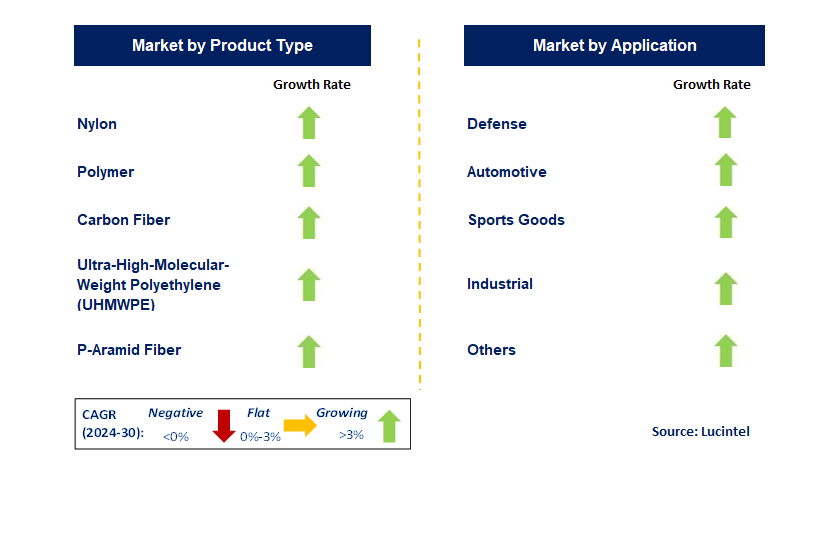
• Lucintel forecasts that, within the product type category, nylon is expected to witness the highest growth over the forecast period due to being mostly used in the manufacture of airbags, seat belts, safety harnesses, and luggage nets.
• Within the application category, automotive is expected to witness the highest growth due to webbing being mostly used in the preparation of various automotive accessories like seat belts, safety harnesses, and airbags.
• In terms of regions, APAC is expected to witness the highest growth over the forecast period due to more number of orders furnished by Chinese firms.


• American Cord & Webbing
• Bally Ribbon Mills
• Belt-Tech
• Murdock Webbing Company
• National Webbing Products
• Jiangsu Daxin Webbing
• Universal Webbing Products Q6. Which webbing market segment will be the largest in the future? Answer: Lucintel forecasts that, within the product type category, nylon is expected to witness the highest growth over the forecast period due to being mostly used in the manufacture of airbags, seat belts, safety harnesses, and luggage nets. Q7. In the webbing market, which region is expected to be the largest in the next 5 years? Answer: In terms of regions, APAC is expected to witness the highest growth over the forecast period due to more number of orders furnished by Chinese firms. Q.8 Do we receive customization in this report? Answer: Yes, Lucintel provides 10% customization without any additional cost.


Choose a license that fits your team. Instant PDF delivery.
Prices exclude taxes. Instant delivery. Custom licensing available on request.
Market Report · May 18, 2026
Market Report · May 18, 2026
Market Report · May 18, 2026
Trusted partner for strategic intelligence and business growth


Receive a complimentary market analysis tailored to your industry. Our analysts will identify key growth opportunities and competitive dynamics specific to your business.

Market size, growth rate, and key trend analysis for your specific sector.

Top competitor positioning and market share analysis.

Strategic recommendations backed by data-driven insights.
Get curated market intelligence and competitive moves straight to your inbox.
By subscribing, you agree to receive our monthly insights. Unsubscribe anytime.
Receive a complimentary market analysis tailored to your industry. Our analysts will identify key growth opportunities and competitive dynamics specific to your business.
Market size, growth rate, and key trend analysis for your specific sector.
Top competitor positioning and market share analysis.
Strategic recommendations backed by data-driven insights.
Get curated market intelligence, emerging trends, and competitive moves straight to your inbox each month.
By subscribing, you agree to receive our monthly insights. Unsubscribe anytime.
We'll send your sample report shortly.