
Market Report · July 31, 2026

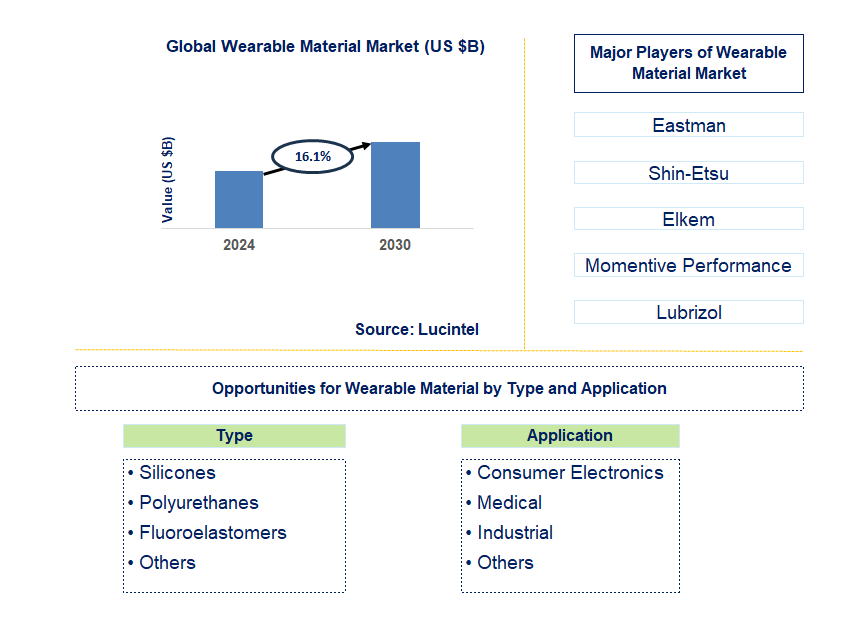
Key data points: The growth forecast = 16.1% annually next 6 years. Scroll below to get more insights. This market report covers trends, opportunities, and forecast in the global wearable material market to 2030 by type (silicones, polyurethanes, fluoroelastomers, and others), application (consumer electronics, medical, industrial, and others), and region (North America, Europe, Asia Pacific, and the Rest of the World)
We'll send your sample report shortly.
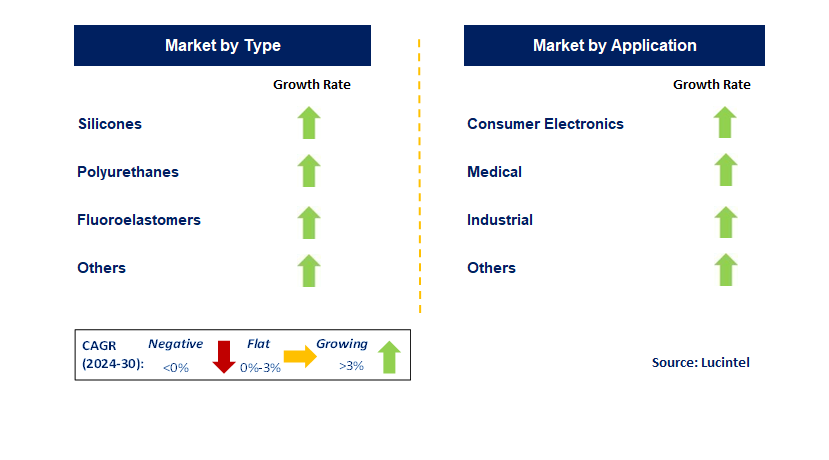
• Lucintel forecasts that silicones will remain the largest segment over the forecast period due to its growing usage in a variety of skin care applications.
• Within this market, consumer electronics will remain the largest segment due to increasing usage of wearable gadgets like smartwatches, health monitors, and fitness bands.
• APAC is expected to witness highest growth over the forecast period due to huge demand for the product across a range of end-use application industries and increasing public interest in fitness and wellness. A more than 150-page report is developed to help in your business decisions.
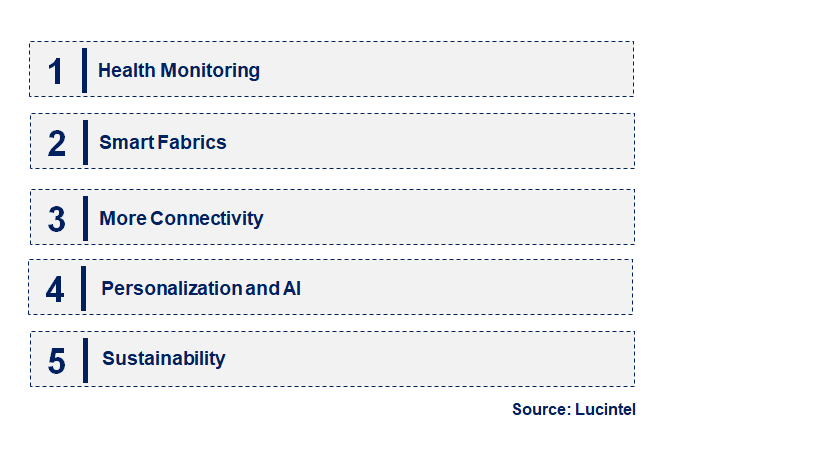
• Health Monitoring: Wearable technologies now track health metrics like heart rate, sleep quality, and stress levels. The motivation for this is primarily from consumers' concern about health management. Because advanced sensors enable the users to make choices informed by real-time data, there is now a preventative approach to healthcare.
• Smart Fabrics: Smart textiles are poised to become a new concept which will help clothes monitor the different health parameters. Body temperature and heart rate, even activity level, can be monitored using such clothing with just lesser burdensome devices. Such an innovation makes wearables comfortable and fashionable for those consumers that look for form and function in their clothing.
• More Connectivity: Wearables are more and more connected with the smart home devices as well as its ecosystem. Highly advanced connectivity allows control over home appliances and sends notifications flawlessly. This integration enhances user experience and positions wearables at the center of a smart living environment.
• Personalization and AI: Artificial intelligence is what is driving personalization in wearables. The devices are learning about user habits to provide tailored recommendations for fitness and health. It not only increases user engagement but also encourages loyalty, as the consumers feel more connected to their devices and receive value from their personalized insights.
• Sustainability: Sustainability becomes an increasingly critical factor in the design and production of wearables. Brands are using "green" materials and lean manufacturing processes that significantly minimize energy consumption. That plays well with green-conscious consumers, as sustainable practices by brands raise a less-negative perception of the brand as well as decrease the extent of resistance against sustainable practice in technology. The new wave of wearable electronics and their increased functionality are still widely redefining the market. They have made it better in terms of user engagement and sustainability. It has been reported that as an emphasis on health monitoring and personalization has been increased, manufacturers are altering the way they approach their product lines according to consumer demands as well as world-wide demands toward sustainability. And, therefore, there is a more innovative and responsive marketplace that provides better customer experience.
• Advanced health tracking: There are advancements in wearable items with respect to offering complex health monitoring features such as ECG and blood glucose tracking. Such an advancement increases the attractiveness of devices, especially among a healthy-conscious consumer. When wearables play a role that becomes required for health management, it could trigger early detection of medical conditions.
• IoT integration: IoT devices are now being integrated into wearable devices. This includes seamless connectivity with other smart devices, allowing for convenient interaction with a user. As wearables are central to the smart home ecosystem, they provide greater control over the environment and connected lifestyles.
• Fashion-Forward Designs: More fashion-forward wearables now embody style and technology in one. Fashion houses are now collaborating hand-in-hand with designers to create devices that achieve high levels of fashion appeal. This is going to be what will help wearables cross a broader population. In addition, it will make wearables becoming part of everyday wear more feasible.
• Better Battery Life: Recently, advancements in battery technology allowed for extended life in wearables. The longer lifetime of the battery makes it more useful because the user can spend a lot of time wearing such a device without needing recharging constantly. It further boosts usability to enable readiness in users to wear the device all day to continuously monitor health.
• Better Data Security: Indeed, wearables capture sensitive health information; therefore, companies are paying much attention to improving data security. Encryption levels and confidentiality measures are therefore heightened to ensure protection of user data. This move is crucial in garnering consumer confidence and fulfilling data protection mandates. New developments functionally and aesthetically to gain consumer's trust. A health-feature-based and connectivity-based market focused on security provides the potential for future growth. Such a market will undoubtedly increase the educated health-conscious consumer base.
• Health and fitness tracking: The development of wearables tracking fitness and health metrics poses a significant business opportunity within the given health-conscious trend by consumers. Through such innovation, companies can maintain uniqueness through new appealing features, such as stress management and sleep tracking, in a swing toward holistic health solutions in response to the growing health-conscious trend of consumers. Such an opportunity promotes lifestyle changes and preventive care.
• Smart Home Integration: Wearables that are connected to smart home systems open quite exciting growth paths. The ability to offer more control to the user of the home environment makes these products attractive to tech-savvy consumers. Companies can develop applications meant to help wearables to effectively interact with lighting, security, and climate control in order to enrich the user experience.
• Fashion and Lifestyle: An intersection of fashion and technology is an area that presents opportunities for expansion. Companies can focus on tech-savvy consumers by developing stylish wearables that act as accessories. This trend encourages wearables that are fashionable yet useful, thereby bringing in more market appeal.
• Older People Care Solutions: Elderly care-specific wearables are also in development. For example, fall detection and health monitoring ensure enhanced safety of older people while enabling them to lead more independent lifestyles. Companies can target the manufacture of user-friendly devices that can be specifically suitable for this kind of demographic population whose needs in the market are in high demand.
• Education and Training: Wearables have excellent potential in schools for engaging activities that enhance interactive learning styles. Devices can track engagement and performance, guiding educators to apply different approaches. Thereby, the application can help create a more personalized environment in education and increase students' levels of success and engagement. The strategic growth opportunities in wearable electronics are indicated by diversified applications and enormous market-growth avenues. Consumer demands and needs for health, fashion, and education will help companies improve the prospects of their offerings and create innovation in this dynamic sector, making the market landscape more robust and variegated.
• Eastman
• Shin-Etsu
• Elkem
• Momentive Performance Materials
• Lubrizol
• BASF
• Dowdupont
• Silicones
• Polyurethanes
• Fluoroelastomers
• Others
• Consumer Electronics
• Medical
• Industrial
• Others
• North America
• Europe
• Asia Pacific
• The Rest of the World
• United States: Health monitoring features are gaining significant attention from the tech companies in the U.S. Apple has already launched its latest Apple Watch with advanced health metrics, such as blood oxygen levels and the ability to take an ECG reading. Fitness trackers also tend to use AI in offering customized insights in terms of health, making wearables appealing.
• China: China has a very high adoption rate of wearable smart things, especially in the fitness domain. Brands such as Xiaomi and Huawei are proliferating their products with budget smartwatches and fitness bands. Recent innovations would include advanced biometric sensors that ensure accurate health tracking, giving way to consumer interest in health-oriented wearable devices.
• Germany: German wearables market is focusing on sustainability in addition to integration into the smart home device. The company is producing eco-friendly wearables that track health and environment, such as air pollution level. The new models are primarily aligned with better connectivity and smart functionality, which market to the green-conscious and geeky lot.
• India: A new wearable electronics market is gradually gaining momentum in India, especially within health and fitness applications. Several local companies are launching affordable smartwatches that offer required features pertaining to health tracking. Increasing health awareness creates a growing market; these products reach a wider population base and spur the adoption of wearables in both urban and rural setups within Japan.
• Japan: Japan is developing wearables which are more of technology infused in fashion. Organizations are finding stylish smart glasses and clothing that have sensors placed inside them. This future trend outlines the infusion of aesthetics and functionality, hence fashion-conscious consumers are attracted at the same time enhanced health and connectivity are promoted.


• Eastman
• Shin-Etsu
• Elkem
• Momentive Performance Materials
• Lubrizol
• BASF
• Dowdupont Q5. Which wearable material market segment will be the largest in future? Answer: Lucintel forecasts that silicones will remain the largest segment over the forecast period due to its growing usage in a variety of skin care applications. Q6. In wearable material market, which region is expected to be the largest in next 5 years? Answer: APAC is expected to witness highest growth over the forecast period due to huge demand for the product across a range of end-use application industries and increasing public interest in fitness and wellness. Q.7 Do we receive customization in this report? Answer: Yes, Lucintel provides 10% customization without any additional cost.


Choose a license that fits your team. Instant PDF delivery.
Prices exclude taxes. Instant delivery. Custom licensing available on request.
Market Report · July 31, 2026
Market Report · July 31, 2026
Market Report · July 31, 2026
Trusted partner for strategic intelligence and business growth


Receive a complimentary market analysis tailored to your industry. Our analysts will identify key growth opportunities and competitive dynamics specific to your business.

Market size, growth rate, and key trend analysis for your specific sector.

Top competitor positioning and market share analysis.

Strategic recommendations backed by data-driven insights.
Get curated market intelligence and competitive moves straight to your inbox.
By subscribing, you agree to receive our monthly insights. Unsubscribe anytime.
Receive a complimentary market analysis tailored to your industry. Our analysts will identify key growth opportunities and competitive dynamics specific to your business.
Market size, growth rate, and key trend analysis for your specific sector.
Top competitor positioning and market share analysis.
Strategic recommendations backed by data-driven insights.
Get curated market intelligence, emerging trends, and competitive moves straight to your inbox each month.
By subscribing, you agree to receive our monthly insights. Unsubscribe anytime.
We'll send your sample report shortly.