
Report Feature
Waterless Bathing Solution Market Trends and Forecast
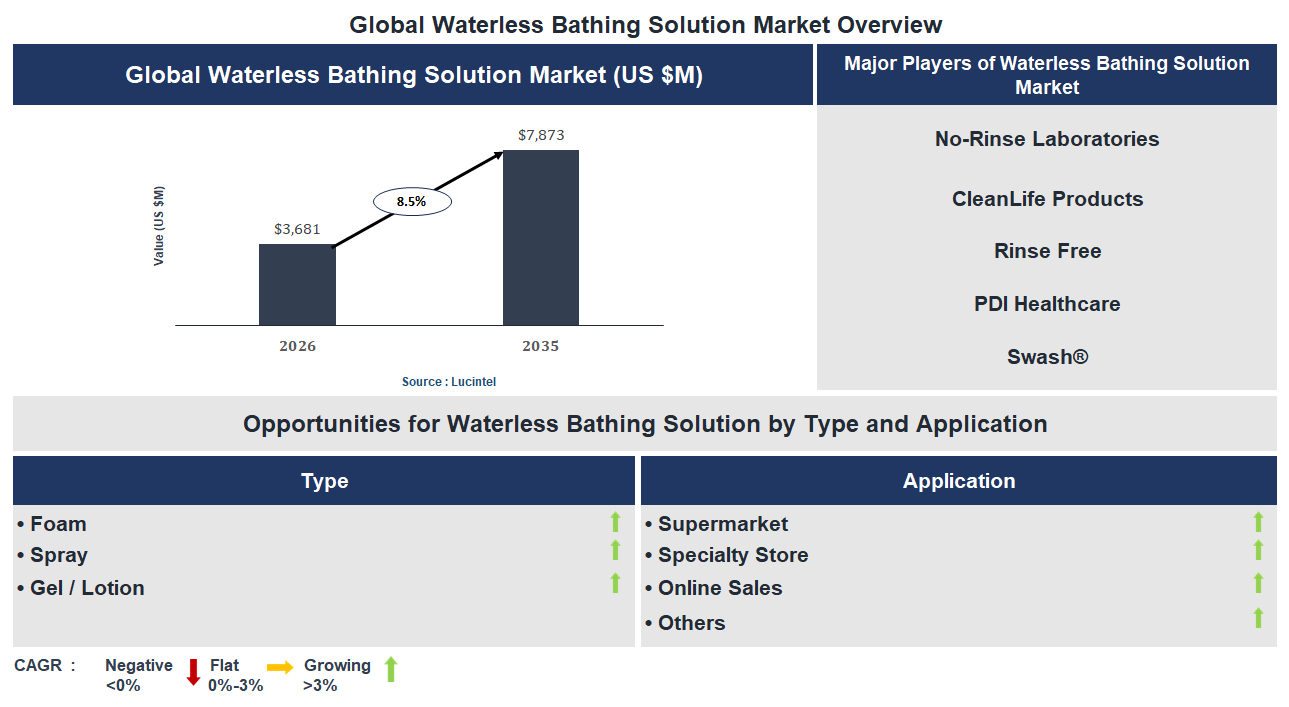
The future of the global waterless bathing solution market looks promising with opportunities in the supermarket, specialty store, and online sale markets. The global waterless bathing solution market is expected to reach an estimated $7,873.0 million by 2035 with a CAGR of 8.5% from 2026 to 2035. The major drivers for this market are the increasing demand for convenient hygiene solutions, the rising awareness of water conservation, and the growing popularity of travel-friendly products.• Lucintel forecasts that, within the type category, gel / lotion is expected to witness the highest growth over the forecast period.
• Within the application category, online sale is expected to witness the highest growth.
• In terms of region, APAC is expected to witness the highest growth over the forecast period. Gain valuable insights for your business decisions with our comprehensive 150+ page report. Sample figures with some insights are shown below.
Emerging Trends in the Waterless Bathing Solution Market
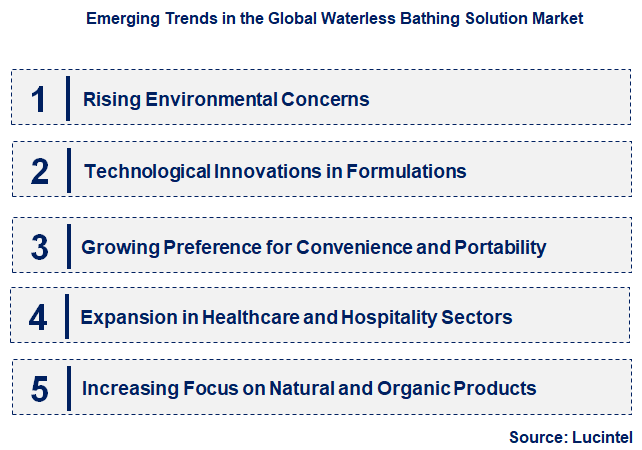
The waterless bathing solution market is experiencing rapid growth driven by increasing environmental awareness, urbanization, and the demand for convenient hygiene products. Innovations in formulations and packaging, along with changing consumer preferences, are shaping the future of personal hygiene routines. Companies are focusing on sustainable, water-saving alternatives to traditional bathing methods, which are gaining popularity across various regions. This markets evolution reflects broader trends toward eco-friendly lifestyles and technological advancements in personal care. As consumers seek efficient, sustainable, and innovative hygiene solutions, these developments are significantly influencing market dynamics and competitive strategies.• Rising Environmental Concerns: Growing awareness of water scarcity and environmental impact is driving demand for waterless bathing solutions. Consumers are seeking eco-friendly products that reduce water consumption and minimize ecological footprints. This trend encourages companies to develop sustainable formulations and packaging, aligning with global sustainability goals. The shift towards waterless bathing reflects a broader commitment to environmental conservation, influencing product innovation and marketing strategies. As water conservation becomes a priority, the market is expected to expand rapidly, with increased adoption across residential, hospitality, and healthcare sectors.
• Technological Innovations in Formulations: Advances in formulation technology are enabling the development of more effective and skin-friendly waterless bathing products. Innovations include the use of natural oils, plant-based ingredients, and advanced emulsifiers that provide cleansing, moisturizing, and antibacterial benefits without water. These technological improvements enhance product efficacy and consumer appeal, fostering trust and repeat purchases. The integration of innovative ingredients and delivery systems is also expanding product versatility, catering to diverse skin types and preferences. This trend is crucial for differentiating brands and capturing market share in a competitive landscape.
• Growing Preference for Convenience and Portability: Consumers increasingly prioritize convenience in personal hygiene routines, especially in urban and mobile lifestyles. Waterless bathing solutions offer portability, quick application, and ease of use, making them ideal for travel, outdoor activities, and busy schedules. This trend is driving demand for compact, easy-to-apply formats such as wipes, sprays, and foams. The convenience factor is particularly appealing to younger demographics and travelers, expanding the markets reach. Companies are focusing on designing user-friendly packaging and formulations that meet these needs, thereby boosting sales and market penetration.
• Expansion in Healthcare and Hospitality Sectors: The healthcare and hospitality industries are adopting waterless bathing solutions to improve hygiene standards and operational efficiency. Hospitals and clinics use these products for patient care and infection control, while hotels and airlines incorporate them for guest convenience and sanitation. The adoption in these sectors is driven by the need for quick, hygienic, and water-saving options, especially during pandemics and health crises. This expansion opens new revenue streams and enhances brand credibility. It also encourages product innovation tailored to specific institutional requirements, further fueling market growth.
• Increasing Focus on Natural and Organic Products: Consumers are increasingly seeking natural, organic, and chemical-free waterless bathing solutions for health and wellness reasons. This trend is prompting manufacturers to develop products with plant-based ingredients, free from synthetic chemicals, parabens, and sulfates. The emphasis on natural formulations appeals to health-conscious consumers and those with sensitive skin. Certification labels and transparent ingredient lists are becoming important marketing tools. The shift towards natural products is driving innovation, expanding market segments, and fostering sustainable practices within the industry, ultimately reshaping product offerings and consumer expectations. In summary, these trends are collectively transforming the waterless bathing solution market by emphasizing sustainability, innovation, convenience, sector-specific applications, and natural ingredients. This evolution is leading to a more dynamic, consumer-centric, and environmentally responsible industry, poised for significant growth and diversification in the coming years.
Recent Development in the Waterless Bathing Solution Market
The waterless bathing solution market is experiencing rapid growth driven by increasing environmental concerns, urbanization, and the need for convenient hygiene options. Innovations in eco-friendly products and rising awareness about water conservation are fueling demand across residential and commercial sectors. Companies are investing in sustainable formulations and portable solutions to meet consumer preferences. This evolving landscape presents significant opportunities for market expansion, technological advancements, and strategic collaborations, shaping the future of personal hygiene practices worldwide.• Growing Environmental Awareness: The shift towards waterless bathing solutions is driven by consumers desire to reduce water consumption and minimize environmental impact. Governments and organizations are promoting water conservation initiatives, encouraging the adoption of eco-friendly hygiene products. This trend is boosting market growth as consumers seek sustainable alternatives to traditional bathing methods. The increased focus on environmental responsibility is also prompting product innovation, leading to a broader range of waterless bathing options that appeal to eco-conscious buyers.
• Urbanization and Space Constraints: Rapid urbanization has led to smaller living spaces and limited access to bathing facilities, creating a demand for portable and compact hygiene solutions. Waterless bathing products offer convenience and ease of use in apartments, offices, and outdoor settings. This trend is expanding market reach into urban areas where traditional bathing infrastructure may be lacking or inconvenient. Manufacturers are developing innovative, travel-friendly products that cater to busy lifestyles, further driving market growth and diversification.
• Technological Innovations in Formulations: Advances in formulation technology are enabling the development of highly effective, skin-friendly waterless bathing products. These innovations include natural ingredients, antimicrobial properties, and long-lasting freshness. Such developments enhance product efficacy and consumer satisfaction, encouraging repeat purchases. The focus on sustainability and health benefits is also influencing R&D efforts, resulting in a wider array of options that meet diverse consumer needs and preferences, thus expanding market potential.
• Rising Demand in Healthcare and Hospitality Sectors: The healthcare and hospitality industries are increasingly adopting waterless bathing solutions to improve hygiene standards and operational efficiency. Hospitals, clinics, hotels, and airlines utilize these products for their convenience, sanitation, and water-saving benefits. This demand is creating new revenue streams and expanding market applications beyond personal use. The sectors focus on infection control and sustainability further accelerates adoption, positioning waterless bathing solutions as essential components in professional hygiene management.
• Increasing Consumer Awareness and Preference for Convenience: Consumers are becoming more aware of the benefits of waterless bathing, such as time savings, portability, and hygiene. The busy lifestyles and outdoor activities drive demand for quick, effective cleansing options. Marketing campaigns emphasizing convenience and eco-friendliness are influencing purchasing decisions. As awareness grows, market penetration deepens across various demographics, including travelers, outdoor enthusiasts, and urban dwellers. This trend is fostering product innovation and expanding the customer base, ultimately boosting overall market growth. These developments are significantly transforming the waterless bathing solution market by promoting sustainability, convenience, and technological innovation. Increased consumer awareness, urbanization, and sector-specific adoption are driving demand and expanding market reach. The focus on eco-friendly formulations and portable solutions is fostering product diversification and competitive growth. Overall, these trends are positioning the market for sustained expansion, with opportunities for innovation, strategic partnerships, and increased adoption across diverse consumer segments worldwide.
Strategic Growth Opportunities in the Waterless Bathing Solution Market
The waterless bathing solution market is experiencing rapid growth driven by increasing environmental concerns, urbanization, and the need for convenient hygiene options. Innovations in formulations and expanding applications across personal care, healthcare, and hospitality sectors are fueling market expansion. Consumers are seeking sustainable, water-saving alternatives that offer effective cleansing without water usage. This evolving landscape presents significant opportunities for companies to develop innovative products, expand geographically, and target diverse customer segments, ultimately transforming hygiene practices worldwide and contributing to water conservation efforts.• Growing Demand for Eco-Friendly and Water-Saving Personal Hygiene Products: Increasing awareness of water scarcity and environmental impact is driving consumers toward waterless bathing solutions. These products offer convenience, portability, and sustainability, making them popular in urban areas, outdoor activities, and emergencies. Companies are innovating with natural, biodegradable ingredients to meet eco-conscious consumer preferences, expanding the market’s reach and encouraging sustainable hygiene practices globally.
• Expansion of Waterless Bathing Solutions in Healthcare and Elderly Care: The healthcare sector is adopting waterless bathing products to improve hygiene, reduce infection risks, and enhance patient comfort. Elderly care facilities benefit from easy-to-use, waterless options that minimize water usage and simplify hygiene routines. This trend is expected to grow as healthcare providers prioritize infection control and sustainability, creating new revenue streams and driving product innovation tailored to medical and senior care needs.
• Increasing Adoption in Hospitality and Travel Industries: Hotels, airlines, and travel companies are integrating waterless bathing solutions to offer guests sustainable, convenient hygiene options. These products help reduce water consumption and waste management costs while appealing to eco-conscious travelers. The hospitality sector’s focus on sustainability and guest comfort is fueling demand, prompting manufacturers to develop specialized, portable, and luxurious formulations suitable for diverse environments.
• Technological Innovations in Formulation and Packaging: Advances in formulation technology are enabling longer-lasting, more effective waterless bathing products with improved skin compatibility. Innovative packaging solutions enhance portability, ease of use, and product preservation, appealing to consumers seeking convenience. These technological developments are expanding product applications, increasing shelf life, and reducing environmental impact, thereby strengthening market competitiveness and encouraging broader adoption across various sectors.
• Rising Awareness and Marketing of Water Conservation Benefits: Educational campaigns and marketing efforts highlighting water conservation benefits are increasing consumer awareness and acceptance of waterless bathing solutions. Governments and environmental organizations promote these products as sustainable alternatives, influencing purchasing decisions. This increased awareness is driving market growth, encouraging manufacturers to emphasize eco-friendly attributes, and fostering a shift toward waterless hygiene practices worldwide. The overall impact of these opportunities is set to significantly accelerate market growth, promote sustainable hygiene practices, and foster innovation across industries. As consumer preferences evolve and environmental concerns intensify, the waterless bathing solution market is poised for substantial expansion, contributing to water conservation efforts and offering new avenues for business development and environmental responsibility.
Waterless Bathing Solution Market Driver and Challenges
The waterless bathing solution market is influenced by a variety of technological, economic, and regulatory factors that shape its growth trajectory. Innovations in hygiene technology, increasing consumer awareness about health and sanitation, and the demand for convenient, water-saving products are key drivers. Conversely, regulatory challenges related to product safety, environmental concerns, and market acceptance pose significant hurdles. Economic factors such as rising disposable incomes and urbanization further impact market expansion. Understanding these drivers and challenges is essential for stakeholders to navigate the evolving landscape and capitalize on emerging opportunities while addressing potential risks. The factors responsible for driving the waterless bathing solution market include:-• Technological Advancements: The development of innovative formulations and delivery systems has significantly enhanced the efficacy and appeal of waterless bathing products. These advancements enable products to mimic traditional bathing experiences, improve shelf life, and ensure safety. As technology continues to evolve, consumers are increasingly adopting these solutions for convenience and hygiene, especially in remote or water-scarce regions. The integration of natural ingredients and eco-friendly packaging further boosts market appeal, aligning with consumer preferences for sustainable products. Overall, technological progress is a primary catalyst for market growth, fostering product diversification and improved user experience.
• Rising Water Scarcity and Environmental Concerns: Growing awareness of water conservation and environmental sustainability has driven demand for waterless bathing solutions. As global water resources become increasingly strained, consumers and governments seek alternatives that reduce water consumption. Waterless products offer a practical solution for areas facing water shortages, outdoor activities, and emergencies. This environmental impetus encourages manufacturers to innovate and expand their product lines, positioning waterless bathing as an eco-friendly alternative. The shift towards sustainable living practices further amplifies this trend, making water scarcity a significant driver for market expansion.
• Increasing Urbanization and Lifestyle Changes: Rapid urbanization has led to busier lifestyles, limited access to traditional bathing facilities, and a preference for quick, portable hygiene solutions. Urban dwellers often seek convenient, time-saving products that fit into their fast-paced routines. Waterless bathing solutions cater to this demand by providing on-the-go hygiene options suitable for travel, work, or outdoor activities. Additionally, the rise of health-conscious consumers and the desire for personal grooming contribute to the markets growth. Urbanization thus acts as a catalyst, expanding the reach and adoption of waterless bathing products across diverse demographic segments.
• Growing Health and Hygiene Awareness: The global emphasis on health and hygiene, especially post-pandemic, has heightened consumer interest in maintaining cleanliness without traditional water-based bathing. Waterless bathing solutions are perceived as effective, hygienic, and convenient alternatives, particularly in healthcare settings, travel, and emergency scenarios. Increased awareness campaigns and public health initiatives further promote their use. This heightened focus on personal hygiene drives demand, encouraging manufacturers to develop more effective, skin-friendly, and natural formulations. As health consciousness continues to rise, so does the market potential for waterless bathing solutions.
• Expansion of E-commerce and Retail Channels: The proliferation of online shopping platforms and retail outlets has significantly increased product accessibility and consumer awareness. E-commerce enables brands to reach a broader audience, offer detailed product information, and provide convenient purchasing options. Retail partnerships with supermarkets, pharmacies, and specialty stores enhance visibility and availability. Digital marketing strategies also play a crucial role in educating consumers about the benefits of waterless bathing solutions. This expansion of distribution channels accelerates market penetration, especially in emerging markets, and supports the overall growth of the industry. The challenges facing the waterless bathing solution market include:-
• Regulatory and Safety Concerns: Stringent regulations regarding product safety, ingredient transparency, and environmental impact pose hurdles for manufacturers. Compliance with diverse regional standards requires significant investment in testing and certification processes. Additionally, concerns over potential skin reactions or allergic responses can hinder consumer trust. Regulatory delays or restrictions may limit product launches and innovation. Ensuring safety and meeting regulatory requirements are critical for market sustainability, but they also increase operational costs and complexity, potentially slowing down growth.
• Market Acceptance and Consumer Perception: Despite growing awareness, some consumers remain hesitant to adopt waterless bathing solutions due to skepticism about their effectiveness or concerns about skin health. Cultural preferences and traditional bathing habits can also impede acceptance in certain regions. Overcoming misconceptions and educating consumers about product benefits is essential but challenging. Resistance to change and preference for conventional methods may limit market penetration, especially in conservative markets, thereby constraining growth potential.
• Environmental Impact of Packaging and Ingredients: While waterless products are promoted as eco-friendly, concerns about packaging waste and the use of synthetic ingredients persist. Non-biodegradable packaging materials and chemical preservatives can undermine sustainability claims, leading to consumer skepticism. Environmental regulations may also restrict certain ingredients or packaging practices. Addressing these issues requires innovation in sustainable packaging and formulation, which can increase costs and complicate product development. Balancing efficacy with environmental responsibility remains a key challenge for industry players. In summary, the waterless bathing solution market is driven by technological innovations, environmental sustainability, urban lifestyle shifts, health awareness, and expanding distribution channels. However, regulatory hurdles, consumer acceptance issues, and environmental concerns about packaging and ingredients pose significant challenges. These factors collectively influence market dynamics, requiring stakeholders to innovate responsibly, educate consumers, and navigate regulatory landscapes carefully. The overall impact is a market poised for growth, provided these drivers are harnessed effectively and challenges are managed strategically.
List of Waterless Bathing Solution Companies
Companies in the market compete on the basis of product quality offered. Major players in this market focus on expanding their manufacturing facilities, R&D investments, infrastructural development, and leverage integration opportunities across the value chain. With these strategies waterless bathing solution companies cater increasing demand, ensure competitive effectiveness, develop innovative products & technologies, reduce production costs, and expand their customer base. Some of the waterless bathing solution companies profiled in this report include-• No-Rinse Laboratories
• CleanLife Products
• Rinse Free
• PDI Healthcare
• Swash®
• ShampooCap Company
• Stryker Corporation
• Coloplast A/S
• Reynard Health Supplies
• DermaRite Industries
Waterless Bathing Solution Market by Segment
The study includes a forecast for the global waterless bathing solution market by type, application, and region.Waterless Bathing Solution Market by Type [Value from 2019 to 2035]:
• Foam
• Spray
• Gel / Lotion
Waterless Bathing Solution Market by Application [Value from 2019 to 2035]:
• Supermarket
• Specialty Store
• Online Sales
• Others
Waterless Bathing Solution Market by Region [Value from 2019 to 2035]:
• North America
• Europe
• Asia Pacific
• The Rest of the World
Country Wise Outlook for the Waterless Bathing Solution Market
The waterless bathing solution market has experienced significant growth driven by increasing environmental concerns, water scarcity, and a rising demand for convenient hygiene products worldwide. Innovations in formulations, sustainability initiatives, and expanding consumer awareness have propelled market expansion across various regions. Countries are adopting eco-friendly practices and investing in research to develop effective waterless bathing alternatives, shaping the future landscape of personal hygiene. This evolving market reflects a shift towards sustainable lifestyles and technological advancements, with key players focusing on product efficacy, safety, and environmental impact to meet diverse consumer needs globally.• United States: The US market has seen rapid growth with innovations in natural and organic formulations, driven by health-conscious consumers. Major brands are expanding product lines to include eco-friendly, biodegradable options, and there is increased adoption in the healthcare and hospitality sectors. Regulatory support for sustainable products and rising awareness about water conservation have further boosted demand.
• China: China’s market is expanding due to urbanization and increasing disposable incomes. Local companies are investing in R&D to develop affordable, effective waterless bathing products tailored to diverse consumer preferences. The government’s emphasis on environmental sustainability and water-saving initiatives has also contributed to market growth.
• Germany: Germany leads in eco-conscious product development, with a focus on organic ingredients and minimal environmental impact. The market benefits from strong consumer awareness about sustainability and stringent regulations promoting eco-friendly products. Innovations include biodegradable packaging and formulations that cater to sensitive skin.
• India: The Indian market is witnessing rapid growth driven by urbanization, water scarcity, and a large population seeking affordable hygiene solutions. Local startups and international brands are introducing innovative, cost-effective waterless bathing products. Government campaigns promoting hygiene and water conservation are further supporting market expansion.
• Japan: Japan’s market is characterized by technological innovation and high consumer standards for safety and efficacy. Companies are developing advanced formulations with added skincare benefits, and there is a growing preference for premium, eco-friendly products. The focus on sustainability and minimal packaging aligns with Japan’s environmental goals.

Features of the Global Waterless Bathing Solution Market
Market Size Estimates: Waterless bathing solution market size estimation in terms of value ($M). Trend and Forecast Analysis: Market trends (2019 to 2025) and forecast (2026 to 2035) by various segments and regions. Segmentation Analysis: Waterless bathing solution market size by type, application, and region in terms of value ($M). Regional Analysis: Waterless bathing solution market breakdown by North America, Europe, Asia Pacific, and Rest of the World. Growth Opportunities: Analysis of growth opportunities in different types, applications, and regions for the waterless bathing solution market. Strategic Analysis: This includes M&A, new product development, and competitive landscape of the waterless bathing solution market. Analysis of competitive intensity of the industry based on Porter’s Five Forces model.
FAQ
Q1. What is the waterless bathing solution market size? Answer: The global waterless bathing solution market is expected to reach an estimated $7,873.0 million by 2035. Q2. What is the growth forecast for waterless bathing solution market? Answer: The global waterless bathing solution market is expected to grow with a CAGR of 8.5% from 2026 to 2035. Q3. What are the major drivers influencing the growth of the waterless bathing solution market? Answer: The major drivers for this market are the increasing demand for convenient hygiene solutions, the rising awareness of water conservation, and the growing popularity of travel-friendly products. Q4. What are the major segments for waterless bathing solution market? Answer: The future of the waterless bathing solution market looks promising with opportunities in the supermarket, specialty store, and online sale markets. Q5. Who are the key waterless bathing solution market companies? Answer: Some of the key waterless bathing solution companies are as follows:• No-Rinse Laboratories
• CleanLife Products
• Rinse Free
• PDI Healthcare
• Swash®
• ShampooCap Company
• Stryker Corporation
• Coloplast A/S
• Reynard Health Supplies
• DermaRite Industries Q6. Which waterless bathing solution market segment will be the largest in future? Answer: Lucintel forecasts that, within the type category, gel / lotion is expected to witness the highest growth over the forecast period. Q7. In waterless bathing solution market, which region is expected to be the largest in next 5 years? Answer: In terms of region, APAC is expected to witness the highest growth over the forecast period. Q8. Do we receive customization in this report? Answer: Yes, Lucintel provides 10% customization without any additional cost.
Table of Contents
List of Figures
List of Tables
Methodology
- In-depth interviews of the major players in this market
- Detailed secondary research from competitors’ financial statements and published data
- Extensive searches of published works, market, and database information pertaining to industry news, company press releases, and customer intentions
- A compilation of the experiences, judgments, and insights of Lucintel’s professionals, who have analyzed and tracked this market over the years.


Buy Now
Choose a license that fits your team. Instant PDF delivery.
Prices exclude taxes. Instant delivery. Custom licensing available on request.
Key Questions
- • What are some of the most promising, high-growth opportunities for the waterless bathing solution market by type (foam, spray, and gel / lotion), application (supermarket, specialty store, online sales, and others), and region (North America, Europe, Asia Pacific, and the Rest of the World)?
- • Which segments will grow at a faster pace and why?
- • Which region will grow at a faster pace and why?
- • What are the key factors affecting market dynamics? What are the key challenges and business risks in this market?
- • What are the business risks and competitive threats in this market?
- • What are the emerging trends in this market and the reasons behind them?
- • What are some of the changing demands of customers in the market?
- • What are the new developments in the market? Which companies are leading these developments?
- • Who are the major players in this market? What strategic initiatives are key players pursuing for business growth?
- • What are some of the competing products in this market and how big of a threat do they pose for loss of market share by material or product substitution?
- • What M&A activity has occurred in the last 7 years and what has its impact been on the industry? For any questions related to Waterless Bathing Solution Market, Waterless Bathing Solution Market Size, Waterless Bathing Solution Market Growth, Waterless Bathing Solution Market Analysis, Waterless Bathing Solution Market Report, Waterless Bathing Solution Market Share, Waterless Bathing Solution Market Trends, Waterless Bathing Solution Market Forecast, Waterless Bathing Solution Companies, write Lucintel analyst at email: helpdesk@lucintel.com. We will be glad to get back to you soon.


