
Market Report · July 22, 2026

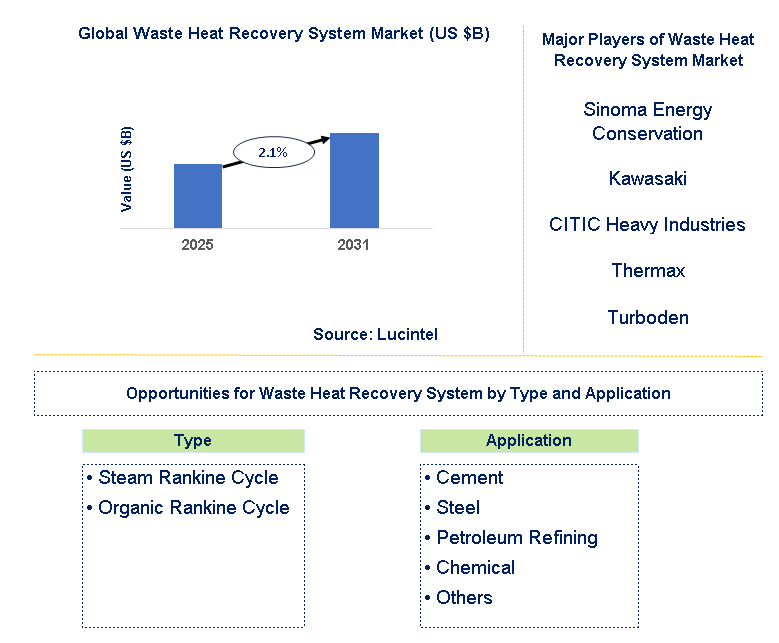
Key data points: The growth forecast = 2.1% annually for the next 7 years. Scroll below to get more insights. This market report covers Trends, opportunities and forecasts in waste heat recovery system market to 2031 by type (steam rankine cycle and organic rankine cycle), application (cement, steel, petroleum refining, chemical, and others), and region (North America, Europe, Asia Pacific, and the Rest of the World)
We'll send your sample report shortly.
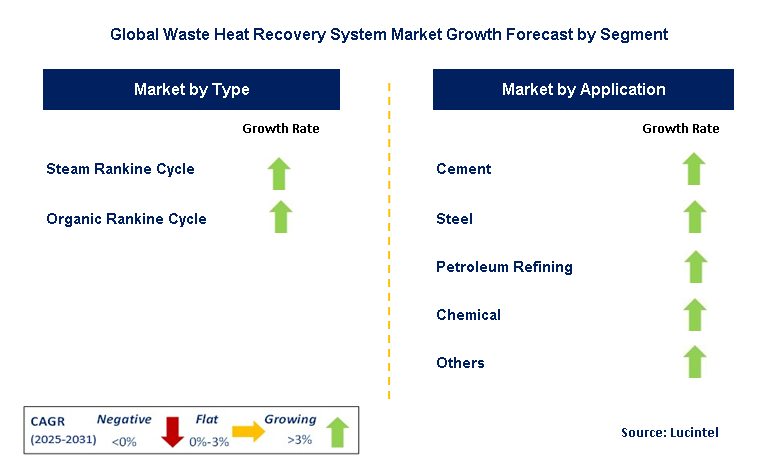
• Lucintel forecasts that, within the type category, steam rankine cycle is expected to witness higher growth over the forecast period.
• Within the application category, petroleum refining is expected to witness the highest growth.
• In terms of region, APAC is expected to witness the highest growth over the forecast period.
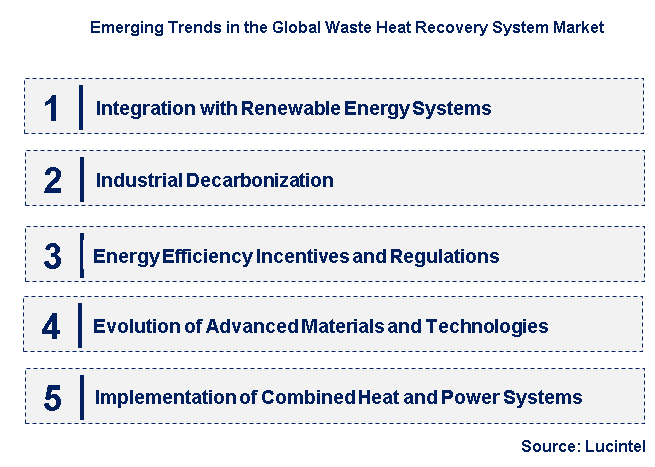
• Integration with Renewable Energy Systems: Waste Heat Recovery Systems are increasingly being combined with renewable energy technologies like solar and wind power to maximize energy generation efficiency. Businesses can achieve a more sustainable and reliable energy supply by using waste heat in addition to renewable sources. Such combination helps promote a cleaner energy mix, lowering dependence on fossil fuels and enabling industries to meet carbon reduction goals. The complementarity of WHRS with renewable energy technologies is stimulating innovation in hybrid energy systems, which will emerge as a key element of the energy landscape in the future.
• Industrial Decarbonization: Industrial decarbonization efforts continue unabated and have further amplified the need for Waste Heat Recovery Systems. As industries, especially those in energy-intensive sectors, seek to minimize their carbon footprints, WHRS technologies provide a solution to reduce greenhouse gas emissions through optimized use of energy. This phenomenon is particularly prevalent in environmentally regulated countries. Through waste heat recovery and utilization, industries can minimize the use of fossil fuels and enhance energy efficiency while supporting overall climate objectives.
• Energy Efficiency Incentives and Regulations: Government policies and economic incentives to enhance energy efficiency are heavily driving the deployment of WHRS technologies. The United States, China, and Germany, among others, have put policies in place to motivate businesses to adopt energy-efficient technologies, including WHRS. These policies, along with tax incentives and subsidies, have encouraged industries to deploy these systems. The regulatory climate is set to continue evolving, further propelling the market for WHRS technologies across industries.
• Evolution of Advanced Materials and Technologies: Advanced materials and technology research and development are enhancing the performance and efficiency of Waste Heat Recovery Systems. Advances in the form of high-temperature heat exchangers, thermoelectric materials, and advanced thermal storage technology are extending the frontiers of WHRS capabilities. These developments enhance the quantity of waste heat that can be harvested and utilized, making the systems more economical. As these technologies become more advanced, the WHRS market will gain from improved performance and lower operational costs.
• Implementation of Combined Heat and Power Systems: Combined Heat and Power (CHP) systems are gaining popularity because they enable the concurrent production of electricity and useful heat from a single fuel source. By incorporating WHRS into CHP systems, industries are able to maximize their energy production, with great improvement in energy efficiency. The usage of CHP systems is bound to increase as companies aim to reduce energy expenses, enhance energy self-sufficiency, and minimize emissions. The increasing trend towards CHP adoption will further drive the WHRS market in different industrial sectors. The future trends in the waste heat recovery system market are transforming industries all over the world. Integration with renewable energy, industrial decarbonization initiatives, energy efficiency norms, material developments, and growth of combined heat and power systems are all helping to drive the market forward. These trends echo the growing concern for sustainability and energy efficiency industry-wide. With companies and governments alike focusing on minimizing carbon footprint and maximizing energy use, implementation of WHRS technologies will drive further growth as it presents unprecedented opportunities for cost savings, expense reduction, and environmental gains.
• Growing Adoption in Industrial Applications: Adoption of WHRS technologies has grown exponentially in energy-intensive sectors like cement, steel, and chemicals. These industries produce a lot of waste heat during manufacturing, and the incorporation of WHRS systems minimizes energy consumption and operating expenses. Through the recovery of excess heat, these systems allow industries to produce extra energy or enhance process efficiency, which is in line with economic and environmental objectives. The trend is especially evident in areas where energy prices are high and regulatory pressures to minimize emissions are tight.
• Government Policies and Incentives: Numerous governments are providing incentives to promote the use of WHRS technologies. Governments in areas such as Europe and North America are offering tax credits, grants, and subsidies to companies that are investing in energy-saving technologies. Moreover, more stringent environmental laws and carbon emission reduction goals are compelling industries to implement WHRS as a way to reduce their carbon footprints. These incentives are assisting in reducing the high capital costs of initial installation of waste heat recovery systems, thereby promoting their use across different industries.
• Technological Innovations in WHRS: Improved technological innovations have made WHRS systems more efficient and cost-effective. Technology advancements in heat exchangers, thermoelectric generators, and sophisticated thermal storage devices are enabling industries to efficiently capture waste heat over a wider range of temperatures and applications. These technologies are accelerating the mitigation of the limitations of conventional WHRS systems, enabling them to become more attractive for more types of industries. Consequently, such systems are growing more appealing to industries looking to maximize energy utilization and minimize environmental footprint.
• Integration with Renewable Energy Systems: One of the most notable trends in the WHRS market is the greater integration of waste heat recovery systems with renewable sources of energy like solar and wind power. This combination allows industries to maximize their energy recovery potential, creating hybrid systems that are both highly efficient and sustainable. By integrating WHRS with renewables, businesses can reduce their reliance on conventional energy sources, thus lowering operational costs and carbon emissions. This trend is gaining momentum as industries strive to meet global sustainability targets.
• Focus on Combined Heat and Power (CHP) Systems: Combined Heat and Power (CHP) systems are increasingly being used because they enable industries to produce and recover waste heat simultaneously while producing electricity. When both functions are combined, CHP systems have a higher overall energy efficiency. The increase in WHRS adoption is directly related to the increase in CHP system adoption because they help industries realize their full energy recovery capability. Several industries, particularly those that have continuous heat-producing processes, are increasingly adopting CHP systems as an ultimate solution for carbon reduction and energy optimization. Current trends in the waste heat recovery system market reveal a clear direction toward enhanced energy efficiency and sustainability across different industries. Growing uptake in industrial applications, government subsidies, technological innovation, coupling with renewable energy, and the emergence of CHP systems are major drivers of the market. These trends signal a move toward cleaner, cost-saving energy options that not only assist companies in lowering operational costs but also assist in reducing global carbon emissions. The WHRS market will continue to grow as companies attempt to satisfy regulatory requirements and corporate sustainability targets.
• Energy-Intensive Industries: Energy-intensive industries like cement, steel, and chemicals are a large growth area for WHRS. These industries are the primary generators of waste heat on a large scale, which can be easily captured and reused through the use of WHRS technologies. As these industries aim to conserve energy and cut down on carbon emissions, they are increasingly investing in waste heat recovery systems. Firms that are capable of offering effective, affordable WHRS designed to the particular demands of these sectors will be able to capitalize on expanded demand for their products.
• Integration with Renewable Energy Systems: Integration with renewable energy systems holds great potential for growth. By integrating waste heat recovery with renewable energy sources like solar, wind, or geothermal energy, industries can achieve maximum energy recovery and minimize reliance on traditional power grids. This hybrid system is in line with international sustainability objectives and enables industries to achieve their energy efficiency goals. With increasing companies embracing renewable energy, the market for integrated WHRS solutions will continue to grow, fueling the market.
• Increased Use of Combined Heat and Power (CHP) Systems: Increased use of Combined Heat and Power (CHP) systems is a key opportunity for the WHRS market. CHP systems produce electricity and useful heat at the same time, offering industries a more efficient energy solution. By incorporating waste heat recovery in CHP systems, organizations can get even greater efficiency improvements and cut their energy costs. The implementation of CHP systems is anticipated to increase across industrial sectors including manufacturing, chemicals, and power generation, driving robust demand for WHRS technologies.
• Government Regulations and Incentives: Government regulations and incentives are major growth drivers of the WHRS market. Financial incentives, tax credits, and subsidies provided by governments to those industries which invest in energy-efficient technologies, such as waste heat recovery systems, drive growth in the WHRS market. These policies aim to assist industries in minimizing their carbon footprint, adhering to environmental standards, and enhancing overall energy efficiency. With governments further increasing energy efficiency standards and carbon emission levels, demand for WHRS technologies will grow, offering businesses immense growth prospects.
• Technological Innovations in Heat Recovery Technologies: Technological innovation in heat recovery systems is a key growth opportunity for the WHRS market. New developments in heat exchangers, thermoelectric generators, and advanced materials are enhancing the efficiency and cost-effectiveness of WHRS systems. These developments make waste heat recovery feasible for more industries and applications, growing the market potential. Businesses that specialize in creating new technologies and enhancing existing systems will be in a good position to take advantage of the increasing demand for energy-efficient solutions. There are ample strategic growth prospects available in the market for the Waste Heat Recovery System. Applications in the cement, steel, chemicals, and power generation industries provide tremendous scope for WHRS implementation, backed by the urgency to enhance energy efficiency and cut costs of operations. Further contributing to market growth are the implementation of WHRS with renewable energy systems, the increasing popularity of CHP systems, and the favorable government policies. By leveraging these opportunities, companies can play a role in global sustainability while accessing a fast-expanding market. With ongoing priorities for energy efficiency, the WHRS market will continue to grow.
• Sinoma Energy Conservation
• Kawasaki
• CITIC Heavy Industries
• Thermax
• Turboden
• Kesen Kenen
• Boustead International Heaters
• Exergy International
• Orcan
• Enertime
• Steam Rankine Cycle
• Organic Rankine Cycle
• Cement
• Steel
• Petroleum Refining
• Chemical
• Others
• North America
• Europe
• Asia Pacific
• The Rest of the World
• United States: In the United States, Waste Heat Recovery Systems have been increasingly adopted with rising energy efficiency standards, government incentives, and industry demand for low-cost energy solutions. The U.S. Department of Energy has been funding initiatives aimed at creating technologies that improve the performance and efficiency of WHRS. The industry is growing in sectors such as cement, steel, and chemicals, while combined heat and power (CHP) systems are growing particularly strongly. Additionally, the industrial decarbonization movement has been driving the evolution of waste heat recovery projects faster, particularly in energy-intensive industries.
• China: China, the world's biggest energy consumer, has invested heavily in Waste Heat Recovery Systems. The industrial development of the country and pollution control policy are propelling the demand for these systems in the cement, iron, steel, and textile sectors. Tighter environmental policy and energy efficiency regulations have been enforced by the Chinese government to promote companies using WHRS solutions to comply with regulations. Further, China is emphasizing the installation of district heating systems on a larger scale with WHRS implementation to enhance energy efficiency and limit the use of coal-based energy.
• Germany: Germany, the industrial efficiency and green technology leader, has been incorporating Waste Heat Recovery Systems in accordance with its sustainability objectives. The nation is dedicated to decreasing carbon emissions and enhancing energy efficiency, and WHRS is a significant contributor in the industrial sector. German industries like automotive, steel, and chemical production are becoming more inclined towards WHRS to minimize energy consumption and decrease operating costs. In addition, Germany's dedication to the European Union's energy standards is propelling the development and deployment of WHRS technologies and making it one of the world's most sophisticated markets.
• India: India, with its expanding industrial sector and energy requirements, has exhibited rising interest in the adoption of Waste Heat Recovery Systems. WHRS are being deployed mainly in the cement and steel sectors, where production processes create high temperatures. The Indian government has brought in different policies to promote energy efficiency, and companies are resorting to WHRS to meet regulatory requirements and save energy. Although there are challenges like lack of awareness and high capital investment, the WHRS market is likely to increase as energy efficiency becomes a key area of focus in the industrial growth of the country.
• Japan: Japan is leading the way in adopting Waste Heat Recovery Systems, especially in manufacturing and power generation industries. Japan's industrial processes such as automotive, steel, and petrochemicals are incorporating WHRS more and more to improve energy efficiency and minimize environmental footprint. The carbon neutrality pledge by Japan for 2050 has prompted innovation in advanced WHRS technologies such as those utilized in combined heat and power (CHP) systems. Moreover, Japan's transition to renewable energy has established synergies between WHRS and renewable energy so that waste heat is optimally reused.


• Sinoma Energy Conservation
• Kawasaki
• CITIC Heavy Industries
• Thermax
• Turboden
• Kesen Kenen
• Boustead International Heaters
• Exergy International
• Orcan
• Enertime Q5. Which waste heat recovery system market segment will be the largest in future? Answer: Lucintel forecasts that, within the type category, steam rankine cycle is expected to witness higher growth over the forecast period. Q6. In waste heat recovery system market, which region is expected to be the largest in next 5 years? Answer: In terms of region, APAC is expected to witness the highest growth over the forecast period. Q7. Do we receive customization in this report? Answer: Yes, Lucintel provides 10% customization without any additional cost.


Choose a license that fits your team. Instant PDF delivery.
Prices exclude taxes. Instant delivery. Custom licensing available on request.
Market Report · July 22, 2026
Market Report · July 22, 2026
Market Report · July 17, 2026
Trusted partner for strategic intelligence and business growth


Receive a complimentary market analysis tailored to your industry. Our analysts will identify key growth opportunities and competitive dynamics specific to your business.

Market size, growth rate, and key trend analysis for your specific sector.

Top competitor positioning and market share analysis.

Strategic recommendations backed by data-driven insights.
Get curated market intelligence and competitive moves straight to your inbox.
By subscribing, you agree to receive our monthly insights. Unsubscribe anytime.
Receive a complimentary market analysis tailored to your industry. Our analysts will identify key growth opportunities and competitive dynamics specific to your business.
Market size, growth rate, and key trend analysis for your specific sector.
Top competitor positioning and market share analysis.
Strategic recommendations backed by data-driven insights.
Get curated market intelligence, emerging trends, and competitive moves straight to your inbox each month.
By subscribing, you agree to receive our monthly insights. Unsubscribe anytime.
We'll send your sample report shortly.