
Market Report · July 22, 2026

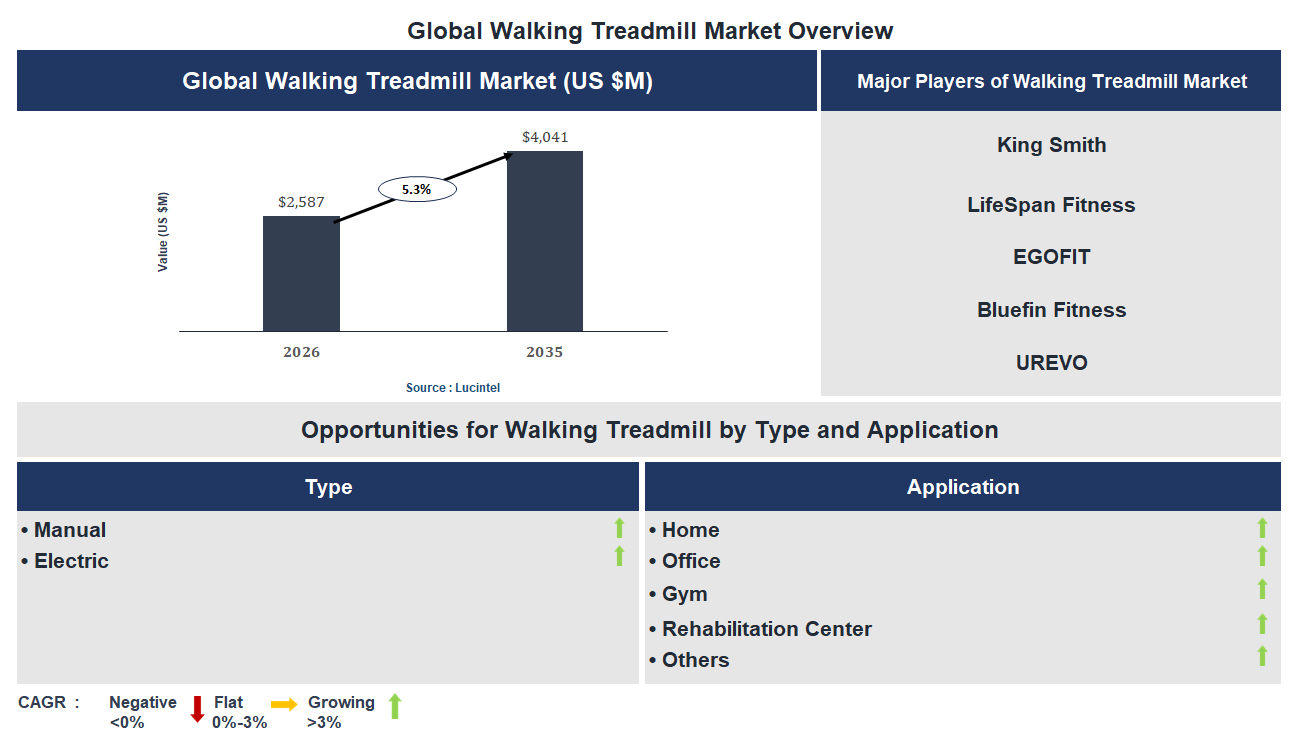
Key data points: The market size in 2035 = $4041 million, growth forecast = 5.3% annually for the next 8 years. Scroll below to get more insights. This market report covers trends, opportunities and forecasts in walking treadmill market to 2035 by type (manual and electric), application (home, office, gym, rehabilitation center, and others), and region (North America, Europe, Asia Pacific, and the Rest of the World)
We'll send your sample report shortly.
• Lucintel forecasts that, within the type category, electric is expected to witness higher growth over the forecast period.
• Within the application category, home is expected to witness the highest growth.
• In terms of region, APAC is expected to witness the highest growth over the forecast period. Gain valuable insights for your business decisions with our comprehensive 150+ page report. Sample figures with some insights are shown below.
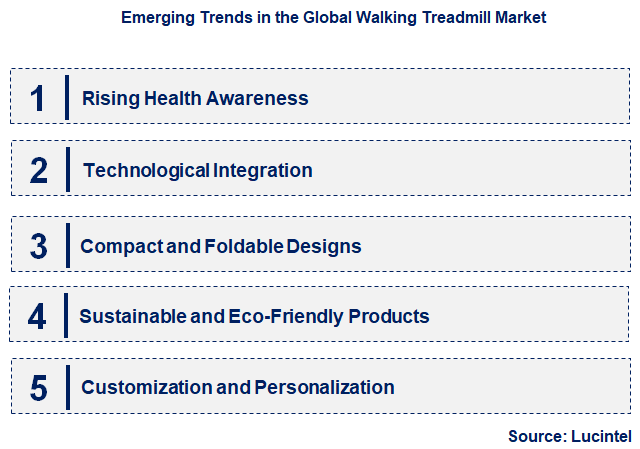
• Rising Health Awareness: Growing health consciousness among consumers is fueling demand for walking treadmills. People are increasingly prioritizing fitness and wellness, especially post-pandemic, leading to a preference for convenient, at-home exercise options. This trend is encouraging manufacturers to develop user-friendly, affordable, and space-efficient treadmills that cater to a broad demographic, including seniors and urban dwellers. The focus on health benefits, such as cardiovascular health and weight management, is driving sustained market growth and product innovation.
• Technological Integration: The incorporation of smart features and digital connectivity is transforming walking treadmills. Devices now come equipped with touchscreen displays, app integration, and virtual workout environments, enhancing user engagement. These features enable personalized training, real-time feedback, and progress tracking, making workouts more motivating and effective. The adoption of AI and IoT technologies is also facilitating predictive maintenance and improved safety features, which boost consumer confidence and satisfaction, thereby expanding market reach.
• Compact and Foldable Designs: Space constraints in urban homes are prompting demand for compact, foldable walking treadmills. Manufacturers are focusing on designing lightweight, portable models that can be easily stored when not in use. These innovations make treadmill exercise accessible to a wider audience, including those with limited space. The convenience of foldability and storage solutions is a significant factor influencing purchasing decisions, contributing to increased sales and market penetration in densely populated areas.
• Sustainable and Eco-Friendly Products: Environmental concerns are influencing product development in the walking treadmill market. Companies are adopting eco-friendly materials, energy-efficient motors, and sustainable manufacturing practices. Some models feature low power consumption and recyclable components, appealing to environmentally conscious consumers. This trend not only aligns with global sustainability goals but also enhances brand reputation and consumer loyalty, driving market growth through responsible innovation.
• Customization and Personalization: The market is witnessing a shift towards tailored workout experiences. Advanced treadmills offer customizable programs based on user preferences, fitness levels, and health goals. Features like adjustable incline, speed, and personalized coaching are becoming standard. This trend improves user engagement, motivation, and results, fostering long-term customer retention. The emphasis on personalization is reshaping product development strategies and creating opportunities for premium offerings in the market. In summary, these trends are collectively reshaping the walking treadmill market by making products more accessible, technologically advanced, sustainable, and personalized. They are expanding market opportunities, enhancing consumer experiences, and driving innovation, ultimately leading to a more competitive and dynamic industry landscape.
• Growing Demand for Home Fitness Equipment: The rising preference for home workouts due to convenience and pandemic-related restrictions is boosting treadmill sales. Consumers seek durable, easy-to-use walking treadmills that fit into limited spaces. This trend encourages manufacturers to develop compact, affordable models with advanced features, expanding market reach. The increased adoption of home fitness solutions is significantly impacting sales volume and product innovation, fostering a competitive environment focused on user-centric designs.
• Technological Innovations Enhancing User Experience: Integration of smart technology, AI, and connectivity features is revolutionizing walking treadmills. These advancements enable personalized workout programs, real-time feedback, and virtual training environments. Enhanced user engagement and motivation lead to higher customer satisfaction and retention. Manufacturers investing in tech-driven features are gaining a competitive edge, driving market growth. The focus on seamless digital integration is transforming traditional treadmill use into an interactive fitness experience.
• Rising Health Consciousness and Lifestyle Changes: Increasing awareness of health benefits associated with regular walking is fueling demand. Consumers are motivated by weight management, cardiovascular health, and overall wellness. This shift encourages the development of user-friendly, customizable treadmills suitable for all fitness levels. The market benefits from a broader demographic, including seniors and beginners, expanding its customer base. The emphasis on health-driven products is fostering innovation and market expansion.
• Expansion in Commercial and Institutional Markets: Gyms, corporate wellness programs, and healthcare facilities are adopting walking treadmills to promote physical activity. This institutional demand supports large-scale sales and product diversification. Manufacturers are creating specialized models tailored for commercial use, emphasizing durability and advanced features. The growth of these sectors contributes to increased market stability and revenue streams, while also encouraging technological enhancements suited for high-traffic environments.
• Focus on Sustainability and Eco-Friendly Designs: Environmental concerns are prompting manufacturers to develop energy-efficient, sustainable treadmills. Use of eco-friendly materials and power-saving features appeals to environmentally conscious consumers. This trend aligns with broader sustainability initiatives, enhancing brand reputation and market appeal. The push for greener products is influencing design choices and manufacturing processes, fostering innovation. As sustainability becomes a key purchasing factor, it is shaping future market dynamics and product development strategies. These developments are significantly transforming the walking treadmill market by expanding consumer base, enhancing product features, and promoting sustainability. The integration of technology, increased health awareness, and growth in institutional sectors are driving market expansion. As manufacturers innovate and adapt to evolving consumer preferences, the industry is poised for sustained growth, creating new opportunities and competitive advantages. Overall, these trends are shaping a dynamic, resilient market with promising prospects for the future.
• Growing Adoption of Smart and Connected Treadmills: The integration of IoT and AI technologies into walking treadmills offers personalized workout experiences, real-time feedback, and remote monitoring. Consumers increasingly prefer smart equipment that can sync with fitness apps, track progress, and provide customized training plans. This trend enhances user engagement, motivation, and convenience, driving demand for technologically advanced treadmills across residential gyms and commercial fitness centers.
• Rising Demand for Compact and Space-Saving Designs: Urbanization and limited living spaces are fueling the need for compact, foldable, and space-efficient walking treadmills. Manufacturers are developing innovative designs that maximize functionality while minimizing footprint. These lightweight, portable models appeal to apartment dwellers and home users seeking versatile fitness solutions without sacrificing space, thereby expanding market reach and increasing sales in densely populated regions.
• Increasing Focus on Health and Wellness Post-Pandemic: The COVID-19 pandemic heightened awareness of health and fitness, prompting consumers to invest in home exercise equipment. Walking treadmills are viewed as accessible, low-impact options suitable for all fitness levels. The trend toward health-conscious lifestyles is expected to sustain demand, encouraging manufacturers to offer affordable, easy-to-use models with enhanced safety features, thus broadening the market base and fostering long-term growth.
• Technological Innovations Enhancing User Experience: Advancements such as touchscreen interfaces, immersive displays, and virtual reality integration are transforming treadmill workouts. These innovations provide engaging, interactive experiences that motivate users and improve adherence to fitness routines. Enhanced cushioning, noise reduction, and energy-efficient motors further improve comfort and sustainability, making treadmills more appealing. Continuous technological evolution is expected to attract a broader consumer base and stimulate market expansion.
• Growing Commercial Sector and Corporate Wellness Programs: The commercial fitness sector, including gyms, hotels, and corporate wellness initiatives, is a significant growth driver. Businesses are investing in high-quality, durable walking treadmills to attract members and employees. The emphasis on employee health and productivity is boosting demand for commercial-grade equipment. This trend offers manufacturers opportunities to develop specialized, scalable solutions tailored for institutional clients, thereby expanding their market footprint and revenue streams. The walking treadmill markets growth is propelled by technological advancements, space-efficient designs, health awareness, and expanding commercial applications. These opportunities collectively enhance consumer engagement, broaden accessibility, and foster innovation, positioning the market for sustained expansion. Stakeholders who capitalize on these trends can achieve competitive advantages and meet evolving customer needs effectively.
• Technological Innovation: The integration of smart features, such as app connectivity, heart rate monitoring, and customizable workout programs, enhances user experience and attracts a broader customer base. Continuous innovation improves product efficiency, safety, and convenience, fueling market growth. Manufacturers investing in R&D are able to differentiate their offerings, meet evolving consumer demands, and stay competitive. The adoption of AI and IoT technologies further personalizes workouts, making walking treadmills more appealing for home and commercial use. This technological evolution is crucial for expanding market reach and increasing sales.
• Rising Health Awareness: Increasing awareness about fitness and wellness among consumers is a major driver. The growing prevalence of sedentary lifestyles and obesity concerns has prompted individuals to seek convenient exercise solutions like walking treadmills. Governments and health organizations are promoting active lifestyles through campaigns, which boost demand. Additionally, the COVID-19 pandemic heightened focus on home-based fitness, accelerating treadmill adoption. As consumers prioritize health, the demand for accessible, easy-to-use exercise equipment like walking treadmills continues to rise, supporting sustained market growth.
• Urbanization and Space Constraints: Rapid urbanization has led to smaller living spaces, creating a demand for compact and space-efficient fitness equipment. Walking treadmills that are foldable or designed for small apartments appeal to urban dwellers seeking convenient exercise options at home. This trend encourages manufacturers to develop innovative, space-saving models, expanding the market. Urbanization also increases the need for accessible fitness solutions outside traditional gyms, further boosting sales. The convenience and adaptability of walking treadmills make them a preferred choice for city residents, driving market expansion.
• Economic Growth and Disposable Income: Rising disposable incomes in emerging economies enable consumers to invest in health and fitness equipment. As economies grow, more households can afford premium walking treadmills with advanced features. This economic upliftment broadens the customer base beyond traditional markets, fostering market expansion. Additionally, increased spending on wellness and fitness reflects changing lifestyles and priorities. Manufacturers benefit from this trend by offering a range of products catering to different income segments, thus fueling overall market growth.
• E-commerce and Distribution Channels: The proliferation of online retail platforms has made walking treadmills more accessible to consumers worldwide. E-commerce provides detailed product information, customer reviews, and competitive pricing, influencing purchasing decisions. The convenience of home delivery and easy return policies further boost sales. Additionally, omnichannel strategies combining online and offline sales enhance market reach. The expansion of distribution channels allows manufacturers to target a broader audience, including remote and rural areas, thereby accelerating market growth and increasing consumer engagement. The challenges facing the walking treadmill market include:-
• High Product Costs: Advanced walking treadmills with smart features and durable materials tend to be expensive, limiting accessibility for price-sensitive consumers. High costs can hinder market penetration, especially in emerging economies where affordability is crucial. Manufacturers face the challenge of balancing quality and innovation with affordability to attract a wider customer base. Additionally, the cost of maintenance and repairs can deter potential buyers. Overcoming this challenge requires strategic pricing, cost-effective manufacturing, and offering a range of products to cater to different income levels.
• Regulatory and Safety Standards: The market faces stringent safety and quality regulations that vary across regions. Compliance with these standards can increase manufacturing costs and extend product development timelines. Ensuring safety features such as stability, emergency stop functions, and user-friendly interfaces is essential but challenging. Non-compliance can lead to legal issues, recalls, and damage to brand reputation. Manufacturers must stay updated with evolving regulations and invest in quality assurance processes, which can be resource-intensive but are necessary for market acceptance and consumer trust.
• Market Saturation and Competition: The increasing number of players and product offerings has led to intense competition, making it difficult for new entrants to establish a foothold. Market saturation in developed regions limits growth opportunities, forcing companies to innovate continuously and differentiate their products. Price wars and promotional activities can erode profit margins. Additionally, the presence of counterfeit and low-quality products can undermine brand integrity. To succeed, companies must focus on innovation, branding, and customer engagement, but the competitive landscape remains a significant challenge. In summary, the walking treadmill market is driven by technological advancements, health consciousness, urbanization, economic growth, and expanding distribution channels. However, high costs, regulatory hurdles, and intense competition pose notable challenges. These factors collectively influence market dynamics, requiring stakeholders to adapt strategies that leverage opportunities while mitigating risks. The markets future growth will depend on innovation, affordability, regulatory compliance, and effective marketing, ensuring sustainable development amid evolving consumer preferences and technological trends.
• King Smith
• LifeSpan Fitness
• EGOFIT
• Bluefin Fitness
• UREVO
• Goplus
• Sunny Health & Fitness
• CITYSPORTS
• RHYTHM FUN
• DeerRun
• Manual
• Electric
• Home
• Office
• Gym
• Rehabilitation Center
• Others
• North America
• Europe
• Asia Pacific
• The Rest of the World
• United States: United States, the market has seen a surge in smart treadmill adoption, with major brands launching AI-enabled models that offer personalized workout plans and real-time feedback. The focus on home fitness due to the pandemic has accelerated sales, especially among urban populations. Additionally, there is a growing trend toward compact, space-saving designs suitable for small apartments. Government initiatives promoting health awareness have also contributed to increased market demand.
• China: Chinas walking treadmill market is rapidly expanding, driven by rising disposable incomes and a growing middle class prioritizing health and wellness. Local manufacturers are innovating with affordable, feature-rich models tailored to urban lifestyles. E-commerce platforms are playing a crucial role in distribution, making treadmills more accessible. The government’s emphasis on public health and fitness programs further boosts market growth. Moreover, technological integration, such as app connectivity and virtual coaching, is becoming increasingly popular among Chinese consumers.
• Germany: Germanys market is characterized by a focus on high-quality, durable, and energy-efficient treadmills. Consumers are increasingly interested in eco-friendly models that reduce power consumption. The market is also witnessing a rise in premium products with advanced features like incline adjustments and interactive screens. Health-conscious aging populations and government initiatives promoting active lifestyles are key drivers. Additionally, German consumers prefer products with robust safety features and long-term warranties, reflecting a demand for reliability and value.
• India: Indias walking treadmill market is experiencing rapid growth due to increasing awareness of fitness and wellness, coupled with rising disposable incomes. The affordability of models is a significant factor, with local brands offering budget-friendly options. Urbanization and sedentary lifestyles are fueling demand, especially in metropolitan areas. E-commerce sales are expanding, providing wider access to various models. The government’s initiatives promoting health and fitness, along with corporate wellness programs, are also contributing to market expansion. Innovations such as foldable and lightweight treadmills are gaining popularity among Indian consumers seeking space-efficient solutions.
• Japan: Japans market is characterized by a mature consumer base with a strong focus on health maintenance and the needs of an aging population. There is a high demand for technologically advanced treadmills with features like heart rate monitoring, virtual training, and connectivity with health apps. Japanese consumers prefer compact, space-saving designs suitable for small homes and apartments. The market is also influenced by government campaigns encouraging active aging and preventive health measures. Premium products with innovative safety features and energy efficiency are favored, reflecting a trend toward sustainable and health-oriented lifestyles.


• King Smith
• LifeSpan Fitness
• EGOFIT
• Bluefin Fitness
• UREVO
• Goplus
• Sunny Health & Fitness
• CITYSPORTS
• RHYTHM FUN
• DeerRun Q6. Which walking treadmill market segment will be the largest in future? Answer: Lucintel forecasts that, within the type category, electric is expected to witness higher growth over the forecast period. Q7. In walking treadmill market, which region is expected to be the largest in next 5 years? Answer: In terms of region, APAC is expected to witness the highest growth over the forecast period. Q8. Do we receive customization in this report? Answer: Yes, Lucintel provides 10% customization without any additional cost.


Choose a license that fits your team. Instant PDF delivery.
Prices exclude taxes. Instant delivery. Custom licensing available on request.
Market Report · July 22, 2026
Market Report · July 16, 2026
Market Report · May 18, 2026
Trusted partner for strategic intelligence and business growth


Receive a complimentary market analysis tailored to your industry. Our analysts will identify key growth opportunities and competitive dynamics specific to your business.

Market size, growth rate, and key trend analysis for your specific sector.

Top competitor positioning and market share analysis.

Strategic recommendations backed by data-driven insights.
Get curated market intelligence and competitive moves straight to your inbox.
By subscribing, you agree to receive our monthly insights. Unsubscribe anytime.
Receive a complimentary market analysis tailored to your industry. Our analysts will identify key growth opportunities and competitive dynamics specific to your business.
Market size, growth rate, and key trend analysis for your specific sector.
Top competitor positioning and market share analysis.
Strategic recommendations backed by data-driven insights.
Get curated market intelligence, emerging trends, and competitive moves straight to your inbox each month.
By subscribing, you agree to receive our monthly insights. Unsubscribe anytime.
We'll send your sample report shortly.