
Market Report · July 22, 2026

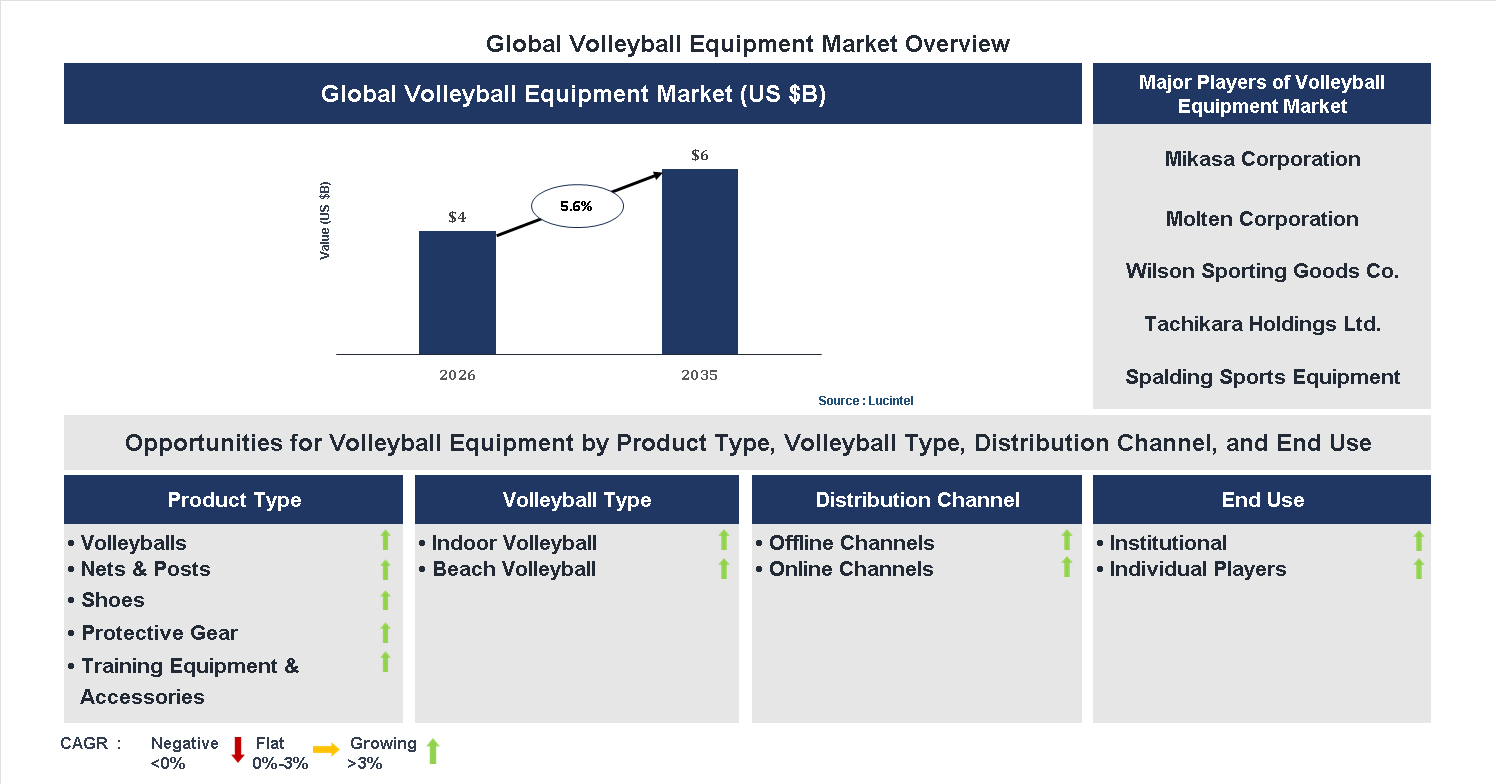
Key data points: The market size in 2035 = $6 billion, growth forecast = 5.6% annually for the next 8 years. Scroll below to get more insights. This market report covers trends, opportunities and forecasts in volleyball equipment market to 2035 by product type (volleyballs, nets & posts, shoes, protective gear, and training equipment & accessories), volleyball type (indoor volleyball and beach volleyball), distribution channel (offline channels and online channels), end use (institutional and individual players), and region (North America, Europe, Asia Pacific, and the Rest of the World)
We'll send your sample report shortly.
• Lucintel forecasts that, within the product type category, volleyball is expected to witness the highest growth over the forecast period.
• Within the distribution channel category, offline channel is expected to witness higher growth.
• In terms of region, APAC is expected to witness the highest growth over the forecast period. Gain valuable insights for your business decisions with our comprehensive 150+ page report. Sample figures with some insights are shown below.
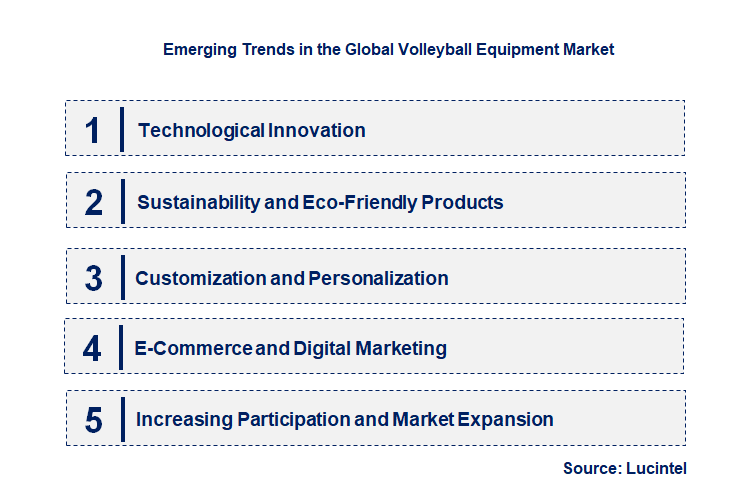
• Technological Innovation: Integration of advanced materials and smart technology is enhancing equipment performance. Manufacturers are developing lightweight, durable, and high-traction volleyballs and gear using innovative composites and synthetic materials. Smart volleyballs embedded with sensors provide real-time data on speed, spin, and impact, aiding training and performance analysis. These innovations improve athlete performance, safety, and engagement, making equipment more appealing to both amateur and professional players. As technology continues to evolve, the market is expected to see increased adoption of connected and high-tech products.
• Sustainability and Eco-Friendly Products: Growing environmental awareness is prompting manufacturers to adopt sustainable practices. Use of recycled materials, biodegradable components, and eco-friendly manufacturing processes are becoming standard. Companies are designing products that reduce carbon footprints and minimize waste, aligning with consumer preferences for environmentally responsible options. This trend not only appeals to eco-conscious consumers but also complies with stricter regulations. The shift towards sustainability is expected to influence product development, packaging, and supply chain practices, fostering a greener market landscape.
• Customization and Personalization: Consumers increasingly seek personalized equipment tailored to their preferences and playing styles. Manufacturers are offering customizable volleyballs, apparel, and accessories with options for colors, logos, and specific performance features. Digital platforms enable consumers to design and order bespoke products easily. This trend enhances customer engagement and brand loyalty, allowing companies to differentiate themselves in a competitive market. Personalized products also cater to team branding and sponsorship opportunities, expanding revenue streams and market reach.
• E-commerce and Digital Marketing: The rise of online retail channels is transforming how volleyball equipment is marketed and sold. E-commerce platforms provide wider reach, convenience, and access to a global customer base. Digital marketing strategies, including social media, influencer collaborations, and targeted advertising, are increasing brand visibility and consumer engagement. Virtual try-ons and augmented reality tools are enhancing the online shopping experience. This shift enables manufacturers to gather valuable consumer data, optimize sales strategies, and respond swiftly to market trends, making digital channels a vital component of market growth.
• Increasing Participation and Market Expansion: Rising popularity of volleyball across schools, colleges, and recreational leagues is driving demand for equipment. Urbanization and sports infrastructure development are making the sport more accessible, especially in emerging markets. The growth of women’s volleyball and youth programs is expanding the customer base. This increased participation fuels demand for a wide range of products, from beginner to professional-grade equipment. Market expansion into developing regions presents significant growth opportunities, encouraging manufacturers to innovate and adapt products to diverse consumer needs. Technological advancements, sustainability efforts, customization options, digital marketing, and increased participation are collectively reshaping the Volleyball Equipment Market. These trends are fostering innovation, expanding consumer bases, and creating new revenue streams, ultimately driving the industry toward a more dynamic and sustainable future.
• Technological Innovations in Equipment: The integration of advanced materials and design improvements enhances durability, performance, and safety of volleyball gear. Innovations such as lightweight, high-strength composites and ergonomic designs are attracting athletes and recreational players alike. These advancements lead to better gameplay, reduced injury risk, and increased consumer satisfaction. As technology continues to evolve, manufacturers can differentiate their products, boosting sales and market share. This trend is expected to sustain growth and elevate the overall quality standards within the industry.
• Rising Popularity of Volleyball Globally: The sports growing popularity in regions like Asia, North America, and Europe is expanding the customer base for volleyball equipment. Increased media coverage, international tournaments, and grassroots initiatives are encouraging more participation at all levels. This surge in demand drives manufacturers to develop a wider range of products tailored to different skill levels and age groups. The expanding market attracts investments and partnerships, further fueling industry growth and global outreach, making volleyball equipment more accessible and affordable.
• Expansion of Sports Infrastructure and Facilities: Governments and private organizations are investing heavily in building volleyball courts and sports complexes. This infrastructure development promotes participation at school, community, and professional levels. As facilities increase, so does the demand for equipment, including balls, nets, and protective gear. The growth of organized leagues and tournaments also boosts sales. Enhanced infrastructure not only supports grassroots development but also attracts sponsorships and commercial opportunities, creating a positive feedback loop that sustains market expansion.
• Increasing Focus on Safety and Comfort: Consumers are prioritizing safety features and comfort in volleyball equipment, prompting manufacturers to innovate. The development of shock-absorbing shoes, padded knee pads, and ergonomic grips enhances player safety and performance. This focus reduces injury risks and improves overall playing experience, encouraging more participation. As awareness about sports safety grows, demand for high-quality, certified equipment rises. This trend influences product development strategies and elevates industry standards, fostering consumer trust and loyalty.
• Growth of E-commerce and Digital Marketing: The rise of online retail platforms and digital marketing strategies has expanded access to volleyball equipment globally. E-commerce offers convenience, competitive pricing, and a broader product selection, attracting a diverse customer base. Digital campaigns, influencer collaborations, and social media engagement increase brand visibility and consumer engagement. This shift enables manufacturers to reach niche markets and emerging economies more effectively. The digital transformation accelerates sales cycles, enhances customer insights, and fosters innovation, significantly impacting market dynamics and growth trajectories. The overall impact of these developments is a dynamic, expanding volleyball equipment market characterized by innovation, increased participation, and improved safety standards. The integration of technology, infrastructure growth, and digital channels are creating new opportunities for brands and stakeholders. As the market evolves, it is poised for sustained growth, driven by consumer demand for high-quality, innovative, and accessible volleyball equipment worldwide.
• Expansion into Emerging Markets: The volleyball equipment market is poised for growth in developing regions where sports infrastructure is improving. Increasing youth participation and government initiatives to promote sports are creating demand for affordable, high-quality volleyball gear. Manufacturers can capitalize on this by localizing products and establishing distribution channels, which will boost sales and market penetration in these regions.
• Innovation in Lightweight and Durable Materials: Advancements in materials science are enabling the production of lighter, more durable volleyball equipment. These innovations improve player performance and safety, making equipment more appealing to both amateur and professional athletes. Companies investing in R&D to develop such materials can differentiate their products, gain competitive advantage, and meet the evolving needs of consumers.
• Rising Demand for Customized and Branded Equipment: Consumers increasingly seek personalized and branded volleyball gear for team identity and style expression. This trend opens opportunities for manufacturers to offer customization options, including team logos, colors, and personalized designs. Such offerings can enhance brand loyalty, increase sales, and attract sponsorship deals, thereby expanding market share in both amateur and professional segments.
• Growth of Indoor and Outdoor Volleyball Tournaments: The proliferation of volleyball competitions at local, national, and international levels drives demand for specialized equipment suited to different playing environments. Event organizers and teams require high-quality, reliable gear, creating opportunities for suppliers to provide tailored solutions. This growth also encourages sponsorship and branding opportunities, further boosting market expansion.
• Adoption of Smart and Connected Equipment: Integration of IoT and sensor technology into volleyball equipment is emerging as a key trend. Smart balls and connected gear can track performance metrics, improve training, and enhance user engagement. Companies investing in connected technology can tap into the sports tech market, offering innovative products that appeal to tech-savvy athletes and coaches, thereby opening new revenue streams and market segments. The overall impact of these opportunities is a dynamic, expanding volleyball equipment market characterized by innovation, regional growth, and increased consumer engagement. Companies that leverage these trends can strengthen their market position, diversify their product offerings, and meet the evolving demands of players and organizations worldwide.
• Technological Innovations: The integration of advanced materials and manufacturing techniques has resulted in lightweight, durable, and high-performance volleyball equipment. Innovations such as improved grip surfaces, enhanced ball aerodynamics, and eco-friendly materials have increased consumer appeal and safety standards. These technological advancements enable manufacturers to differentiate their products, meet evolving consumer preferences, and comply with international standards, thereby expanding market reach. Continuous R&D investments foster product innovation, attracting both amateur and professional players, which sustains market growth.
• Rising Sports Participation: Increasing awareness of health and fitness has led to a surge in sports participation worldwide. Volleyball, being accessible and easy to play, has gained popularity across various age groups and regions. The growing number of amateur leagues, school programs, and recreational clubs boosts demand for volleyball equipment, including balls, nets, and protective gear. This trend is further supported by government initiatives promoting sports infrastructure development, which collectively contribute to expanding the market and encouraging new consumer segments.
• Economic Growth and Disposable Income: Economic development in emerging markets has resulted in higher disposable incomes, enabling consumers to spend more on sports and recreational activities. As disposable incomes rise, households are more likely to invest in quality volleyball equipment for personal use, training, or club memberships. This economic upliftment also encourages sports organizations and educational institutions to upgrade their facilities, increasing demand for professional-grade equipment. Consequently, economic growth directly correlates with increased market sales and diversification of product offerings.
• Sponsorships and Endorsements: The involvement of professional athletes and sports organizations in endorsing volleyball equipment significantly influences consumer purchasing decisions. Sponsorship deals and endorsements enhance brand visibility and credibility, attracting a broader customer base. These marketing strategies often lead to increased sales of branded equipment and stimulate interest in the sport itself. As a result, companies invest heavily in athlete endorsements and sponsorships to leverage their influence, which in turn fuels market expansion and product innovation driven by consumer preferences.
• Expansion of E-commerce Channels: The proliferation of online retail platforms has transformed the distribution landscape for volleyball equipment. E-commerce offers consumers easy access to a wide range of products, competitive pricing, and detailed product information. This channel expansion enables manufacturers to reach global markets efficiently, especially in regions with limited physical retail infrastructure. The convenience and variety offered by online shopping attract more customers, boost sales, and facilitate direct consumer feedback, which helps in tailoring products to market needs. The growth of digital marketing further amplifies this trend, supporting sustained market growth. The challenges facing the volleyball equipment market include:
• High Manufacturing Costs: Producing high-quality volleyball equipment involves significant expenses related to raw materials, advanced manufacturing processes, and quality control. The use of specialized materials such as synthetic leather, durable plastics, and eco-friendly components increases production costs. Additionally, maintaining consistent quality standards to meet international regulations adds to expenses. These high costs can limit profit margins, especially for small and medium-sized manufacturers, and may lead to higher retail prices, potentially reducing consumer demand in price-sensitive markets.
• Regulatory Compliance and Standards: The volleyball equipment industry must adhere to strict safety and quality standards set by various international and regional regulatory bodies. Compliance involves rigorous testing, certification, and documentation processes, which can be time-consuming and costly. Variations in standards across countries create additional complexities for manufacturers aiming for global distribution. Non-compliance risks product recalls, legal penalties, and damage to brand reputation, all of which can hinder market entry and expansion efforts.
• Fluctuating Raw Material Prices: The volatility of raw material prices, such as rubber, synthetic leather, and plastics, directly impacts manufacturing costs. Supply chain disruptions, geopolitical tensions, and environmental factors can cause price fluctuations, making cost management challenging. Manufacturers may face difficulties in maintaining stable pricing strategies, which can affect profit margins and product pricing. These uncertainties can also delay product launches and reduce competitiveness in a highly dynamic market environment. The volleyball equipment market is driven by technological advancements, increasing sports participation, economic growth, strategic marketing, and expanding online channels. However, high manufacturing costs, regulatory hurdles, and raw material price volatility pose significant challenges. These factors collectively influence market dynamics, requiring stakeholders to innovate, adapt, and strategize effectively. While growth prospects remain promising, addressing these challenges is crucial for sustainable development and competitive advantage in the evolving landscape of volleyball equipment.
• Mikasa Corporation
• Molten Corporation
• Wilson Sporting Goods Co.
• Tachikara Holdings Ltd.
• Spalding Sports Equipment
• Baden Sports
• ASICS Corporation
• Mizuno Corporation
• Under Armour, Inc.
• Nike, Inc.
• Volleyballs
• Nets & Posts
• Shoes
• Protective Gear
• Training Equipment & Accessories
• Indoor Volleyball
• Beach Volleyball
• Offline Channels
• Online Channels
• Institutional
• Individual Players
• North America
• Europe
• Asia Pacific
• The Rest of the World
• United States: The US market has seen a rise in premium, technologically advanced volleyball equipment, including lightweight balls and eco-friendly gear. Major sports brands are expanding their product lines and sponsoring collegiate and professional leagues, boosting consumer confidence. E-commerce sales have surged, driven by online sports retailers and direct-to-consumer models. Additionally, increased investment in youth sports programs and community leagues has expanded market reach. Innovations in ball design and material durability are also gaining popularity among amateur and professional players alike.
• China: China’s volleyball equipment market is experiencing rapid growth due to government initiatives promoting sports development and increased participation in volleyball at schools and clubs. Local manufacturers are investing in R&D to produce high-quality, affordable equipment, competing with international brands. The adoption of smart volleyballs with embedded sensors for training purposes is emerging. E-commerce platforms are expanding their offerings, making products more accessible nationwide. The government’s focus on hosting international volleyball events is further fueling demand for professional-grade equipment.
• Germany: The German market emphasizes high-quality, sustainable volleyball equipment, aligning with the country’s strong environmental consciousness. Leading brands are innovating with eco-friendly materials and manufacturing processes. The market is also witnessing a rise in indoor volleyball facilities, which increases demand for specialized equipment. Germany’s focus on sports science and athlete performance has led to the development of advanced training gear and accessories. The popularity of beach volleyball has also contributed to increased sales of outdoor volleyball equipment, with a focus on durability and weather resistance.
• India: The Indian volleyball equipment market is expanding rapidly, driven by government initiatives to promote sports and increased awareness of health benefits. Local manufacturers are improving product quality and affordability to cater to a growing youth demographic. The rise of online retail channels has made equipment more accessible across urban and rural areas. There is a growing trend of organized volleyball tournaments, which boosts demand for professional-grade gear. Additionally, international brands are entering the market, offering innovative products tailored to Indian players’ needs, further stimulating growth.
• Japan: Japan’s volleyball equipment market is characterized by technological innovation and a focus on safety and performance. The country’s strong volleyball culture, especially in schools and professional leagues, drives demand for high-performance gear. Japanese manufacturers are developing lightweight, durable balls with enhanced grip and control features. The market also sees a focus on eco-friendly materials and sustainable manufacturing practices. The popularity of beach volleyball and indoor leagues continues to support steady growth. Moreover, Japan’s emphasis on sports science has led to the integration of smart technology in training equipment, enhancing athlete performance.


• Mikasa Corporation
• Molten Corporation
• Wilson Sporting Goods Co.
• Tachikara Holdings Ltd.
• Spalding Sports Equipment
• Baden Sports
• ASICS Corporation
• Mizuno Corporation
• Under Armour, Inc.
• Nike, Inc. Q6. Which volleyball equipment market segment will be the largest in future? Answer: Lucintel forecasts that, within the product type category, volleyball is expected to witness the highest growth over the forecast period. Q7. In volleyball equipment market, which region is expected to be the largest in next 5 years? Answer: In terms of region, APAC is expected to witness the highest growth over the forecast period. Q8. Do we receive customization in this report? Answer: Yes, Lucintel provides 10% customization without any additional cost.


Choose a license that fits your team. Instant PDF delivery.
Prices exclude taxes. Instant delivery. Custom licensing available on request.
Market Report · July 22, 2026
Market Report · July 16, 2026
Market Report · May 18, 2026
Trusted partner for strategic intelligence and business growth


Receive a complimentary market analysis tailored to your industry. Our analysts will identify key growth opportunities and competitive dynamics specific to your business.

Market size, growth rate, and key trend analysis for your specific sector.

Top competitor positioning and market share analysis.

Strategic recommendations backed by data-driven insights.
Get curated market intelligence and competitive moves straight to your inbox.
By subscribing, you agree to receive our monthly insights. Unsubscribe anytime.
Receive a complimentary market analysis tailored to your industry. Our analysts will identify key growth opportunities and competitive dynamics specific to your business.
Market size, growth rate, and key trend analysis for your specific sector.
Top competitor positioning and market share analysis.
Strategic recommendations backed by data-driven insights.
Get curated market intelligence, emerging trends, and competitive moves straight to your inbox each month.
By subscribing, you agree to receive our monthly insights. Unsubscribe anytime.
We'll send your sample report shortly.