
Market Report · July 22, 2026

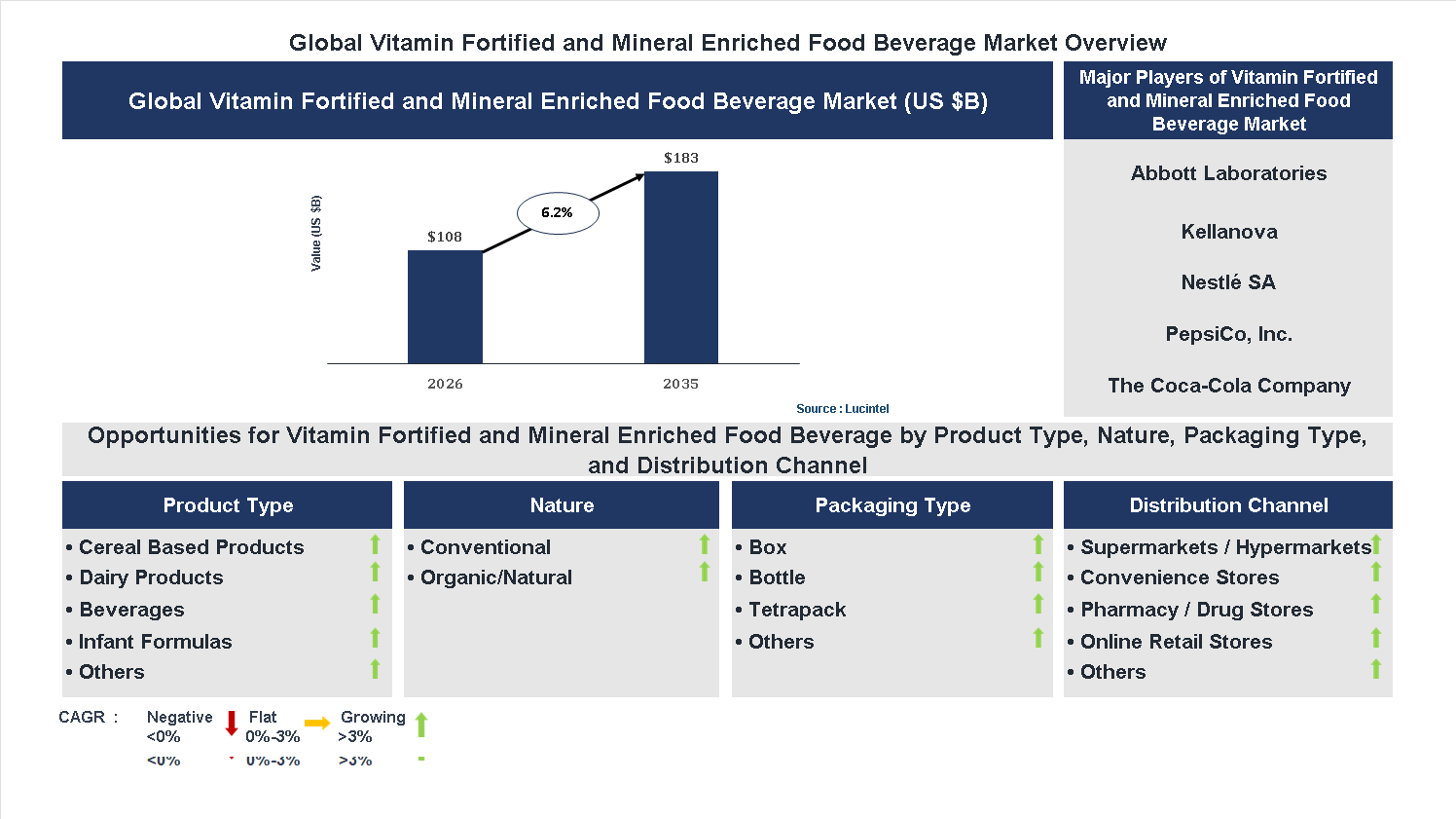
Key data points: The market size in 2035 = $183 billion, growth forecast = 6.2% annually for the next 8 years. Scroll below to get more insights. This market report covers trends, opportunities and forecasts in vitamin fortified and mineral enriched food beverage market to 2035 by product type (cereal based products, dairy products, beverages, infant formulas, and others), nature (conventional and organic/natural), packaging type (box, bottle, tetrapack, and others), distribution channel (supermarkets / hypermarkets, convenience stores, pharmacy / drug stores, online retail stores, and others), and region (North America, Europe, Asia Pacific, and the Rest of the World)
We'll send your sample report shortly.
• Lucintel forecasts that, within the product type category, beverage is expected to witness the highest growth over the forecast period.
• Within the packaging type category, bottle is expected to witness the highest growth.
• In terms of region, APAC is expected to witness the highest growth over the forecast period. Gain valuable insights for your business decisions with our comprehensive 150+ page report. Sample figures with some insights are shown below.
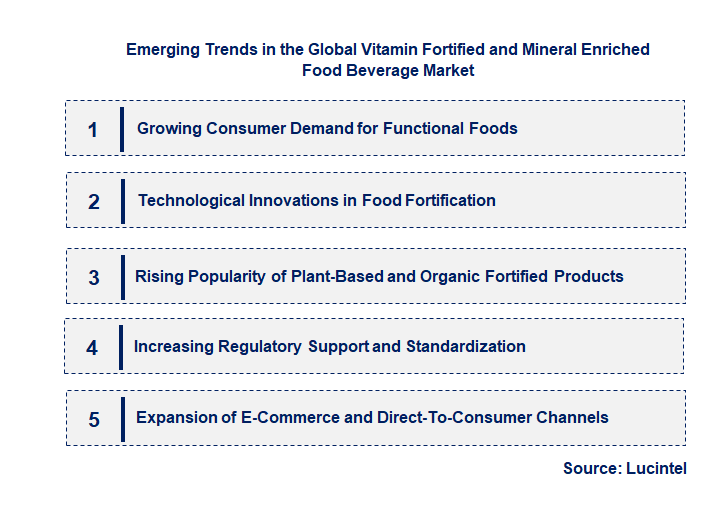
• Growing Consumer Demand for Functional Foods: Consumers are increasingly seeking foods and beverages that offer health benefits beyond basic nutrition. This trend is driven by a rising awareness of preventive healthcare and lifestyle-related health issues. Fortified products with added vitamins and minerals are perceived as convenient solutions to meet daily nutritional needs, leading to increased market adoption. Manufacturers are responding by developing innovative formulations tailored to specific health concerns such as immunity, bone health, and energy. This shift is expanding the market’s scope and encouraging product diversification.
• Technological Innovations in Food Fortification: Advances in food technology are enabling more effective and stable fortification processes. Techniques such as microencapsulation and nanotechnology help preserve nutrient potency and improve bioavailability. These innovations allow for the development of more appealing products with better taste, texture, and shelf life. As a result, consumers are more likely to accept and incorporate fortified foods into their diets. The technological progress is also facilitating the fortification of a wider range of food and beverage categories, including beverages, snacks, and dairy products, thereby broadening market opportunities.
• Rising Popularity of Plant-Based and Organic Fortified Products: The shift towards plant-based diets and organic foods is significantly impacting the fortified food beverage market. Consumers prefer products that align with their ethical, health, and environmental values. Fortified plant-based beverages, such as almond, soy, and oat drinks enriched with vitamins and minerals, are gaining popularity. Organic fortification ensures that products meet strict standards for natural ingredients and minimal processing. This trend is driving innovation in plant-based and organic segments, creating new sub-segments and expanding the consumer base for fortified foods.
• Increasing Regulatory Support and Standardization: Governments and regulatory bodies are implementing guidelines to ensure the safety, efficacy, and transparency of fortified foods. Clear labeling standards and health claims regulations are building consumer trust and confidence. This regulatory support encourages manufacturers to invest in research and development, leading to higher-quality products. Additionally, standardized fortification levels help prevent overconsumption of nutrients, addressing health concerns. As regulations evolve, they are shaping product formulations, marketing strategies, and market entry barriers, ultimately fostering a more trustworthy and sustainable market environment.
• Expansion of E-commerce and Direct-to-Consumer Channels: The growth of online retail platforms is transforming how fortified foods and beverages are marketed and sold. E-commerce offers consumers easy access to a wide range of products, detailed nutritional information, and personalized recommendations. Direct-to-consumer models enable brands to build stronger relationships with customers, gather feedback, and tailor offerings. This trend is particularly significant in reaching health-conscious and niche markets, including rural and remote areas. The digital shift is also facilitating innovative marketing strategies, such as influencer collaborations and subscription services, which are boosting sales and market penetration. These trends are collectively reshaping the vitamin fortified and mineral enriched food beverage market by fostering innovation, expanding consumer choices, and enhancing trust. They are driving market growth, encouraging sustainable practices, and creating new opportunities for manufacturers to meet evolving consumer preferences in a competitive landscape.
• Growing Consumer Awareness Of Health Benefits: The rising awareness of health benefits associated with fortified foods is boosting demand. Consumers increasingly seek products that support immunity, bone health, and overall wellness, prompting manufacturers to develop innovative fortified beverages. This trend is expanding the market by attracting health-conscious demographics and encouraging product diversification, including plant-based and organic options. As awareness continues to grow, the market is expected to see sustained growth and new product launches tailored to specific health needs.
• Innovation In Product Formulations: Companies are investing in R&D to develop advanced formulations that combine multiple vitamins and minerals in appealing formats. These innovations include flavored drinks, ready-to-drink options, and functional shots, catering to busy lifestyles. Such developments enhance consumer engagement and satisfaction, leading to increased brand loyalty. The ability to customize formulations for different age groups and health conditions is expanding market reach, fostering competitive differentiation and opening new revenue streams.
• Expansion Of Distribution Channels: The growth of online retail, specialty stores, and health-focused outlets is broadening product accessibility. E-commerce platforms enable brands to reach a wider audience, including rural and international markets. Strategic partnerships with supermarkets and convenience stores also enhance visibility and availability. This expansion of distribution channels is crucial for market penetration, especially in emerging economies, and supports the rapid growth of fortified food and beverage products across diverse consumer segments.
• Increasing Demand From Emerging Markets: Rapid urbanization and rising disposable incomes in emerging economies are driving demand for fortified foods. Consumers in these regions are increasingly adopting health-conscious lifestyles, creating opportunities for market expansion. Local manufacturers are entering the space with affordable, culturally adapted products, further fueling growth. This trend is enabling global brands to tap into new markets, diversify their portfolios, and establish a strong presence in regions with high growth potential.
• Focus On Sustainability And Clean Label Products: Consumers are demanding transparent, eco-friendly, and minimally processed products. Companies are responding by adopting sustainable sourcing, eco-friendly packaging, and clean label formulations. These initiatives appeal to environmentally conscious consumers and enhance brand reputation. The emphasis on sustainability is also driving innovation in natural fortification ingredients, which further boosts market growth by aligning with consumer values and regulatory standards. The overall impact of these developments is a dynamic, expanding market characterized by innovation, increased accessibility, and heightened consumer engagement. As companies continue to adapt to evolving preferences and technological advancements, the market is poised for sustained growth, offering diverse opportunities for stakeholders and fostering a healthier, more informed consumer base.
• Expanding Functional Food and Beverage Segments: The rising consumer focus on health and wellness is driving demand for vitamin and mineral-enriched products. Functional foods like fortified cereals, energy drinks, and dairy products are gaining popularity across age groups. Innovations in product formulations, such as plant-based options and low-sugar variants, cater to diverse dietary needs. Strategic marketing emphasizing health benefits and scientific backing can boost adoption, expanding the overall market footprint.
• Growing Demand in Emerging Markets: Rapid urbanization, increasing disposable incomes, and rising health consciousness in emerging economies like India, China, and Brazil create substantial growth opportunities. Local manufacturers are adopting fortification techniques tailored to regional nutritional deficiencies, such as iron in India or vitamin D in Southeast Asia. Collaborations with local distributors and culturally adapted marketing strategies can accelerate market penetration and consumer acceptance in these regions.
• Innovation in Product Formulations and Packaging: Advances in food technology enable the development of innovative, convenient, and appealing fortified products. Single-serve packaging, ready-to-drink formats, and natural ingredient-based formulations enhance consumer convenience and trust. Incorporating clean-label ingredients and eco-friendly packaging aligns with sustainability trends, attracting environmentally conscious consumers. Continuous R&D efforts to improve bioavailability and taste profiles are essential for maintaining competitive advantage.
• Strategic Collaborations and Partnerships: Collaborations between ingredient suppliers, food manufacturers, and health organizations can foster product innovation and credibility. Licensing agreements, co-branding, and joint ventures facilitate access to new markets and distribution channels. Partnering with healthcare providers and nutritionists can enhance consumer trust and awareness. These strategic alliances support the development of scientifically validated products, expanding market reach and reinforcing brand reputation.
• Focus on Personalization and Targeted Nutrition: The shift towards personalized nutrition offers tailored vitamin and mineral solutions based on individual health profiles, age, and lifestyle. Technologies like genetic testing and digital health platforms enable customized product offerings. This trend encourages the development of niche products for specific groups such as athletes, seniors, or pregnant women. Companies investing in data-driven approaches and consumer education can capitalize on this growing segment, fostering loyalty and higher engagement. The overall market is poised for significant growth as these opportunities align with consumer health priorities and technological advancements. Companies that innovate, expand into emerging markets, and adopt personalized strategies will be well-positioned to capture market share and meet evolving consumer demands effectively.
• Technological Innovations: The development of advanced fortification techniques allows for the incorporation of vitamins and minerals into a wide range of beverages without compromising taste or shelf life. Innovations such as microencapsulation improve nutrient stability and bioavailability, making fortified products more effective and appealing. These technological advancements enable manufacturers to create customized formulations targeting specific health concerns, thereby expanding product portfolios and attracting health-conscious consumers. As technology continues to evolve, the market is expected to see increased product diversity and improved efficacy, fueling overall growth.
• Rising Health Awareness: Consumers are increasingly aware of the importance of nutrition and preventive health, leading to a higher demand for fortified food and beverages. The desire for convenient, on-the-go health solutions drives consumers toward products enriched with essential vitamins and minerals. This trend is particularly prominent among aging populations, athletes, and individuals with specific nutritional deficiencies. As awareness campaigns and educational initiatives grow, more consumers seek products that support their health goals, thereby expanding the market for fortified beverages.
• Economic Growth and Urbanization: Rapid economic development, especially in emerging markets, results in increased disposable income and changing lifestyles. Urbanization leads to busier schedules, prompting consumers to prefer ready-to-drink fortified beverages over traditional, time-consuming nutritional options. The expanding middle class in regions like Asia-Pacific and Latin America is more willing to invest in health-oriented products, creating new market opportunities. This economic shift supports higher production volumes and encourages companies to innovate and diversify their offerings to meet the growing demand.
• Regulatory Support and Nutritional Standards: Governments and regulatory bodies worldwide are establishing guidelines for food fortification and nutritional labeling to ensure consumer safety and product transparency. These regulations encourage manufacturers to develop compliant products, fostering innovation within the market. Additionally, health claims backed by regulatory approval enhance consumer trust and product credibility. As regulatory frameworks become more robust and standardized, they facilitate market expansion by ensuring quality and safety, thereby attracting more consumers and investors.
• Strategic Collaborations and Market Expansion: Partnerships between food and beverage companies, ingredient suppliers, and research institutions accelerate product development and innovation. Collaborations enable access to new technologies, ingredients, and markets, facilitating faster entry and expansion. Companies are also exploring untapped markets through strategic alliances, joint ventures, and acquisitions, broadening their geographic reach. These collaborations help optimize supply chains, reduce costs, and enhance product offerings, ultimately driving market growth and competitiveness. The challenges facing the vitamin fortified and mineral enriched food beverage market include:
• Stringent Regulatory Frameworks: The market faces complex and evolving regulations related to food fortification, health claims, and labeling standards across different regions. Compliance requires significant investment in R&D, testing, and certification processes, which can delay product launches and increase costs. Non-compliance risks legal penalties and damage to brand reputation. Navigating diverse regulatory landscapes poses a challenge for global companies seeking to expand, as they must adapt products to meet varying standards, potentially limiting innovation and market entry.
• High R&D and Production Costs: Developing effective, stable, and bioavailable fortified products involves substantial research and development expenses. The need for specialized ingredients, advanced processing technologies, and rigorous testing increases production costs. Small and medium-sized enterprises may find it difficult to compete with larger players who have the resources to invest in innovation. These high costs can limit product diversity and slow market growth, especially in price-sensitive regions where consumers may be less willing to pay premium prices.
• Supply Chain Complexities: Ensuring the consistent availability of high-quality vitamins, minerals, and other ingredients is challenging due to supply chain disruptions, raw material shortages, and quality control issues. Variability in ingredient sourcing can affect product quality and safety, leading to recalls and reputational damage. Additionally, logistical challenges in transporting sensitive nutrients without degradation complicate distribution, especially in remote or developing regions. These supply chain issues can hinder timely product launches and limit market penetration, impacting overall growth prospects. The vitamin fortified and mineral enriched food beverage market is driven by technological advancements, increasing health awareness, economic growth, supportive regulations, and strategic collaborations. However, it faces challenges such as regulatory complexities, high R&D costs, and supply chain issues. These factors collectively shape the market landscape, influencing innovation, product development, and expansion strategies. While opportunities for growth are significant, addressing these challenges is crucial for sustainable development and competitive advantage in this evolving sector.
• Abbott Laboratories
• Kellanova
• Nestlé SA
• PepsiCo, Inc.
• The Coca-Cola Company
• The Hain Celestial Group
• Amway Corporation
• General Mills Inc.
• Danone SA
• Kraft Heinz Company
• Cereal Based Products
• Dairy Products
• Beverages
• Infant Formulas
• Others
• Conventional
• Organic/Natural
• Box
• Bottle
• Tetrapack
• Others
• Supermarkets / Hypermarkets
• Convenience Stores
• Pharmacy / Drug Stores
• Online Retail Stores
• Others
• North America
• Europe
• Asia Pacific
• The Rest of the World
• United States: The US market has seen a surge in plant-based fortified beverages, with major brands launching products enriched with vitamins D, B12, and calcium. Regulatory agencies have introduced stricter labeling standards, encouraging transparency. Innovation in clean-label and organic options is prominent, catering to health-conscious consumers. E-commerce sales of fortified drinks are expanding rapidly, driven by online health platforms and direct-to-consumer models.
• China: China’s market is rapidly growing, fueled by rising disposable incomes and increasing awareness of nutritional health. Local companies are investing in R&D to develop traditional herbal and fruit-based fortified beverages. Government initiatives promoting nutrition education are boosting demand. The market is also witnessing a shift towards premium products with added functional benefits like immunity boosting and gut health support.
• Germany: The German market emphasizes natural and organic fortified foods, with consumers favoring products free from artificial additives. There is a strong focus on sustainability and eco-friendly packaging. Innovations include fortified plant-based drinks and dairy alternatives enriched with vitamins and minerals. Regulatory frameworks support product safety and quality, fostering consumer trust and market stability.
• India: India’s market is expanding rapidly due to increasing health awareness and urbanization. Local brands are launching affordable fortified beverages targeting the middle class. There is a growing preference for traditional ingredients like turmeric and ashwagandha in fortified drinks. Government programs promoting nutrition and school feeding schemes are also contributing to market growth.
• Japan: Japan’s market is characterized by a high demand for functional beverages with added vitamins and minerals, especially targeting aging populations. Innovations include probiotic and collagen-enriched drinks. The focus on convenience and health benefits aligns with busy lifestyles. Regulatory standards ensure product safety, and collaborations with healthcare providers are common to promote fortified products.


• Abbott Laboratories
• Kellanova
• Nestlé SA
• PepsiCo, Inc.
• The Coca-Cola Company
• The Hain Celestial Group
• Amway Corporation
• General Mills Inc.
• Danone SA
• Kraft Heinz Company Q6. Which vitamin fortified and mineral enriched food beverage market segment will be the largest in future? Answer: Lucintel forecasts that, within the product type category, beverage is expected to witness the highest growth over the forecast period. Q7. In vitamin fortified and mineral enriched food beverage market, which region is expected to be the largest in next 8 years? Answer: In terms of region, APAC is expected to witness the highest growth over the forecast period. Q8. Do we receive customization in this report? Answer: Yes, Lucintel provides 10% customization without any additional cost.


Choose a license that fits your team. Instant PDF delivery.
Prices exclude taxes. Instant delivery. Custom licensing available on request.
Market Report · July 22, 2026
Market Report · July 22, 2026
Market Report · July 22, 2026
Trusted partner for strategic intelligence and business growth


Receive a complimentary market analysis tailored to your industry. Our analysts will identify key growth opportunities and competitive dynamics specific to your business.

Market size, growth rate, and key trend analysis for your specific sector.

Top competitor positioning and market share analysis.

Strategic recommendations backed by data-driven insights.
Get curated market intelligence and competitive moves straight to your inbox.
By subscribing, you agree to receive our monthly insights. Unsubscribe anytime.
Receive a complimentary market analysis tailored to your industry. Our analysts will identify key growth opportunities and competitive dynamics specific to your business.
Market size, growth rate, and key trend analysis for your specific sector.
Top competitor positioning and market share analysis.
Strategic recommendations backed by data-driven insights.
Get curated market intelligence, emerging trends, and competitive moves straight to your inbox each month.
By subscribing, you agree to receive our monthly insights. Unsubscribe anytime.
We'll send your sample report shortly.