
Market Report · July 16, 2026

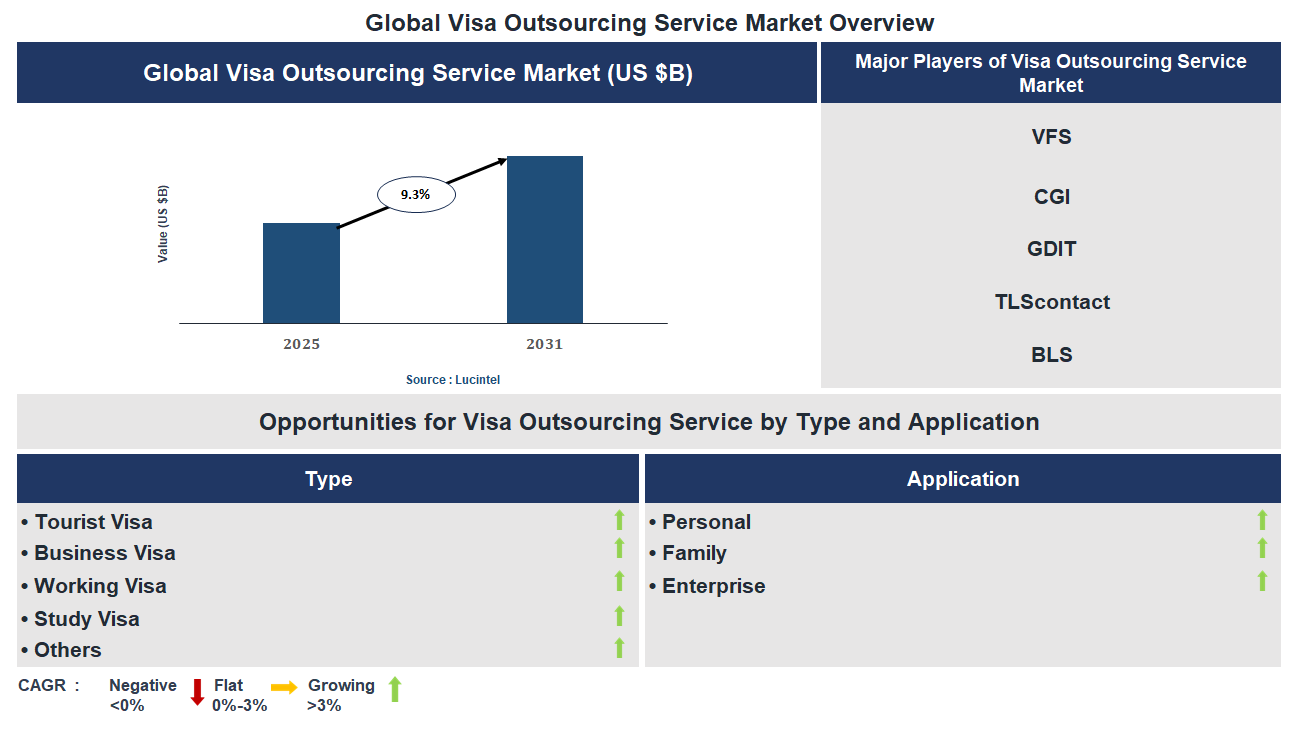
Key data points: The growth forecast = 9.3% annually for the next 7 years. Scroll below to get more insights. This market report covers trends, opportunities and forecasts in visa outsourcing service market to 2031 by type (tourist visa, business visa, working visa, study visa, and others), application (personal, family, and enterprise), and region (North America, Europe, Asia Pacific, and the Rest of the World)
We'll send your sample report shortly.
• Lucintel forecasts that, within the application category, personal is expected to witness the highest growth over the forecast period.
• Within the type category, tourist visa is expected to witness the highest growth.
• In terms of region, APAC is expected to witness the highest growth over the forecast period. Gain valuable insights for your business decisions with our comprehensive 150+ page report. Sample figures with some insights are shown below.
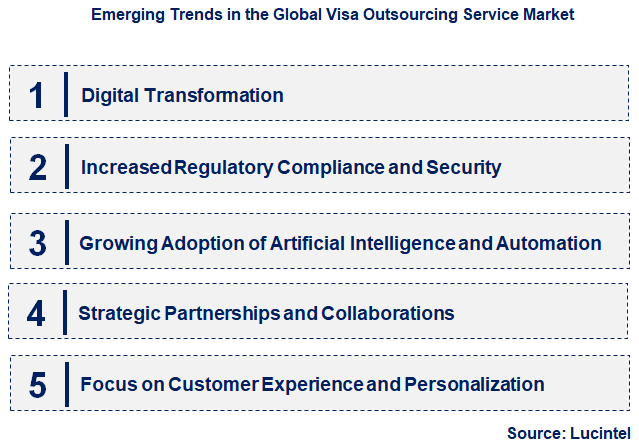
• Digital Transformation: The integration of digital platforms and automation tools is revolutionizing visa processing. Cloud-based systems, AI, and machine learning enable faster, more accurate, and transparent services. This reduces processing times, minimizes errors, and enhances user experience. Digital solutions also facilitate real-time tracking and improved data management, making visa services more accessible and efficient for clients worldwide. As a result, providers are increasingly investing in innovative technologies to stay competitive and meet rising demand for seamless digital experiences.
• Increased Regulatory Compliance and Security: With evolving immigration laws and stricter security protocols, visa outsourcing providers are prioritizing compliance and data security. They implement advanced cybersecurity measures and adhere to international standards to protect sensitive information. This trend ensures that visa processes are not only efficient but also secure and compliant with legal requirements. Enhanced compliance reduces risks of penalties and legal issues for clients, fostering trust and reliability in outsourcing services. As regulations become more complex, providers are continuously updating their protocols to meet new standards.
• Growing Adoption of Artificial Intelligence and Automation: AI-driven solutions are increasingly used to streamline visa application processing, document verification, and decision-making. Automation reduces manual workload, accelerates processing times, and minimizes human errors. AI tools also enable predictive analytics for risk assessment and fraud detection. This trend enhances operational efficiency and allows providers to handle larger volumes of applications without compromising quality. The adoption of AI and automation is a key driver for cost reduction and improved accuracy, making outsourcing services more attractive to clients seeking scalable solutions.
• Strategic Partnerships and Collaborations: Market players are forming alliances with government agencies, technology firms, and other stakeholders to enhance service offerings. These collaborations facilitate access to advanced technologies, regulatory insights, and expanded networks. Strategic partnerships enable providers to deliver comprehensive, end-to-end visa solutions and improve market reach. Such alliances also foster innovation, allowing for the development of customized services tailored to specific client needs. This trend underscores the importance of collaboration in maintaining competitiveness and driving growth in the evolving visa outsourcing landscape.
• Focus on Customer Experience and Personalization: Providers are increasingly emphasizing user-centric services, including personalized support, multilingual assistance, and user-friendly interfaces. Enhanced customer experience is achieved through digital portals, chatbots, and 24/7 support services. Personalization helps address diverse client needs and improves satisfaction levels. This trend is driven by the rising expectations of clients for quick, transparent, and hassle-free visa processing. By prioritizing customer experience, providers can differentiate themselves in a competitive market, foster loyalty, and attract new clients seeking reliable and efficient visa outsourcing solutions. In summary, these trends are fundamentally reshaping the visa outsourcing service market by driving technological innovation, enhancing compliance and security, and prioritizing customer-centric approaches. They are enabling providers to deliver faster, more secure, and personalized services, thereby increasing efficiency and competitiveness. As these developments continue, the market is poised for sustained growth, with a focus on digital transformation and strategic collaborations shaping its future trajectory.
• Adoption of AI and automation: The integration of artificial intelligence and automation tools has revolutionized visa processing by reducing manual errors, speeding up application reviews, and enhancing customer experience. Service providers are leveraging AI to automate document verification, data entry, and fraud detection, leading to increased efficiency and cost savings. This technological shift is attracting more clients seeking faster turnaround times and reliable services, thereby expanding market opportunities.
• Expansion of digital platforms: The development of comprehensive digital platforms has transformed how visa outsourcing services are delivered. These platforms enable online application submissions, real-time tracking, and digital document management, improving transparency and convenience for applicants. The enhanced user experience has increased demand from both government agencies and private organizations, fostering market growth and encouraging innovation in service delivery.
• Regulatory compliance and data security: As visa outsourcing involves sensitive personal data, stringent regulatory compliance and data security measures have become paramount. Service providers are investing in advanced cybersecurity protocols and ensuring adherence to international data protection standards. This focus on compliance not only mitigates legal risks but also builds trust with clients, positioning providers as reliable partners in a competitive market.
• Strategic partnerships and acquisitions: Market players are forming strategic alliances and acquiring smaller firms to expand their service offerings and geographic reach. These collaborations enable access to new markets, enhance technological capabilities, and improve service quality. Such strategic moves are vital for staying competitive and addressing diverse client needs in an increasingly globalized environment.
• Impact of geopolitical and regulatory changes: Evolving geopolitical landscapes and changing immigration policies significantly influence the visa outsourcing market. Service providers must adapt to new regulations, sanctions, and visa policies, which can either create opportunities or pose challenges. Staying agile and informed about policy shifts is essential for maintaining market relevance and ensuring compliance. In summary, these developments are collectively transforming the visa outsourcing service market by enhancing efficiency, security, and customer experience. The adoption of AI and digital platforms is driving operational improvements, while regulatory compliance ensures trust and stability. Strategic partnerships are expanding market reach, and geopolitical factors are shaping future opportunities. Overall, these trends are fostering a more innovative, secure, and competitive market environment, poised for sustained growth.
• Digital Transformation in Visa Processing: The adoption of digital platforms and automation tools is revolutionizing visa processing, reducing turnaround times and minimizing errors. This enhances customer satisfaction and operational efficiency, attracting more clients to outsourcing services. Governments and agencies benefit from improved compliance and data security, making digital transformation a critical growth driver.
• Increasing Demand for Business Travel Solutions: As global business travel expands, companies seek reliable visa outsourcing services to facilitate smooth travel arrangements for employees. This creates opportunities for specialized solutions that cater to corporate clients, offering faster processing, tracking, and compliance management, thereby boosting market growth.
• Expansion in Emerging Markets: Emerging economies are witnessing increased outbound travel and foreign investment, driving demand for visa outsourcing services. Providers expanding into these regions can capitalize on the growing need for efficient visa management, fostering market penetration and revenue growth.
• Focus on Security and Compliance: Heightened security concerns and stricter visa regulations necessitate advanced verification and fraud prevention measures. Outsourcing providers investing in secure, compliant solutions can differentiate themselves, gaining trust and expanding their market share in sensitive applications.
• Integration of AI and Data Analytics: The incorporation of artificial intelligence and data analytics enhances decision-making, risk assessment, and customer service. These technologies enable personalized, faster, and more accurate visa processing, attracting clients seeking innovative solutions and driving market competitiveness. In summary, these growth opportunities are significantly impacting the visa outsourcing service market by fostering innovation, expanding regional reach, and improving service quality. They enable providers to meet evolving client demands, enhance security, and streamline operations, ultimately fueling sustained market growth and competitiveness.
• Technological Innovation: The integration of advanced technologies like AI, machine learning, and blockchain enhances visa processing efficiency, accuracy, and security. Automation reduces manual errors and processing time, enabling service providers to handle higher volumes with improved customer satisfaction. These innovations also facilitate real-time tracking and transparent communication, which are critical for client trust and compliance. As technology continues to evolve, outsourcing firms can offer more sophisticated, scalable solutions, making the market more attractive to governments and private entities seeking cost-effective, reliable visa services.
• Growing Global Mobility: Increasing international travel, expatriation, and global business activities are fueling demand for streamlined visa services. Countries are experiencing higher tourist inflows and business migration, necessitating efficient visa processing systems. Outsourcing providers benefit from this trend by offering specialized services that cater to diverse visa categories, ensuring faster approvals and better customer experiences. The rise in cross-border movement also prompts governments to seek outsourcing solutions to manage high volumes while maintaining security and compliance standards, thus expanding market opportunities.
• Regulatory and Policy Changes: Evolving immigration laws and stricter compliance requirements compel governments to update their visa processing procedures. Outsourcing service providers are positioned to adapt quickly to these changes, offering compliant and flexible solutions that meet new standards. This dynamic regulatory environment encourages partnerships with specialized firms capable of navigating complex legal frameworks, thereby driving market growth. Additionally, outsourcing helps reduce administrative burdens on government agencies, ensuring faster processing times and better adherence to international standards.
• Cost Optimization and Efficiency: Governments and organizations are increasingly outsourcing visa services to reduce operational costs and improve efficiency. By leveraging economies of scale and technological advancements, outsourcing providers can deliver faster, more reliable services at lower costs. This cost-effectiveness is especially crucial for countries with high visa volumes or limited internal resources. The ability to offer scalable solutions that adapt to fluctuating demand makes outsourcing an attractive option, fostering market expansion and encouraging new entrants to develop innovative service models.
• Strategic Partnerships and Global Expansion: Collaborations between outsourcing firms and international agencies facilitate market penetration and service diversification. These partnerships enable access to new markets, sharing of expertise, and development of tailored solutions for different regions. As companies expand their geographic footprint, they can better address local regulatory nuances and customer preferences. This strategic approach enhances competitiveness and accelerates growth, making the market more dynamic and resilient to regional challenges. The challenges facing this visa outsourcing service market include:
• Regulatory Complexity and Compliance Risks: Navigating diverse and evolving immigration laws across countries presents significant challenges. Non-compliance can lead to legal penalties, delays, and reputational damage. Outsourcing providers must continuously update their processes and train staff to adhere to changing regulations, which can be resource-intensive. The complexity increases with regional differences, requiring sophisticated legal expertise and adaptable systems. Failure to manage compliance effectively can hinder market growth and erode trust among clients and governments.
• Data Security and Privacy Concerns: Handling sensitive personal data involved in visa processing raises significant security and privacy issues. Data breaches or mishandling can result in legal liabilities, loss of customer trust, and regulatory sanctions. Outsourcing firms must invest heavily in cybersecurity measures and comply with international data protection standards such as GDPR. Ensuring data integrity and confidentiality is critical, especially as cyber threats become more sophisticated. These concerns can slow market adoption and necessitate ongoing investments in security infrastructure.
• Political and Geopolitical Instability: Political tensions, diplomatic disputes, and changes in government policies can disrupt visa outsourcing operations. Such instability may lead to sudden policy shifts, travel bans, or restrictions that impact visa issuance and processing. Outsourcing providers face uncertainties in regions with volatile political climates, which can affect contractual commitments and operational continuity. Managing these risks requires strategic planning and diversification, but instability remains a persistent challenge that can hinder market growth and investor confidence. In summary, the visa outsourcing service market is shaped by technological advancements, increasing global mobility, regulatory shifts, cost efficiencies, and strategic collaborations. However, it faces challenges such as regulatory complexity, data security issues, and geopolitical risks. These drivers and challenges collectively influence market dynamics, requiring stakeholders to innovate, adapt, and mitigate risks to sustain growth. The markets future depends on balancing technological progress with robust compliance and security measures, alongside strategic risk management to navigate geopolitical uncertainties effectively.
• VFS
• CGI
• GDIT
• TLScontact
• BLS
• CIBT
• OIS
• Tourist Visa
• Business Visa
• Working Visa
• Study Visa
• Others
• Personal
• Family
• Enterprise
• North America
• Europe
• Asia Pacific
• The Rest of the World
• United States: The US has seen a surge in outsourcing visa services to improve processing times and security measures. Major firms are integrating AI and automation to handle high volumes efficiently, especially for work and student visas. Recent policies favor digital applications, reducing paperwork and wait times, while partnerships with tech companies enhance service delivery. The focus remains on compliance with immigration laws and enhancing user experience.
• China: China is rapidly expanding its visa outsourcing capabilities to support its growing international business and tourism sectors. The government collaborates with local and international firms to digitize visa applications and introduce biometric verification. Recent developments include streamlined online portals and mobile app integrations, making visa processes more accessible and efficient for travelers and expatriates.
• Germany: Germany has modernized its visa outsourcing services by adopting advanced digital platforms that facilitate faster processing and better data security. The country emphasizes compliance with EU regulations and has partnered with global service providers to handle complex visa categories, including work and family reunification visas. Recent innovations focus on user-friendly interfaces and multilingual support to cater to diverse applicants.
• India: India is witnessing a significant shift towards outsourcing visa services to reduce processing times and improve transparency. The government has engaged private sector players to develop integrated online systems for visa applications, tracking, and document verification. Recent initiatives include mobile-friendly portals and AI-driven chatbots to assist applicants, aligning with the countrys digital transformation goals.
• Japan: Japan has enhanced its visa outsourcing services by adopting cutting-edge technology to streamline procedures for tourists, students, and business travelers. The country emphasizes secure biometric verification and digital documentation. Recent developments include the expansion of e-visa options and automated processing centers, aiming to boost tourism and international business engagement while maintaining strict security standards.


• VFS
• CGI
• GDIT
• TLScontact
• BLS
• CIBT
• OIS Q5. Which visa outsourcing service market segment will be the largest in future? Answer: Lucintel forecasts that, within the application category, personal is expected to witness the highest growth over the forecast period. Q6. In visa outsourcing service market, which region is expected to be the largest in next 5 years? Answer: In terms of region, APAC is expected to witness the highest growth over the forecast period. Q7. Do we receive customization in this report? Answer: Yes, Lucintel provides 10% customization without any additional cost.


Choose a license that fits your team. Instant PDF delivery.
Prices exclude taxes. Instant delivery. Custom licensing available on request.
Market Report · July 16, 2026
Market Report · May 18, 2026
Market Report · May 18, 2026
Trusted partner for strategic intelligence and business growth


Receive a complimentary market analysis tailored to your industry. Our analysts will identify key growth opportunities and competitive dynamics specific to your business.

Market size, growth rate, and key trend analysis for your specific sector.

Top competitor positioning and market share analysis.

Strategic recommendations backed by data-driven insights.
Get curated market intelligence and competitive moves straight to your inbox.
By subscribing, you agree to receive our monthly insights. Unsubscribe anytime.
Receive a complimentary market analysis tailored to your industry. Our analysts will identify key growth opportunities and competitive dynamics specific to your business.
Market size, growth rate, and key trend analysis for your specific sector.
Top competitor positioning and market share analysis.
Strategic recommendations backed by data-driven insights.
Get curated market intelligence, emerging trends, and competitive moves straight to your inbox each month.
By subscribing, you agree to receive our monthly insights. Unsubscribe anytime.
We'll send your sample report shortly.