
Market Report · July 22, 2026

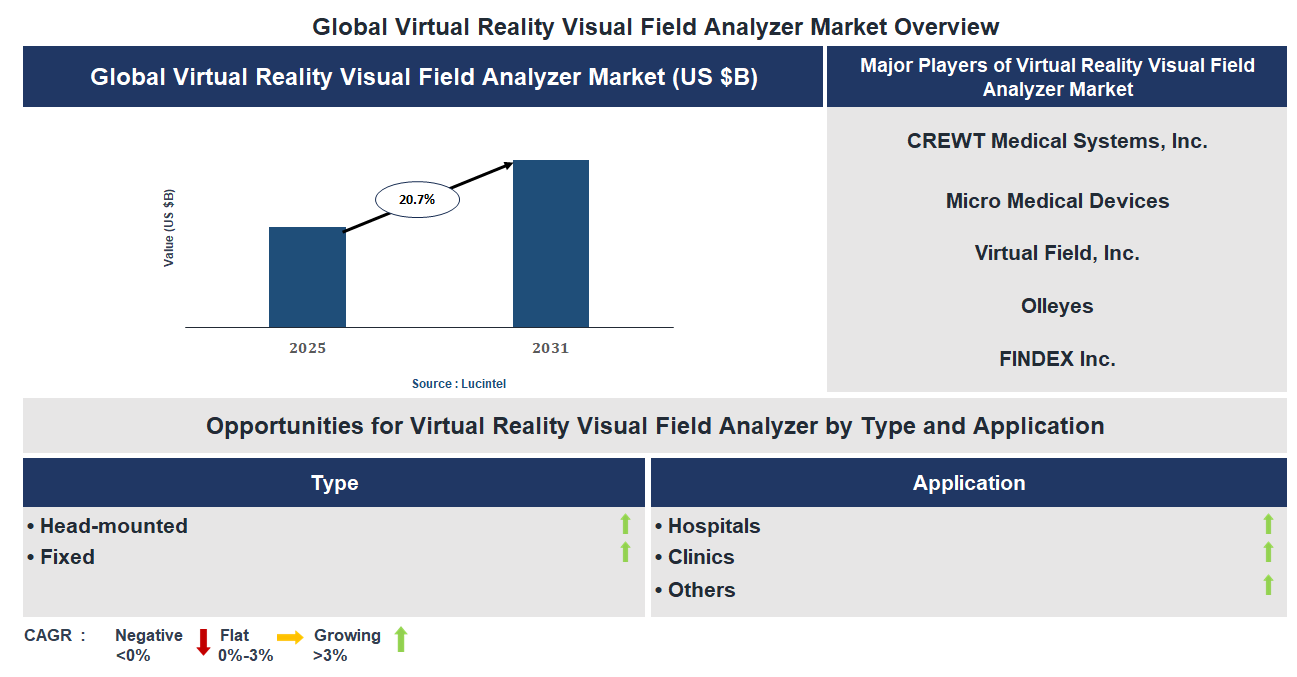
Key data points: The growth forecast = 20.7% annually for the next 7 years. Scroll below to get more insights. This market report covers trends, opportunities and forecasts in virtual reality visual field analyzer market to 2031 by type (head-mounted and fixed), application (hospitals, clinics, and others), and region (North America, Europe, Asia Pacific, and the Rest of the World)
We'll send your sample report shortly.
• Lucintel forecasts that, within the type category, head-mounted is expected to witness higher growth over the forecast period.
• Within the application category, hospital is expected to witness higher growth.
• In terms of region, APAC is expected to witness the highest growth over the forecast period. Gain valuable insights for your business decisions with our comprehensive 150+ page report. Sample figures with some insights are shown below.
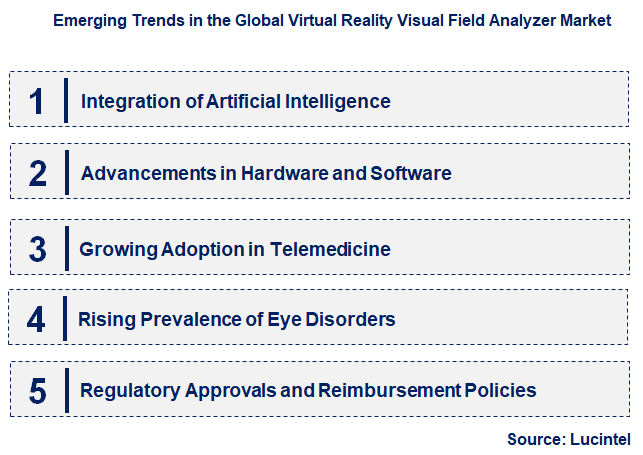
• Integration of Artificial Intelligence: AI enhances diagnostic accuracy by analyzing vast amounts of visual data quickly and precisely. Machine learning algorithms improve the detection of visual field defects, enabling early intervention and personalized treatment plans. This integration reduces human error and increases the efficiency of assessments, making VR visual field analyzers more reliable and user-friendly. As AI continues to evolve, it will further refine diagnostic capabilities, leading to better patient outcomes and expanding the market’s scope.
• Advancements in Hardware and Software: Continuous improvements in VR headset technology, including higher resolution displays, wider fields of view, and improved comfort, are making visual field testing more accurate and user-friendly. Software updates incorporate sophisticated algorithms for real-time analysis and reporting, streamlining clinical workflows. These advancements reduce testing time and increase patient compliance, especially among children and elderly patients. Enhanced hardware and software are critical for expanding the adoption of VR visual field analyzers across diverse healthcare settings.
• Growing Adoption in Telemedicine: The COVID-19 pandemic accelerated the adoption of telehealth solutions, including remote eye examinations. VR visual field analyzers facilitate remote diagnostics, allowing patients to undergo testing from home or local clinics, reducing the need for in-person visits. This trend improves access to eye care in remote or underserved areas and supports continuous monitoring of chronic eye conditions. Telemedicine integration is expected to boost market growth by making eye health assessments more accessible and convenient.
• Rising Prevalence of Eye Disorders: Increasing incidences of glaucoma, age-related macular degeneration, and other visual impairments are driving demand for early detection and ongoing monitoring tools. VR-based visual field analyzers offer non-invasive, quick, and repeatable assessments, making them ideal for managing chronic eye conditions. The growing patient population and awareness about early diagnosis are fueling market expansion, prompting manufacturers to develop more sophisticated and user-friendly VR diagnostic devices.
• Regulatory Approvals and Reimbursement Policies: The market is witnessing a surge in regulatory approvals for VR visual field analyzers, which enhances credibility and encourages adoption. Additionally, evolving reimbursement policies by healthcare payers are making these devices more financially accessible for clinics and hospitals. Clear regulatory pathways and reimbursement frameworks are crucial for widespread adoption, fostering innovation and encouraging manufacturers to invest in research and development. These policies are pivotal in transitioning VR visual field analyzers from experimental tools to standard clinical practice. In summary, these emerging trends are collectively reshaping the virtual reality visual field analyzer market by improving diagnostic accuracy, expanding accessibility, and integrating cutting-edge technologies. As hardware, software, and policy frameworks evolve, the market is poised for significant growth, ultimately enhancing patient care and transforming traditional eye health diagnostics.
• Technological Innovation: Integration of advanced VR hardware and software has enhanced the precision and usability of visual field analyzers, enabling more detailed and reliable assessments. This innovation improves diagnostic accuracy, reduces testing time, and enhances patient comfort, thereby increasing adoption rates among eye care professionals.
• Growing Adoption in Clinical Settings: Increasing acceptance of VR-based visual field analyzers in hospitals and clinics is driven by their ability to provide objective, repeatable results. This trend is expanding the market reach, especially in regions with advanced healthcare infrastructure, and is expected to improve early detection and management of visual impairments.
• Rising Investment and R&D Activities: Significant investments by healthcare companies and research institutions are fueling the development of more sophisticated VR visual field analyzers. These efforts aim to enhance device capabilities, incorporate AI for data analysis, and reduce costs, ultimately making the technology more accessible and effective.
• Regulatory Approvals and Reimbursements: Recent approvals by regulatory bodies and inclusion in insurance reimbursement schemes are boosting market confidence. These developments facilitate wider adoption by validating the safety and efficacy of VR visual field analyzers, encouraging healthcare providers to integrate them into routine practice.
• Market Expansion in Emerging Economies: Increasing healthcare infrastructure development and rising awareness about eye health are driving market growth in emerging economies. Local manufacturers and international players are entering these markets, expanding access to advanced visual field testing and addressing unmet needs in eye care. In summary, these developments are collectively propelling the virtual reality visual field analyzer market toward greater adoption, improved technology, and broader geographic reach. The integration of innovative solutions and supportive regulatory frameworks is expected to enhance diagnostic accuracy, patient experience, and overall market growth, transforming eye health management worldwide.
• Enhanced Precision and Patient Engagement: Virtual reality visual field analyzers provide more accurate and immersive assessments of visual fields, improving diagnostic confidence. They enable clinicians to detect early signs of eye diseases such as glaucoma with higher sensitivity, leading to timely interventions. The engaging nature of VR reduces patient discomfort and fatigue during testing, increasing compliance and reliability of results. This advancement is transforming ophthalmic diagnostics by offering faster, more precise, and patient-friendly solutions, ultimately improving clinical outcomes and expanding adoption in clinics and hospitals.
• Remote Monitoring and Diagnosis: VR-based visual field analyzers facilitate remote eye health assessments, making teleophthalmology more effective. Patients in remote or underserved areas can undergo comprehensive visual field testing without visiting specialized centers. This reduces healthcare disparities and enhances early detection of eye conditions. The integration of VR with telemedicine platforms allows for real-time data sharing and remote expert consultations, streamlining diagnosis and treatment planning. As telehealth gains momentum, VR analyzers are positioned to become essential tools for expanding access and improving patient management across diverse geographic regions.
• Innovative Treatment Solutions: Virtual reality visual field analyzers are increasingly used in vision rehabilitation and therapy programs. They offer customizable, interactive exercises that help patients recover visual functions after injury or disease. The immersive environment enhances patient engagement and motivation, leading to better therapy adherence and outcomes. These tools enable clinicians to monitor progress precisely and tailor interventions accordingly. The adoption of VR in rehabilitation is revolutionizing traditional approaches, providing more effective, engaging, and measurable therapy options for patients with visual impairments.
• Advanced Data Collection and Analysis: VR analyzers provide high-quality, standardized data crucial for research and clinical trials. They enable detailed mapping of visual fields and functional assessments, facilitating the development of new treatments and understanding disease progression. The immersive nature of VR allows for controlled testing environments, reducing variability and improving data accuracy. This capability accelerates research timelines and enhances the robustness of clinical studies. As the demand for innovative therapies grows, VR-based visual field analyzers are becoming indispensable tools for advancing ophthalmic research and clinical validation.
• Driving Innovation and Adoption: Companies are forming strategic partnerships to develop integrated VR solutions and expand market reach. Collaborations with healthcare providers, technology firms, and research institutions foster innovation and accelerate product development. Market expansion efforts include entering emerging markets and customizing solutions for specific applications. These collaborations also facilitate regulatory approvals and reimbursement pathways, boosting adoption. As the market matures, strategic alliances will be key to driving continuous innovation, increasing accessibility, and establishing VR visual field analyzers as standard tools in ophthalmic care. In summary, these growth opportunities are significantly impacting the virtual reality visual field analyzer market by enhancing diagnostic accuracy, expanding access through telemedicine, improving rehabilitation outcomes, advancing research, and fostering strategic collaborations. Collectively, they are driving market expansion, technological innovation, and improved patient care, positioning VR analyzers as vital tools in the future of ophthalmology.
• Technological Advancements: The rapid development of VR hardware and software has significantly improved the accuracy and usability of visual field analyzers. Enhanced graphics, immersive experiences, and real-time data processing enable more precise diagnostics and patient monitoring. These innovations reduce procedure times and improve patient comfort, encouraging wider adoption among ophthalmologists and optometrists. As technology continues to evolve, the integration of AI and machine learning further enhances diagnostic capabilities, making VR-based visual field analysis more reliable and accessible. This ongoing innovation sustains market growth and expands application scope.
• Increasing Prevalence of Eye Disorders: The rising incidence of glaucoma, age-related macular degeneration, and other visual impairments globally is a major driver. As these conditions become more prevalent, the demand for accurate, efficient diagnostic tools grows. VR visual field analyzers offer non-invasive, quick assessments, making them attractive options for early detection and ongoing monitoring. The aging population particularly benefits from these advancements, leading to increased adoption in clinics and hospitals. This trend underscores the market’s potential for expansion as healthcare systems seek better management solutions for eye health.
• Growing Healthcare Expenditure: Increased investment in healthcare infrastructure and diagnostic technologies supports the adoption of VR visual field analyzers. Governments and the private sector are allocating funds toward innovative medical devices to improve patient outcomes. The cost-effectiveness of VR diagnostics, which can reduce the need for more invasive procedures, appeals to healthcare providers aiming to optimize resource utilization. Additionally, reimbursement policies and insurance coverage for advanced diagnostic tools are improving, further incentivizing adoption. This financial support accelerates market growth and encourages manufacturers to innovate and expand their product offerings.
• Rising Awareness and Acceptance of VR Technology: The growing acceptance of VR in medical diagnostics is driven by increased awareness among healthcare professionals and patients. Educational campaigns, clinical studies, and successful case reports demonstrate the benefits of VR-based visual field testing. As familiarity with the technology increases, clinicians are more willing to incorporate it into routine practice. Patients also prefer non-invasive, engaging diagnostic procedures, which enhance compliance and satisfaction. This shift in perception fosters broader acceptance, facilitating market penetration and encouraging further technological development.
• Strategic Collaborations and Product Launches: Partnerships between technology firms, healthcare providers, and research institutions are fueling innovation in the VR visual field analyzer market. These collaborations lead to the development of advanced, user-friendly devices tailored to clinical needs. Frequent product launches and upgrades keep the market dynamic and competitive. Such strategic alliances also facilitate regulatory approvals and market access, accelerating commercialization. The continuous pipeline of new products and features attracts investments and expands market reach, ensuring sustained growth and technological leadership. The challenges facing this virtual reality visual field analyzer market include:-
• High Costs and Limited Reimbursement: The initial investment for VR visual field analyzers remains high, posing a barrier for widespread adoption, especially in resource-constrained settings. The costs of hardware, software, and training can be prohibitive for smaller clinics and developing regions. Additionally, limited reimbursement policies for VR-based diagnostics hinder financial viability for providers. Without adequate insurance coverage or government support, market penetration slows, restricting access to advanced diagnostics for many patients. Addressing cost and reimbursement issues is crucial for broader adoption and market expansion.
• Technological Limitations and Reliability Concerns: Despite advancements, VR technology still faces challenges related to hardware durability, user comfort, and data accuracy. Motion sickness, device calibration issues, and variability in user experience can affect diagnostic reliability. Ensuring consistent performance across diverse clinical environments remains a concern. These limitations can undermine clinician confidence and slow adoption. Continuous technological improvements and rigorous validation are necessary to establish VR visual field analyzers as standard diagnostic tools, overcoming skepticism and ensuring dependable results.
• Regulatory and Standardization Challenges: Navigating complex regulatory pathways and establishing standardized protocols for VR diagnostic devices pose significant hurdles. Variability in approval processes across regions can delay market entry and increase compliance costs. Lack of universally accepted standards for VR-based diagnostics raises concerns about safety, efficacy, and data privacy. These regulatory uncertainties can deter investment and slow innovation. Harmonizing standards and streamlining approval processes are essential to facilitate market growth and ensure that VR visual field analyzers meet rigorous clinical and safety requirements. In summary, the virtual reality visual field analyzer market is driven by technological innovations, increasing eye health issues, rising healthcare investments, growing acceptance of VR technology, and strategic collaborations. However, high costs, technological reliability concerns, and regulatory complexities present notable challenges. These factors collectively influence the pace and scope of market growth. Overcoming barriers related to cost, technology, and regulation will be vital for expanding access and establishing VR visual field analyzers as standard diagnostic tools. The market’s future depends on continued innovation, supportive policies, and strategic partnerships to harness the full potential of VR in eye care.
• CREWT Medical Systems, Inc.
• Micro Medical Devices
• Virtual Field, Inc.
• Olleyes
• FINDEX Inc.
• RadiusXR
• Oculera
• OCULUS, Inc.
• PeriVision SA
• Virtual Vision
• Head-mounted
• Fixed
• Hospitals
• Clinics
• Others
• North America
• Europe
• Asia Pacific
• The Rest of the World
• United States: The US leads in VR visual field analyzer adoption, driven by advanced healthcare infrastructure and substantial R&D investments. Major companies are developing portable, user-friendly devices and integrating AI for improved diagnostics. Regulatory approvals and reimbursement policies are facilitating market growth, with increasing use in clinics and research institutions. Telehealth integration is also expanding access to eye health assessments, especially in rural areas.
• China: China is rapidly expanding its VR visual field analyzer market, supported by government initiatives promoting digital health. Local manufacturers are innovating cost-effective solutions tailored for large-scale screening programs. The country’s focus on smart healthcare and AI integration is enhancing device capabilities. Growing awareness of eye health and increasing healthcare expenditure are further propelling market growth, with a rising number of clinics adopting these technologies.
• Germany: Germany's market is characterized by high-quality standards and stringent regulatory frameworks. The country emphasizes precision and reliability in VR visual field analyzers, with collaborations between tech firms and healthcare providers. The adoption of these devices is driven by a strong focus on early diagnosis of eye conditions and integration into existing ophthalmology practices. Reimbursement policies and healthcare funding support market expansion, alongside ongoing clinical research.
• India: India is witnessing a burgeoning market for VR visual field analyzers, fueled by increasing eye health issues and a large population in need of affordable diagnostic tools. Local startups and international companies are introducing low-cost, portable devices suitable for rural and urban settings. Government initiatives aimed at improving eye care infrastructure and awareness campaigns are boosting adoption. The market is also benefiting from teleophthalmology services, expanding access to eye health assessments.
• Japan: Japan's market is characterized by technological innovation and a focus on eye health needs. The country is investing in advanced VR devices with high precision and user comfort. Integration with AI and big data analytics is enhancing diagnostic accuracy. Japan’s healthcare system supports widespread adoption through insurance coverage and clinical guidelines, with a strong emphasis on early detection and management of visual field impairments among elderly patients.


• CREWT Medical Systems, Inc.
• Micro Medical Devices
• Virtual Field, Inc.
• Olleyes
• FINDEX Inc.
• RadiusXR
• Oculera
• OCULUS, Inc.
• PeriVision SA
• Virtual Vision Q5. Which virtual reality visual field analyzer market segment will be the largest in future? Answer: Lucintel forecasts that, within the type category, head-mounted is expected to witness higher growth over the forecast period. Q6. In virtual reality visual field analyzer market, which region is expected to be the largest in next 5 years? Answer: In terms of region, APAC is expected to witness the highest growth over the forecast period. Q7. Do we receive customization in this report? Answer: Yes, Lucintel provides 10% customization without any additional cost.


Choose a license that fits your team. Instant PDF delivery.
Prices exclude taxes. Instant delivery. Custom licensing available on request.
Market Report · July 22, 2026
Market Report · July 22, 2026
Market Report · July 22, 2026
Trusted partner for strategic intelligence and business growth


Receive a complimentary market analysis tailored to your industry. Our analysts will identify key growth opportunities and competitive dynamics specific to your business.

Market size, growth rate, and key trend analysis for your specific sector.

Top competitor positioning and market share analysis.

Strategic recommendations backed by data-driven insights.
Get curated market intelligence and competitive moves straight to your inbox.
By subscribing, you agree to receive our monthly insights. Unsubscribe anytime.
Receive a complimentary market analysis tailored to your industry. Our analysts will identify key growth opportunities and competitive dynamics specific to your business.
Market size, growth rate, and key trend analysis for your specific sector.
Top competitor positioning and market share analysis.
Strategic recommendations backed by data-driven insights.
Get curated market intelligence, emerging trends, and competitive moves straight to your inbox each month.
By subscribing, you agree to receive our monthly insights. Unsubscribe anytime.
We'll send your sample report shortly.