
Report Feature
Veterinary Ultrasound Device Market Trends and Forecast
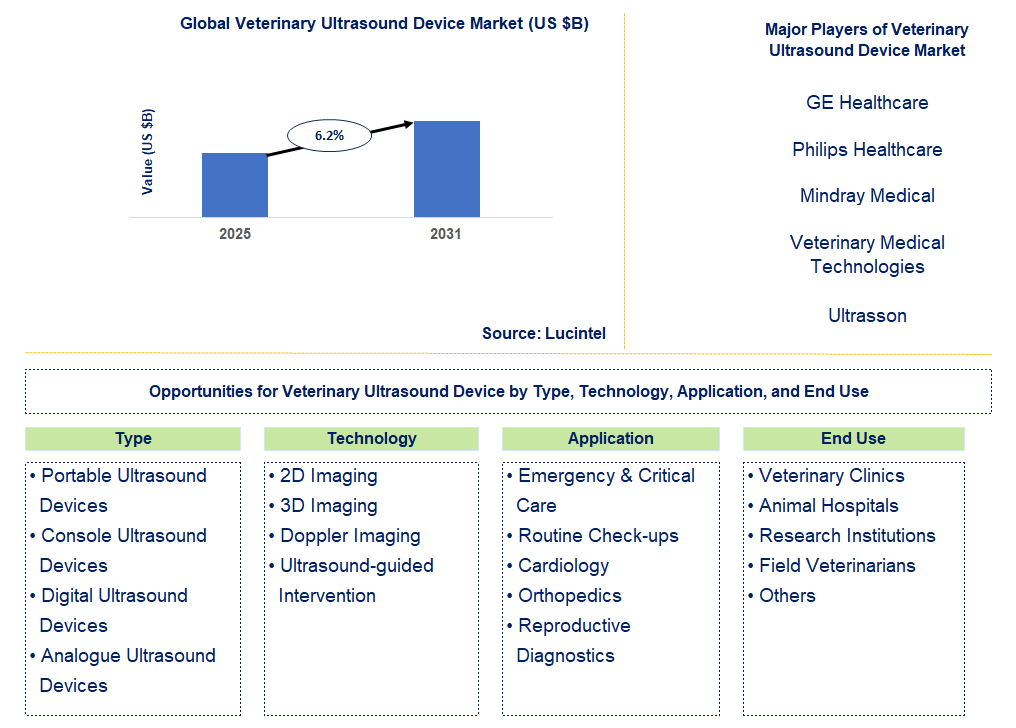
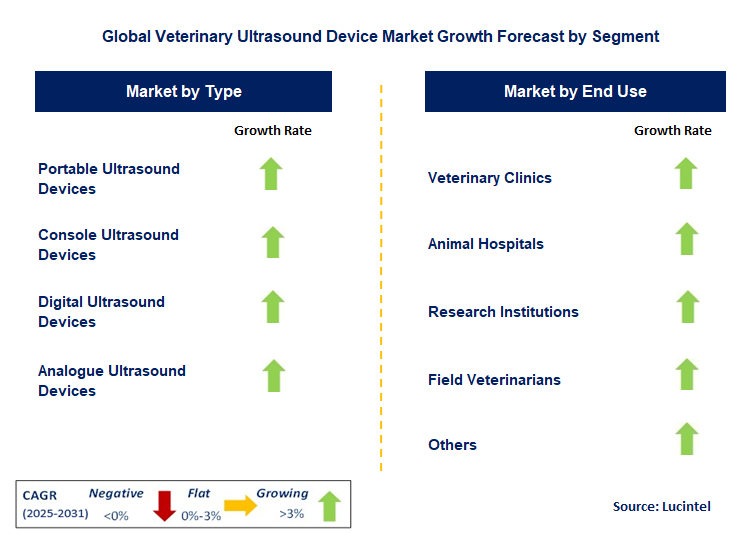
The future of the global veterinary ultrasound device market looks promising with opportunities in the veterinary clinic, animal hospital, research institution, and field veterinarian markets. The global veterinary ultrasound device market is expected to grow with a CAGR of 6.2% from 2025 to 2031. The major drivers for this market are the increasing demand for non-invasive diagnostic tools, the rising adoption of veterinary point-of-care services, and the growing awareness of early disease detection in animals.• Lucintel forecasts that, within the type category, portable ultrasound device is expected to witness the highest growth over the forecast period.
• Within the application category, veterinary clinic is expected to witness the highest growth.
• In terms of region, APAC is expected to witness the highest growth over the forecast period. Gain valuable insights for your business decisions with our comprehensive 150+ page report. Sample figures with some insights are shown below.
Emerging Trends in the Veterinary Ultrasound Device Market
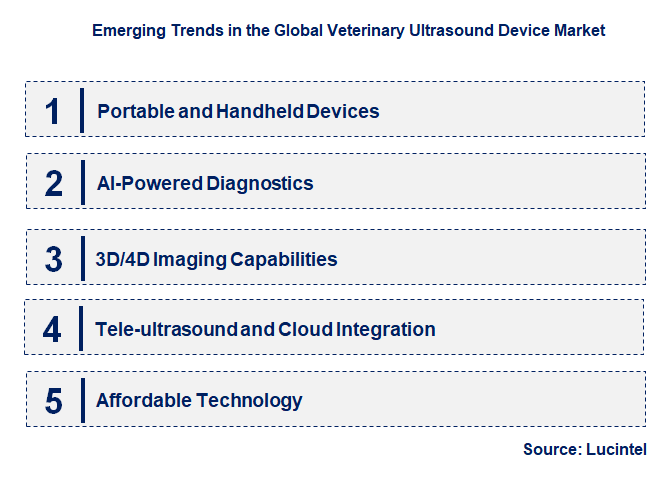
The veterinary ultrasound device market is undergoing a fundamental shift, with emerging trends that are making diagnostic imaging more accessible, data-driven, and user-friendly. These trends are driven by a need for improved diagnostic accuracy, a response to a growing demand for non-invasive procedures, and the integration of new technologies that improve image quality and workflow. They are fundamentally changing how veterinary professionals manage animal health.• Portable and Handheld Devices: The trend toward portable and handheld ultrasound devices is a major force in the market. These devices, which can connect wirelessly to smartphones or tablets, are affordable and highly convenient. The impact is a democratization of diagnostics, allowing veterinarians to perform quick scans in the field, in barns, or in small clinics, making ultrasound more accessible than ever before.
• AI-Powered Diagnostics: The integration of artificial intelligence into ultrasound devices is a key emerging trend. AI algorithms can analyze images in real time, assist in measurement, and help identify abnormalities. This trend improves diagnostic accuracy, especially for less-experienced users, and reduces the time required for a scan, which enhances clinic efficiency and helps ensure better patient outcomes.
• 3D/4D Imaging Capabilities: The market is seeing a trend toward advanced 3D and 4D imaging capabilities, which provide a more detailed, three-dimensional view of internal organs and blood flow. This is particularly useful for cardiology and obstetrics. The impact is a significant improvement in diagnostic precision, allowing veterinarians to better visualize complex conditions and provide more accurate treatment plans.
• Tele-ultrasound and Cloud Integration: The rise of tele-ultrasound services and cloud-based platforms is a key trend. These systems allow for the remote sharing of ultrasound images for specialist consultation and secure data storage. The impact is enhanced collaboration among veterinary professionals and improved access to specialist expertise, especially in remote or underserved regions.
• Affordable Technology: The trend toward making high-quality ultrasound technology more affordable is a notable development. Manufacturers are focusing on developing cost-effective devices without compromising on essential features. The impact is a broader adoption of ultrasound technology by small and mid-sized clinics that previously could not afford the high cost of traditional systems, expanding the overall market. These emerging trends are collectively reshaping the veterinary ultrasound device market by making it more technologically integrated, patient-centric, and efficient. The move toward portable devices, AI diagnostics, and cloud integration is not only improving diagnostic quality but also expanding the market’s reach, ensuring that more animals have access to timely and accurate veterinary care.
Recent Development in the Veterinary Ultrasound Device Market
Recent developments in the veterinary ultrasound device market are focused on enhancing portability, improving image quality, and integrating smart technology. These advancements are driven by the increasing demand for high-quality, convenient, and comprehensive care for both companion animals and livestock. These key developments are not only improving existing workflows but are also enabling new frontiers in animal health and wellness.• Development of Handheld Wireless Probes: A major development is the introduction of wireless ultrasound probes that connect to a smartphone or tablet. These devices are compact, affordable, and easy to use in various settings. The impact is a significant increase in the accessibility and versatility of ultrasound, allowing veterinarians to perform scans on the farm, in the field, or during a house call, leading to faster diagnoses.
• Integration of AI-Powered Software: The market has seen a significant development in the integration of AI-powered software into ultrasound devices. These programs can automatically measure organs, identify anomalies, and guide the user. The impact is a reduction in the learning curve for veterinarians, improved diagnostic consistency, and increased efficiency during a busy workday, ultimately leading to better animal health outcomes.
• Launch of Enhanced 3D/4D Systems: The launch of new, enhanced 3D/4D ultrasound systems is a key development, offering a more detailed, three-dimensional view of an animal’s internal structures. This is particularly valuable for complex diagnoses. The impact is improved diagnostic accuracy for conditions in cardiology and obstetrics, allowing for more precise and effective treatment planning.
• Growth in Refurbished Device Market: A key development is the growth of the refurbished veterinary ultrasound device market. Refurbished devices offer a more affordable entry point for small clinics and veterinary students. The impact is enhanced accessibility to advanced diagnostic technology for budget-conscious practitioners, helping to democratize high-quality veterinary care and expanding the overall user base.
• Expansion of Tele-Radiology Platforms: The rise of tele-radiology platforms for veterinary use is a significant development. These platforms allow clinics to send ultrasound images to board-certified specialists for expert interpretation. The impact is that clinics in remote or underserved areas can offer specialist-level diagnostics without needing to hire a full-time specialist, improving the quality of care they can provide. These key developments, from the revolutionary power of handheld devices to the accessibility of tele-radiology, are collectively driving the evolution of the veterinary ultrasound market. They are enhancing precision, convenience, and versatility, thereby expanding the market’s reach into new applications and geographies. This evolution is reshaping animal diagnostics from a niche specialty to a standard of care.
Strategic Growth Opportunities in the Veterinary Ultrasound Device Market
The veterinary ultrasound device market is rich with strategic growth opportunities across various key applications. These opportunities are driven by the increasing demand for non-invasive, high-quality diagnostics and the need for more efficient and effective veterinary procedures. Leveraging these opportunities is essential for market players to gain a competitive edge and drive future innovation.• Reproductive and Pregnancy Diagnostics: The use of ultrasound in reproductive and pregnancy diagnostics for both large animals and companion animals offers a major growth opportunity. The technology is essential for confirming pregnancy, monitoring fetal development, and detecting reproductive issues. This is fueled by the need for efficient and profitable breeding programs in the livestock industry and by concerned pet owners.
• Cardiology and Internal Medicine: The application of ultrasound in cardiology and internal medicine presents a significant growth opportunity. As veterinary medicine advances, there is a rising demand for non-invasive methods to diagnose heart conditions and evaluate internal organs. This is driven by the increasing prevalence of chronic diseases in aging pets and the willingness of owners to invest in advanced care.
• Point-of-Care Ultrasound: The growth of point-of-care ultrasound is a high-value growth opportunity. Handheld devices allow veterinarians to perform quick, bedside scans to guide immediate medical decisions in emergency situations or during routine check-ups. This opportunity is driven by the need for rapid diagnostics, which can save time and improve outcomes in critical scenarios.
• Training and Education: Providing training and educational resources for veterinarians on how to use ultrasound devices effectively is a key growth area. A shortage of skilled professionals is a major market challenge. Companies that offer comprehensive training programs can build strong relationships with customers and drive market penetration by increasing user confidence and adoption.
• Remote Diagnostic Services: The development of remote diagnostic services, or tele-ultrasound, represents a strategic opportunity. This application allows veterinary clinics to perform a scan and then transmit the images to a specialist for interpretation. This is fueled by the need to democratize access to specialist expertise, especially in rural areas, and by the convenience it provides to all types of veterinary practices. These strategic growth opportunities across key applications are collectively driving the evolution of the veterinary ultrasound device market. The increasing need for sophisticated and preventative diagnostics for animals is pushing the boundaries of what is possible, leading to a more dynamic and innovative market. Capitalizing on these opportunities is essential for sustained growth and technological leadership.
Veterinary Ultrasound Device Market Driver and Challenges
The veterinary ultrasound device market is influenced by a complex interplay of drivers and challenges, including various technological, economic, and regulatory factors. The market is propelled by a rising demand for high-quality care, but also faces significant barriers related to cost and a shortage of skilled professionals. Understanding these dynamics is crucial for navigating the market and planning for future growth. The factors responsible for driving the veterinary ultrasound device market include: 1. Rising Pet Ownership: The increasing trend of pet ownership is a primary driver. As pets are treated as family members, owners are more willing to spend on their health. This societal shift creates a large and expanding client base for veterinary services, which in turn drives demand for advanced diagnostic tools like ultrasound to ensure comprehensive health and wellness care. 2. Technological Advancements: The continuous progress in ultrasound technology is a significant driver. Innovations such as improved image resolution, portable and wireless devices, and the integration of AI have made the technology more efficient and user-friendly. These advancements are making ultrasound a standard diagnostic tool rather than a specialized one, fueling market growth. 3. Growing Prevalence of Animal Diseases: The increasing incidence of chronic and infectious diseases in both companion animals and livestock is a key driver. This creates a consistent need for accurate and timely diagnostics. Ultrasound is a crucial tool for diagnosing conditions like heart disease, tumors, and organ abnormalities, driving its adoption across various veterinary applications. 4. Demand for Non-Invasive Diagnostics: The growing demand for non-invasive diagnostic tools is a major driver. Ultrasound provides a safe, radiation-free method for visualizing internal structures, making it a preferred choice over other imaging modalities. This is driven by both veterinary professionals and pet owners who seek less stressful and less risky procedures for their animals. 5. Expansion of Veterinary Clinics: The global expansion of veterinary clinics and hospitals is a significant driver. An increasing number of facilities provides more access to veterinary care and, consequently, a higher demand for diagnostic equipment. This infrastructure growth provides a stable market for veterinary ultrasound device manufacturers. Challenges in the veterinary ultrasound device market are: 1. High Cost of Devices: The high initial cost of advanced ultrasound devices is a significant challenge for many small and mid-sized clinics. This financial barrier can limit the adoption of cutting-edge technology, particularly in developing regions. It can also force veterinarians to choose between high-end features and affordability, hindering market penetration. 2. Lack of Skilled Professionals: There is a global shortage of veterinarians and technicians with specialized training in veterinary ultrasound. This poses a significant challenge. Without proper training, users may not be able to effectively interpret images or utilize the full capabilities of the devices, which can lead to misdiagnoses and limits the technology’s full potential. 3. Complex Regulatory Approval: The market faces challenges related to a complex regulatory environment for medical devices. Obtaining regulatory approval for new devices can be a lengthy and expensive process. This can slow down innovation and limit the availability of new and advanced solutions to the market, especially for companies seeking to enter new geographic markets. The veterinary ultrasound device market is being shaped by powerful drivers like the "pet humanization" trend and technological advancements, which are fueling significant growth. However, it also faces considerable challenges, including the high cost of equipment and a shortage of skilled professionals. For the market to thrive, stakeholders must address these challenges by providing innovative and cost-effective solutions that are both effective and accessible.List of Veterinary Ultrasound Device Companies
Companies in the market compete on the basis of product quality offered. Major players in this market focus on expanding their manufacturing facilities, R&D investments, infrastructural development, and leverage integration opportunities across the value chain. With these strategies veterinary ultrasound device companies cater increasing demand, ensure competitive effectiveness, develop innovative products & technologies, reduce production costs, and expand their customer base. Some of the veterinary ultrasound device companies profiled in this report include-• GE Healthcare
• Philips Healthcare
• Mindray Medical International
• Veterinary Medical Technologies
• Ultrasson
• Scivac
• Fujifilm Holdings
• Zonare Medical Systems
• Samsung Medison
• Hitachi Medical Systems
Veterinary Ultrasound Device Market by Segment
The study includes a forecast for the global veterinary ultrasound device market by type, technology, application, end use, and region.Veterinary Ultrasound Device Market by Type [Value from 2019 to 2031]:
• Portable Ultrasound Devices
• Console Ultrasound Devices
• Digital Ultrasound Devices
• Analogue Ultrasound Devices
Veterinary Ultrasound Device Market by Technology [Value from 2019 to 2031]:
• 2D Imaging
• 3D Imaging
• Doppler Imaging
• Ultrasound-guided Intervention
Veterinary Ultrasound Device Market by Application [Value from 2019 to 2031]:
• Emergency & Critical Care
• Routine Check-ups
• Cardiology
• Orthopedics
• Reproductive Diagnostics
Veterinary Ultrasound Device Market by End Use [Value from 2019 to 2031]:
• Veterinary Clinics
• Animal Hospitals
• Research Institutions
• Field Veterinarians
• Others
Veterinary Ultrasound Device Market by Region [Value from 2019 to 2031]:
• North America
• Europe
• Asia Pacific
• The Rest of the World
Country Wise Outlook for the Veterinary Ultrasound Device Market
Recent developments in the veterinary ultrasound device market are driven by a strong shift toward enhanced portability, advanced imaging capabilities, and data integration. The focus is on making high-quality diagnostics more accessible for both small clinics and large-animal field work. This evolution is vital for improving diagnostic accuracy, supporting a shift to preventive care, and ensuring the economic viability of veterinary practices.• United States: The U.S. market is a leader in technological adoption, with a strong emphasis on advanced features like AI-powered diagnostics and wireless connectivity. Recent developments include the widespread adoption of handheld, wireless ultrasound probes that integrate with smartphones. This is driven by high per-pet spending and a push for more efficient, on-the-go diagnostics for both companion and large animals.
• China: China’s veterinary ultrasound device market is experiencing explosive growth, fueled by the modernization of its livestock industry and rising pet ownership. Recent developments are focused on mass-producing cost-effective, portable devices. Chinese manufacturers are now major global players, providing accessible technology that is helping to professionalize veterinary care in a rapidly urbanizing and developing country.
• Germany: In Germany, the veterinary ultrasound market is mature and highly focused on precision and quality. Recent developments are centered on providing high-resolution, specialized devices for specific applications like cardiology and reproductive medicine. The market is also seeing an increase in the integration of ultrasound with digital systems to ensure data continuity and improve diagnostic workflows.
• India: The Indian veterinary ultrasound device market is in a nascent but high-growth phase. Recent developments are driven by a rapid increase in commercial dairy and poultry farming and a growing awareness of animal health. A key advancement is the entry of global players and the rise of local distributors, which are introducing modern, affordable ultrasound machines to support a professionalizing veterinary sector.
• Japan: The Japanese market is highly developed, with a strong cultural emphasis on precision and quality in both companion animal and livestock care. Recent developments are centered on providing high-end, specialized devices with advanced imaging capabilities, such as 3D/4D ultrasound. The market is also investing in compact, user-friendly devices to cater to an aging veterinary population.

Features of the Global Veterinary Ultrasound Device Market
Market Size Estimates: Veterinary ultrasound device market size estimation in terms of value ($B). Trend and Forecast Analysis: Market trends (2019 to 2024) and forecast (2025 to 2031) by various segments and regions. Segmentation Analysis: Veterinary ultrasound device market size by various segments, such as by type, technology, application, end use, and region in terms of value ($B). Regional Analysis: Veterinary ultrasound device market breakdown by North America, Europe, Asia Pacific, and Rest of the World. Growth Opportunities: Analysis of growth opportunities in different types, technologies, applications, end uses, and regions for the veterinary ultrasound device market. Strategic Analysis: This includes M&A, new product development, and competitive landscape of the veterinary ultrasound device market. Analysis of competitive intensity of the industry based on Porter’s Five Forces model.
FAQ
Q1. What is the growth forecast for veterinary ultrasound device market? Answer: The global veterinary ultrasound device market is expected to grow with a CAGR of 6.2% from 2025 to 2031. Q2. What are the major drivers influencing the growth of the veterinary ultrasound device market? Answer: The major drivers for this market are the increasing demand for non-invasive diagnostic tools, the rising adoption of veterinary point-of-care services, and the growing awareness of early disease detection in animals. Q3. What are the major segments for veterinary ultrasound device market? Answer: The future of the veterinary ultrasound device market looks promising with opportunities in the veterinary clinic, animal hospital, research institution, and field veterinarian markets. Q4. Who are the key veterinary ultrasound device market companies? Answer: Some of the key veterinary ultrasound device companies are as follows:• GE Healthcare
• Philips Healthcare
• Mindray Medical International
• Veterinary Medical Technologies
• Ultrasson
• Scivac
• Fujifilm Holdings
• Zonare Medical Systems
• Samsung Medison
• Hitachi Medical Systems Q5. Which veterinary ultrasound device market segment will be the largest in future? Answer: Lucintel forecasts that, within the type category, portable ultrasound device is expected to witness the highest growth over the forecast period. Q6. In veterinary ultrasound device market, which region is expected to be the largest in next 5 years? Answer: In terms of region, APAC is expected to witness the highest growth over the forecast period. Q7. Do we receive customization in this report? Answer: Yes, Lucintel provides 10% customization without any additional cost.
Table of Contents
Methodology
- In-depth interviews of the major players in this market
- Detailed secondary research from competitors’ financial statements and published data
- Extensive searches of published works, market, and database information pertaining to industry news, company press releases, and customer intentions
- A compilation of the experiences, judgments, and insights of Lucintel’s professionals, who have analyzed and tracked this market over the years.


Buy Now
Choose a license that fits your team. Instant PDF delivery.
Prices exclude taxes. Instant delivery. Custom licensing available on request.
Key Questions
- • What are some of the most promising, high-growth opportunities for the veterinary ultrasound device market by type (portable ultrasound devices, console ultrasound devices, digital ultrasound devices, and analogue ultrasound devices), technology (2d imaging, 3d imaging, doppler imaging, and ultrasound-guided intervention), application (emergency & critical care, routine check-ups, cardiology, orthopedics, and reproductive diagnostics), end use (veterinary clinics, animal hospitals, research institutions, field veterinarians, and others), and region (North America, Europe, Asia Pacific, and the Rest of the World)?
- • Which segments will grow at a faster pace and why?
- • Which region will grow at a faster pace and why?
- • What are the key factors affecting market dynamics? What are the key challenges and business risks in this market?
- • What are the business risks and competitive threats in this market?
- • What are the emerging trends in this market and the reasons behind them?
- • What are some of the changing demands of customers in the market?
- • What are the new developments in the market? Which companies are leading these developments?
- • Who are the major players in this market? What strategic initiatives are key players pursuing for business growth?
- • What are some of the competing products in this market and how big of a threat do they pose for loss of market share by material or product substitution?
- • What M&A activity has occurred in the last 5 years and what has its impact been on the industry? For any questions related to Veterinary Ultrasound Device Market, Veterinary Ultrasound Device Market Size, Veterinary Ultrasound Device Market Growth, Veterinary Ultrasound Device Market Analysis, Veterinary Ultrasound Device Market Report, Veterinary Ultrasound Device Market Share, Veterinary Ultrasound Device Market Trends, Veterinary Ultrasound Device Market Forecast, Veterinary Ultrasound Device Companies, write Lucintel analyst at email: helpdesk@lucintel.com. We will be glad to get back to you soon.


