
Market Report · July 31, 2026

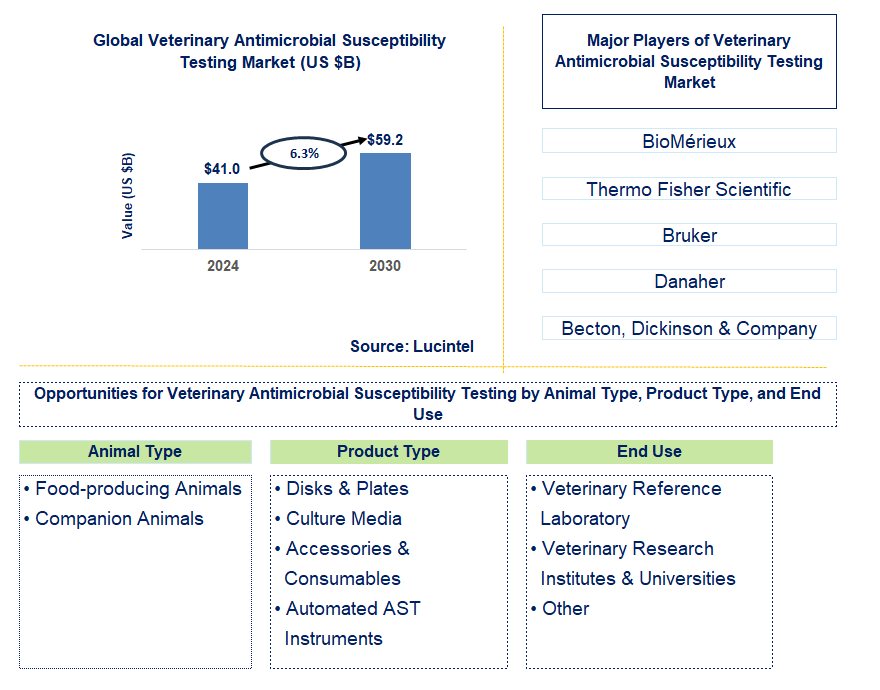
Key data points: The market size in 2030 = $59.2 billion, growth forecast = 6.3% annually for the next 6 years. Scroll below to get more insights. This market report covers trends, opportunities, and forecasts in the global veterinary antimicrobial susceptibility testing market to 2030 by animal type (food-producing animals and companion animals), product type (disks & plates, culture media, accessories & consumables, and automated AST instruments), end use (veterinary reference laboratory, veterinary research institutes & universities, and other), and region (North America, Europe, Asia Pacific, and the Rest of the World)
We'll send your sample report shortly.
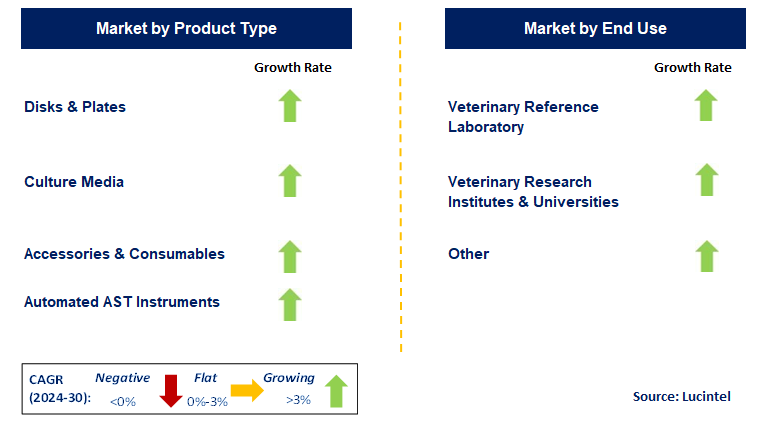
• Lucintel forecasts that, within the animal type category food-producing animals is expected to witness the higher growth over the forecast period.
• Within the end use category, veterinary reference laboratories is expected to witness the highest growth.
• In terms of regions, North America is expected to witness highest growth over the forecast period due to growing consumption of meat and diary product and increasing veterinary healthcare expenditure in the region. A more than 150-page report is developed to help in your business decisions.
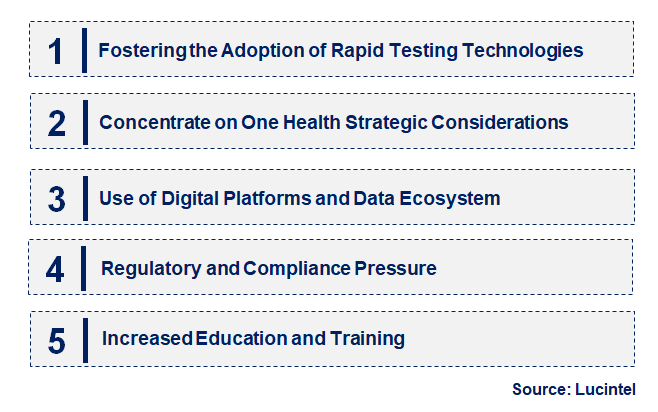
• Fostering the Adoption of Rapid Testing Technologies: The adoption of rapid testing methods for AST is changing the dynamics of veterinary AST. Antibiotic susceptibility testing based on molecular amplification techniques like PCR and microfluidics are becoming more popular, enabling rapid strides in turnaround time for susceptibility testing reports. This development helps veterinarians make treatment decisions in a timely manner, improving the welfare of the animals concerned and minimizing instances of unnecessary antibiotic prescriptions.
• Concentration on One Health Strategic Considerations: One Health is another area of development that has attracted attention in the veterinary AST market. No one can fight this problem alone, so collaboration among veterinarians, medical doctors, and environmental scientists has led to comprehensive strategies for analyzing the AMR problem and its rectification, placing it within the context of solving public health issues.
• Use of Digital Platforms and Data Ecosystems: The growing trend toward digital information exchange and analysis is impacting the veterinary AST market. Cloud-based systems allow veterinarians to retrieve data on resistance in real time, aiding clinical decision-making and enhancing treatment results. This trend promotes collaboration among various players, making the management of AMR more evidence-based and policy-driven.
• Regulatory and Compliance Pressure: Increased regulatory pressure on the use of antimicrobials in animals is creating a demand for appropriate AST services. Governments are becoming more stringent, making it mandatory for veterinary clinics to incorporate testing practices to remain compliant. This trend underscores the priority placed on responsible antimicrobial use in the prevention of diseases.
• Increased Education and Training: Veterinarians and other animal health professionals are receiving more education on AMR and the need for AST. Aid programs and seminars are being designed to improve knowledge and skills so that practitioners can follow testing procedures and assist in controlling AMR. These emerging trends are significantly changing the dynamics of the Veterinary Antimicrobial Susceptibility Testing market, driving innovation, cooperation, and best practices. As the industry evolves, players must harness new technologies and keep up with the shifting regulatory environment.
• Testing Methods Improvements: With the advent of new methods, such as broth microdilution and disk diffusion techniques, there have been improvements in AST results, including increased efficacy and faster turnaround times. These techniques make it possible for veterinary practitioners to identify resistant colonies, thus providing alternatives for treatment.
• Collaboration with Regulatory Authorities: The joint efforts of veterinary laboratory specialists and authorities have enhanced the standardization of certain testing processes. This alignment of goals enables testing services to be coordinated with the requirements of both local and international marketplaces, enhancing uniformity and accuracy of resistance profiles.
• Occurrence of Point-of-Care Testing: Point-of-care testing devices have changed the dynamics of Veterinary Antimicrobial Susceptibility Testing. These mobile devices enable fast tests to be conducted away from the patient’s home, increasing the availability of AST services to farmers in remote areas and speeding up treatment decisions.
• Boom in Veterinary Laboratories: The number of accredited institutions providing AST services has grown significantly. This expansion is due to the increased demand for reliable testing, leading to increased capacity for testing and improved infrastructure to extend the service across regions.
• Educational and Awareness Campaigns Needed: There is growing momentum for educational initiatives to combat antimicrobial resistance and promote responsible use. Initiatives are underway to train veterinarians on sample interpretation to ensure better compliance with or initiation of AST in practice. These developments are enhancing the efficiency, accessibility, and accuracy of Veterinary Antimicrobial Susceptibility Testing services. As demand for these services increases, so does the need for continuous innovation and expansion in the industry.
• Livestock Production: There is a sizable segment in the veterinary AST services for the livestock market. In the near future, antibiotic use will be increasingly regulated. Therefore, testing services will assist farmers in complying with safety standards when treating sick animals, thus increasing productivity.
• Care of Companion Animals: Pets have become fashionable companions in modern society, and this trend is expected to increase the demand for AST in companion animal care services. Veterinary clinics should be able to provide specific testing services to determine which treatments can be used for infections in pets, improving pet health and strengthening client relationships.
• Aquaculture: The aquaculture sector is addressing rising concerns about antimicrobial use, which is why the demand for AST services is increasing. Laboratories may develop protocols to enable testing of aquatic species, assisting farmers in controlling infections and preventing the emergence of antibiotic resistance.
• Research and Development: Collaboration with pharmaceutical companies and scientific organizations offers great opportunities for progress in veterinary AST. Supporting the development of novel antimicrobial therapies and newer tests can help advance AST practices within laboratories.
• Education and Training Programs: Offering educational courses and organizing training workshops related to antimicrobial susceptibility testing and antimicrobial resistance management will enhance the value of services. These activities can elevate the status of testing laboratories to industry leaders while promoting the safe use of antibiotics among veterinarians. These strategic growth opportunities underline the potential for expansion in various sectors within the Veterinary Antimicrobial Susceptibility Testing market. Testing laboratories will be able to expand their reach with key applications of these opportunities and services that meet required standards.
• Increased Awareness of Antimicrobial Resistance (AMR): Broader awareness of the problem among vets, farmers and the public regarding AMR is boosting demand for the AST services. This awareness underlines the need to rein in unnecessary use of antibiotics and therefore calls for more tests to be done choc.
• Regulatory Support for Responsible Use: Governments are getting stricter when it comes to the use of antibiotics in animals to help encourage responsible use of these drugs. It is this regulatory backing that is encouraging the uptake of AST testing services especially in compliance by veterinarians and livestock producers.
• Technological Advancements in Testing Methods: There are continuous developments in testing technologies such as automated AST systems and molecular diagnostics that enable more effective performing of AST. These factors are hastening the results, making it easy for veterinary practices to integrate tests into their operations.
• Expansion of Veterinary Healthcare Services: As the demand for veterinary health care services rises, especially among companion animals and livestock, the need for advanced diagnostics such as AST also rises in the same manner. Since veterinary practices are increasingly looking for ways to offer complete care, testing services are becoming standard components of management.
• Collaborative Initiatives and Research: Joint activities of practitioners, scientists and regulation authorities contribute to closer engagement with AST advancement. These collaborations are encouraging enhancement leading to better testing services and better insights into AMR patterns. Challenges in the veterinary antimicrobial susceptibility testing market are:
• Cost Barriers for Veterinary Practices: One obstacle to the implementation of AST services is the cost, particularly for small and medium-sized veterinary practices. Financial limitations may prevent access to necessary resources, negatively affecting the quality of care.
• Complexity of Regulatory Compliance: Veterinarians may struggle to keep up with numerous regulations governing when antibiotics should be used and when testing should be conducted. Even when regulations are clear, compliance is not always guaranteed, leading to legal and operational risks for veterinary practitioners.
• Limited Availability of Testing Services in Remote Regions: Due to economic constraints and farmer apathy, the availability of veterinary AST services may be limited in rural regions, especially where practices lack the capacity to perform tests. This lack of access may delay diagnoses and hinder effective AMR management, leading to poor animal health. The confluence of these drivers and challenges shapes the Veterinary Antimicrobial Susceptibility Testing market, offering both opportunities and obstacles. To compete in today’s market and effectively address issues related to antimicrobial resistance, stakeholders must develop strategies to overcome these challenges.
• BioMérieux
• Thermo Fisher Scientific
• Bruker
• Danaher
• Becton, Dickinson & Company
• Neogen
• Synbiosis
• Liofilchem
• HiMedia Laboratories
• Bio-Rad Laboratories
• Food-producing Animals
• Companion Animals
• Disks & Plates
• Culture Media
• Accessories & Consumables
• Automated AST Instruments
• Veterinary Reference Laboratory
• Veterinary Research Institutes & Universities
• Other
• North America
• Europe
• Asia Pacific
• The Rest of the World
• United States: The U.S. has implemented the FDA’s Guidance for Industry #263, which focuses on responsible antibiotic use. There is a growing trend toward rapid testing technologies, such as microfluidics and automation, to speed up AST results. Collaboration between veterinary and diagnostic practices is improving AMR data collection and influencing treatment decisions.
• China: The veterinary AST market in China is rapidly growing due to government initiatives aimed at reducing AMR. The Ministry of Agriculture is promoting responsible antibiotic use, and digital networks are facilitating data exchange to monitor resistance patterns. Local laboratories are improving testing capabilities, which is accelerating diagnosis and treatment.
• Germany: Germany continues to lead in veterinary AST innovation, with ongoing R&D efforts to combat AMR. The European Pathway on One Health Action Plan is integrating systematic AST for livestock AMR control. Advances in molecular diagnostics are enabling more targeted treatments for resistant strains.
• India: The veterinary AST market in India is expanding due to greater awareness of AMR. The government is promoting responsible antibiotic use in agriculture, and demand for AST services is rising. New initiatives include the accreditation of veterinary laboratories and the development of mobile testing technologies to improve access in rural areas.
• Japan: Japan is focusing on improving food safety and animal health by reducing antibiotic pressure in livestock. The Ministry of Health, Labor, and Welfare has established guidelines to lessen antibiotic use, which is expected to reduce the need for AST. Additionally, rapid test kits are enabling quicker, more effective treatment options.


• BioMérieux
• Thermo Fisher Scientific
• Bruker
• Danaher
• Becton, Dickinson & Company
• Neogen
• Synbiosis
• Liofilchem
• HiMedia Laboratories
• Bio-Rad Laboratories Q6. Which veterinary antimicrobial susceptibility testing market segment will be the largest in future? Answer: Lucintel forecasts that food-producing animals is expected to witness the higher growth over the forecast period. Q7. In veterinary antimicrobial susceptibility testing market, which region is expected to be the largest in next 6 years? Answer: North America is expected to witness highest growth over the forecast period due to growing consumption of meat and diary product and increasing veterinary healthcare expenditure in the region. Q.8 Do we receive customization in this report? Answer: Yes, Lucintel provides 10% customization without any additional cost.


Choose a license that fits your team. Instant PDF delivery.
Prices exclude taxes. Instant delivery. Custom licensing available on request.
Market Report · July 31, 2026
Market Report · July 31, 2026
Market Report · July 31, 2026
Trusted partner for strategic intelligence and business growth


Receive a complimentary market analysis tailored to your industry. Our analysts will identify key growth opportunities and competitive dynamics specific to your business.

Market size, growth rate, and key trend analysis for your specific sector.

Top competitor positioning and market share analysis.

Strategic recommendations backed by data-driven insights.
Get curated market intelligence and competitive moves straight to your inbox.
By subscribing, you agree to receive our monthly insights. Unsubscribe anytime.
Receive a complimentary market analysis tailored to your industry. Our analysts will identify key growth opportunities and competitive dynamics specific to your business.
Market size, growth rate, and key trend analysis for your specific sector.
Top competitor positioning and market share analysis.
Strategic recommendations backed by data-driven insights.
Get curated market intelligence, emerging trends, and competitive moves straight to your inbox each month.
By subscribing, you agree to receive our monthly insights. Unsubscribe anytime.
We'll send your sample report shortly.