
Market Report · July 22, 2026

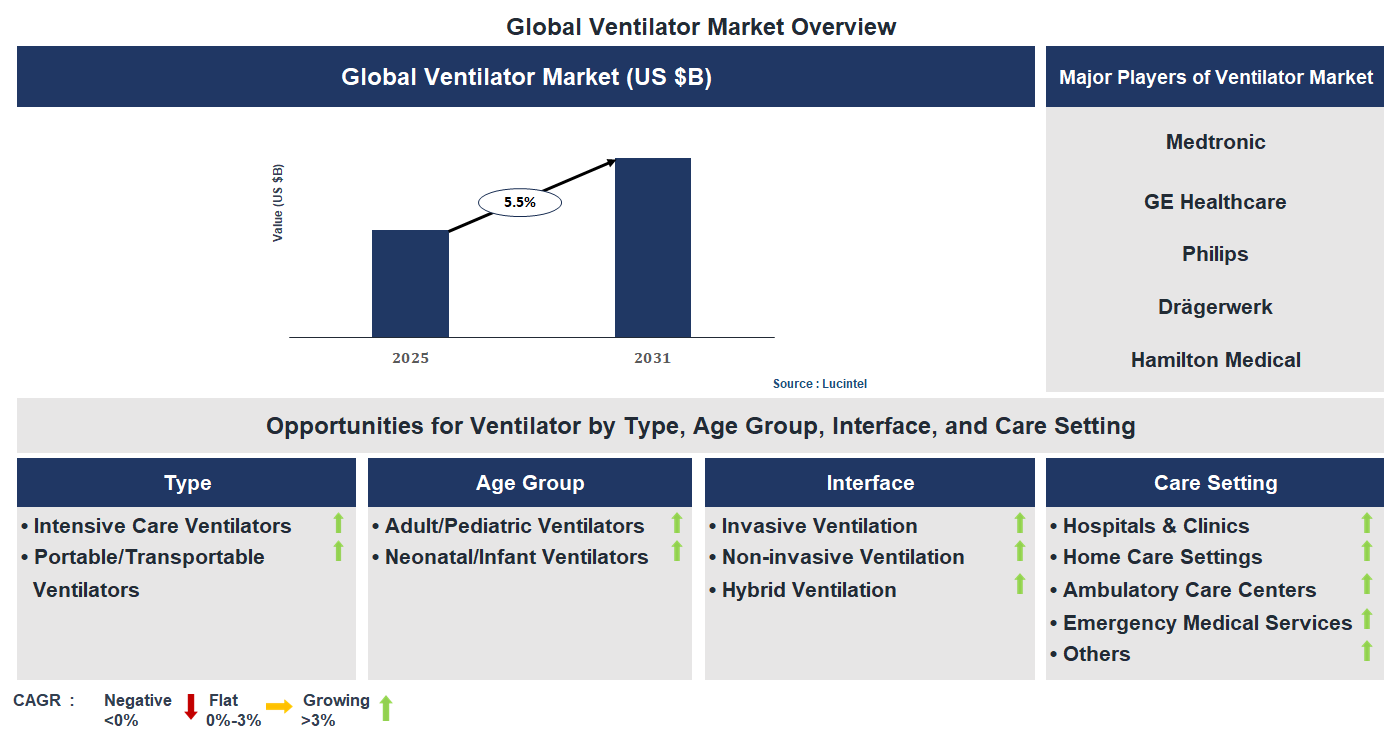
Key data points: The growth forecast = 5.5% annually for the next 7 years. Scroll below to get more insights. This market report covers trends, opportunities and forecasts in ventilator market to 2031 by type (intensive care ventilators and portable/transportable ventilators), age group (adult/pediatric ventilators and neonatal/infant ventilators), interface (invasive ventilation, non-invasive ventilation, and hybrid ventilation), care setting (hospitals & clinics, home care settings, ambulatory care centers, emergency medical services, and others), and region (North America, Europe, Asia Pacific, and the Rest of the World)
We'll send your sample report shortly.
• Lucintel forecasts that, within the type category, intensive care ventilator is expected to witness higher growth over the forecast period.
• Within the care setting category, hospital & clinic is expected to witness the highest growth.
• In terms of region, North America is expected to witness the highest growth over the forecast period. Gain valuable insights for your business decisions with our comprehensive 150+ page report. Sample figures with some insights are shown below.
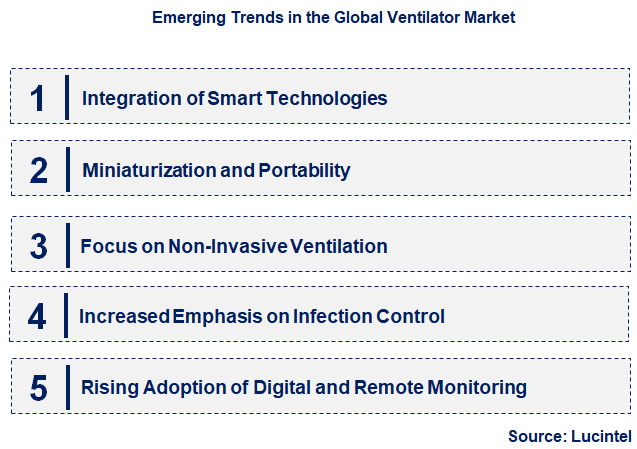
• Integration of Smart Technologies: The adoption of IoT and AI in ventilators is enhancing patient monitoring and device management. Smart ventilators can collect real-time data, adjust settings automatically, and alert healthcare providers to potential issues, improving patient safety and reducing clinician workload. This integration facilitates personalized treatment plans and predictive maintenance, leading to better clinical outcomes and operational efficiency.
• Miniaturization and Portability: Advances in materials and design are enabling the development of compact, lightweight ventilators suitable for emergency, home care, and transport settings. Portable ventilators increase accessibility for patients outside hospital environments, supporting home-based care and reducing hospital stays. This trend addresses the rising demand for flexible respiratory support options, especially in remote or resource-limited areas.
• Focus on Non-Invasive Ventilation: There is a growing preference for non-invasive ventilation methods due to their reduced risk of infections and increased patient comfort. Innovations in NIV technology are making devices more effective and user-friendly, expanding their application in chronic respiratory conditions and during pandemics. This shift is decreasing reliance on invasive procedures and improving the patients quality of life.
• Increased Emphasis on Infection Control: The COVID-19 pandemic has heightened awareness of infection prevention in ventilator design. Manufacturers are incorporating features such as antimicrobial coatings, disposable components, and closed-loop systems to minimize cross-contamination. These enhancements are critical for patient safety, especially in high-risk environments, and are driving regulatory standards and market growth.
• Rising Adoption of Digital and Remote Monitoring: Telemedicine integration allows clinicians to remotely monitor ventilator performance and patient status. Digital platforms enable real-time data sharing, remote adjustments, and troubleshooting, which is vital during pandemics or in rural healthcare settings. This trend improves access to care, reduces hospital visits, and supports efficient resource utilization. In summary, these emerging trends are fundamentally reshaping the ventilator market by fostering innovation, enhancing patient safety, and expanding access to respiratory support. The integration of smart technologies, portability, non-invasive methods, infection control measures, and remote monitoring is collectively driving market growth and improving clinical outcomes, positioning the industry for a more connected and patient-centric future.
• Technological Innovation: Introduction of AI-powered ventilators has enhanced patient monitoring and personalized treatment, leading to improved outcomes and operational efficiency. These advanced devices enable real-time data analysis, predictive maintenance, and remote management, reducing healthcare provider workload and increasing safety. The impact is a more responsive and adaptable ventilator system, which is crucial during high-demand periods like pandemics.
• Increased Adoption of Portable Ventilators: The demand for portable ventilators has surged, especially in emergency and home-care settings. Compact, lightweight devices facilitate mobility and ease of use, expanding access to respiratory support outside traditional hospital environments. This development improves patient quality of life and reduces hospital stays, thereby lowering healthcare costs and increasing market reach.
• Regulatory Approvals and Standards: Stringent regulatory frameworks and new standards have been established to ensure the safety and efficacy of ventilators. Recent approvals of innovative models have accelerated market entry and adoption. These regulations foster trust among healthcare providers and patients, while also encouraging manufacturers to invest in safer, more reliable devices.
• Focus on Pandemic Preparedness: The COVID-19 pandemic underscored the need for scalable ventilator solutions. Manufacturers have ramped up production and diversified product portfolios to meet global demand. This focus on preparedness has led to the development of ventilators with enhanced features for infectious disease management, boosting market resilience and capacity.
• Integration of Digital Health Technologies: The incorporation of IoT and telemedicine into ventilator systems has revolutionized patient care. Remote monitoring, data sharing, and cloud connectivity enable continuous oversight and timely interventions. This integration enhances treatment precision, reduces hospital visits, and supports healthcare infrastructure, thereby expanding market opportunities. In summary, these developments are transforming the ventilator market by making devices more intelligent, accessible, and responsive to global health needs. Technological advancements, regulatory support, and a focus on pandemic readiness are driving growth, improving patient outcomes, and expanding market potential. The sector is poised for continued innovation and increased adoption, shaping a more resilient and efficient respiratory care landscape.
• Critical Care Applications: Expanding use in intensive care units (ICUs) to manage severe respiratory conditions, leading to increased demand for advanced ventilator systems with enhanced monitoring and automation features. This growth improves patient survival rates and reduces ICU stays, driving market expansion.
• Emergency and Disaster Response: Development of portable and easy-to-deploy ventilators for emergencies, such as natural disasters or mass casualty events. These devices enable rapid response, saving lives and broadening market reach into emergency services and field hospitals.
• Home Healthcare: Rising adoption of ventilators for home use among patients with chronic respiratory diseases, supported by technological innovations like remote monitoring. This shift reduces hospital visits, improves patient quality of life, and opens new revenue streams for manufacturers.
• Pediatric Applications: Focused development of specialized ventilators for neonatal and pediatric care, addressing unique physiological needs. This niche market fosters innovation and expands the overall market size by catering to vulnerable patient groups.
• Surgical and Anesthesia Applications: Increasing integration of ventilators in surgical procedures and anesthesia delivery, driven by advancements in minimally invasive surgeries. This enhances surgical outcomes and supports the growth of ventilator sales in operating rooms. In summary, these key growth opportunities are significantly impacting the ventilator market by broadening application scopes, fostering technological innovation, and meeting diverse healthcare needs. As demand continues to rise across these segments, the market is poised for sustained expansion, driven by both clinical requirements and technological advancements.
• Technological Innovation: The continuous development of advanced ventilator systems, such as portable and AI-enabled devices, enhances patient care and operational efficiency. These innovations improve treatment outcomes, reduce hospital stays, and enable remote monitoring, which is especially critical during pandemics. As technology evolves, manufacturers can offer more sophisticated, user-friendly, and cost-effective solutions, fueling market growth and expanding access across healthcare settings worldwide.
• Rising Prevalence of Respiratory Diseases: Increasing incidences of chronic respiratory conditions like COPD, asthma, and acute respiratory infections are driving demand for ventilators. Factors such as pollution, smoking, and aging populations contribute to this trend. The surge in respiratory illnesses, especially during health crises like COVID-19, has underscored the need for advanced ventilatory support, prompting healthcare providers to invest heavily in ventilator procurement and upgrades.
• Growing Healthcare Expenditure: Governments and private sectors are increasing investments in healthcare infrastructure, including ventilator procurement and maintenance. Rising healthcare budgets, especially in emerging economies, facilitate the adoption of advanced ventilator systems. This financial support enables hospitals to upgrade existing equipment, expand ICU capacities, and improve patient outcomes, thereby propelling market expansion.
• Impact of COVID-19 Pandemic: The pandemic significantly accelerated ventilator demand globally, highlighting the critical role of respiratory support devices. The urgent need for ventilators in overwhelmed healthcare systems led to increased production, innovation, and strategic collaborations. Post-pandemic, this heightened awareness and infrastructure development continue to sustain market growth, with a focus on scalable, efficient, and portable ventilator solutions. The challenges facing this ventilator market include:-
• Stringent Regulatory Approvals: Navigating complex regulatory landscapes, such as FDA and CE certifications, delays product launches and increases costs. Compliance with safety and efficacy standards is essential but time-consuming, which can hinder rapid market entry and innovation. These regulatory hurdles often require extensive clinical trials and documentation, impacting manufacturers ability to respond swiftly to market demands.
• High Manufacturing Costs: Developing advanced ventilator systems involves significant R&D investments, specialized components, and quality assurance processes. These costs translate into higher prices for end-users, limiting accessibility in low-income regions. Additionally, fluctuations in raw material prices and supply chain disruptions further escalate manufacturing expenses, challenging market players to balance quality with affordability.
• Supply Chain Disruptions: Global events like pandemics and geopolitical tensions have disrupted supply chains, affecting the availability of critical components and raw materials. These disruptions lead to delays in production and distribution, impacting market supply and increasing costs. Ensuring a resilient supply chain is vital for meeting surging demand, especially during health crises, but remains a persistent challenge for manufacturers. In summary, the ventilator market is driven by technological advancements, increasing respiratory health issues, rising healthcare investments, and pandemic-induced demand surges. However, regulatory complexities, high production costs, and supply chain vulnerabilities pose significant hurdles. These factors collectively influence market growth trajectories, requiring stakeholders to innovate strategically, streamline operations, and navigate regulatory landscapes effectively. Addressing these challenges while leveraging technological and economic drivers will be crucial for sustained expansion and improved patient care outcomes in the evolving ventilator landscape.
• Medtronic
• GE Healthcare
• Philips
• Drägerwerk
• Hamilton Medical
• ResMed
• Getinge
• Fisher & Paykel
• Vyaire Medical
• Smiths Group
• Intensive Care Ventilators
• Portable/Transportable Ventilators
• Adult/Pediatric Ventilators
• Neonatal/Infant Ventilators
• Invasive Ventilation
• Non-invasive Ventilation
• Hybrid Ventilation
• Hospitals & Clinics
• Home Care Settings
• Ambulatory Care Centers
• Emergency Medical Services
• Others
• North America
• Europe
• Asia Pacific
• The Rest of the World
• United States: The US market has seen rapid technological innovations, including the integration of AI and IoT for smarter ventilator management. Major companies are expanding production capacity and receiving regulatory approvals for new models, especially in response to COVID-19. There is also a focus on portable and home-use ventilators to improve patient comfort and reduce hospital burden.
• China: China has significantly increased ventilator manufacturing capacity, becoming one of the largest producers globally. The country has introduced advanced ventilator models with improved automation and user-friendly interfaces. Government initiatives aim to boost domestic innovation and export capabilities, ensuring supply chain resilience amid global shortages.
• Germany: Germany continues to lead in high-quality, technologically advanced ventilators, emphasizing precision engineering and reliability. The market has seen increased investment in research for non-invasive ventilation solutions and integration with digital health systems. Regulatory frameworks support rapid approval processes for innovative devices, strengthening Germany’s position in the global market.
• India: India is rapidly expanding its ventilator manufacturing sector to meet domestic demand driven by rising respiratory illnesses. The focus is on affordable, portable ventilators suitable for rural and underserved areas. Government schemes promote local production, and collaborations with international firms are enhancing technological capabilities.
• Japan: Japan emphasizes the development of compact, energy-efficient ventilators with advanced features for elderly and chronic care patients. The country invests heavily in R&D, integrating robotics and AI to improve device functionality. Japan’s regulatory environment facilitates swift approval of innovative ventilator technologies, supporting its aging population’s healthcare needs.


• Medtronic
• GE Healthcare
• Philips
• Drägerwerk
• Hamilton Medical
• ResMed
• Getinge
• Fisher & Paykel
• Vyaire Medical
• Smiths Group Q5. Which ventilator market segment will be the largest in future? Answer: Lucintel forecasts that, within the type category, intensive care ventilator is expected to witness higher growth over the forecast period. Q6. In ventilator market, which region is expected to be the largest in next 5 years? Answer: In terms of region, North America is expected to witness the highest growth over the forecast period. Q7. Do we receive customization in this report? Answer: Yes, Lucintel provides 10% customization without any additional cost.


Choose a license that fits your team. Instant PDF delivery.
Prices exclude taxes. Instant delivery. Custom licensing available on request.
Market Report · July 22, 2026
Market Report · July 22, 2026
Market Report · July 22, 2026
Trusted partner for strategic intelligence and business growth


Receive a complimentary market analysis tailored to your industry. Our analysts will identify key growth opportunities and competitive dynamics specific to your business.

Market size, growth rate, and key trend analysis for your specific sector.

Top competitor positioning and market share analysis.

Strategic recommendations backed by data-driven insights.
Get curated market intelligence and competitive moves straight to your inbox.
By subscribing, you agree to receive our monthly insights. Unsubscribe anytime.
Receive a complimentary market analysis tailored to your industry. Our analysts will identify key growth opportunities and competitive dynamics specific to your business.
Market size, growth rate, and key trend analysis for your specific sector.
Top competitor positioning and market share analysis.
Strategic recommendations backed by data-driven insights.
Get curated market intelligence, emerging trends, and competitive moves straight to your inbox each month.
By subscribing, you agree to receive our monthly insights. Unsubscribe anytime.
We'll send your sample report shortly.