
Market Report · July 31, 2026

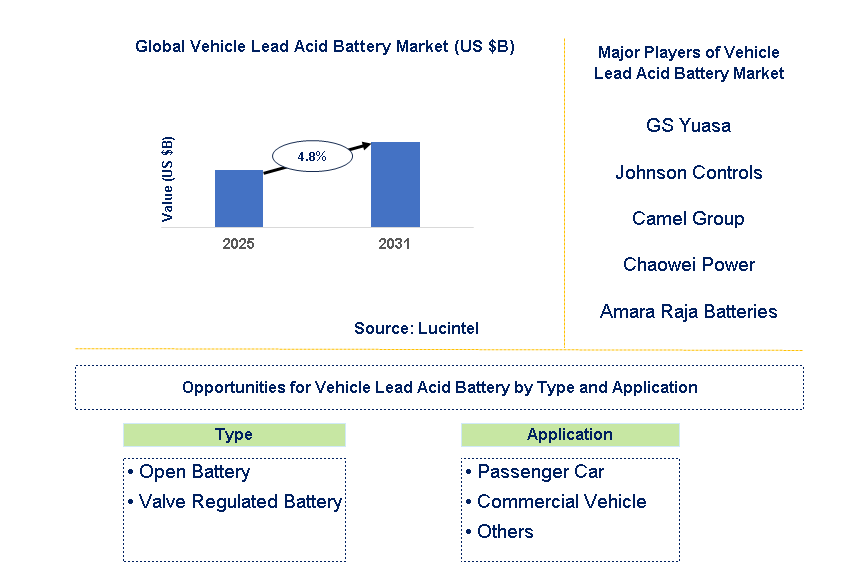
Key data points: The growth forecast = 4.8% annually for the next 7 years. Scroll below to get more insights. This market report covers Trends, opportunities and forecasts in vehicle lead acid battery market to 2031 by type (open battery and valve regulated battery), application (passenger car, commercial vehicle, and others), and region (North America, Europe, Asia Pacific, and the Rest of the World)
We'll send your sample report shortly.
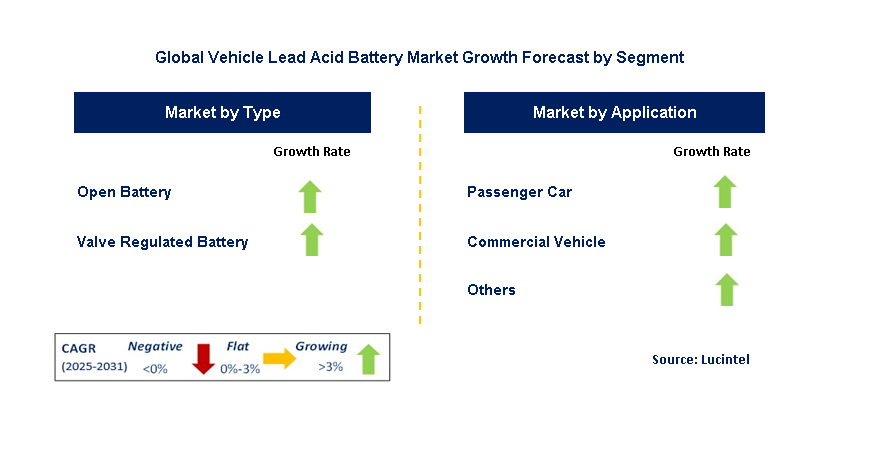
• Lucintel forecasts that, within the type category, valve regulated battery is expected to witness higher growth over the forecast period due to its reliability and high usage in backup power.
• Within the application category, passenger car is expected to witness higher growth due to its affordability in personal transportation.
• In terms of region, APAC is expected to witness the highest growth over the forecast period due to presence of highly developed automotive industry.
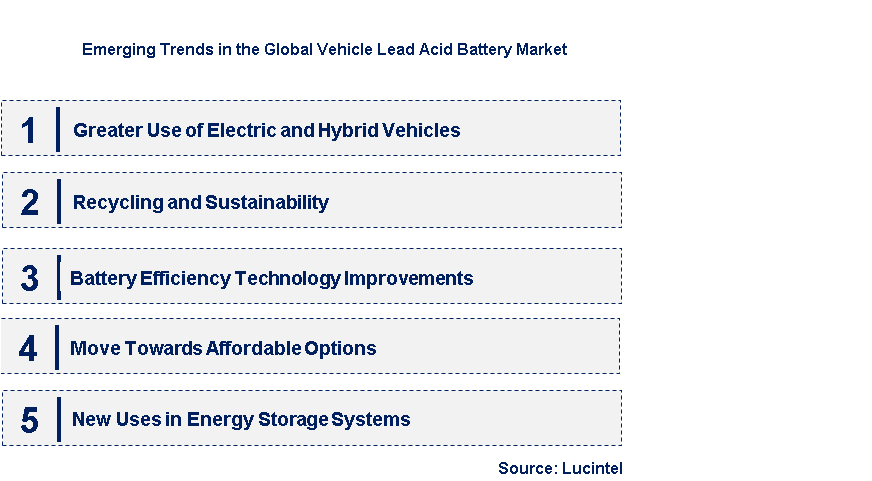
• Greater Use of Electric and Hybrid Vehicles: Probably the most important reason for the increasing use of hybrid and electric vehicles is how greatly they impact the vehicle lead-acid battery market. Most automakers are leaning towards green-friendly modes of transport, which is raising demand for lead-acid batteries in EV and hybrid applications. Rechargeable Lead-acid batteries are capable of meeting the demand for efficiently stored energy that is also cheap, making them ideal for low-priced automotive markets. These factors combined with the rising global demand for eco-friendly transport is expected to greatly increase the consumption of vehicle lead acid batteries.
• Recycling and Sustainability: Global sustainability efforts have concentrated and even expanded to cover the automobile sector. Because of this, manufacturers that produce vehicle lead-acid batteries have begun creating recycling programs. Lead-acid batteries are one of the most recyclable battery types, and the development in their recycling processes is helping raise the battery industry's circular economy and lower its carbon footprint. These manufacturers are also working on lowering the raw material carbon emissions and seeking out new materials and technologies that would reduce the need for harmful raw materials. Stricter regulations and consumer demands for eco-friendly products guarantee that sustainability will be a pillar innovation in the vehicle lead-acid battery industry.
• Battery Efficiency Technology Improvements: New technologies in lead-acid batteries have made new improvements possible in their energy efficiency, service life, and potency. Axis Power EV has developed unparalleled lead-acid batteries that are now able to hold more energy while taking less space and weight. These modifications allow lead-acid batteries to better compete with other automotive lithium-ion batteries. With these advancements, the vehicle lead-acid batteries share in the traditional and electric vehicle markets will continue to grow.
• Move Towards Affordable Options: For a large chunk of consumers, cost is a major concern, more so for those in a developing economy. Borrowing from lithium-ion alternatives, lead-acid batteries serve as a cheaper option for energy storage. As automotive manufacturers attempt to lower their expenses, lead-acid batteries used in automobiles present a feasible economic solution, especially for low-tier electric and hybrid vehicles. Furthermore, as the production of vehicles increases, the cost-effectiveness of lead-acid batteries will be vital for their continued use in the automotive industry.
• New Uses in Energy Storage Systems: Lead-acid batteries are gaining popularity not just in automobiles, but also in energy storage systems for residential and commercial use, especially in off-grid or backup power systems. They are also being employed in electric and hybrid electric vehicles as part of an overall trend towards more environmentally friendly and efficient energy devices. With the increasing popularity of energy storage systems for vehicles, lead-acid batteries are becoming an integral part of the larger energy storage market and creating new growth opportunities in the industry. The evolving patterns within the vehicle lead acid battery market are changing its future outlook significantly. Amid increasing preference for cost-effective and eco-friendly energy storage systems, vehicle lead-acid batteries remain instrumental, especially in hybrid and electric vehicles. Growth in the market is being aided by technological upgrades, enhanced recycling, and increased use of green energy. In addition, new opportunities are provided by new developments within energy storage systems and increased use of hybrid vehicles. Nevertheless, competition from lithium-ion batteries and environmental issues pose persistent challenges, but these trends are transforming the market making it relevant in the changing world of automobiles.
• Developments in the Technology of Lead Acid Batteries: Development in the technology of lead acid batteries has led to improvement in other parameters like energy density and charge retention of the battery. The introduction of new technologies, including improved lead plates and formulated electrolytes, is increasing battery life and efficiency. These changes shift the balance against traditional lead-acid batteries, rendering them more acceptable to competition from lithium-ion batteries. Adoption of vehicle lead-acid batteries in electric and hybrid vehicle markets is likely to increase due to these innovations.
• Creation of Sustainable Techniques to Recycle: The concern towards the environment is growing, and so is the need for efficient recycling of lead-acid batteries. New eco-friendly technologies are being developed which aim to improve the sustainability of lead-acid batteries. Firms are employing advanced techniques which result in the increased recovery of lead and other materials, which in turn, greatly mitigates the repercussions of battery disposal. This method of recycling enables greater sustainability and drives down production costs due to a lower need for raw materials during the manufacturing process.
• Expansion of Production and Funding in Newly Developed Regions: The Asia and Africa regions are witnessing a significant surge in the production of vehicle lead-acid batteries. Local manufacturers are building new plants in response to the increased demand for cheaper automobiles. This investment assists in fostering growth of the market of vehicle lead-acid batteries in emerging economies which severely lack affordable methods of transport. Moreover, these developing regions are becoming major contributors in the battery recycling industry which will help cater to the demand for vehicle batteries around the world.
• Government Regulations Supporting Green Energy Solutions - The above described Government initiatives that seek to improve green energy solutions, assist in the development of newer, more efficient lead-acid batteries. There are also laws concerning electric vehicle adoption, battery recycling, and environmental emissions from battery production facilities, all of which aid in the growth of the vehicle lead-acid battery industry. These laws and programs are facilitating the creation of adequate legislation for the integration and development of vehicle lead-acid batteries in the automotive sector
• Incorporation of Lead-Acid Batteries in Hybrid Vehicles - The growing demand for lead-acid batteries in the energy storage systems of hybrid cars stems from an increasing demand for cost effective and high performance vehicles. Advanced lead-acid batteries are being integrated into hybrid systems by vehicle manufacturers as they seek to provide a better energy storage system at a reasonable cost. The growing popularity of hybrid cars will likely further lead to an increase in the use of lead-acid batteries in these systems, thereby ensuring usage of such batteries for a longer time in the automotive industry. Recent developments in the market for vehicle lead acid batteries showcase the emerging changes in battery technologies as well as the increasing need for sustainable energy. Improved design and recycling processes of batteries, together with growing use in hybrids and electric vehicles are fueling the growth of the market. Along with these, government policies and spending in developing countries also increase demand. Nevertheless, competition from advanced technologies like lithium ion batteries, and eco-friendliness issues regarding disposal of lead are some of the problems. Yet, the strive for improved performance and sustainability of vehicle lead-acid batteries is improving the claim of the automobile industry toward green energy solutions.
• Applications in EVs: The proliferation of electric vehicles is the single most important opportunity for the vehicle lead-acid battery market. Although lithium-ion batteries are the standard for EVs, lead-acid batteries continue to serve as an affordable alternative for low-end models and some hybrids. As the EV market continues to grow, there is greater shift to lower-cost energy storage solutions, giving lead-acid batteries a edge in many low-cost poriton of the markets.
• Hybrid Vehicles Incorporation: The market for hybrid electric vehicles (HEVs) is rapidly growing, as with all vehicles, there is an emerging need for vehicle lead-acid batteries. These types of vehicles are aided by new form factors of batteries, primarily because of their low cost and high energy efficiency. This segment is poised to grow as government and customers increasingly adopt hybrid vehicles as a middle ground between traditional vehicles and fully electric ones. This trend is expected to drive the growth allotment for lead-acid batteries in the automotive industry.
• ESS: Nowadays, lead-acid batteries can be found in many homes and businesses where they are used to store energy. With the increasing popularity of solar and wind energy, lead-acid batteries have become an essential component in energy storage systems. The opportunity stands immensely as both residential and commercial energy storage systems usage is booming all over the world.
• Aftermarket Parts: In terms of aftermarket opportunities, they also stand for expanded utilization of lead-acid batteries in cars, particularly in places where most vehicles are older. There is an increased demand for affordable battery replacements in aging vehicles and as part of the global trend towards increased availability of personal vehicles. As a result, car owners globally are becoming more inclined towards cost-effective options. This expands the possibility for more growth because all these factors contribute to increasing the global vehicle fleet
• New Battery Technologies and Charges Economies Implementations in Emerging Markets: Emerging economies, especially from Asia, Africa, and Latin America, rely upon vehicle lead-acid batteries as one of the key energy storage systems owing to their affordability. These regions are increasing in vehicle ownership along with a growing demand for economical transportation which in turn increases the need for lead-acid batteries. This demand is being sourced by manufactures who are desperately trying to fulfill the need for inexpensive automotive batteries. The demand for affordable and sustainable energy storage solutions is driving growth opportunities in the vehicle lead acid battery market. There are tremendous growth aspects in the proliferation of electric and hybrid vehicles’ accompanied by improvements in battery efficiency, advancement in recycling technology, and growing battery storage systems. Also, new markets and new applications in energy storage systems increase the utilization potential of vehicle lead acid batteries. Competition from lithium ion batteries presents hurdles, but these chances are enabling lead acid batteries to continue being a relevant solution in the automotive and energy storage industries.
• GS Yuasa
• Johnson Controls
• Camel Group
• Chaowei Power
• Amara Raja Batteries
• East Penn Manufacturing
• Exide Technologies
• Open Battery
• Valve Regulated Battery
• Passenger Car
• Commercial Vehicle
• Others
• North America
• Europe
• Asia Pacific
• The Rest of the World
• United States: As for the United States, development of new battery technologies paired with the rising concern regarding hybrid and electric vehicle demand has pushed forward the vehicle lead acid battery market. As a result, automakers across the country have sought more efficient, durable and inexpensive batteries, which attracted investment into the enhancement of lead-acid battery competitiveness. Moreover, US government regulations including emission limits are leading to greater utilization of alternative energy sources in transportation. Additionally, the US has been focusing on recycling and sustainability with programs that advocate the reuse of lead-acid batteries, thus strengthening their market potential in automotive industries.
• China: The adoption of electric vehicles has resulted in China becoming one of the leaders in usage of vehicle lead-acid batteries. Alongside the country's prominent position in automotive manufacturing, the government actively supports the EV market which further strengthens China's position. Moreover, China's spending on battery recycling infrastructure is massive, which helps reduce carbon footprint and increases ecosystem health. In turn, this lessens the reliance on imported goods and creates a more competitive market domestically.
• Germany: Besides being a car industry hub, the popularity of lead-acid batteries is steadily increasing in Germany as they become a more cost-effective option for hybrid vehicles. German manufacturers are also more focused on sustainable EV technologies and battery performance. Combatting climate change and boosting clean energy has led Germany to intensively support further innovation in battery recycling instead of disposal. Alongside other eco-friendly policies, German government initiatives are aimed towards prolonging the country's lead in battery technology.
• India: The production of vehicles in India, together with government participation in electric mobility, is rapidly expanding the country's vehicle lead acid battery market. India is working on enhancing the quality and amplification of lifespan of lead acid batteries that stake the market as it is largely used in two-wheeler electric vehicles (EVs). Furthermore, India is increasing its investment in the manufacturing capacity of lead acid batteries and battery recycling in order to mitigate the environmental problems caused by lead acid battery disposal. The increasing concern surrounding eco-friendly energy solutions coupled with the government's demand for clean transportation options is propelling vehicle lead acid batteries use as a sustainable alternative.
• Japan: Innovation is the most prominent feature of Japan's vehicle lead acid battery market and there is a continuous attempt to design the automotive market in a cleaner way. Although Japan adopts advanced technology at a high rate, lead-acid batteries still occupy a large share in certain segments like the hybrid and low-cost electric vehicles markets. The Japanese manufacturer is also integrating the improvement of energy density and cycle life features of lead-acid batteries with an investment in recycling systems in order to exploit the environmentally friendly aspects in their business. More so, the highly developed economies like Japan are using these factors to motivate the automotive industry for stronger environmental protection policies for energy storage systems.


• GS Yuasa
• Johnson Controls
• Camel Group
• Chaowei Power
• Amara Raja Batteries
• East Penn Manufacturing
• Exide Technologies Q5. Which vehicle lead acid battery market segment will be the largest in future? Answer: Lucintel forecasts that, within the type category, valve regulated battery is expected to witness higher growth over the forecast period due to its reliability and high usage in backup power. Q6. In vehicle lead acid battery market, which region is expected to be the largest in next 5 years? Answer: In terms of region, APAC is expected to witness the highest growth over the forecast period due to presence of highly developed automotive industry. Q7. Do we receive customization in this report? Answer: Yes, Lucintel provides 10% customization without any additional cost.


Choose a license that fits your team. Instant PDF delivery.
Prices exclude taxes. Instant delivery. Custom licensing available on request.
Market Report · July 31, 2026
Market Report · July 22, 2026
Market Report · July 17, 2026
Trusted partner for strategic intelligence and business growth


Receive a complimentary market analysis tailored to your industry. Our analysts will identify key growth opportunities and competitive dynamics specific to your business.

Market size, growth rate, and key trend analysis for your specific sector.

Top competitor positioning and market share analysis.

Strategic recommendations backed by data-driven insights.
Get curated market intelligence and competitive moves straight to your inbox.
By subscribing, you agree to receive our monthly insights. Unsubscribe anytime.
Receive a complimentary market analysis tailored to your industry. Our analysts will identify key growth opportunities and competitive dynamics specific to your business.
Market size, growth rate, and key trend analysis for your specific sector.
Top competitor positioning and market share analysis.
Strategic recommendations backed by data-driven insights.
Get curated market intelligence, emerging trends, and competitive moves straight to your inbox each month.
By subscribing, you agree to receive our monthly insights. Unsubscribe anytime.
We'll send your sample report shortly.