
Market Report · July 22, 2026

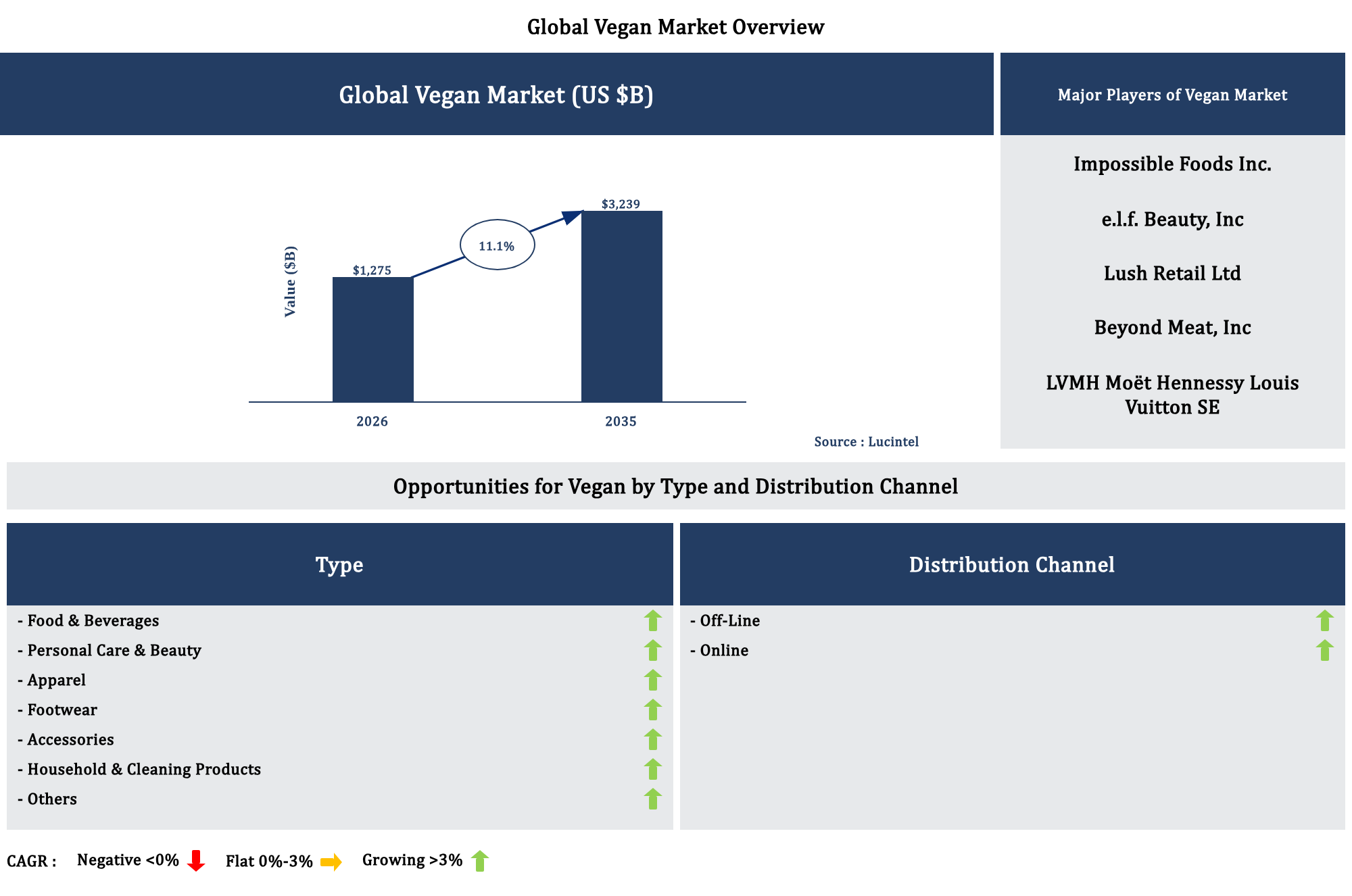
Key data points: The market size in 2035 = $3,239 billion, growth forecast = 11.1% annually for the next 9 years. Scroll below to get more insights. This market report covers trends, opportunities and forecasts in vegan market to 2035 by type (food & beverages, personal care & beauty, apparel, footwear, accessories, household & cleaning products, and others), distribution channel (off-line and online), and region (North America, Europe, Asia Pacific, and the Rest of the World)
We'll send your sample report shortly.
The future of the global vegan market looks promising with opportunities in the off-line and online markets. The global vegan market is expected to reach an estimated $3,239 billion by 2035 with a CAGR of 11.1% from 2026 to 2035. The major drivers for this market are the increasing demand for plant based foods, the rising awareness about animal free products, and the growing adoption of sustainable vegan lifestyles.
Gain valuable insights for your business decisions with our comprehensive 150+ page report. Sample figures with some insights are shown below.
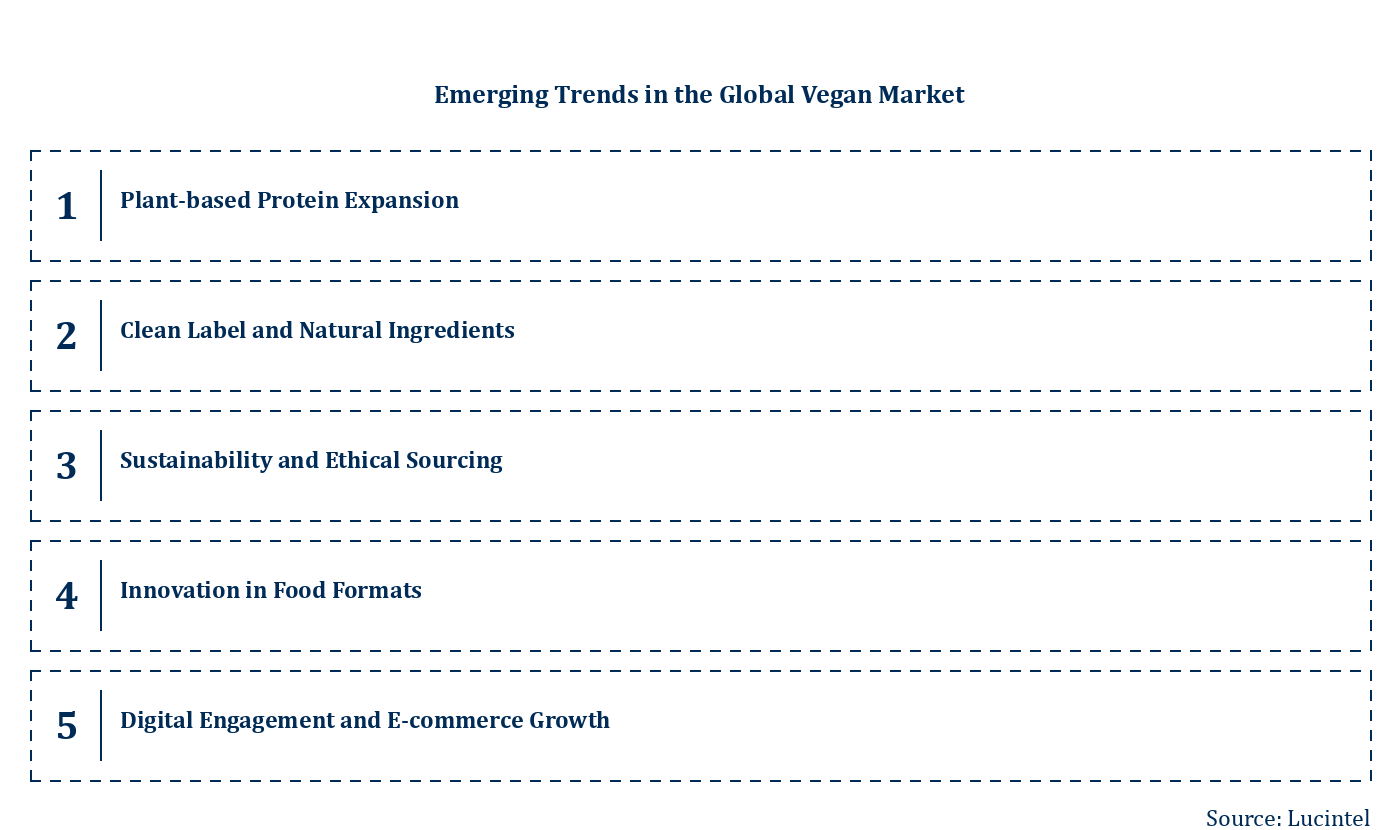
The vegan market is experiencing rapid growth driven by changing consumer preferences, increased awareness of health and environmental issues, and a surge in plant-based product availability. As more individuals adopt vegan lifestyles or reduce meat consumption, companies are innovating to meet this demand. This evolving landscape is characterized by new product categories, shifting marketing strategies, and a focus on sustainability. These developments are not only expanding the market but also reshaping consumer expectations and industry standards. Understanding these key trends is essential for stakeholders aiming to capitalize on the opportunities within this dynamic sector.
These trends are collectively reshaping the vegan market by making products more innovative, sustainable, transparent, and accessible. They are driving increased consumer engagement and expanding market opportunities, ultimately transforming the industry into a more dynamic and inclusive space.
The vegan market has experienced rapid growth driven by increasing consumer awareness of health, environmental, and ethical issues. Innovations in plant-based products, expanding product ranges, and global market penetration are fueling this trend. Companies are investing heavily in research and development to meet rising demand. This evolving landscape presents significant opportunities for investors and entrepreneurs. As the market matures, understanding key developments is essential for strategic positioning and capitalizing on emerging trends.
These developments are significantly transforming the vegan market by expanding product offerings, improving technology, and increasing global reach. Consumer demand and innovation are driving rapid growth, attracting investments, and fostering competitive dynamics. As a result, the market is becoming more diverse, accessible, and sustainable. These trends are creating substantial opportunities for existing players and new entrants, ultimately shaping a robust, future-ready vegan industry with broad consumer appeal and long-term growth potential.
The vegan market is experiencing rapid expansion driven by increasing consumer awareness of health, environmental, and ethical issues. Innovations in plant-based products, shifting dietary preferences, and supportive regulatory frameworks are creating new avenues for growth. Companies are investing heavily in product development, marketing, and distribution channels to capture a larger share of this evolving market. This dynamic environment offers numerous opportunities for stakeholders to capitalize on emerging trends and meet the rising demand for vegan options across various applications.
The overall impact of these growth opportunities is set to significantly accelerate the vegan market’s expansion, fostering innovation, increasing consumer choice, and strengthening industry competitiveness. As stakeholders capitalize on these trends, the market is poised for sustained growth, driven by evolving consumer preferences and supportive regulatory environments. This dynamic landscape promises long-term benefits for businesses, consumers, and the planet.
The vegan market is influenced by a complex interplay of technological, economic, and regulatory factors. Advances in food technology have enabled the development of innovative plant-based products, expanding consumer options. Economic shifts, such as rising disposable incomes and increasing health consciousness, drive demand for vegan foods. Regulatory frameworks promoting sustainable practices and labeling standards further shape market growth. However, challenges like supply chain complexities, regulatory hurdles, and consumer skepticism pose obstacles. Understanding these drivers and challenges is essential for stakeholders aiming to capitalize on the market's potential and navigate its evolving landscape effectively.
The factors responsible for driving the vegan market include:-
The Challenges in The vegan market Are: -
The vegan market is propelled by technological advancements, health and environmental concerns, supportive policies, and improved distribution channels. However, supply chain issues, regulatory complexities, and consumer skepticism present notable challenges. These drivers and obstacles collectively shape the market's trajectory, demanding strategic innovation and adaptation from industry players. The overall impact is a dynamic landscape with significant growth potential, provided stakeholders effectively navigate the regulatory and consumer acceptance hurdles.
Companies in the market compete on the basis of product quality offered. Major players in this market focus on expanding their manufacturing facilities, R&D investments, infrastructural development, and leverage integration opportunities across the value chain. Through these strategies vegan market companies cater increasing demand, ensure competitive effectiveness, develop innovative products & technologies, reduce production costs, and expand their customer base. Some of the vegan market companies profiled in this report include-
The study includes a forecast for the global vegan market by type, distribution channel, and region.
The vegan market has experienced significant growth globally, driven by increasing consumer awareness of health, environmental sustainability, and animal welfare. As more individuals adopt plant-based lifestyles, countries are innovating and expanding their vegan product offerings, infrastructure, and policies to meet rising demand. This dynamic landscape reflects broader shifts toward sustainable consumption and ethical considerations, with each country adapting to its unique cultural and economic contexts. The following summaries highlight recent developments in the vegan market across the United States, China, Germany, India, and Japan, showcasing key advancements and trends shaping the industry.
Lucintel has been in the business of market research and management consulting since 2000 and has published over 1000 market intelligence reports in various markets / applications and served over 1,000 clients worldwide. This study is a culmination of four months of full-time effort performed by Lucintel's analyst team. The analysts used the following sources for the creation and completion of this valuable report:
Extensive research and interviews are conducted across the supply chain of this market to estimate market share, market size, trends, drivers, challenges, and forecasts. Below is a brief summary of the primary interviews that were conducted by job function for this report.

Thus, Lucintel compiles vast amounts of data from numerous sources, validates the integrity of that data, and performs a comprehensive analysis. Lucintel then organizes the data, its findings, and insights into a concise report designed to support the strategic decision-making process. The figure below is a graphical representation of Lucintel's research process.

Choose a license that fits your team. Instant PDF delivery.
Prices exclude taxes. Instant delivery. Custom licensing available on request.
Some of the key vegan companies are as follows:
Market Report · July 22, 2026
Market Report · July 22, 2026
Market Report · July 22, 2026
Trusted partner for strategic intelligence and business growth


Receive a complimentary market analysis tailored to your industry. Our analysts will identify key growth opportunities and competitive dynamics specific to your business.

Market size, growth rate, and key trend analysis for your specific sector.

Top competitor positioning and market share analysis.

Strategic recommendations backed by data-driven insights.
Get curated market intelligence and competitive moves straight to your inbox.
By subscribing, you agree to receive our monthly insights. Unsubscribe anytime.
Receive a complimentary market analysis tailored to your industry. Our analysts will identify key growth opportunities and competitive dynamics specific to your business.
Market size, growth rate, and key trend analysis for your specific sector.
Top competitor positioning and market share analysis.
Strategic recommendations backed by data-driven insights.
Get curated market intelligence, emerging trends, and competitive moves straight to your inbox each month.
By subscribing, you agree to receive our monthly insights. Unsubscribe anytime.
We'll send your sample report shortly.