
Market Report · July 20, 2026

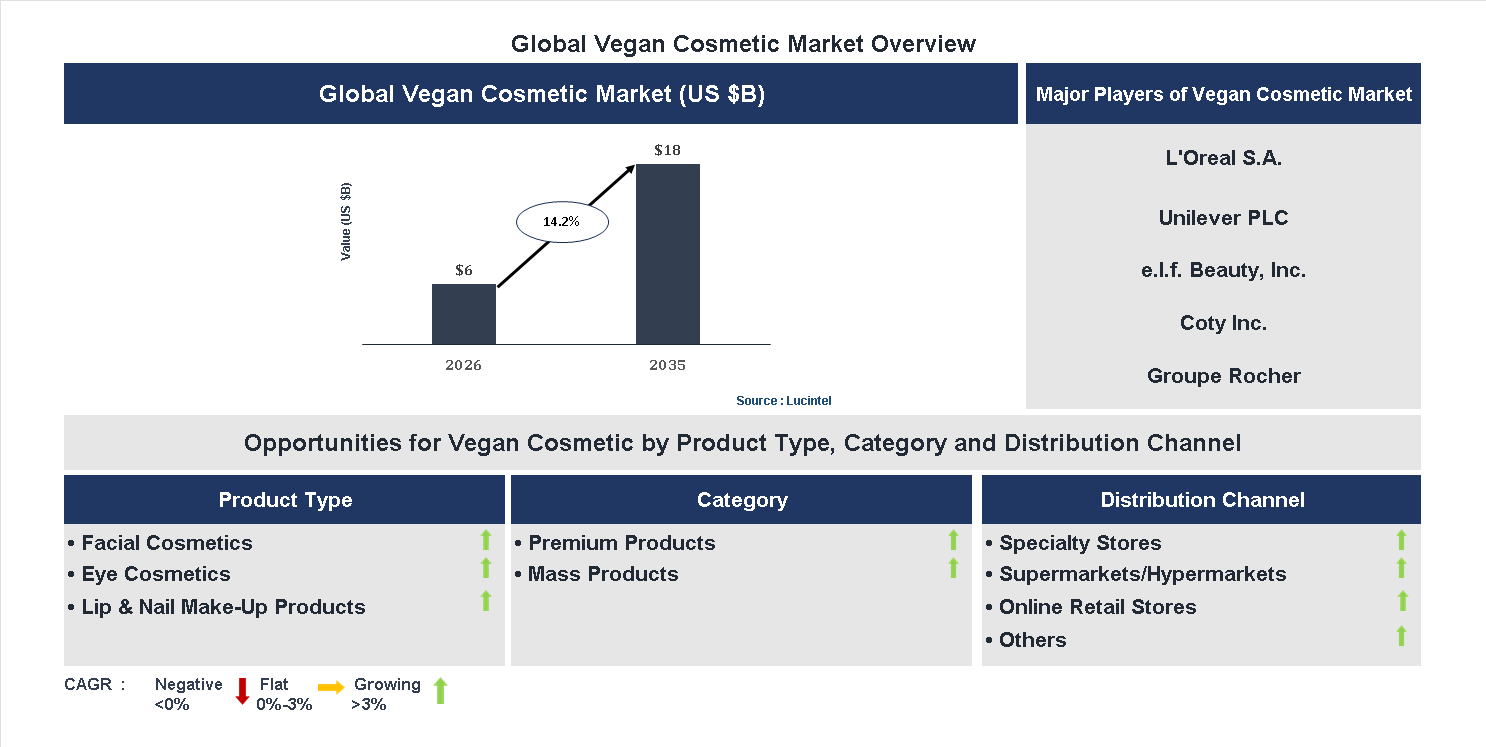
Key data points: The market size in 2035 = $18 billion, growth forecast = 0.142 annually for the next 8 years. Scroll below to get more insights. This market report covers trends, opportunities and forecasts in vegan cosmetic market to 2035 by product type (facial cosmetics, eye cosmetics, and lip & nail make-up products), category (premium products and mass products), distribution channel (specialty stores, supermarkets/hypermarkets, online retail stores, and others), and region (North America, Europe, Asia Pacific, and the Rest of the World)
We'll send your sample report shortly.
• Lucintel forecasts that, within the product type category, facial cosmetic is expected to witness the highest growth over the forecast period.
• Within the distribution channel category, online retail store is expected to witness the highest growth.
• In terms of region, APAC is expected to witness the highest growth over the forecast period. Gain valuable insights for your business decisions with our comprehensive 150+ page report. Sample figures with some insights are shown below.
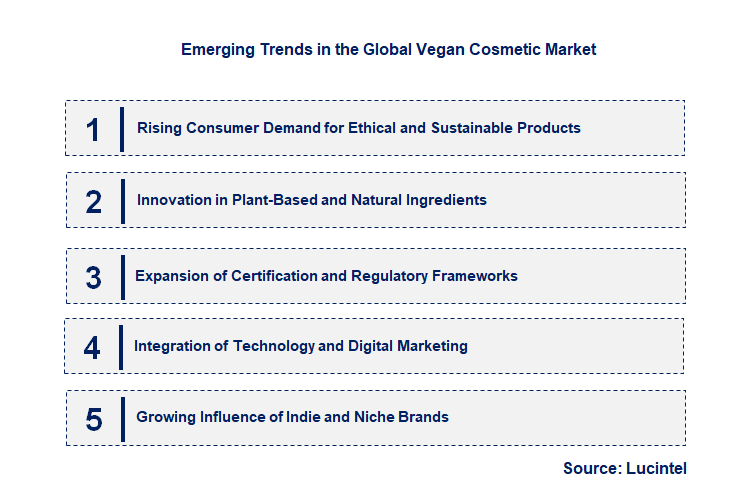
• Rising Consumer Demand for Ethical and Sustainable Products: Consumers are increasingly prioritizing products that are cruelty-free, eco-friendly, and ethically sourced. This shift is driven by heightened awareness of animal rights, environmental impact, and health benefits. As a result, brands are investing in transparent supply chains, sustainable packaging, and cruelty-free testing methods. The demand is particularly strong among Millennials and Gen Z, who prefer brands aligned with their values. This trend is encouraging companies to innovate with sustainable ingredients and practices, ultimately reshaping product offerings and marketing strategies to appeal to ethically conscious consumers.
• Innovation in Plant-Based and Natural Ingredients: The market is witnessing a surge in the development of plant-based, natural, and organic ingredients that serve as effective alternatives to traditional chemicals. Advances in botanical science enable the formulation of high-performance products that are free from synthetic additives, parabens, and sulfates. This trend not only caters to health-conscious consumers but also enhances product efficacy and safety. Companies are investing in research to discover new plant extracts and bioactive compounds, leading to a broader range of innovative, natural cosmetic solutions. This focus on natural ingredients is redefining product development standards within the industry.
• Expansion of Certification and Regulatory Frameworks: As the vegan cosmetic market grows, there is an increasing emphasis on certification standards such as Leaping Bunny, PETA, and Vegan Society. These certifications provide consumers with assurance regarding cruelty-free and vegan claims. Governments and regulatory bodies are also establishing clearer guidelines to prevent false advertising and ensure product safety. This trend promotes transparency and accountability among brands, fostering consumer trust. It encourages companies to adhere to stricter standards, which in turn elevates industry credibility and encourages wider adoption of vegan practices across the sector.
• Integration of Technology and Digital Marketing: Digital platforms, social media, and e-commerce are playing a crucial role in shaping consumer engagement and brand visibility. Brands leverage influencer marketing, virtual try-ons, and augmented reality to enhance customer experience and educate consumers about vegan products. Data analytics and AI-driven personalization enable targeted marketing strategies, increasing conversion rates. Additionally, online reviews and social proof influence purchasing decisions significantly. This technological integration allows brands to reach a global audience efficiently, accelerate product launches, and foster community-building around vegan cosmetics, thereby transforming traditional marketing approaches and expanding market reach.
• Growing Influence of Indie and Niche Brands: Smaller, independent brands are gaining prominence by offering unique, innovative, and affordable vegan cosmetic products. These brands often emphasize transparency, sustainability, and community engagement, resonating with niche consumer segments. Their agility allows rapid product development and customization, challenging established players. The rise of indie brands is also driven by social media and crowdfunding platforms, which facilitate direct consumer interaction and funding. This trend diversifies the market, encourages innovation, and provides consumers with more choices aligned with their values, ultimately disrupting traditional industry hierarchies and fostering a more dynamic competitive landscape. These trends are collectively reshaping the vegan cosmetic market by emphasizing sustainability, innovation, transparency, technological integration, and consumer engagement. They are driving industry standards upward, encouraging brands to adopt more ethical and eco-friendly practices, and expanding the market’s reach globally. As these developments continue, the vegan cosmetic industry is poised for sustained growth, greater consumer trust, and increased innovation, making it a significant segment within the broader beauty and personal care industry.
• Growing Consumer Demand for Cruelty-Free Products: The increasing awareness of animal rights and ethical concerns has led consumers to prefer cruelty-free cosmetics. This shift is encouraging brands to eliminate animal testing and promote transparency. As a result, companies are investing in certification programs and marketing strategies emphasizing cruelty-free practices. This trend boosts consumer trust and loyalty, expanding the market for vegan cosmetics. The demand is also driving innovation in alternative testing methods, further supporting ethical standards.
• Innovation in Plant-Based Ingredients: Advances in botanical science are enabling the development of effective, natural, and sustainable ingredients for cosmetics. These innovations improve product efficacy while aligning with vegan principles. Companies are exploring new plant extracts, oils, and bioactive compounds to create unique formulations. This development enhances product appeal to health-conscious consumers and reduces reliance on synthetic chemicals. The growing availability of innovative ingredients is expanding product diversity and market competitiveness.
• Regulatory Changes Supporting Vegan Certification: Governments and industry bodies are implementing stricter regulations and certification standards for vegan cosmetics. These policies ensure product transparency and authenticity, building consumer confidence. Certification labels like Vegan Society and Leaping Bunny are gaining prominence, influencing purchasing decisions. Companies adopting these standards can differentiate themselves in a crowded market. Regulatory support also encourages industry-wide adoption of ethical practices, fostering sustainable growth and consumer trust.
• Expansion of E-Commerce and Digital Marketing: The rise of online retail platforms and social media has significantly increased market reach for vegan cosmetics. Brands leverage digital marketing to educate consumers, showcase product benefits, and build brand loyalty. E-commerce provides convenience and access to a global audience, especially in emerging markets. Virtual try-ons, influencer collaborations, and targeted advertising enhance consumer engagement. This digital shift accelerates market penetration, boosts sales, and enables smaller brands to compete with established players.
• Sustainability and Eco-Friendly Packaging Initiatives: Consumers increasingly prioritize environmentally friendly packaging solutions. Companies are adopting biodegradable, recyclable, and refillable packaging to reduce ecological footprints. These initiatives resonate with eco-conscious buyers and enhance brand reputation. Innovations include minimalistic designs, plant-based plastics, and reusable containers. Sustainable packaging not only aligns with vegan principles but also meets regulatory and consumer expectations. This focus on eco-friendliness is driving market differentiation and long-term growth. The overall impact of these developments is a more ethical, innovative, and sustainable vegan cosmetic market. Consumer trust and demand are fueling industry expansion, while regulatory and technological advancements are fostering innovation. Digital marketing and eco-friendly practices are broadening reach and appeal. Collectively, these trends are transforming the market into a more responsible and competitive space, promising continued growth and increased consumer engagement.
• Expanding Product Lines with Innovative Plant-Based Ingredients: Companies can capitalize on the trend by developing diverse, high-performance vegan formulations that cater to various skin types and concerns. Incorporating unique botanical extracts and sustainable ingredients can differentiate brands, attract eco-conscious consumers, and increase market share. Continuous innovation in product development will be essential to meet evolving consumer expectations and establish brand loyalty in a competitive landscape.
• Increasing Penetration in Emerging Markets Through Localized Marketing Strategies: Targeting developing regions with tailored marketing approaches can unlock new customer bases. Educating consumers about vegan benefits, leveraging local influencers, and adapting products to regional preferences will enhance acceptance. Building distribution networks and establishing brand presence in these markets can significantly boost sales and support global market growth.
• Leveraging E-commerce Platforms for Direct-to-Consumer Sales: Online channels offer cost-effective access to a broad audience, enabling brands to showcase their vegan product ranges directly. Investing in digital marketing, virtual consultations, and personalized shopping experiences can enhance customer engagement. E-commerce expansion allows for rapid market entry, data collection on consumer preferences, and increased sales, making it a vital growth avenue in the digital age.
• Formulating Eco-Friendly and Sustainable Packaging Solutions: Developing biodegradable, recyclable, or refillable packaging aligns with consumer values and regulatory trends. Sustainable packaging reduces environmental impact and enhances brand reputation. Innovating in this area can differentiate products, meet eco-conscious consumer demands, and comply with evolving environmental standards, thereby fostering long-term loyalty and market competitiveness.
• Collaborating with Influencers and Ethical Brands to Boost Visibility: Strategic partnerships with social media influencers and like-minded brands can amplify brand awareness and credibility. These collaborations can effectively communicate the ethical and health benefits of vegan cosmetics, reaching targeted audiences. Such alliances can accelerate market penetration, foster community engagement, and position brands as leaders in the ethical beauty space. The overall growth of the vegan cosmetic market hinges on leveraging these opportunities to innovate, expand geographically, enhance digital presence, prioritize sustainability, and build strategic partnerships. Embracing these strategies will enable brands to capture emerging consumer segments, strengthen market positioning, and sustain long-term growth in a competitive environment.
• Growing Consumer Awareness and Ethical Preferences: Increasing awareness about animal cruelty, environmental impact, and health benefits has led consumers to prefer vegan cosmetics. This shift is driven by social media influence, advocacy campaigns, and a broader movement towards ethical consumption. Consumers now seek products that align with their values, boosting demand for cruelty-free, plant-based cosmetics. This trend encourages brands to innovate and expand their vegan product lines, fostering market growth and diversification.
• Technological Innovations in Product Development: Advances in biotechnology, natural ingredient extraction, and formulation techniques have enabled companies to develop high-quality vegan cosmetics that rival traditional products. Innovations such as plant-based preservatives, sustainable packaging, and lab-grown ingredients improve product efficacy and shelf life. These technological improvements reduce costs and enhance product appeal, allowing brands to meet evolving consumer expectations for safety, efficacy, and sustainability.
• Regulatory Environment and Certification Standards: Governments and industry bodies are implementing stricter regulations regarding ingredient transparency, labeling, and cruelty-free claims. Certification programs like Leaping Bunny and Vegan Society provide credibility and consumer trust. Compliance with these standards ensures market access and enhances brand reputation. However, navigating diverse regulatory landscapes can be complex and costly, requiring continuous updates and adherence to evolving standards.
• Economic Growth and Rising Disposable Incomes: Increasing disposable incomes, especially in emerging markets, enable consumers to spend more on premium, ethically produced cosmetics. As consumers prioritize health and sustainability, they are willing to pay a premium for vegan products. This economic trend supports market expansion, encourages brand investments in R&D, and fosters the development of innovative, high-quality vegan cosmetic offerings.
• Expansion of Distribution Channels and E-commerce: The proliferation of online retail platforms and social media marketing has expanded access to vegan cosmetics globally. E-commerce provides convenience, wider product selection, and direct engagement with consumers. This channel growth allows brands to reach niche markets and build brand loyalty more effectively. The integration of digital marketing strategies further accelerates market penetration and consumer education. The challenges facing the vegan cosmetic market include:
• Ingredient Sourcing and Supply Chain Complexity: Securing consistent, high-quality plant-based ingredients can be challenging due to seasonal variations, geographic limitations, and supply chain disruptions. Ensuring ingredient purity and sustainability adds complexity and costs. Additionally, sourcing rare or exotic ingredients may lead to supply shortages, impacting production timelines and product availability, which can hinder market growth and innovation.
• Regulatory and Certification Variability: Differing regulations and certification standards across countries create compliance challenges for global brands. Variations in definitions of vegan and cruelty-free claims can lead to consumer confusion and potential legal issues. Maintaining transparency and meeting diverse standards require significant resources, and failure to comply can damage brand reputation and limit market access.
• Market Saturation and Intense Competition: The rapid proliferation of vegan cosmetic brands has led to a highly competitive landscape. Differentiating products and establishing brand loyalty becomes increasingly difficult as new entrants flood the market. Price wars and marketing challenges can erode profit margins, while consumer skepticism about product efficacy and authenticity may hinder growth. Companies must innovate continuously and build trust to sustain their market position. The vegan cosmetic market is driven by ethical consumerism, technological advancements, regulatory support, economic growth, and expanding distribution channels. However, it faces challenges related to ingredient sourcing, regulatory variability, and intense competition. These factors collectively influence the markets trajectory, requiring stakeholders to adapt strategically. Embracing innovation, ensuring compliance, and maintaining transparency will be crucial for sustained growth and competitive advantage in this evolving industry.
• LOreal S.A.
• Unilever PLC
• e.l.f. Beauty, Inc.
• Coty Inc.
• Groupe Rocher
• Estee Lauder Companies
• Amorepacific Corporation
• Pacifica Beauty, LLC
• MuLondon
• Beauty Without Cruelty
• Facial Cosmetics
• Eye Cosmetics
• Lip & Nail Make-Up Products
• Premium Products
• Mass Products
• Specialty Stores
• Supermarkets/Hypermarkets
• Online Retail Stores
• Others
• North America
• Europe
• Asia Pacific
• The Rest of the World
• United States: The US vegan cosmetic market has seen rapid expansion, fueled by rising demand for cruelty-free and organic products. Major brands are investing in R&D to develop innovative plant-based formulations, and retail channels are increasingly dedicated to vegan offerings. Regulatory agencies are strengthening guidelines around ingredient transparency, boosting consumer confidence. E-commerce platforms are playing a crucial role in market growth, providing wider access to vegan products. Additionally, collaborations with influencers and celebrities are enhancing brand visibility and consumer engagement. Overall, the US market is characterized by innovation, transparency, and a strong emphasis on sustainability.
• China: The vegan cosmetic market in China is gaining momentum, driven by a growing middle class and increasing awareness of ethical beauty. Domestic brands are expanding their vegan product lines, often blending traditional herbal ingredients with modern formulations. Regulatory reforms are encouraging transparency and safety standards, fostering consumer trust. E-commerce giants like Alibaba and JD.com are facilitating access to vegan products, while social media campaigns promote cruelty-free beauty. International brands are entering the market, adapting products to local preferences. The Chinese market is also witnessing a rise in vegan certifications and eco-labels, reflecting a shift toward more conscious consumption.
• Germany: Germany remains a leader in the European vegan cosmetic market, with a strong emphasis on sustainability and ethical sourcing. Consumer demand for organic, cruelty-free, and environmentally friendly products continues to grow. Local brands are innovating with biodegradable packaging and natural ingredients, aligning with strict EU regulations. Certification bodies like Vegan Society and Leaping Bunny are widely recognized, enhancing product credibility. Retailers are dedicating more shelf space to vegan cosmetics, and online sales channels are expanding rapidly. Germany’s market is characterized by high consumer awareness, rigorous standards, and a commitment to environmental responsibility.
• India: The vegan cosmetic market in India is emerging, driven by increasing awareness of cruelty-free and natural beauty products. Traditional Ayurvedic practices are integrating with modern vegan formulations, creating a unique blend of heritage and innovation. Local brands are gaining popularity by offering affordable, plant-based products tailored to regional preferences. Regulatory frameworks are gradually evolving to support ethical cosmetics, while social media influences are boosting consumer interest. The market is also benefiting from a rising middle class seeking sustainable and chemical-free options. Overall, India’s vegan cosmetics sector is poised for substantial growth, emphasizing affordability, tradition, and modernity.
• Japan: Japan’s vegan cosmetic market is expanding steadily, with consumers prioritizing purity, safety, and high-quality ingredients. The focus on minimalism and natural beauty aligns with vegan principles, leading to increased demand for plant-based skincare and makeup. Local brands are innovating with unique botanical extracts and eco-friendly packaging. Regulatory standards are strict, ensuring product safety and transparency. E-commerce and specialty stores are key distribution channels, facilitating access to vegan products. Cultural values emphasizing harmony with nature support market growth. Japan’s market is characterized by a sophisticated consumer base seeking premium, ethical, and environmentally conscious beauty solutions.


• LOreal S.A.
• Unilever PLC
• e.l.f. Beauty, Inc.
• Coty Inc.
• Groupe Rocher
• Estee Lauder Companies
• Amorepacific Corporation
• Pacifica Beauty, LLC
• MuLondon
• Beauty Without Cruelty Q6. Which vegan cosmetic market segment will be the largest in future? Answer: Lucintel forecasts that, within the product type category, facial cosmetic is expected to witness the highest growth over the forecast period. Q7. In vegan cosmetic market, which region is expected to be the largest in next 5 years? Answer: In terms of region, APAC is expected to witness the highest growth over the forecast period. Q8. Do we receive customization in this report? Answer: Yes, Lucintel provides 10% customization without any additional cost.


Choose a license that fits your team. Instant PDF delivery.
Prices exclude taxes. Instant delivery. Custom licensing available on request.
Market Report · July 20, 2026
Market Report · July 15, 2026
Market Report · July 15, 2026
Trusted partner for strategic intelligence and business growth


Receive a complimentary market analysis tailored to your industry. Our analysts will identify key growth opportunities and competitive dynamics specific to your business.

Market size, growth rate, and key trend analysis for your specific sector.

Top competitor positioning and market share analysis.

Strategic recommendations backed by data-driven insights.
Get curated market intelligence and competitive moves straight to your inbox.
By subscribing, you agree to receive our monthly insights. Unsubscribe anytime.
Receive a complimentary market analysis tailored to your industry. Our analysts will identify key growth opportunities and competitive dynamics specific to your business.
Market size, growth rate, and key trend analysis for your specific sector.
Top competitor positioning and market share analysis.
Strategic recommendations backed by data-driven insights.
Get curated market intelligence, emerging trends, and competitive moves straight to your inbox each month.
By subscribing, you agree to receive our monthly insights. Unsubscribe anytime.
We'll send your sample report shortly.