
Market Report · July 16, 2026

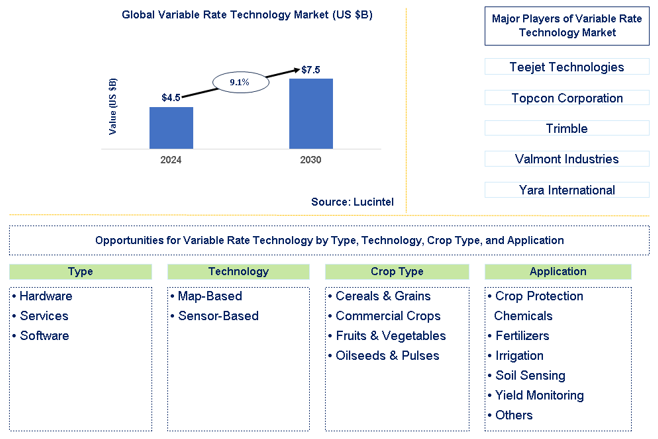
Key data points: The market size in 2030 = $7.5 billion, growth forecast = 9.1% annually next 6 years. Scroll below to get more insights. This market report covers trends, opportunities, and forecast in the global variable rate technology market to 2030 by component (hardware, services, and software), technology (map-based and sensor-based), crop type (cereals & grains, commercial crops, fruits & vegetables, and oilseeds & pulses), application (crop protection chemicals, fertilizers, irrigation, soil sensing, yield monitoring, and others), and region (North America, Europe, Asia Pacific, and the Rest of the World)
We'll send your sample report shortly.
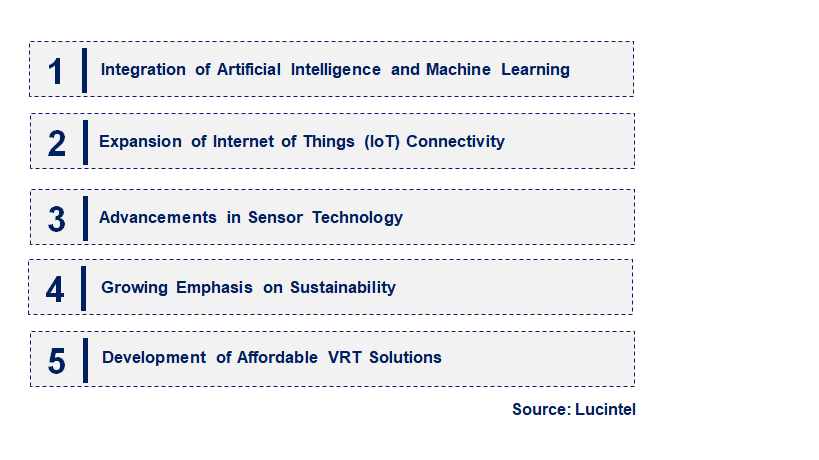
• Integration of Artificial Intelligence and Machine Learning: AI and ML are revolutionizing VRT by enabling more accurate predictions and data-driven decision-making. AI algorithms analyze vast amounts of data from various sources, including weather patterns, soil conditions, and crop health, to optimize input application. ML models continuously learn and adapt, improving the accuracy and efficiency of VRT systems over time. This integration enhances precision agriculture by allowing farmers to apply resources more effectively, reduce waste, and increase crop yields.
• Expansion of Internet of Things (IoT) Connectivity: IoT technology is increasingly being integrated into VRT systems to enable real-time monitoring and control. IoT devices such as sensors and actuators collect and transmit data on soil moisture, nutrient levels, and crop health. This data is used to make immediate adjustments in input application, optimizing resource use. IoT connectivity improves the responsiveness and accuracy of VRT systems, allowing for better field management and more efficient use of inputs.
• Advancements in Sensor Technology: Recent advancements in sensor technology are enhancing the capabilities of VRT systems. New sensors offer more precise measurements of soil properties, crop conditions, and environmental factors. High-resolution sensors and multispectral imaging provide detailed insights into field conditions, enabling more accurate and targeted input application. These advancements contribute to improved calibration of VRT systems and better overall performance, leading to increased productivity and resource efficiency.
• Growing Emphasis on Sustainability: The focus on sustainability is driving innovations in VRT. There is a strong emphasis on developing systems that reduce environmental impact by minimizing input waste and optimizing resource use. VRT solutions are being designed to enhance soil health, reduce water consumption, and lower carbon footprints. Sustainable practices are becoming a key criterion in VRT technology development, aligning with broader agricultural goals of environmental stewardship and resource conservation.
• Development of Affordable VRT Solutions: The market is witnessing the emergence of cost-effective VRT solutions, particularly in emerging economies. Companies are creating affordable systems that cater to small and medium-sized farms, making precision agriculture more accessible. These solutions often include simplified technologies and modular components that can be scaled according to specific needs. This trend is helping to democratize access to VRT technologies and support broader adoption across diverse agricultural settings. The variable rate technology (VRT) market is evolving with significant trends in AI integration, IoT connectivity, sensor advancements, sustainability, and affordability. These trends are transforming VRT into a more precise, efficient, and accessible tool for modern agriculture. By leveraging these emerging technologies and focusing on sustainable practices, the VRT market is poised to enhance agricultural productivity and resource management, addressing both environmental and economic challenges in farming.
• Enhanced Integration of Artificial Intelligence (AI): AI has increasingly been integrated into VRT systems to improve decision-making and operational efficiency. By analyzing large datasets from sensors and historical records, AI algorithms provide precise recommendations for input application. This integration helps in predicting optimal application rates for fertilizers, pesticides, and water, significantly reducing waste and enhancing crop productivity. AI-driven systems also enable real-time adjustments based on changing field conditions, further improving accuracy and efficiency.
• Advances in Sensor Technology: Recent developments in sensor technology have dramatically improved the capabilities of VRT systems. New sensors offer high-resolution measurements of soil moisture, nutrient levels, and crop health. These advanced sensors provide more accurate and timely data, which allows for better calibration of VRT systems. Enhanced sensor technology contributes to precise and efficient input application, leading to optimized resource use and increased agricultural yields.
• Increased Adoption of IoT Connectivity: The adoption of Internet of Things (IoT) technology is expanding within the VRT market, facilitating real-time data collection and monitoring. IoT-enabled devices such as wireless sensors and GPS systems transmit data on field conditions and equipment performance. This connectivity allows for immediate adjustments and more informed decision-making. IoT integration improves the responsiveness and adaptability of VRT systems, leading to more effective resource management and better field outcomes.
• Focus on Sustainability and Eco-Friendly Solutions: Sustainability is becoming a major focus in the VRT market, with developments aimed at reducing environmental impact. VRT solutions are being designed to minimize input waste, optimize resource use, and enhance soil health. Advances in technology are supporting practices that lower water consumption and reduce carbon emissions. This emphasis on eco-friendly solutions aligns with broader agricultural goals of environmental stewardship and helps farmers meet regulatory and consumer demands for sustainable practices.
• Emergence of Cost-Effective VRT Solutions: The market is seeing the development of more affordable VRT solutions, particularly for small to medium-sized farms. Companies are introducing cost-effective systems that provide essential precision agriculture capabilities without the high costs of advanced technology. These solutions often feature simplified technology and modular components that can be scaled based on the needs of the farm. The availability of affordable VRT options is increasing accessibility and supporting broader adoption of precision farming practices. Recent developments in the variable rate technology market highlight significant progress in AI integration, sensor advancements, IoT connectivity, sustainability, and affordability. These innovations are transforming VRT systems into more precise, efficient, and accessible tools for modern agriculture. By improving data accuracy, enhancing resource management, and supporting sustainable practices, these advancements are helping farmers optimize productivity and achieve environmental goals, marking a substantial evolution in precision agriculture technology.
• Precision Fertilizer Application: Precision fertilizer application is a key growth opportunity in the VRT market. By using VRT systems to apply fertilizers based on real-time soil and crop data, farmers can optimize nutrient delivery, reduce waste, and minimize environmental impact. This targeted approach not only enhances crop yields but also promotes sustainable farming practices. With advancements in sensor technology and data analytics, VRT systems are becoming more accurate and efficient, making precision fertilizer application increasingly accessible and cost-effective.
• Variable Rate Irrigation: Variable rate irrigation (VRI) is another significant growth opportunity for VRT. VRI systems use data from soil moisture sensors and weather forecasts to adjust irrigation levels according to the specific needs of different areas within a field. This tailored approach ensures that water is used efficiently, reducing waste and improving crop health. As water scarcity becomes a growing concern, the ability to apply water precisely and effectively is becoming more critical, driving the adoption of VRI systems.
• Precision Pest and Disease Management: VRT technology is increasingly being applied to precision pest and disease management. By integrating data from sensors and imaging technologies, VRT systems can identify pest infestations and disease outbreaks at an early stage. This allows for targeted application of pesticides and treatments, reducing the overall chemical use and improving crop protection. The growth of precision pest and disease management solutions is driven by the need for more sustainable and efficient approaches to crop protection.
• Optimized Seed Planting: Optimized seed planting is a crucial application for VRT, offering the potential to enhance crop yields and reduce input costs. VRT systems can adjust seed rates and planting depths based on soil conditions and crop requirements, ensuring that seeds are planted at the optimal density and depth for each field zone. This precision planting helps in maximizing seed efficiency and improving overall crop performance. The increasing availability of affordable and user-friendly VRT solutions is driving the growth of optimized seed planting applications.
• Soil Health Monitoring and Management: Soil health monitoring and management represent a growing application area for VRT. Advanced sensors and data analytics are used to assess soil conditions, including nutrient levels, pH, and organic matter content. This information helps farmers make informed decisions about soil management practices, such as liming and composting. By improving soil health, VRT systems contribute to better crop yields and sustainable farming practices. The emphasis on soil health is expanding the role of VRT in comprehensive farm management strategies. Strategic growth opportunities in the variable rate technology market are emerging across precision fertilizer application, variable rate irrigation, precision pest and disease management, optimized seed planting, and soil health monitoring. These applications highlight the potential of VRT to transform farming practices by enhancing resource efficiency, improving crop yields, and promoting sustainability. As technology continues to advance, the adoption of VRT solutions is expected to grow, providing valuable benefits to farmers and contributing to the future of precision agriculture.
• Teejet Technologies
• Topcon Corporation
• Trimble
• Valmont Industries
• Yara International
• AquaSpy
• Bayer
• Capstan AG Systems
• Crop Quest
• CNH Industrial
• Hardware
• Services
• Software
• Map-Based
• Sensor-Based
• Cereals & Grains
• Commercial Crops
• Fruits & Vegetables
• Oilseeds & Pulses
• Crop Protection Chemicals
• Fertilizers
• Irrigation
• Soil Sensing
• Yield Monitoring
• Others
• North America
• Europe
• Asia Pacific
• The Rest of the World
• United States: In the U.S., recent developments in the VRT market include advancements in GPS and sensor technologies, enabling more precise application of agricultural inputs. The integration of artificial intelligence (AI) and machine learning (ML) into VRT systems has improved data analysis capabilities, allowing for more accurate decision-making and field management. Additionally, there has been a growing adoption of VRT by large-scale farms aiming to increase efficiency and sustainability. Government incentives and subsidies for precision agriculture have also supported the growth of VRT adoption across various states.
• China: China has been actively investing in VRT to enhance its agricultural productivity and sustainability. Recent developments include the implementation of advanced satellite imagery and remote sensing technologies to support precision agriculture. The Chinese government is promoting VRT adoption through policy initiatives and funding programs aimed at modernizing agriculture. Additionally, there has been a significant push towards integrating VRT with Internet of Things (IoT) technologies to enable real-time monitoring and automated decision-making processes, enhancing overall farm management and resource efficiency.
• Germany: Germany is at the forefront of integrating VRT with sustainable agricultural practices. Recent advancements in the German VRT market include the development of sophisticated software and data analytics tools that enable precise field mapping and input application. German farmers are increasingly adopting VRT systems to comply with stringent environmental regulations and to optimize input usage. Innovations in drone technology and data integration are also contributing to more accurate and efficient VRT solutions. The emphasis on reducing environmental impact and improving crop yields has driven the adoption of these advanced technologies.
• India: In India, the VRT market is evolving with a focus on increasing agricultural productivity and resource efficiency. Recent developments include the introduction of affordable VRT solutions tailored for small and medium-sized farms. The Indian government has launched initiatives to promote precision agriculture, providing subsidies and support for VRT adoption. Additionally, advancements in mobile technology and data analytics are helping farmers in India utilize VRT more effectively. The emphasis on improving food security and sustainability in Indian agriculture is driving the growth of VRT technologies in the region.
• Japan: Japan has seen significant progress in the VRT market with advancements in automation and robotics. Recent developments include the deployment of autonomous tractors and drones equipped with VRT systems to manage field operations more efficiently. Japan's focus on high-tech solutions and precision agriculture has led to the development of advanced VRT tools that integrate with smart farming systems. The Japanese government supports VRT adoption through research and development funding, aiming to enhance agricultural productivity and sustainability while addressing the challenges of a rapidly aging farming population.


• Teejet Technologies
• Topcon Corporation
• Trimble
• Valmont Industries
• Yara International
• AquaSpy
• Bayer
• Capstan AG Systems
• Crop Quest
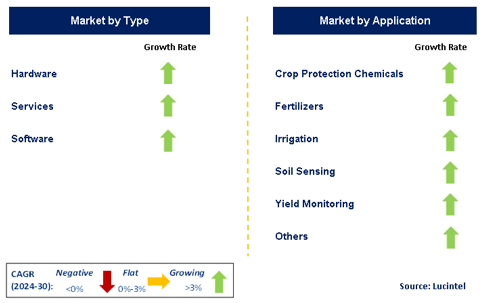
• CNH Industrial Q6. Which variable rate technology market segment will be the largest in future? Answer: Lucintel forecasts that hardware is expected to witness the highest growth over the forecast period. Q7. In variable rate technology market, which region is expected to be the largest in next 5 years? Answer: APAC is expected to witness the highest growth over the forecast period. Q.8 Do we receive customization in this report? Answer: Yes, Lucintel provides 10% customization without any additional cost.


Choose a license that fits your team. Instant PDF delivery.
Prices exclude taxes. Instant delivery. Custom licensing available on request.
Market Report · July 16, 2026
Market Report · May 18, 2026
Market Report · May 18, 2026
Trusted partner for strategic intelligence and business growth


Receive a complimentary market analysis tailored to your industry. Our analysts will identify key growth opportunities and competitive dynamics specific to your business.

Market size, growth rate, and key trend analysis for your specific sector.

Top competitor positioning and market share analysis.

Strategic recommendations backed by data-driven insights.
Get curated market intelligence and competitive moves straight to your inbox.
By subscribing, you agree to receive our monthly insights. Unsubscribe anytime.
Receive a complimentary market analysis tailored to your industry. Our analysts will identify key growth opportunities and competitive dynamics specific to your business.
Market size, growth rate, and key trend analysis for your specific sector.
Top competitor positioning and market share analysis.
Strategic recommendations backed by data-driven insights.
Get curated market intelligence, emerging trends, and competitive moves straight to your inbox each month.
By subscribing, you agree to receive our monthly insights. Unsubscribe anytime.
We'll send your sample report shortly.