
Report Feature
Vaccine Container Market Trends and Forecast
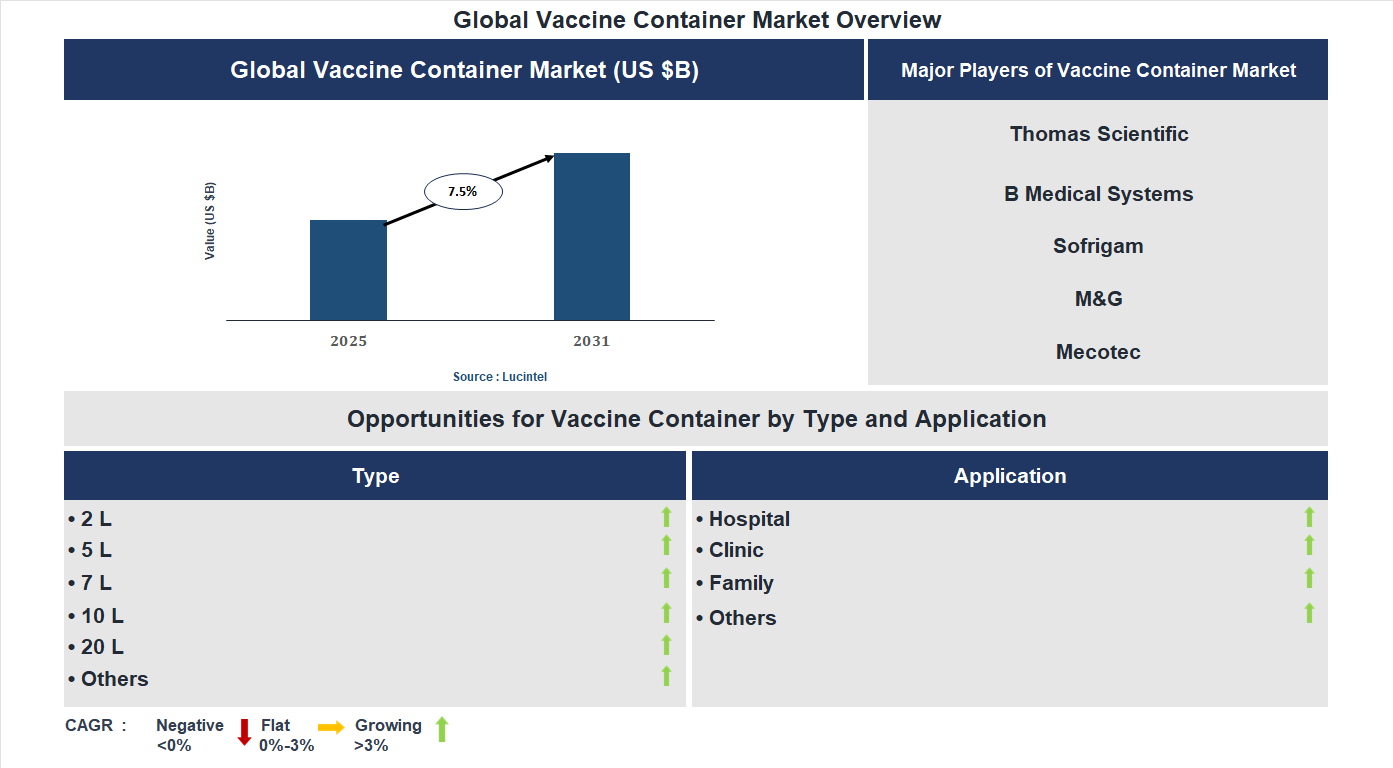
The future of the global vaccine container market looks promising with opportunities in the hospital, clinic, and family markets. The global vaccine container market is expected to grow with a CAGR of 7.5% from 2025 to 2031. The major drivers for this market are the increasing demand for temperature controlled vaccine storage containers, the growing demand for vaccine safety & contamination prevention, and the rising focus on vaccine production across viral & bacterial diseases.• Lucintel forecasts that, within the type category, 20 l is expected to witness the highest growth over the forecast period.
• Within the application category, hospital is expected to witness the highest growth.
• In terms of region, APAC is expected to witness the highest growth over the forecast period. Gain valuable insights for your business decisions with our comprehensive 150+ page report. Sample figures with some insights are shown below.
Emerging Trends in the Vaccine Container Market
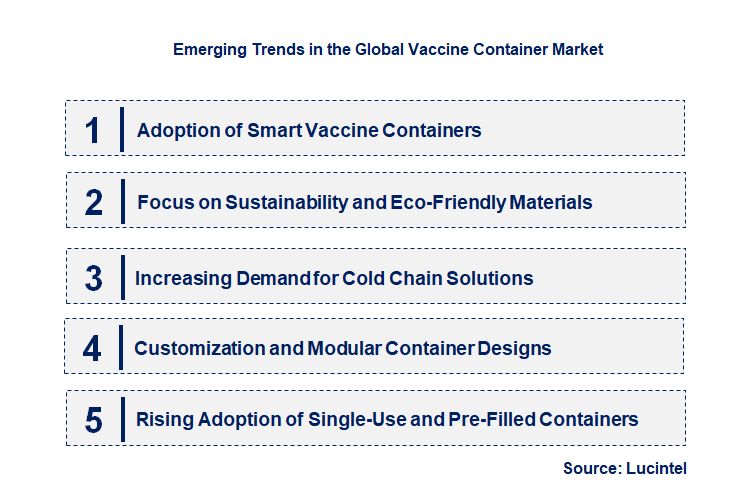
The vaccine container market is experiencing rapid evolution driven by technological advancements, increasing global vaccination efforts, and the need for efficient, safe, and sustainable packaging solutions. As the demand for vaccines rises worldwide, manufacturers are innovating to meet regulatory standards, improve storage and transportation, and reduce environmental impact. These developments are shaping the future landscape of vaccine distribution, ensuring better accessibility and safety. The market is also influenced by emerging economies expanding healthcare infrastructure and the push for personalized medicine. Understanding these key trends is essential for stakeholders aiming to capitalize on opportunities and address challenges in this dynamic sector.• Adoption of Smart Vaccine Containers: Integration of IoT technology is transforming vaccine containers by enabling real-time tracking, temperature monitoring, and data collection. This innovation ensures vaccine integrity during storage and transportation, reduces wastage, and enhances supply chain transparency. Smart containers facilitate compliance with regulatory standards and improve inventory management, especially in remote or underserved areas. As IoT technology becomes more affordable and reliable, its adoption is expected to accelerate, leading to more efficient and secure vaccine distribution systems globally.
• Focus on Sustainability and Eco-friendly Materials: Environmental concerns are prompting manufacturers to develop biodegradable and recyclable vaccine containers. These eco-friendly solutions aim to reduce plastic waste and carbon footprint associated with vaccine packaging. Innovations include the use of bioplastics, reusable containers, and minimal packaging designs. This trend aligns with global sustainability goals and regulatory pressures, appealing to environmentally conscious consumers and governments. The shift towards sustainable materials is expected to reshape manufacturing practices and supply chain logistics in the vaccine container market.
• Increasing Demand for Cold Chain Solutions: The need for temperature-sensitive vaccines has driven the development of advanced cold chain packaging solutions. These include insulated containers, phase change materials, and passive cooling systems that maintain required temperatures during transit and storage. The growing prevalence of vaccines requiring strict temperature control, especially in remote regions, underscores this trend. Enhanced cold chain solutions reduce vaccine spoilage, ensure efficacy, and expand access to immunization programs. This trend is critical for meeting global health targets and supporting the distribution of complex biologics.
• Customization and Modular Container Designs: The market is witnessing a shift towards customizable and modular vaccine containers tailored to specific vaccine types, storage durations, and transportation conditions. Modular designs allow for scalability, easy handling, and adaptability to various logistical scenarios. Customization improves efficiency, reduces costs, and enhances safety by minimizing contamination risks. This trend supports personalized medicine initiatives and diverse vaccination campaigns, enabling manufacturers to meet unique client needs and regulatory requirements more effectively.
• Rising Adoption of Single-use and Pre-filled Containers: Single-use, pre-filled vaccine containers are gaining popularity due to their convenience, safety, and reduced contamination risk. These containers streamline the vaccination process, minimize preparation time, and improve sterility. They are especially valuable in mass vaccination drives and emergency response situations. The trend also aligns with infection control standards and regulatory guidelines promoting single-use solutions. As manufacturing costs decrease and technology advances, the adoption of pre-filled, single-use containers is expected to expand, enhancing efficiency and safety in vaccine delivery. In summary, these emerging trends are significantly reshaping the vaccine container market by enhancing safety, sustainability, and efficiency. The integration of smart technology, eco-friendly materials, advanced cold chain solutions, customization, and single-use designs is collectively driving innovation. These developments are not only improving vaccine distribution and storage but also expanding access to immunization worldwide. As a result, the market is becoming more resilient, adaptable, and aligned with global health and environmental goals, paving the way for a more effective and sustainable vaccine supply chain.
Recent Development in the Vaccine Container Market
The vaccine container market is experiencing rapid innovation driven by increasing global vaccination efforts and technological advancements. As demand for safe, durable, and efficient containers grows, industry players are focusing on sustainable materials, smart packaging, and cost-effective solutions. These developments are shaping the future landscape, enhancing vaccine distribution, and addressing logistical challenges. The following key developments highlight the markets trajectory and its potential to meet evolving healthcare needs worldwide.• Innovation in Sustainable Materials: The market is shifting towards eco-friendly, biodegradable, and recyclable materials for vaccine containers. This reduces environmental impact and aligns with global sustainability goals. Companies are investing in research to develop biodegradable plastics and alternative materials that maintain vaccine integrity. These advancements not only appeal to environmentally conscious consumers but also reduce disposal costs and regulatory hurdles, ultimately fostering a more sustainable supply chain.
• Adoption of Smart Packaging Technologies: Integration of IoT and RFID technologies into vaccine containers is revolutionizing tracking and monitoring. Smart containers enable real-time temperature monitoring, ensuring vaccine efficacy during transit and storage. This reduces wastage, enhances safety, and improves inventory management. The technology also provides data for regulatory compliance and supply chain transparency, boosting confidence among healthcare providers and governments and streamlining distribution processes globally.
• Development of Tamper-Evident and Secure Containers: Security features such as tamper-evident seals and advanced locking mechanisms are becoming standard to prevent contamination and tampering. These innovations are critical for maintaining vaccine integrity, especially in high-risk environments. Enhanced security measures build trust among stakeholders, reduce the risk of counterfeit vaccines, and comply with stringent regulatory standards, thereby strengthening the overall safety and reliability of vaccine distribution.
• Focus on Cost-Effective and Lightweight Designs: Manufacturers are designing lightweight, cost-efficient containers to reduce transportation costs and improve accessibility. These containers facilitate easier handling and distribution, especially in remote or resource-limited areas. Cost savings enable broader vaccination campaigns and help meet global health targets. The emphasis on affordability and portability is driving market expansion, making vaccines more accessible to underserved populations and supporting large-scale immunization efforts.
• Expansion of Customization and Modular Solutions: The market is witnessing increased demand for customizable and modular vaccine containers tailored to specific vaccines and logistical needs. These solutions offer flexibility in size, shape, and features, optimizing storage and transportation. Modular designs allow for scalable and adaptable systems, accommodating various vaccine types and distribution channels. This customization enhances efficiency, reduces waste, and supports diverse healthcare infrastructure, ultimately improving vaccine delivery outcomes worldwide. The recent developments in sustainable materials, smart packaging, security features, cost-effective designs, and customization are significantly transforming the vaccine container market. These innovations improve safety, efficiency, and environmental sustainability, fostering broader access and trust. As a result, the market is poised for substantial growth, driven by increasing global vaccination initiatives and technological integration, ultimately enhancing healthcare delivery and vaccine management worldwide.
Strategic Growth Opportunities in the Vaccine Container Market
The vaccine container market is experiencing rapid growth driven by increasing global vaccination initiatives, technological advancements, and rising demand for safe, efficient storage solutions. As immunization programs expand across regions, the need for reliable, temperature-controlled containers becomes critical. Innovations in materials and design are enhancing container durability and safety. Market players are focusing on sustainable and cost-effective options to meet diverse healthcare needs. This evolving landscape presents significant opportunities for manufacturers to capture market share and support global health efforts.• Growing demand for temperature-sensitive vaccine containers: The increasing need to maintain vaccine efficacy during storage and transportation is fueling demand for advanced temperature-controlled containers. These containers ensure vaccines remain within specified temperature ranges, preventing spoilage and wastage. As immunization programs expand, especially in remote and developing regions, the demand for reliable, portable, and insulated vaccine containers is rising, creating opportunities for innovation and market expansion.
• Technological advancements in vaccine container materials: Innovations in materials such as lightweight plastics, composites, and eco-friendly substances are improving vaccine container durability, safety, and environmental sustainability. These advancements enable better insulation, reduced weight for easier transport, and enhanced resistance to physical damage. Manufacturers investing in new materials can offer more efficient, cost-effective, and eco-conscious solutions, meeting the evolving needs of healthcare providers and regulatory standards worldwide.
• Increasing adoption of smart vaccine containers with IoT integration: The integration of Internet of Things (IoT) technology into vaccine containers allows real-time monitoring of temperature, humidity, and location. This ensures better control over vaccine storage conditions, reduces wastage, and enhances traceability. Growing adoption of smart containers in healthcare logistics and immunization campaigns presents opportunities for tech companies and container manufacturers to develop connected solutions that improve supply chain transparency and efficiency.
• Rising focus on sustainable and eco-friendly vaccine packaging solutions: Environmental concerns are prompting market players to develop biodegradable, recyclable, and eco-friendly vaccine containers. These sustainable options help reduce plastic waste and the carbon footprint associated with vaccine distribution. Governments and organizations are increasingly supporting green initiatives, creating a market for environmentally responsible packaging. Companies that innovate in sustainable materials and design can gain a competitive advantage and meet regulatory and consumer expectations.
• Expansion of vaccine distribution in emerging markets: Rapid population growth, expanding healthcare infrastructure, and government vaccination programs in emerging economies are driving demand for affordable, scalable vaccine containers. These markets require cost-effective, easy-to-use solutions capable of maintaining cold chain integrity. Opportunities exist for local manufacturing, strategic partnerships, and customized container designs to address specific regional needs, thereby capturing a significant share of the expanding global vaccine market. The overall impact of these growth opportunities is set to significantly enhance the vaccine container market, fostering innovation, sustainability, and efficiency. This will support global vaccination efforts, improve healthcare logistics, and meet the increasing demand for safe, reliable, and environmentally friendly vaccine storage solutions worldwide.
Vaccine Container Market Driver and Challenges
The vaccine container market is influenced by a variety of technological, economic, and regulatory factors that shape its growth and development. Advances in materials science and container design improve vaccine stability and safety, while economic considerations such as cost efficiency and supply chain logistics impact market dynamics. Regulatory standards ensure quality and safety, influencing product development and approval processes. Additionally, global health initiatives and increasing vaccination programs drive demand, but challenges like regulatory hurdles, technological limitations, and supply chain disruptions pose significant obstacles. Understanding these drivers and challenges is essential for stakeholders aiming to capitalize on market opportunities and navigate potential risks effectively. The factors responsible for driving the vaccine container market include:• Technological Innovation: The development of advanced materials and container designs enhances vaccine stability, reduces contamination risks, and extends shelf life. Innovations such as pre-filled syringes and multi-dose vials improve ease of use and storage efficiency, meeting the needs of large-scale immunization programs. These technological advancements enable manufacturers to produce safer, more reliable containers, thereby increasing market demand and supporting global vaccination efforts.
• Growing Vaccination Programs: Increasing government initiatives and global health campaigns aim to eradicate preventable diseases, significantly boosting demand for vaccine containers. The expansion of immunization programs in developing countries, driven by organizations like WHO and GAVI, creates a substantial market opportunity. Rising awareness about vaccine efficacy and safety further propels the need for specialized containers that ensure proper storage and transportation.
• Regulatory Compliance and Standards: Stringent regulatory requirements for vaccine storage, transportation, and administration influence container design and manufacturing. Compliance with standards set by agencies such as the FDA and EMA ensures product safety and efficacy, fostering consumer confidence. These regulations also drive innovation in container materials and features, shaping market offerings and encouraging investment in compliant solutions.
• Economic Factors and Cost Efficiency: Cost-effective manufacturing processes and economies of scale are critical for market growth. The demand for affordable vaccine containers, especially in low-income regions, pushes manufacturers to optimize production and reduce prices. Additionally, supply chain efficiencies and bulk procurement strategies help lower costs, making vaccines more accessible and expanding market reach.
• Global Health Initiatives and Funding: International organizations and governments investing in health infrastructure and vaccination programs significantly influence market growth. Funding from entities like the Global Fund and UNICEF supports the procurement of vaccine containers, especially in emerging markets. These initiatives promote widespread immunization, thereby increasing demand for reliable, scalable container solutions. The challenges facing this Market include:
• Regulatory Hurdles: Navigating complex and varying regulatory landscapes across different countries can delay product approval and market entry. Stringent safety and quality standards require extensive testing and documentation, increasing time and costs for manufacturers. These hurdles can hinder innovation and limit the rapid deployment of new container technologies, impacting overall market growth.
• Supply Chain Disruptions: The global supply chain for raw materials and manufacturing components is vulnerable to disruptions caused by geopolitical tensions, pandemics, and logistical issues. Such disruptions can lead to delays in production and distribution, affecting the availability of vaccine containers. Ensuring a resilient supply chain is crucial to meet rising demand and prevent shortages.
• Technological Limitations: Despite advancements, challenges remain in developing containers that can withstand extreme conditions, maintain vaccine stability over long periods, and are environmentally sustainable. Limitations in materials and manufacturing processes can restrict innovation, increase costs, and pose environmental concerns, potentially hindering market expansion and adoption of new container solutions. In summary, the vaccine container market is driven by technological innovations, expanding vaccination initiatives, regulatory standards, economic considerations, and global health funding. However, regulatory complexities, supply chain vulnerabilities, and technological limitations present significant challenges. These factors collectively influence market growth, requiring stakeholders to innovate, adapt, and collaborate to overcome obstacles. The overall impact is a dynamic market with substantial growth potential, provided that challenges are effectively managed through strategic planning and technological advancements.
List of Vaccine Container Companies
Companies in the market compete on the basis of product quality offered. Major players in this market focus on expanding their manufacturing facilities, R&D investments, infrastructural development, and leverage integration opportunities across the value chain. With these strategies vaccine container companies cater increasing demand, ensure competitive effectiveness, develop innovative products & technologies, reduce production costs, and expand their customer base. Some of the vaccine container companies profiled in this report include-• Thomas Scientific
• B Medical Systems
• Sofrigam
• M&G
• Mecotec
Vaccine Container Market by Segment
The study includes a forecast for the global vaccine container market by type, application, and region.Vaccine Container Market by Type [Value from 2019 to 2031]:
• 2 L
• 5 L
• 7 L
• 10 L
• 20 L
• Others
Vaccine Container Market by Application [Value from 2019 to 2031]:
• Hospital
• Clinic
• Family
• Others
Vaccine Container Market by Region [Value from 2019 to 2031]:
• North America
• Europe
• Asia Pacific
• The Rest of the World
Country Wise Outlook for the Vaccine Container Market
The vaccine container market has experienced significant growth driven by increasing global vaccination efforts, technological advancements, and the need for efficient cold chain logistics. As countries aim to improve vaccine storage and transportation, innovations in container design, materials, and tracking systems have emerged. The markets evolution is also influenced by regulatory standards, supply chain disruptions, and the rising demand for vaccines in both developed and developing nations. These developments reflect a broader trend toward enhancing vaccine accessibility and safety, ensuring that immunization programs reach wider populations effectively.• United States: The US market has seen substantial innovation in vaccine container technology, focusing on temperature stability and tracking systems. Major companies are investing in smart containers with IoT integration to monitor conditions in real-time, improving cold chain reliability. Regulatory agencies have also introduced stricter standards, encouraging manufacturers to adopt advanced materials and designs. The COVID-19 pandemic accelerated demand for high-quality containers, prompting increased R&D efforts. Additionally, partnerships between biotech firms and logistics providers have enhanced distribution efficiency, supporting nationwide vaccination campaigns and global exports.
• China: China has rapidly expanded its vaccine container capabilities to meet domestic and international demands. The focus has been on developing cost-effective, durable containers suitable for diverse climatic conditions. Innovations include lightweight materials and improved insulation to maintain cold chain integrity. The government has prioritized technological upgrades, integrating IoT sensors for real-time monitoring. China’s growing vaccine exports have driven the adoption of standardized, high-quality containers. Additionally, local manufacturers are investing in automation and quality control to boost competitiveness, aligning with national health initiatives and global supply chain requirements.
• Germany: Germany remains a leader in high-quality vaccine container manufacturing, emphasizing safety, durability, and environmental sustainability. The market has seen advancements in reusable containers with enhanced insulation and temperature control features. German firms are pioneering eco-friendly materials and energy-efficient designs to reduce environmental impact. The integration of digital tracking and data logging has improved supply chain transparency. Regulatory compliance with European standards has driven innovation, and collaborations with research institutions have fostered new materials and technologies. The focus on sustainability and precision has strengthened Germany’s position in the global vaccine container market.
• India: India’s vaccine container market is characterized by rapid growth driven by government initiatives and increased vaccine production capacity. The emphasis has been on developing affordable, robust containers suitable for rural and remote areas. Innovations include modular designs and improved insulation to withstand varied climatic conditions. The government’s push for self-reliance has led to local manufacturing of high-quality containers, reducing dependency on imports. IoT-enabled containers are gradually being adopted to enhance monitoring and traceability. The expansion of immunization programs and export opportunities is fueling investments in research and infrastructure, positioning India as a key player in the global vaccine container supply chain.
• Japan: Japan’s market focuses on advanced, high-precision vaccine containers with a strong emphasis on safety and environmental sustainability. Recent developments include the integration of smart sensors for precise temperature control and real-time data transmission. Japanese manufacturers are investing in eco-friendly materials and energy-efficient designs to meet stringent environmental standards. The country’s emphasis on innovation and quality assurance has led to the adoption of cutting-edge technologies, including automation and robotics in manufacturing. Japan’s expertise in cold chain logistics and regulatory compliance continues to support its leadership role in the global vaccine container market, especially in high-value and sensitive vaccine shipments.

Features of the Global Vaccine Container Market
Market Size Estimates: Vaccine container market size estimation in terms of value ($B). Trend and Forecast Analysis: Market trends (2019 to 2024) and forecast (2025 to 2031) by various segments and regions. Segmentation Analysis: Vaccine container market size by type, application, and region in terms of value ($B). Regional Analysis: Vaccine container market breakdown by North America, Europe, Asia Pacific, and Rest of the World. Growth Opportunities: Analysis of growth opportunities in different types, applications, and regions for the vaccine container market. Strategic Analysis: This includes M&A, new product development, and competitive landscape of the vaccine container market. Analysis of competitive intensity of the industry based on Porter’s Five Forces model.
FAQ
Q1. What is the growth forecast for vaccine container market? Answer: The global vaccine container market is expected to grow with a CAGR of 7.5% from 2025 to 2031. Q2. What are the major drivers influencing the growth of the vaccine container market? Answer: The major drivers for this market are the increasing demand for temperature controlled vaccine storage containers, the growing demand for vaccine safety & contamination prevention, and the rising focus on vaccine production across viral & bacterial diseases. Q3. What are the major segments for vaccine container market? Answer: The future of the vaccine container market looks promising with opportunities in the hospital, clinic, and family markets. Q4. Who are the key vaccine container market companies? Answer: Some of the key vaccine container companies are as follows:• Thomas Scientific
• B Medical Systems
• Sofrigam
• M&G
• Mecotec Q5. Which vaccine container market segment will be the largest in future? Answer: Lucintel forecasts that, within the type category, 20 l is expected to witness the highest growth over the forecast period. Q6. In vaccine container market, which region is expected to be the largest in next 5 years? Answer: In terms of region, APAC is expected to witness the highest growth over the forecast period. Q7. Do we receive customization in this report? Answer: Yes, Lucintel provides 10% customization without any additional cost.
Table of Contents
List of Figures
List of Tables
Methodology
- In-depth interviews of the major players in this market
- Detailed secondary research from competitors’ financial statements and published data
- Extensive searches of published works, market, and database information pertaining to industry news, company press releases, and customer intentions
- A compilation of the experiences, judgments, and insights of Lucintel’s professionals, who have analyzed and tracked this market over the years.


Buy Now
Choose a license that fits your team. Instant PDF delivery.
Prices exclude taxes. Instant delivery. Custom licensing available on request.
Key Questions
- • What are some of the most promising, high-growth opportunities for the vaccine container market by type (2 l, 5 l, 7 l, 10 l, 20 l, and others), application (hospital, clinic, family, and others), and region (North America, Europe, Asia Pacific, and the Rest of the World)?
- • Which segments will grow at a faster pace and why?
- • Which region will grow at a faster pace and why?
- • What are the key factors affecting market dynamics? What are the key challenges and business risks in this market?
- • What are the business risks and competitive threats in this market?
- • What are the emerging trends in this market and the reasons behind them?
- • What are some of the changing demands of customers in the market?
- • What are the new developments in the market? Which companies are leading these developments?
- • Who are the major players in this market? What strategic initiatives are key players pursuing for business growth?
- • What are some of the competing products in this market and how big of a threat do they pose for loss of market share by material or product substitution?
- • What M&A activity has occurred in the last 6 years and what has its impact been on the industry? For any questions related to Vaccine Container Market, Vaccine Container Market Size, Vaccine Container Market Growth, Vaccine Container Market Analysis, Vaccine Container Market Report, Vaccine Container Market Share, Vaccine Container Market Trends, Vaccine Container Market Forecast, Vaccine Container Companies, write Lucintel analyst at email: helpdesk@lucintel.com. We will be glad to get back to you soon.


