
Market Report · July 29, 2026

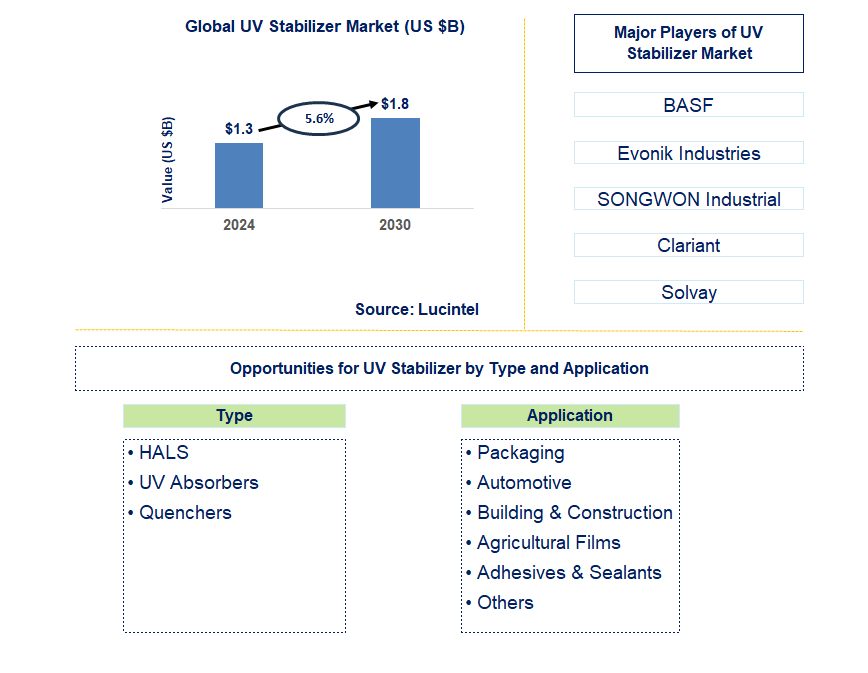
Key data points: The market size in 2030 = $1.8 billion, growth forecast = 5.6% annually for the next 6 years. Scroll below to get more insights. This market report covers trends, opportunities, and forecasts in the global uv stabilizer market to 2030 by type (HALS, UV absorbers, and quenchers), application (packaging, automotive, building & construction, agricultural films, adhesives & sealants, and others), and region (North America, Europe, Asia Pacific, and the Rest of the World)
We'll send your sample report shortly.
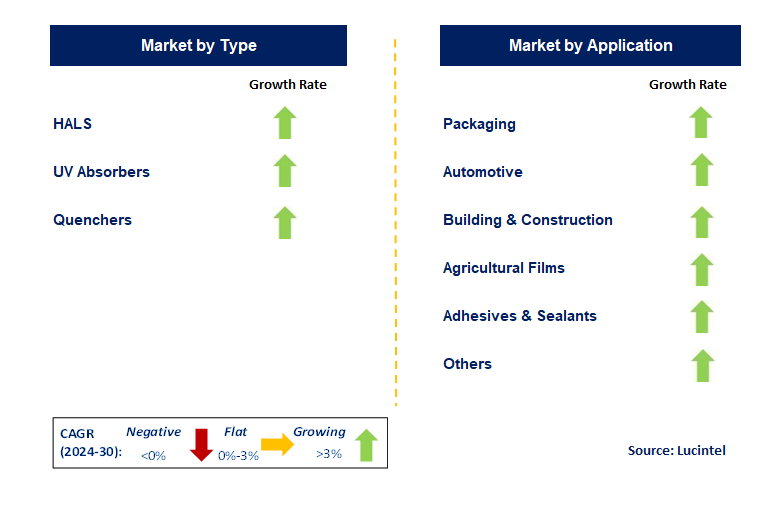
• Lucintel forecasts that, within the type category, hindered amine light stabilizers segment is expected to witness the highest growth over the forecast period due to outstanding ability to provide UV protection.
• Within the application category, packaging segment is expected to witness the highest growth due to necessity for safeguarding products, consumer anticipations, and regulatory mandates.
• In terms of regions, APAC is expected to witness the highest growth over the forecast period due to growing disposable income in this area is a factor in the rise in building and infrastructure activity. A more than 150-page report is developed to help in your business decisions.
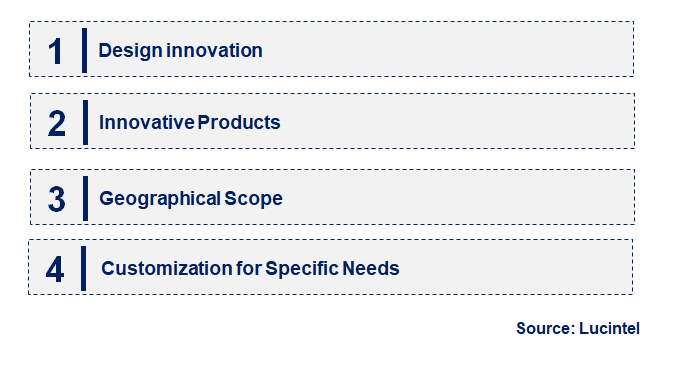
• Design Innovation: Eco-friendly UV stabilizers based on bio-organic or recyclable materials are being increasingly used across various industries. This trend is motivated by legislation and people's growing preference for chemical products that are safer for humans and the environment. It has led to the creation of less toxic polycottons as an alternative to traditional polycottons.
• Innovative Products: New ideas in UV stabilizer formulations are enhancing efficiency and lifespan. Advancements in these formulations are providing higher levels of protection against UV degradation, which prolongs the service life of materials and products in industries such as automotive and construction.
• Geographical Scope: The use of UV stabilizers is expanding in electronics and high-end coatings. This growth is driven by the rising demand for materials resistant to UV exposure in harsh conditions, which is broadening the market. Environmental concerns and stricter government regulations on chemical safety are pushing manufacturers to create UV stabilizers that comply with these regulations. Adhering to high regulatory standards is crucial for manufacturers to avoid fines and continue operating.
• Customization for Specific Needs: The UV stabilizer market is increasingly focused on end-user needs. This trend is evident in the development of formulations that provide better UV protection for coatings and materials tailored to specific applications. These trends are redefining the UV stabilizer market by fostering new innovations, expanding application areas, and emphasizing sustainable development. They play a significant role in shaping product development, market trends, and industry directions that will guide the market's future.
• Development of Environmentally Friendly UV Stabilizers: Sustainable UV stabilizers are gaining popularity and are being marketed more effectively. Performance-based, bio-based, and recyclable UV stabilizers are being introduced to reduce the carbon footprint across various industries.
• Technological Advancements in Formulations: New formulations are offering better UV protection and durability. These advancements make UV stabilizers more effective in protecting products in harsh conditions, particularly in the automotive and construction industries.
• Expansion of Production Capabilities: Manufacturers are investing in expanding production capacities to meet growing demand. This includes modernizing facilities with new tools and equipment to increase efficiency and capacity.
• Increased Regulatory Compliance for Companies: Companies are responding to stricter environmental and safety regulations by developing UV stabilizers that comply with these standards. This trend enables manufacturers to avoid regulatory penalties and access untapped markets.
• Broader Growth in Application Areas: UV stabilizers are finding new applications in electronics and more sophisticated coatings. This is driven by the demand for materials that are UV-resistant in various industries. These developments are having a cumulative effect on the UV stabilizer market by driving change, enhancing product offerings, and broadening application possibilities. They continue to shape the evolution of the industry and its future direction.
• Automobile Industry: There is significant potential for growth in the automotive industry, as UV stabilizers are used to protect vehicle exteriors and interiors from UV rays. New stabilizers are extending the longevity and appearance of plastic parts, especially in an industry increasingly focused on durable and lightweight materials.
• Construction Materials: UV stabilizers are being incorporated into construction materials to improve their performance and longevity. By enhancing the resistance of materials to UV degradation, these stabilizers help extend the life expectancy of construction and structural materials.
• Packaging Industry: The packaging sector offers opportunities for UV stabilizers to improve the performance of packaging materials against UV rays, leading to better product preservation and longevity. New stabilizer formulations are enhancing the durability and effectiveness of packaging solutions.
• Textiles and Apparel: In the textiles and apparel industries, UV stabilizers are used to protect fabrics from UV radiation and extend their lifespan. This trend is driven by rising consumer awareness and demand for clothing and materials that provide UV protection.
• Electronics: The electronics industry is adopting UV stabilizers to enhance the durability and energy efficiency of electronic devices. This growth opportunity also includes developing stabilizers that increase the toughness and operational efficiency of electronic components. These growth opportunities are benefiting the UV stabilizer market by increasing its application areas and promoting growth in key sectors. They are reshaping the market and opening new avenues for innovation and expansion.
• Technological Progress: New systems for UV stabilizer requirements and their respective technologies are improving and further extending application range. These innovations are enhancing market growth through effective protection of materials.
• Growing Demand for Materials: The rising need for such materials is fueling the use of UV stabilizers. This is common in automotive, buildings, and even packaging industries.
• Focus on Environment: The growing preference for green and sustainable products is creating a need for bio-degradable and recyclable UV absorbers. This trend is consistent with regulatory environments and customer demand.
• Expansion into New Applications: The increasing usage of UV stabilizers in new areas such as electronics and high-end coatings is widening the market and fueling growth.
• Regulatory Giants: The increasing environmental and safety requirements are compelling the industry to develop compliant UV stabilizers. This provides assurance towards market access and regulatory penalties. Challenges in the uv stabilizer market are:
• High Production Costs: The production costs of high-end UV stabilizers can be significant, making market penetration and acceptance difficult. Managing costs, maintaining product quality, and ensuring high performance are major challenges for manufacturers.
• Regulatory Complexity: Meeting regulatory requirements from different jurisdictions can be a complex and time-consuming task. Companies must invest in research and development to meet emerging standards.
• Market Competition: Intense competition in the UV stabilizer market could lead to price wars and lower profit margins. Companies must innovate and differentiate themselves to remain competitive. These drivers and challenges are shaping the UV stabilizer market, determining its growth prospects, technological opportunities, and overall market dynamics. Addressing these challenges is crucial for success in this rapidly changing market.
• BASF
• Evonik Industries
• SONGWON Industrial
• Clariant
• Solvay
• Unitechem
• Everlight Chemical Industrial
• HALS
• UV Absorbers
• Quenchers
• Packaging
• Automotive
• Building & Construction
• Agricultural Films
• Adhesives & Sealants
• Others
• North America
• Europe
• Asia Pacific
• The Rest of the World
• United States: The U.S. market is focused on developing advanced, high-performance UV stabilizers suitable for critical applications in industries like automotive and aerospace. Efforts are underway to make these chemicals more durable and effective in response to stricter regulatory pressures on chemical safety and environmental concerns.
• China: China is investing heavily in the production of UV stabilizers to meet the growing demands of its manufacturing industries. The goal is to create cost-effective products that still offer advanced features, making them suitable for applications in industries such as construction and consumer products.
• Germany: Germany leads in producing environmentally friendly light stabilizers that comply with stringent environmental laws. New products based on polyciliate with plasticizing additives are optimized for various applications while minimizing environmental impact.
• India: The UV stabilizer market in India is growing, particularly in the packaging and textiles sectors. Rising demand for product differentiation and adherence to international standards is driving local companies to adopt modern technologies and improve their formulations.
• Japan: Japan is at the forefront of integrating UV stabilizers into advanced materials, especially for electronics and automotive applications. Recent innovations have focused on maintaining UV protection in high-tech coatings and materials used in aggressive industrial environments.


• BASF
• Evonik Industries
• SONGWON Industrial
• Clariant
• Solvay
• Unitechem
• Everlight Chemical Industrial Q6. Which UV stabilizer market segment will be the largest in future? Answer: Lucintel forecasts that hindered amine light stabilizers segment is expected to witness the highest growth over the forecast period due to outstanding ability to provide UV protection. Q7. In UV stabilizer market, which region is expected to be the largest in next 5 years? Answer: APAC is expected to witness the highest growth over the forecast period due to growing disposable income in this area is a factor in the rise in building and infrastructure activity. Q.8 Do we receive customization in this report? Answer: Yes, Lucintel provides 10% customization without any additional cost.


Choose a license that fits your team. Instant PDF delivery.
Prices exclude taxes. Instant delivery. Custom licensing available on request.
Market Report · July 29, 2026
Market Report · July 20, 2026
Market Report · July 20, 2026
Trusted partner for strategic intelligence and business growth


Receive a complimentary market analysis tailored to your industry. Our analysts will identify key growth opportunities and competitive dynamics specific to your business.

Market size, growth rate, and key trend analysis for your specific sector.

Top competitor positioning and market share analysis.

Strategic recommendations backed by data-driven insights.
Get curated market intelligence and competitive moves straight to your inbox.
By subscribing, you agree to receive our monthly insights. Unsubscribe anytime.
Receive a complimentary market analysis tailored to your industry. Our analysts will identify key growth opportunities and competitive dynamics specific to your business.
Market size, growth rate, and key trend analysis for your specific sector.
Top competitor positioning and market share analysis.
Strategic recommendations backed by data-driven insights.
Get curated market intelligence, emerging trends, and competitive moves straight to your inbox each month.
By subscribing, you agree to receive our monthly insights. Unsubscribe anytime.
We'll send your sample report shortly.