
Market Report · July 22, 2026

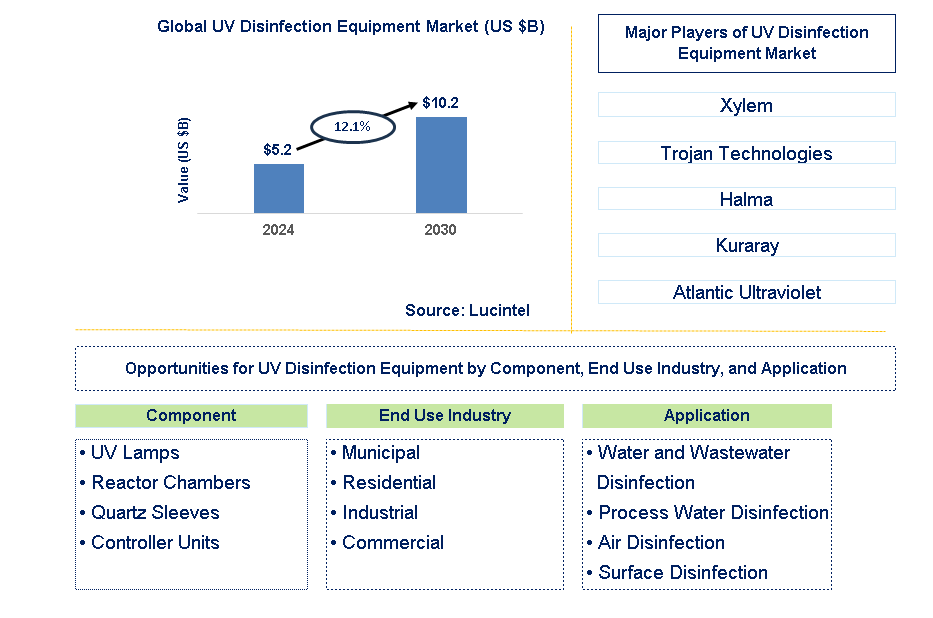
Key data points: The market size in 2030 = $10.2 billion, growth forecasts = 12.1% annually for the next 6 years. Scroll below to get more insights. This market report covers trends, opportunities, and forecasts in the global UV disinfection equipment market to 2030 by component (UV lamps, reactor chambers, quartz sleeves, and controller units), end use industry (municipal, residential, industrial, and commercial), application (water and wastewater disinfection, process water disinfection, air disinfection, and surface disinfection), and region (North America, Europe, Asia Pacific, and the Rest of the World)
We'll send your sample report shortly.
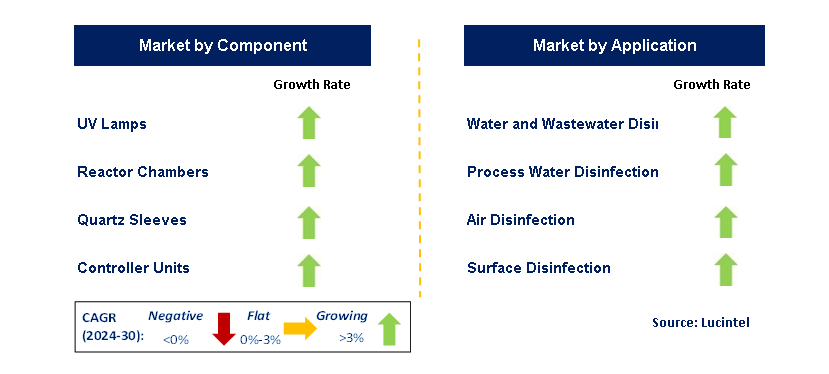
• Lucintel forecasts that, within the component category, UV lamps is expected to witness highest growth over the forecast period due to usage for germicidal applications.
• Within the application category, water and wastewater disinfection will remain the largest segment due to usage in disinfection of bacteria, viruses, molds, algae, and other microorganisms, which multiply and grow.
• In terms of regions, APAC is expected to witness the highest growth over the forecast period due to presence of numerous UV lamps manufacturers and the demand for ultrapure water in the region. Gain Valuable insights for your business decisions with our comprehensive 150+ page report.
• Emerging Trends in the UV Disinfection Equipment Market: The UV disinfection equipment market is changing in scope due to emerging trends that are revolutionizing the industry. These trends are informed by technological improvements, a growing concern for safety and health, and the preservation of the environment. Such considerations are of vital importance, especially for market participants who intend to take advantage of the growing opportunities and meet the changing preferences of consumers. Moreover, the following five factors are emerging as major contributors to the UV disinfection equipment market.
• Rise of UV-C LED Technologies: The bulk of the study on UV-C LED technology has been conducted primarily from the perspectives of energy savings, small size, and long lifespan of the devices. One distinguishing advantage of UV-C LEDs over conventional mercury lamps is that they are much more energy-efficient. This situation is creating new configurations for mobile and adaptable disinfection devices, consequently increasing the availability of UV-C technology for personal and industrial applications in the treatment of air, water, and surfaces.
• Integration with Smart Technologies: The collaboration between UV disinfection systems and smart technologies has increased over time. This involves the incorporation of IoT and AI in monitoring, controlling, and automating the overall performance of UV disinfection processes. Smart systems, such as those detailed in the Journal of Photochemistry & Photobiology A, which provided information on maximum UV exposure and time taken for air suction, can monitor device functionality and make necessary adjustments. This trend can be seen in the growth of both household and industrial UV disinfection solutions, enhancing their performance and ease of use.
• Movement Towards Health Facilities: The deployment of UV disinfection systems in healthcare facilities marks a significant development, inspired by the quest for improved infection control. Hospitals and clinics are incorporating UV-C systems for the disinfection of surfaces, air, and water in an attempt to minimize healthcare-associated infections (HAIs). This trend is supported by evidence of UV-C systems’ ability to kill germs and the ever-increasing need to promote hygiene in healthcare settings. The ultraviolet disinfection equipment industry is witnessing major changes as new influences emerge, such as UV-C LED technology, smart technology integration, and movement into healthcare facilities. Increased commitment and efforts toward air and surface sanitization, along with the enhancement of small and individual devices, indicate that hygiene is becoming more in demand and addressing convenience rather than just aesthetics. These trends have accelerated the development of new solutions and enhanced the efficiency of external UV disinfection solutions, thus influencing market growth patterns and meeting emerging health and safety requirements.
• Development of UV-C LED Technology: The elimination of UV-C mercury and the introduction of UV-C LED technology have been game changers for the UV disinfection industry. Moreover, UV-C LEDs offer higher energy efficiency, longer lifespan, and fewer adverse environmental effects than their mercury counterparts. This development is enabling the provision of smaller, more portable, and cost-effective disinfection solutions. The application of UV-C LEDs is diversifying beyond consumer goods to industrial systems, benefiting overall market growth.
• Application of Other Smart Technologies with UV Disinfection Units: The ongoing development of smart health technologies is boosting the adoption of UV disinfection systems. UV disinfection technologies are now complemented by IoT and AI, enabling the operation of these systems and providing insights into their functionality. This development is leading to the advancement of more intelligent and flexible disinfection solutions that can accommodate both household and business needs.
• Area of Expansion: Entry into Healthcare and Social Areas: To address hygiene issues, healthcare and social facilities are increasingly utilizing UV disinfection systems. Acute care hospitals, outpatient clinics, and government-owned facilities are employing UV-C air and surface cleaning systems to combat infections and enhance safety. This change has been driven by the desire for adequate sanitation and has facilitated the growing use of UV technology in these areas.
• Design of Mobile Disinfection Devices: The trend for portable UV disinfection devices is also gaining traction. Handheld UV-C wands and portable germicidal units have become popular for individual and small-scale use. Such devices are practical and provide disinfection while on the move, as more consumers seek products that address personal hygiene needs. This development expands the scope and reach of the market. Recent years have shown a consistent trend towards more efficient, smart, and sustainable development of UV disinfection equipment. These advancements in UV-C LED technology, integration with smart technologies, and expansion into healthcare and public spaces strengthen the applicability of UV disinfection. The introduction of small portable devices and a growing focus on sustainability reflect the ongoing evolution of this industry, responding to the increasing demand for sophisticated and eco-friendly disinfection solutions.
• Healthcare Facility Applications: There is significant potential in extending UV disinfection systems into healthcare facilities. To strengthen infection prevention and patient safety, more hospitals and clinics are using UV-C systems to disinfect air, surfaces, and water. This application is likely to grow significantly due to the increasing need for compliance with infection prevention standards in healthcare.
• Public Transportation Systems: A global opportunity lies in the application of ultraviolet technology in public transport systems. UV-C systems could be implemented in buses, subway trains, and other transit vehicles as a measure to combat disease spread in densely populated areas. This potential application aligns with efforts to enhance health safety in urban transportation systems.
• Heating and Air Conditioning Systems in Businesses and Households: Another new frontier many companies are pursuing involves implementing UV sterilization in air conditioning systems. UV-C systems can be integrated into HVAC systems to improve indoor air quality by reducing impurities in air circulation. The increasing appreciation of indoor air quality and the rising demand for effective sanitation in commercial and residential buildings are fueling this opportunity.
• Water Treatment Systems: The adoption of ultraviolet sterilization in water treatment facilities represents a significant growth opportunity. The efficacy of UV-C systems in destroying waterborne pathogens suggests that they can be employed in domestic, commercial, and municipal water treatment plants. This opportunity is expanding as the global demand for safe and clean drinking water increases. The UV disinfection systems market provides several avenues for strategic growth across the healthcare sector, public transportation, heating, ventilation, and air conditioning (HVAC) systems, water purification, and consumer markets. The growing adoption of UV-C technology in these segments reflects the market's responsiveness to evolving health and safety demands. Stakeholders in the sector can capitalize on these opportunities to meet rising needs while driving market growth and innovation.
• Technological Advancement: This factor significantly contributes to the rapid advancement of UV disinfection technologies such as UV-C LEDs and advanced UV-C lamps. Upgraded technologies offer better performance, energy efficiency, and longer lifespans. As technological improvements continue, UV disinfection systems are likely to become more affordable and adopted across various sectors, from healthcare to consumer products.
• Concerns for Health and Safety: Prompted by the COVID-19 pandemic, the general public has become increasingly mindful of hygiene and safety, driving demand for ultraviolet (UV) disinfection solutions. There is a growing need for reliable disinfection techniques to control pathogens in public places, clinics, and homes. This heightened awareness underscores the demand for dependable UV disinfection technologies. Challenges in the UV disinfection equipment market include:
• Limitations of Technology: Despite technological advancements, UV disinfection still faces drawbacks related to low penetration and material degradation. Not all systems function optimally within their operational range, limiting their overall performance. Addressing these limitations may require further advancements in light technologies and materials.
• Regulatory Hurdles: Navigating the various rules and regulations that apply across different regions can be challenging. Numerous national standards govern UV disinfection devices, complicating market penetration and operational efforts. Provisions must be made to ensure that products comply with legal requirements in every region in which organizations operate. While the UV disinfection equipment market experiences significant drivers such as technological development, increased health and safety concerns, and broader applications, it also faces challenges, including high costs, technological gaps, and regulatory obstacles. These factors collectively influence market activity and alter its growth and innovation trajectory. In the future, it will be crucial for stakeholders to address these challenges while leveraging the drivers to benefit from and enhance UV disinfection technology.
• Xylem
• Trojan Technologies
• Halma
• Kuraray
• Atlantic Ultraviolet
• Evoqua Water Technologies
• Advanced Uv
• UV Lamps
• Reactor Chambers
• Quartz Sleeves
• Controller Units
• Municipal
• Residential
• Industrial
• Commercial
• Water and Wastewater Disinfection
• Process Water Disinfection
• Air Disinfection
• Surface Disinfection
• North America
• Europe
• Asia Pacific
• The Rest of the World
• United States: In the US, growth in the UV disinfection market has increased due to heightened concerns regarding the prevention of infectious diseases, a notable consequence of the COVID-19 outbreak. Improvements in UV-C technology have led to the manufacture of more efficient disinfection systems for air and surfaces. Additionally, there is a growing trend in the use of portable UV devices for personal use, along with stricter regulations governing the effectiveness of UV disinfection devices in healthcare and public spaces.
• China: Similarly, China has advanced in UV disinfection technologies, focusing on urban pollution challenges and improving public health. Recent trends include the incorporation of ultraviolet-C systems in heating, ventilation, and air conditioning (HVAC) systems and water purification. The Chinese government's support for smart city projects has led to increased use of UV disinfection technologies in public transport and commercial buildings. Moreover, UV LEDs are expected to enhance the energy efficiency and economic feasibility of disinfection equipment.
• Germany: German UV disinfection solution market is evolving, with a focus on economic and sustainable practices. The country is leading in combining low-mercury UV lamps with improved filtration for ecological reasons. In recent years, there has been increased use of UV disinfection systems in industrial processes and healthcare facilities to enhance hygiene. This orientation towards research and technological development has been beneficial for the advancement of efficient and sustainable UV disinfection technologies.
• India: Indian UV disinfection market is evolving rapidly due to a growing emphasis on better hygiene in clinical and social sectors. Recent initiatives include the introduction of low-cost UV-C systems for water and air sterilization in underserved areas. The Indian government is also actively promoting safe drinking water initiatives, significantly funding UV sanitation technologies to improve access to clean water.
• Japan: Japan has consistently been a leader in integrating robotic and automated solutions with UV disinfection technologies. Recent studies have explored the use of disinfectant robots in hospitals and public spaces, reflecting a sophisticated and technology-driven approach in Japanese culture. Additionally, there has been a strong emphasis on energy-efficient UV-C devices. Research indicates that new UV-C LED technologies are being developed to enhance the efficiency and effectiveness of ultraviolet disinfection equipment while minimizing environmental impact.


• Xylem
• Trojan Technologies
• Halma
• Kuraray
• Atlantic Ultraviolet
• Evoqua Water Technologies
• Advanced UV Q6. Which UV disinfection equipment market segment will be the largest in future? Answer: Lucintel forecasts that UV lamps is expected to witness highest growth over the forecast period due to usage for germicidal applications. Q7. In UV disinfection equipment market, which region is expected to be the largest in next 5 years? Answer: APAC is expected to witness highest growth over the forecast period due to presence of numerous UV lamps manufacturers and the demand for ultrapure water in the region. Q.8 Do we receive customization in this report? Answer: Yes, Lucintel provides 10% customization without any additional cost.


Choose a license that fits your team. Instant PDF delivery.
Prices exclude taxes. Instant delivery. Custom licensing available on request.
Market Report · July 22, 2026
Market Report · July 22, 2026
Market Report · July 17, 2026
Trusted partner for strategic intelligence and business growth


Receive a complimentary market analysis tailored to your industry. Our analysts will identify key growth opportunities and competitive dynamics specific to your business.

Market size, growth rate, and key trend analysis for your specific sector.

Top competitor positioning and market share analysis.

Strategic recommendations backed by data-driven insights.
Get curated market intelligence and competitive moves straight to your inbox.
By subscribing, you agree to receive our monthly insights. Unsubscribe anytime.
Receive a complimentary market analysis tailored to your industry. Our analysts will identify key growth opportunities and competitive dynamics specific to your business.
Market size, growth rate, and key trend analysis for your specific sector.
Top competitor positioning and market share analysis.
Strategic recommendations backed by data-driven insights.
Get curated market intelligence, emerging trends, and competitive moves straight to your inbox each month.
By subscribing, you agree to receive our monthly insights. Unsubscribe anytime.
We'll send your sample report shortly.