
Market Report · May 18, 2026

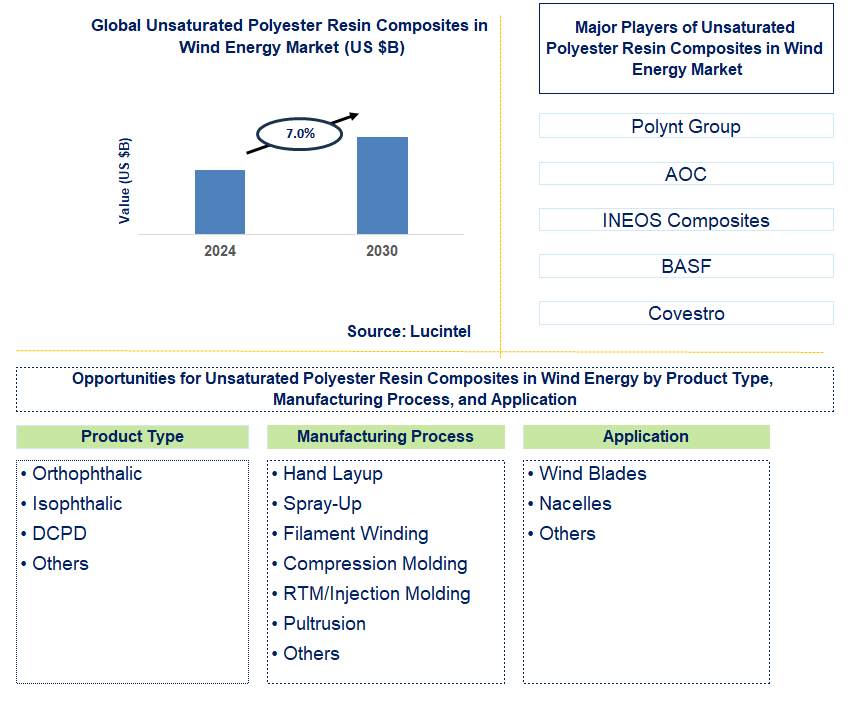
Key data points: The growth forecast = 7.0% annually for the next 6 years. Scroll below to get more insights. This market report covers trends, opportunities, and forecasts in the global unsaturated polyester resin composites in wind energy market to 2030 by product type (orthophthalic, isophthalic, DCPD, and others), manufacturing process (hand layup, spray-up, filament winding, compression molding, RTM/injection molding, pultrusion, and others), application (wind blades, nacelles, and others), and region (North America, Europe, Asia Pacific, and the Rest of the World)
We'll send your sample report shortly.
• Lucintel forecasts that, within the manufacturing category, hand layup is expected to witness the highest growth over the forecast period.
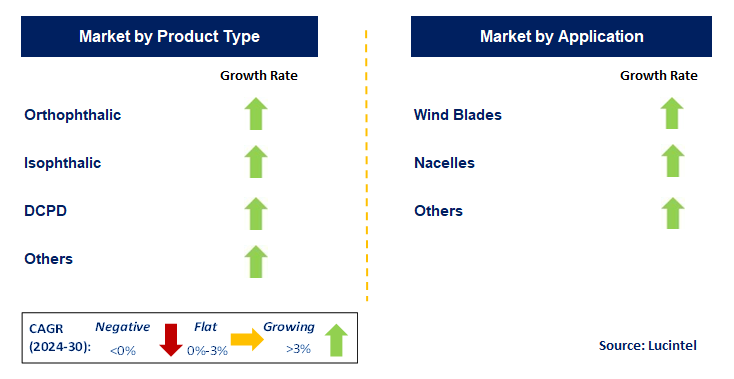
• Within the application category, wind blade is expected to witness the higher growth.
• In terms of regions, APAC is expected to witness highest growth over the forecast period. A more than 150-page report is developed to help in your business decisions.
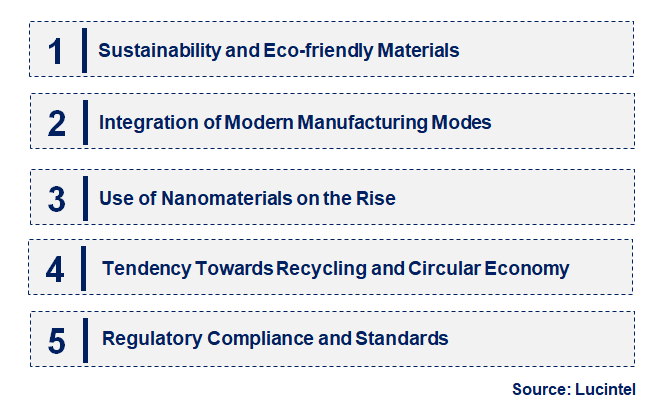
• Sustainability and Eco-friendly Materials: There is an increase in the adoption of bio-based and recyclable UPR composites due to a rise in the focus on sustainability. Companies are turning their attention to reducing the carbon footprint of wind blades. This is not only important for regulatory compliance but also attracts environmentally conscious consumers. Hence, it is expected that silica-based product offerings will increase in the eco-friendly context.
• Integration of Modern Manufacturing Methods: Advanced manufacturing techniques, involving 3D printing and automated processes, are changing how UPR composites are manufactured. These processes increase accuracy while decreasing waste, helping to realize cost-effective, quality production processes. Such changes enable more intricate designs and better performance of wind turbine parts.
• Use of Nanomaterials on the Rise: The adoption of nanomaterials in UPR composites is changing trends and positively affecting mechanical properties such as strength and durability. The use of enhanced weather-resistant nanocomposites is inevitable in the wind energy market. This advancement not only increases the efficiency of wind turbine blades but also enhances the durability of the components.
• Tendency Toward Recycling and the Circular Economy: The UPR composites market is showing a significant shift toward recycling and circular economy principles. Companies are making efforts to recover and reuse composite materials, thereby reducing waste. This tendency complements efforts to protect the environment while also cutting costs related to acquiring raw materials.
• Regulatory Compliance and Standards: Across the wind energy sector, manufacturers face persistent pressure to innovate due to rising regulatory standards for materials. Meeting prevailing health and environmental regulations has become crucial, leading to the introduction of better quality UPR composites. This trend ensures that products conform to the high expectations of the industry, enhancing safety and reliability. These trends are also transforming the UPR composites market for wind energy, focusing on sustainability and efficiency while adhering to regulatory standards.
• Emphasis on the Development of Bio-based UPR Resins: To achieve corporate social responsibility objectives, bio-based UPR resin production is on the rise. Such formulations decrease reliance on petroleum-based materials and emissions during processes. With the growing availability of green materials, bio-resins will play a significant role in wind turbine manufacturing.
• Innovative Composite Reinforcement Techniques: New procedures, such as incorporating both carbon and natural fibers, are enhancing the mechanical properties of UPR composites. These innovations help design more efficient and reliable turbine blades that are not only lightweight but also strong, thus improving energy utilization and reducing maintenance costs.
• Automated Production Processes: The increased use of automated production methods, robotization, and advanced moldings is revolutionizing UPR composites manufacturing processes. These technologies reduce production costs by minimizing labor costs and shortening production time.
• Enhanced Durability through Nanotechnology: Incorporating nanotechnology to enhance UPR composites is improving performance and durability in adverse weather conditions. Nanomaterials provide better impact, UV, and moisture resistance, extending the replacement cycle of wind turbine components.
• Regulatory Advancements and Certifications: Overregulation and certification requirements are shaping the UPR composites market. Manufacturers are focusing on meeting the necessary standards, fostering creativity in product development and testing methods. These efforts not only improve safety but also increase competitiveness in the market. All these factors are driving the UPR composites market toward a more efficient, sustainable, and compliant direction, ensuring the growth of the wind energy sector.
• Offshore Wind Turbines: As offshore wind energy grows, UPR composites present a good business opportunity due to their strength and resistance to corrosion, making them suitable for marine applications. Emerging composite technologies can be exploited by manufacturers to design better materials that improve the efficiency of offshore facilities.
• Lightweight Blade Production: Increasing the efficiency and energy output of wind turbine blades has led to greater demand for lightweight blades. UPR composites can be used to manufacture blades with better strength-to-weight ratios, allowing for taller turbines and larger blades. This trend not only improves performance but also reduces costs for installation and transportation.
• Retrofit and Maintenance Solutions: The ability to retrofit existing turbines with UPR composites is a major opportunity. This allows manufacturers to develop specific solutions that enhance maintenance and repairs for older systems, extending their lifespan and creating new market demand.
• Hybrid Material Systems: UPR composites can be combined with other materials such as metals and ceramics to create new composites with improved functional properties. This presents opportunities for R&D as industries explore different composite configurations to leverage the advantages of multiple materials for better performance.
• Regional Expansion in Emerging Markets: With the rise of renewable energy investments in emerging markets such as India and Southeast Asia, UPR composites have significant growth potential in these regions. Businesses can capitalize on forming alliances and developing local manufacturing capabilities to address the increasing demand for wind energy technology. These growth strategies and trends highlight the high potential of UPR composites in the wind energy market, which continues to present new opportunities in the foreseeable future.
• Growing Demand for Renewable Energy: The push to fully explore renewable energy sources has led to the adoption of wind energy. This creates increased demand for wind turbine technologies, including UPR composites, which are essential for producing high-quality turbine parts.
• Advancements in Composite Technology: New developments in UPR composites, such as enhanced strength, greater durability, and lighter weight, are driving market growth. These improvements justify the use of these materials in wind turbines.
• Government Incentives and Support: Countries have implemented policies that encourage the renewable energy industry, especially the wind energy sector. These policies attract investment in UPR composites, as sustainability has become a priority for organizations.
• Environmental Regulations: Changes in environmental regulations are pushing industries to shift to greener materials. Sustainability regulations are driving the development of UPR composites, increasing demand for green formulations and reducing waste in production processes.
• Rising Investment in R&D: Investment in research and development is providing new technological solutions for UPR composites, leading to diversification of companies and innovation. This drives market penetration and fosters competition. Challenges in the unsaturated polyester resin composites in wind energy market are:
• Raw Material Variability: Shortages and price instability of materials needed for UPR composites contribute to rising production costs. Manufacturers face challenges in maintaining profitability in a price-sensitive market.
• Advantages of Other Materials: The rise of alternative composite materials, such as thermoplastics and bio-composites, poses a challenge to UPR composites. Manufacturers are recognizing the threat posed by these materials’ growing popularity and are working to innovate.
• Technical Constraints in Manufacturing: While advancements are underway in UPR composites, there are technical issues, such as maintaining consistent quality and improving curing techniques, which may limit market growth. These issues must be addressed to continue advancing the technology. Thus, the development drivers and process barriers are interlinked as the market continues to evolve.
• Polynt Group
• AOC
• INEOS Composites
• BASF
• Covestro
• Xinyang Technology Group
• Tianhe Resin Company
• Orthophthalic
• Isophthalic
• DCPD
• Others
• Hand Layup
• Spray-Up
• Filament Winding
• Compression Molding
• RTM/Injection Molding
• Pultrusion
• Others
• Wind Blades
• Nacelles
• Others
• North America
• Europe
• Asia Pacific
• The Rest of the World
• United States: The U.S. has seen positive developments alongside increased interest in the mechanical characterization of UPR composites. Some processes focus on using nanomaterials to enhance the strength and flexibility of composites, leading to lighter and more efficient wind turbine blade designs. Additionally, regulatory support for sustainable materials is encouraging corporations to adopt green solutions while meeting national emission reduction targets.
• China: As the largest market for wind energy, China is making significant strides with recent advancements in UPR composites. The country plans to continue investing in modern manufacturing technologies to improve productivity. Research is focusing on developing optimally bio-based UPRs to reduce their environmental impact. These efforts support China’s objectives to build sustainable energy sources and help turbine manufacturers gain an edge in the international market.
• Germany: Germany leads in UPR composites development with a focus on recycling. Efforts are being made to produce and reuse UPR materials, further promoting circular economy models in the wind energy sector. Collaboration between research institutions and industry players is enhancing the quality of wind turbine blades and parts that can withstand extreme weather conditions.
• India: India is positioned for significant growth in the wind energy sector, where UPR composites will play a vital role. Recent projects are focused on improving wind energy efficiency and advancing the use of UPR composites in turbine production. Increased investment in renewable energy technologies is expected to propel the growth of UPR composites in India, particularly in the region’s coastal states with favorable wind conditions.
• Japan: Japan’s wind energy sector is rapidly adopting cutting-edge manufacturing methods to increase the overall quality of UPR composites. The country's strong focus on developing alternative energy solutions is positioning it to play a central role in the growing UPR composite market.


• Polynt Group
• AOC
• INEOS Composites
• BASF
• Covestro
• Xinyang Technology Group
• Tianhe Resin Company Q5. Which unsaturated polyester resin composites in wind energy market segment will be the largest in future? Answer: Lucintel forecasts that hand layup is expected to witness the highest growth over the forecast period. Q6. In unsaturated polyester resin composites in wind energy market, which region is expected to be the largest in next 6 years? Answer: APAC is expected to witness highest growth over the forecast period. Q.7 Do we receive customization in this report? Answer: Yes, Lucintel provides 10% customization without any additional cost.


Choose a license that fits your team. Instant PDF delivery.
Prices exclude taxes. Instant delivery. Custom licensing available on request.
Market Report · May 18, 2026
Market Report · May 16, 2026
Market Report · May 16, 2026
Trusted partner for strategic intelligence and business growth


Receive a complimentary market analysis tailored to your industry. Our analysts will identify key growth opportunities and competitive dynamics specific to your business.

Market size, growth rate, and key trend analysis for your specific sector.

Top competitor positioning and market share analysis.

Strategic recommendations backed by data-driven insights.
Get curated market intelligence and competitive moves straight to your inbox.
By subscribing, you agree to receive our monthly insights. Unsubscribe anytime.
Receive a complimentary market analysis tailored to your industry. Our analysts will identify key growth opportunities and competitive dynamics specific to your business.
Market size, growth rate, and key trend analysis for your specific sector.
Top competitor positioning and market share analysis.
Strategic recommendations backed by data-driven insights.
Get curated market intelligence, emerging trends, and competitive moves straight to your inbox each month.
By subscribing, you agree to receive our monthly insights. Unsubscribe anytime.
We'll send your sample report shortly.