
Market Report · July 31, 2026

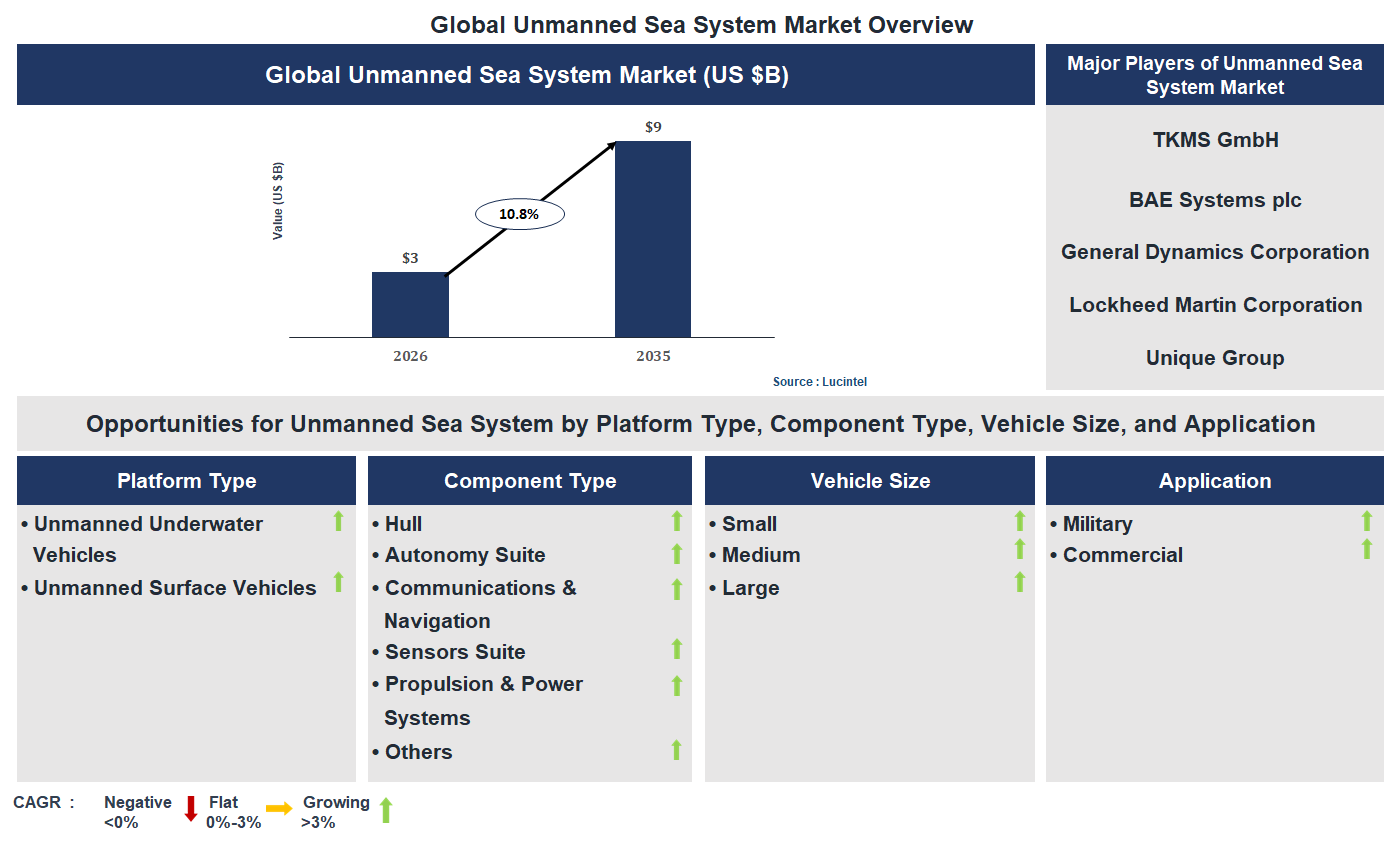
Key data points: The market size in 2035 = $9 billion, growth forecast = 10.8% annually for the next 8 years. Scroll below to get more insights. This market report covers trends, opportunities and forecasts in unmanned sea system market to 2035 by platform type (unmanned underwater vehicles and unmanned surface vehicles), component type (hull, autonomy suite, communications & navigation, sensors suite, propulsion & power systems, and others), vehicle size (small, medium, and large), application (military and commercial), and region (North America, Europe, Asia Pacific, and the Rest of the World)
We'll send your sample report shortly.
• Lucintel forecasts that, within the platform type category, unmanned underwater vehicle is expected to witness higher growth over the forecast period.
• Within the application category, military is expected to witness higher growth.
• In terms of region, North America is expected to witness the highest growth over the forecast period. Gain valuable insights for your business decisions with our comprehensive 150+ page report. Sample figures with some insights are shown below.
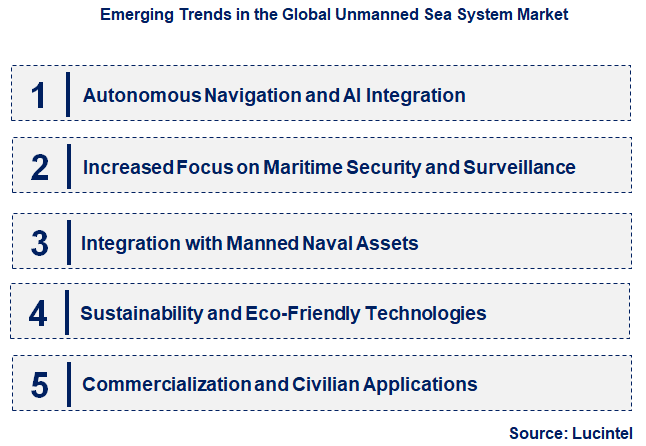
• Autonomous Navigation and AI Integration: The adoption of advanced AI and machine learning algorithms is enabling unmanned sea systems to navigate complex maritime environments autonomously. These systems can identify obstacles, optimize routes, and make real-time decisions, reducing the need for human intervention. This trend enhances operational efficiency, safety, and mission success rates, especially in hostile or hard-to-reach areas. As AI technology matures, we can expect even more sophisticated autonomous capabilities, leading to broader deployment across military and commercial sectors.
• Increased Focus on Maritime Security and Surveillance: Unmanned sea systems are increasingly used for maritime security, border patrol, and surveillance missions. Their ability to operate continuously over long durations without risking human lives makes them ideal for monitoring illegal activities, piracy, and smuggling. This trend is driven by rising maritime threats and the need for persistent, cost-effective surveillance solutions. Enhanced sensor technology and data analytics are further improving the accuracy and usefulness of these systems, making them indispensable tools for national security agencies.
• Integration with Manned Naval Assets: The trend toward hybrid operations, where unmanned systems work alongside manned ships and submarines, is gaining momentum. This integration allows for coordinated missions, data sharing, and extended operational reach. It reduces risks to human personnel while increasing mission flexibility. The development of communication protocols and interoperability standards is critical to this trend. As integration improves, unmanned systems will become seamless components of naval fleets, enhancing overall maritime operational capabilities and strategic advantage.
• Sustainability and Eco-Friendly Technologies: Environmental concerns are influencing the development of unmanned sea systems, with a focus on reducing carbon footprints and minimizing ecological impact. Innovations include the use of renewable energy sources like solar and wave power, as well as eco-friendly materials. These sustainable technologies aim to extend operational endurance and reduce costs associated with fuel consumption and maintenance. This trend aligns with global efforts to promote environmentally responsible maritime practices and ensures the long-term viability of unmanned systems in diverse marine environments.
• Commercialization and Civilian Applications: Beyond military use, the market is witnessing growth in commercial applications such as oceanographic research, underwater exploration, and offshore infrastructure inspection. Unmanned systems offer cost-effective solutions for data collection, environmental monitoring, and resource management. This diversification broadens market opportunities and encourages innovation in sensor technology, data analytics, and autonomous operations. As regulations evolve and technology becomes more accessible, civilian sectors will increasingly adopt unmanned sea systems, transforming maritime industries and fostering sustainable economic development. These emerging trends are reshaping the unmanned sea system market by enhancing autonomous capabilities, expanding security applications, fostering integration with manned assets, emphasizing sustainability, and broadening commercial use. These developments are driving innovation, increasing operational efficiency, and opening new markets, ultimately transforming maritime operations and strategic paradigms worldwide.
• Growing Defense Budgets: Increased military spending worldwide is fueling demand for unmanned sea systems, enabling nations to modernize navies and enhance surveillance capabilities without risking human lives. Governments recognize the strategic advantage of autonomous systems for border security, reconnaissance, and mine detection. This financial commitment accelerates research, development, and procurement, leading to a broader adoption of unmanned systems across various maritime domains. The trend is expected to continue as security concerns escalate globally, making unmanned sea systems a critical component of modern naval forces.
• Technological Advancements in Autonomy: Innovations in AI, machine learning, and sensor technology are significantly improving the autonomy and operational efficiency of unmanned sea systems. These advancements enable systems to perform complex tasks such as obstacle avoidance, target identification, and data collection with minimal human intervention. Enhanced autonomy reduces operational costs and increases mission duration and safety. As technology matures, these systems are becoming more reliable, versatile, and capable of executing a wider range of missions, thus expanding their application scope across military and commercial sectors.
• Integration of Data Analytics and Communication: The incorporation of advanced data analytics and robust communication networks is transforming unmanned sea systems into intelligent platforms. Real-time data processing and secure communication channels enable better decision-making and coordination among multiple units. This integration enhances situational awareness, operational efficiency, and mission success rates. It also facilitates remote control and autonomous decision-making, reducing the need for onboard human operators. As data-driven strategies become standard, the market benefits from increased system interoperability and smarter maritime operations.
• Environmental Monitoring and Research: Unmanned sea systems are increasingly used for environmental monitoring, oceanographic research, and disaster management. These systems provide valuable data on marine ecosystems, climate change, and pollution levels, supporting sustainable maritime practices. Their ability to operate in harsh and remote environments makes them indispensable for scientific research and environmental protection. The deployment of unmanned systems in these areas promotes better understanding of ocean dynamics and aids in policy formulation for marine conservation, thereby opening new commercial and governmental opportunities.
• Commercial and Maritime Industry Adoption: The commercial sector is adopting unmanned sea systems for tasks such as offshore oil and gas exploration, shipping, and underwater infrastructure inspection. These systems offer cost-effective, efficient, and safer alternatives to traditional methods. They enable continuous monitoring, asset inspection, and data collection in challenging environments, reducing operational risks and costs. As industries recognize the benefits, the market is witnessing increased investment and innovation in commercial unmanned maritime solutions, driving growth and expanding the scope of applications. The recent developments in the unmanned sea system market are significantly enhancing maritime security, environmental monitoring, and commercial operations. Increased defense spending, technological innovations, and integration of data analytics are driving market expansion. These advancements are making unmanned systems more autonomous, reliable, and versatile, leading to broader adoption across sectors. Overall, these opportunities are transforming maritime strategies, improving safety, and fostering sustainable practices, thereby shaping the future landscape of the global unmanned sea system industry.
• Growing Demand for Autonomous Surveillance and Security Systems: The increasing need for maritime security, border patrol, and surveillance drives demand for unmanned sea systems. These systems offer extended operational capabilities, reduced human risk, and cost efficiency. Governments and defense agencies are investing heavily in autonomous patrol vessels and underwater drones to monitor vast maritime areas effectively. The ability to operate in challenging environments without risking personnel makes these systems essential for national security and maritime domain awareness.
• Advancements in Marine Robotics and Sensor Technologies: Innovations in robotics, AI, and sensor technology are enhancing the capabilities of unmanned sea systems. Improved navigation, obstacle detection, and data collection enable more precise and reliable operations. These technological advancements facilitate applications in oceanographic research, environmental monitoring, and resource exploration. As sensor accuracy and autonomous decision-making improve, the market for sophisticated unmanned systems is expected to grow significantly, supporting diverse maritime activities with high efficiency.
• Increasing Adoption in Commercial Maritime and Offshore Industries: The commercial sector is increasingly adopting unmanned sea systems for tasks such as pipeline inspection, cargo monitoring, and offshore platform security. These systems reduce operational costs, improve safety, and enable continuous monitoring in harsh environments. The offshore oil and gas industry, in particular, benefits from autonomous underwater vehicles for maintenance and exploration. Growing commercial demand is expected to expand the market, driven by the need for safer, more efficient maritime operations.
• Rising Focus on Environmental Monitoring and Marine Research: Unmanned sea systems are vital for collecting data on ocean health, climate change, and marine biodiversity. Their ability to operate in remote and hazardous areas makes them ideal for scientific research and environmental assessment. Governments and research institutions are investing in autonomous platforms for long-term monitoring of marine ecosystems. This focus on sustainability and environmental protection is expected to propel market growth, fostering innovations tailored to scientific and ecological needs.
• Increasing International Collaboration and Regulatory Framework Development: Global cooperation and standardized regulations are fostering market growth by enabling cross-border operations and technology sharing. International agencies are developing guidelines for unmanned maritime systems, ensuring safety and interoperability. Collaborative projects between countries and private firms are accelerating innovation and deployment. As regulatory frameworks mature, confidence in unmanned sea systems will grow, encouraging wider adoption across military, commercial, and research sectors worldwide. The overall impact of these opportunities is set to transform the unmanned sea system market into a more integrated, technologically advanced, and versatile sector. Enhanced capabilities and expanding applications will drive market growth, foster innovation, and address critical maritime challenges. This evolution will support global security, environmental sustainability, and commercial efficiency, positioning unmanned sea systems as indispensable tools for the future of maritime operations.
• Technological Innovation: The rapid development of autonomous navigation, AI, and sensor technologies enhances system capabilities, enabling longer endurance, improved accuracy, and better operational efficiency. These advancements open new applications in defense, surveillance, and commercial sectors, fostering market growth. Continuous R&D investments are fueling innovation, making unmanned systems more reliable and versatile, which attracts government and private sector interest alike.
• Defense and Security Spending: Increasing maritime security threats and geopolitical tensions are prompting governments worldwide to invest heavily in unmanned sea systems for surveillance, reconnaissance, and mine detection. These systems offer cost-effective, safer alternatives to manned missions, leading to higher procurement rates and expanding market opportunities across military and homeland security sectors.
• Regulatory and Policy Frameworks: Evolving international maritime laws and regulations are shaping the deployment and operation of unmanned systems. Governments are establishing standards for safety, cybersecurity, and environmental impact, which influence market entry and product development. Clear regulatory pathways encourage industry players to innovate confidently while ensuring compliance.
• Commercial Maritime Applications: Growing demand for unmanned systems in commercial sectors such as offshore oil & gas, shipping, and environmental monitoring is expanding market scope. These systems improve operational efficiency, reduce costs, and enhance safety in challenging maritime environments, driving adoption and market expansion. The challenges in the unmanned sea system market are:
• Regulatory Uncertainty: Lack of comprehensive international regulations and standards creates ambiguity around the deployment and operation of unmanned systems. This uncertainty hampers market growth, as companies face delays in certification, legal liabilities, and compliance issues, especially in international waters where jurisdictional conflicts may arise.
• Cybersecurity Threats: As unmanned sea systems become more connected and reliant on data processing, they are increasingly vulnerable to cyberattacks. These threats can compromise mission integrity, lead to data breaches, or even cause system failures, raising concerns among users and regulators, and necessitating robust cybersecurity measures.
• Environmental and Ethical Concerns: The deployment of unmanned systems raises environmental issues such as marine pollution and disturbance to marine life. Ethical considerations regarding autonomous decision-making in military applications also pose challenges, potentially leading to restrictions or bans that could limit market growth and innovation. The unmanned sea system market is driven by technological advancements, increased defense spending, evolving regulations, and expanding commercial applications. However, regulatory uncertainties, cybersecurity risks, and environmental concerns present significant challenges. These factors collectively influence the pace and direction of market development, requiring stakeholders to navigate complex legal, technological, and ethical landscapes. Successful adaptation to these drivers and challenges will determine the market's future trajectory, fostering innovation while ensuring safety, security, and sustainability.
• TKMS GmbH
• BAE Systems plc
• General Dynamics Corporation
• Lockheed Martin Corporation
• Unique Group
• Teledyne Technologies Incorporated
• Saab AB
• L3Harris Technologies, Inc.
• Maritime Robotics AS
• The Boeing Company
• Unmanned Underwater Vehicles
• Unmanned Surface Vehicles
• Hull
• Autonomy Suite
• Communications & Navigation
• Sensors Suite
• Propulsion & Power Systems
• Others
• Small
• Medium
• Large
• Military
• Commercial
• North America
• Europe
• Asia Pacific
• The Rest of the World
• United States: The US leads in unmanned sea system development, with significant investments in autonomous surface and underwater vehicles for defense and research. The Navy has launched advanced programs like the Orca and Sea Hunter, emphasizing AI integration and long-endurance capabilities. Private sector companies such as Boeing and Lockheed Martin are innovating in this space, expanding commercial applications. The US government also emphasizes regulatory frameworks to support innovation while ensuring security and safety standards. Overall, the US remains at the forefront of technological advancements and deployment in unmanned maritime systems.
• China: China has rapidly advanced its unmanned sea system capabilities, focusing on military applications and maritime surveillance. The Chinese navy has deployed several autonomous underwater vehicles (AUVs) and surface drones for reconnaissance and mine countermeasures. The government prioritizes indigenous development, with companies like China Shipbuilding Industry Corporation leading innovation. China’s strategic focus on expanding its maritime reach and safeguarding territorial claims drives significant investments in unmanned systems. Additionally, China is exploring commercial uses, including oceanographic research and resource exploration, to diversify its market presence.
• Germany: Germany emphasizes the integration of unmanned sea systems within its naval and research fleets, prioritizing technological innovation and environmental sustainability. The German Navy has tested autonomous underwater vehicles for mine detection and maritime security missions. The country invests in collaborative projects with European partners to develop standardized, interoperable systems. Germany’s focus on dual-use technology aims to balance defense needs with commercial applications, such as offshore infrastructure inspection and environmental monitoring. The country’s strong research institutions and industry partnerships position it as a key player in advancing unmanned maritime technology in Europe.
• India: India is rapidly expanding its unmanned sea system capabilities to enhance maritime security and research. The Indian Navy has deployed autonomous underwater vehicles (AUVs) and surface drones for surveillance, reconnaissance, and mine detection. The government emphasizes indigenous development through organizations like DRDO and private sector collaborations. India’s strategic focus on securing its maritime borders and expanding its blue economy drives investments in unmanned systems. The country is also exploring commercial applications, including oceanographic research and resource exploration, to boost its technological self-reliance and regional influence.
• Japan: Japan is advancing its unmanned sea system technology primarily for defense, research, and disaster management. The Japan Maritime Self-Defense Force has tested autonomous underwater vehicles (AUVs) for surveillance and mine clearance. Japan emphasizes integrating unmanned systems with existing naval assets and developing AI-driven autonomous capabilities. The country invests in international collaborations and innovation hubs to stay at the forefront of maritime technology. Japan’s focus on disaster response, maritime security, and environmental monitoring underscores its strategic priorities, positioning it as a significant player in the global unmanned sea system market.


• TKMS GmbH
• BAE Systems plc
• General Dynamics Corporation
• Lockheed Martin Corporation
• Unique Group
• Teledyne Technologies Incorporated
• Saab AB
• L3Harris Technologies, Inc.
• Maritime Robotics AS
• The Boeing Company Q6. Which unmanned sea system market segment will be the largest in future? Answer: Lucintel forecasts that, within the platform type category, unmanned underwater vehicle is expected to witness higher growth over the forecast period. Q7. In unmanned sea system market, which region is expected to be the largest in next 8 years? Answer: In terms of region, North America is expected to witness the highest growth over the forecast period. Q8. Do we receive customization in this report? Answer: Yes, Lucintel provides 10% customization without any additional cost.


Choose a license that fits your team. Instant PDF delivery.
Prices exclude taxes. Instant delivery. Custom licensing available on request.
Market Report · July 31, 2026
Market Report · July 31, 2026
Market Report · July 31, 2026
Trusted partner for strategic intelligence and business growth


Receive a complimentary market analysis tailored to your industry. Our analysts will identify key growth opportunities and competitive dynamics specific to your business.

Market size, growth rate, and key trend analysis for your specific sector.

Top competitor positioning and market share analysis.

Strategic recommendations backed by data-driven insights.
Get curated market intelligence and competitive moves straight to your inbox.
By subscribing, you agree to receive our monthly insights. Unsubscribe anytime.
Receive a complimentary market analysis tailored to your industry. Our analysts will identify key growth opportunities and competitive dynamics specific to your business.
Market size, growth rate, and key trend analysis for your specific sector.
Top competitor positioning and market share analysis.
Strategic recommendations backed by data-driven insights.
Get curated market intelligence, emerging trends, and competitive moves straight to your inbox each month.
By subscribing, you agree to receive our monthly insights. Unsubscribe anytime.
We'll send your sample report shortly.