
Market Report · May 18, 2026

This market report covers trends, opportunities, and forecasts in the global unified communication and business headsets market to 2031 by technology (earphones and headphones), end use industry (bfsi, corporate, education, healthcare, and others), and region (North America, Europe, Asia Pacific, and the Rest of the World)
We'll send your sample report shortly.
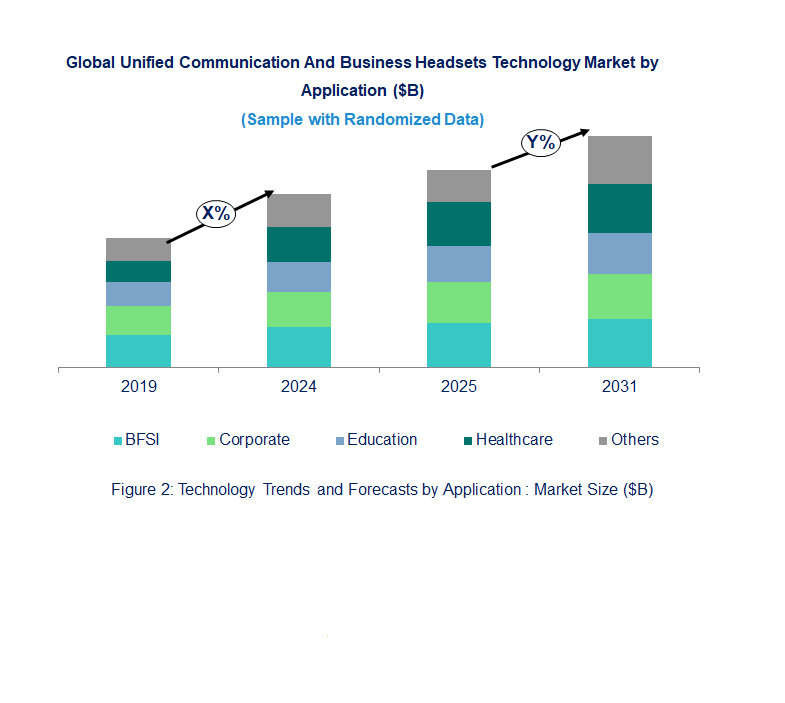
• Rising Adoption of Wireless and Bluetooth Headsets: Businesses are increasingly replacing wired solutions with wireless and Bluetooth headsets to offer greater mobility, comfort, and compatibility with multiple devices across work settings.
• Integration with Unified Communication Platforms: Headsets are now being designed to work seamlessly with platforms like Microsoft Teams, Zoom, and Cisco Webex, ensuring high-quality audio and one-touch call controls for business users.
• Advanced Noise Cancellation Features: Active noise cancellation (ANC) has become a standard requirement, especially in open office and remote work environments, to ensure clear communication and reduce ambient distractions.
• Voice Assistant and AI Integration: Smart headsets are incorporating AI-based features such as real-time language translation, contextual voice commands, and smart muting, enhancing user experience and workflow efficiency.
• Ergonomic and Health-Focused Designs: With prolonged headset use becoming common, manufacturers are emphasizing ergonomic design, lightweight materials, and features that minimize ear fatigue and hearing strain. These technology trends are reshaping the unified communication and business headsets market by driving demand for smarter, more adaptive, and user-friendly solutions. The transition to wireless, platform-integrated, and AI-powered headsets supports the evolving needs of businesses across sectors like BFSI, corporate, education, and healthcare, enabling more productive and flexible communication experiences.
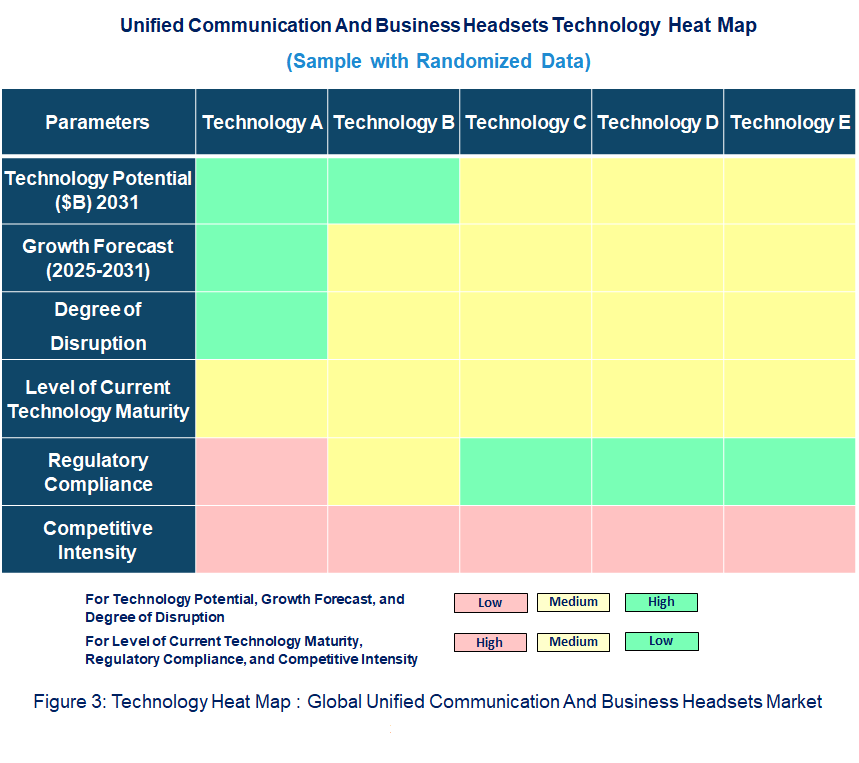
• Technology Potential Unified communication (UC) and business headsets are revolutionizing enterprise collaboration by offering advanced features like active noise cancellation (ANC), AI-powered audio optimization, and seamless integration with UC platforms such as Microsoft Teams, Zoom, and Cisco Webex. These headsets enhance communication clarity, reduce meeting fatigue, and support mobility, making them critical tools for remote and hybrid workforces.
• Degree of Disruption The disruption level in this market is high. Traditional desk phones and basic audio peripherals are being phased out in favor of intelligent, multifunctional headsets. The shift to cloud-based communication and increasing adoption of hybrid work models have accelerated the demand for versatile and secure headset solutions, reshaping workplace communication dynamics.
• Technology Maturity The technology is highly mature, with leading brands offering a wide range of professional-grade headsets optimized for different use cases ranging from call centers to executive settings. Continued innovation includes AI-enhanced voice tracking, environmental noise suppression, and real-time translation, expanding their role in enterprise ecosystems.
• Regulatory Compliance These devices must meet strict regulatory requirements, including occupational safety (e.g., OSHA hearing protection limits), electromagnetic compatibility (EMC), and wireless communication standards. When integrated with voice assistants or cloud platforms, compliance with data protection laws like GDPR becomes essential, ensuring secure and privacy-compliant communication environments.
• Agero Inc.: Agero Inc. has expanded its headset portfolio with advanced noise-cancellation technology and AI-powered voice assistants, improving user experience for remote workers and call centers. This development enhances communication clarity and productivity in noisy environments.
• Aplicom: Aplicom has introduced IoT-enabled business headsets featuring smart connectivity and device management capabilities. This innovation allows enterprises to remotely monitor and optimize headset performance, reducing downtime and operational costs.
• Mitacs: Mitacs has partnered with software providers to integrate headsets seamlessly with popular unified communication platforms like Microsoft Teams and Zoom, ensuring smooth interoperability and simplifying user workflows.
• Masternaut Limited: Masternaut Limited has launched ergonomically designed wireless headsets with extended battery life and multi-device connectivity, addressing the needs of professionals requiring mobility and long working hours.
• Meta System S.p.A.: Meta System S.p.A. has invested in developing AI-driven adaptive sound technology that personalizes audio settings based on user environment, boosting comfort and reducing listening fatigue for prolonged use.
• Growth of Remote and Hybrid Work: The widespread adoption of remote and hybrid working models is driving demand for advanced headsets that facilitate clear and effective communication, boosting productivity in decentralized work environments.
• Technological Advancements: Continuous innovation in wireless technologies, AI integration, and noise cancellation is expanding product capabilities, attracting enterprise investments to improve communication infrastructure. Challenge:
• High Cost of Advanced Headsets: Premium features like AI, ANC, and multi-platform compatibility raise the cost of headsets, limiting adoption among small and medium-sized enterprises with budget constraints.
• Regulatory and Compliance Issues: Varying international standards and certifications for electronic communication devices complicate market entry and require significant compliance efforts from manufacturers. These drivers and challenges shape the unified communication and business headsets market by encouraging innovation and adoption while demanding cost-effective and compliant solutions. Capitalizing on integration opportunities and addressing affordability will be key to sustained growth and market penetration across industries globally.
• Agero Inc.
• Aplicom
• Mitacs
• Masternaut Limited.
• Meta System S.P.A
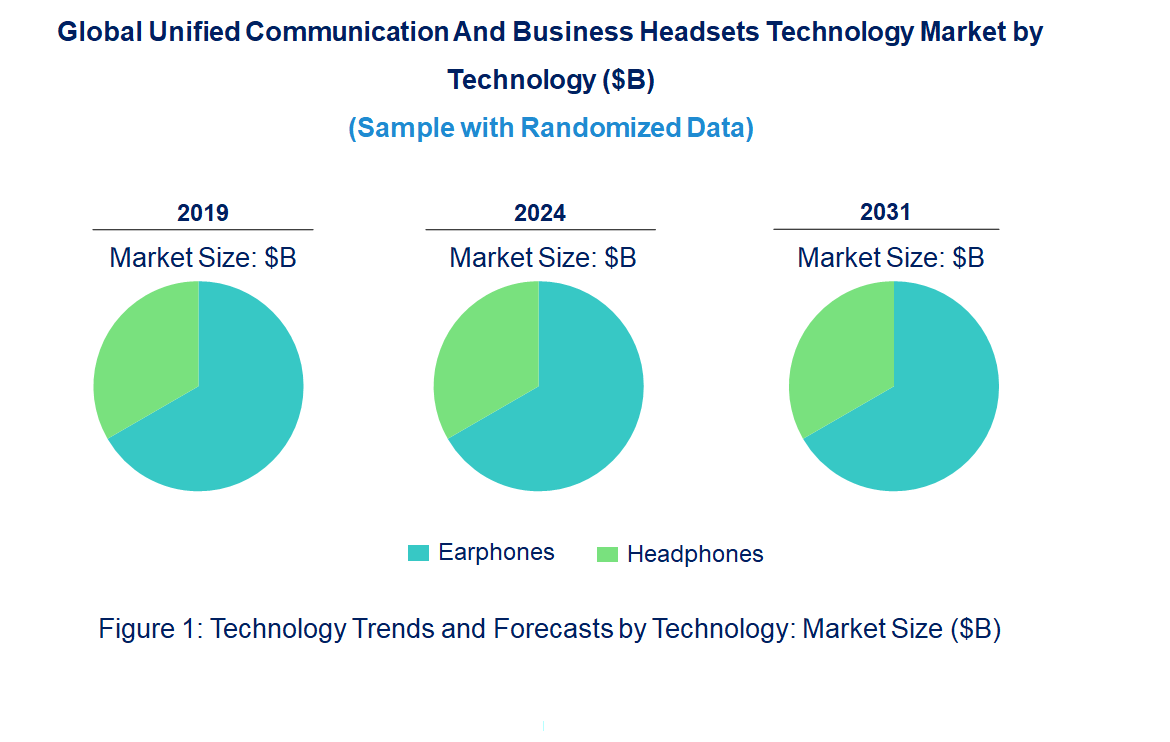
• Technology Readiness: Headphones exhibit a high level of technology readiness with mature designs widely deployed in corporate and healthcare settings, supported by strong vendor ecosystems. Earphones have rapidly matured, leveraging advancements in miniaturization, Bluetooth protocols, and AI features for enhanced usability in BFSI and education sectors. Both technologies maintain high competitive levels, with continuous innovation driven by end-use demand for comfort, noise management, and unified communication compatibility. Regulatory compliance is consistently met across regions, facilitating widespread adoption, while key applications include remote conferencing, call centers, and hybrid work environments, making both essential for modern business communication.
• Disruption Potential: In the unified communication and business headsets market, earphones offer high disruption potential due to their compact size, portability, and increasing integration of wireless and smart features, making them ideal for on-the-go communication. Headphones, while traditionally dominant, face moderate disruption as they evolve with advanced noise cancellation and AI capabilities, enhancing user experience in office and remote settings. Earphones are driving adoption in mobile and casual professional environments, whereas headphones remain preferred for long-duration, immersive use. The shift toward wireless, Bluetooth-enabled, and AI-integrated devices is transforming both segments, promoting flexibility and seamless connectivity across platforms.
• Competitive Intensity and Regulatory Compliance: Competitive intensity is high in both earphones and headphones segments, with numerous players innovating to capture market share through features like active noise cancellation and platform integration. Earphones face stiff competition due to the influx of consumer-grade products crossing over into business use, while headphones compete on ergonomics and advanced audio quality. Regulatory compliance focuses on safety, electromagnetic interference, and wireless communication standards such as FCC, CE, and Bluetooth SIG certifications. Compliance ensures product reliability and market access, with evolving regulations around user safety and data privacy impacting development cycles.
• Earphones
• Headphones
• BFSI
• Corporate
• Education
• Healthcare
• Others
• North America
• Europe
• Asia Pacific
• The Rest of the World
• Latest Developments and Innovations in the Unified Communication And Business Headsets Technologies
• Companies / Ecosystems
• Strategic Opportunities by Technology Type


Choose a license that fits your team. Instant PDF delivery.
Prices exclude taxes. Instant delivery. Custom licensing available on request.
Market Report · May 18, 2026
Market Report · May 18, 2026
Market Report · May 18, 2026
Trusted partner for strategic intelligence and business growth


Receive a complimentary market analysis tailored to your industry. Our analysts will identify key growth opportunities and competitive dynamics specific to your business.

Market size, growth rate, and key trend analysis for your specific sector.

Top competitor positioning and market share analysis.

Strategic recommendations backed by data-driven insights.
Get curated market intelligence and competitive moves straight to your inbox.
By subscribing, you agree to receive our monthly insights. Unsubscribe anytime.
Receive a complimentary market analysis tailored to your industry. Our analysts will identify key growth opportunities and competitive dynamics specific to your business.
Market size, growth rate, and key trend analysis for your specific sector.
Top competitor positioning and market share analysis.
Strategic recommendations backed by data-driven insights.
Get curated market intelligence, emerging trends, and competitive moves straight to your inbox each month.
By subscribing, you agree to receive our monthly insights. Unsubscribe anytime.
We'll send your sample report shortly.