
Market Report · July 20, 2026

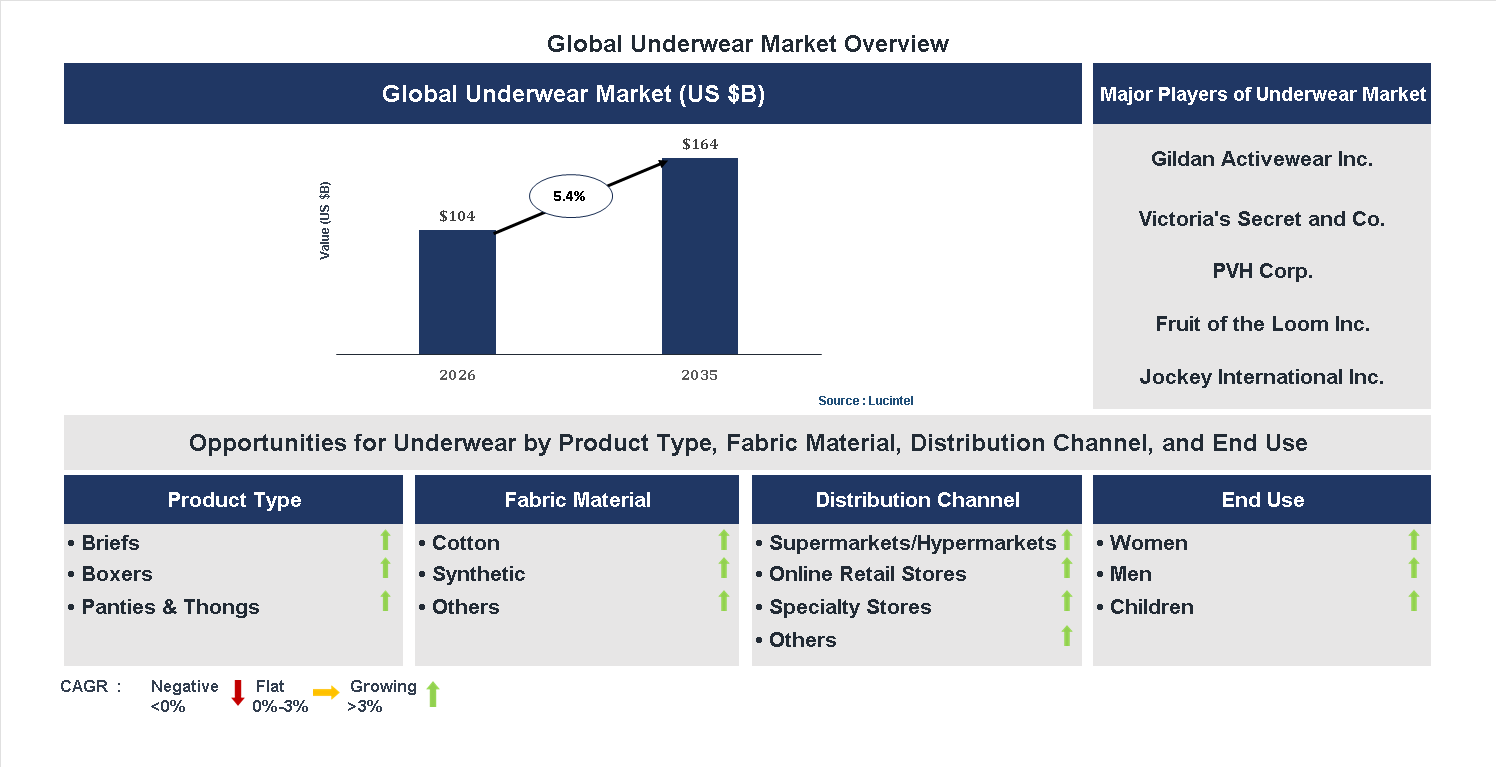
Key data points: The market size in 2035 = $164 billion, growth forecast = 5.4% annually for the next 8 years. Scroll below to get more insights. This market report covers trends, opportunities and forecasts in underwear market to 2035 by product type (briefs, boxers, and panties & thongs), fabric material (cotton, synthetic, and others), distribution channel (supermarkets/hypermarkets, online retail stores, specialty stores, and others), end use (women, men, and children), and region (North America, Europe, Asia Pacific, and the Rest of the World)
We'll send your sample report shortly.
• Lucintel forecasts that, within the product type category, boxer is expected to witness the highest growth over the forecast period.
• Within the fabric material category, synthetic is expected to witness higher growth.
• In terms of region, APAC is expected to witness the highest growth over the forecast period. Gain valuable insights for your business decisions with our comprehensive 150+ page report. Sample figures with some insights are shown below.
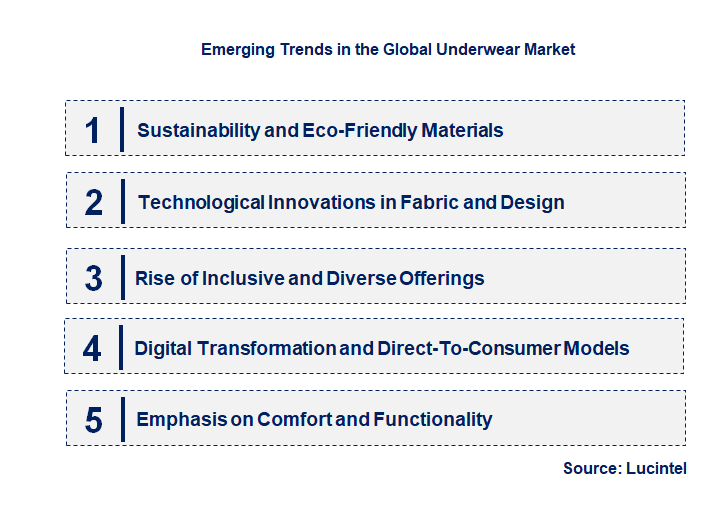
• Sustainability and Eco-Friendly Materials: Increasing consumer awareness about environmental issues is driving demand for sustainable underwear. Brands are adopting organic cotton, recycled fabrics, and biodegradable materials to reduce their carbon footprint. This trend encourages transparency in sourcing and production processes, appealing to eco-conscious shoppers. As sustainability becomes a key purchase criterion, companies investing in eco-friendly innovations are gaining competitive advantage, fostering a shift towards greener practices across the industry.
• Technological Innovations in Fabric and Design: Advances in textile technology are enhancing comfort, durability, and functionality. Moisture-wicking, anti-odor, and temperature-regulating fabrics are becoming standard, improving user experience. 3D knitting and seamless designs reduce irritation and enhance fit. These innovations enable brands to offer high-performance underwear suitable for active lifestyles, expanding market segments. The integration of smart textiles with embedded sensors is also emerging, providing data on health metrics, which appeals to tech-savvy consumers.
• Rise of Inclusive and Diverse Offerings: The market is embracing diversity by offering a wider range of sizes, fits, and styles to cater to all body types and gender identities. Brands are promoting body positivity and inclusivity through marketing campaigns and product lines. This shift broadens the customer base and fosters brand loyalty. Inclusive sizing and gender-neutral options are becoming standard, reflecting societal progress and ensuring that underwear is accessible and comfortable for everyone.
• Digital Transformation and Direct-to-Consumer Models: E-commerce platforms and social media marketing are revolutionizing how brands reach consumers. Direct-to-consumer (DTC) channels allow for personalized shopping experiences, better pricing, and faster feedback loops. Virtual fitting rooms and augmented reality try-ons enhance online shopping confidence. This digital shift reduces reliance on traditional retail, enabling brands to build stronger relationships with customers and gather valuable data to tailor offerings more precisely.
• Emphasis on Comfort and Functionality: Consumers prioritize comfort and practicality alongside style. Features like seamless construction, breathable fabrics, and ergonomic designs are in high demand. The focus on everyday wear and athleisure styles is expanding the market beyond traditional underwear. Brands are innovating to combine comfort with aesthetic appeal, catering to busy lifestyles and health-conscious consumers. This trend underscores a shift towards underwear as an essential, versatile wardrobe staple rather than just a basic necessity. These trends are reshaping the underwear market by emphasizing sustainability, technological innovation, inclusivity, digital engagement, and comfort. They are driving brands to adapt quickly, fostering a more consumer-centric, innovative, and environmentally responsible industry landscape.
• Growth of Sustainable Fabrics: Increasing consumer awareness about environmental impact is driving demand for eco-friendly underwear made from organic, recycled, or biodegradable materials. Brands adopting sustainable fabrics are gaining market share by appealing to eco-conscious buyers. This shift encourages innovation in textile production and promotes transparency in supply chains, fostering brand loyalty. As sustainability becomes a key purchasing factor, the market is witnessing a significant shift toward greener products, influencing industry standards and consumer expectations.
• Technological Innovations in Fabric and Design: Advances in fabric technology, such as moisture-wicking, anti-odor, and seamless designs, are enhancing comfort and functionality. Smart textiles with embedded sensors are emerging, offering health monitoring features. These innovations improve user experience and differentiate products in a competitive market. Brands investing in R&D are able to offer high-performance underwear, attracting athletes and health-conscious consumers. The integration of technology is transforming product development and elevating consumer expectations for comfort and innovation.
• Expansion of E-commerce and Direct-to-Consumer Brands: The rise of online shopping platforms and DTC brands is revolutionizing distribution channels. Consumers now prefer the convenience of purchasing underwear online, often seeking personalized options and better prices. This shift reduces reliance on traditional retail outlets and allows brands to build direct relationships with customers. Enhanced digital marketing and data analytics enable targeted campaigns, increasing sales and brand loyalty. The e-commerce boom is making the market more accessible and competitive, fostering rapid growth for innovative brands.
• Growing Demand for Inclusive and Diverse Offerings: Consumers are demanding more inclusive sizing, styles, and marketing that reflect diverse body types and identities. Brands that embrace inclusivity are expanding their customer base and enhancing brand reputation. This trend encourages product innovation to cater to various needs and preferences, fostering a more equitable market. Inclusive marketing strategies resonate with modern consumers, driving loyalty and engagement. The focus on diversity is reshaping industry standards and encouraging brands to adopt more representative practices.
• Influence of Fashion Trends and Celebrity Endorsements: Fashion-forward designs and celebrity collaborations are boosting the appeal of underwear as a fashion statement. Trend-driven collections attract younger consumers and create buzz in the market. Celebrity endorsements enhance brand visibility and credibility, influencing purchasing decisions. This dynamic fosters innovation in design and marketing, making underwear a key component of personal style. The integration of fashion trends and celebrity influence is fueling market growth and expanding consumer interest beyond basic functionality. These developments are significantly transforming the underwear market by fostering innovation, sustainability, inclusivity, and digital engagement. They are enabling brands to better meet evolving consumer preferences, expand their reach, and differentiate themselves in a competitive landscape. As a result, the market is becoming more dynamic, diverse, and responsive to global trends, promising sustained growth and increased consumer satisfaction.
• Product Innovation and Material Advancements Drive Market Expansion: The development of innovative fabrics such as moisture-wicking, breathable, and eco-friendly materials is enhancing product appeal. Brands are investing in R&D to create comfortable, durable, and sustainable underwear options. These advancements attract health-conscious and environmentally aware consumers, encouraging repeat purchases and brand loyalty. As material technology evolves, companies can differentiate their offerings, expand product lines, and tap into niche markets, fueling overall market growth.
• Growing Demand for Sustainable and Eco-Friendly Underwear: Consumers are increasingly prioritizing sustainability, prompting brands to adopt eco-friendly practices. Use of organic cotton, recycled fibers, and biodegradable packaging is gaining popularity. This shift aligns with broader environmental concerns and ethical consumption trends. Companies that incorporate sustainable practices can enhance brand reputation, meet regulatory standards, and attract environmentally conscious customers, thereby expanding their market share and fostering long-term growth in the underwear industry.
• E-commerce Expansion and Digital Marketing Transform Distribution Channels: The rise of online shopping platforms has revolutionized how consumers purchase underwear. E-commerce offers convenience, wider product selection, and competitive pricing. Digital marketing strategies, including social media and influencer collaborations, increase brand visibility and engagement. Direct-to-consumer models enable brands to build stronger relationships with customers, gather valuable data, and customize offerings. This digital shift broadens market reach and accelerates sales growth across diverse demographics.
• Increasing Focus on Comfort, Fit, and Functionality to Meet Consumer Preferences: Modern consumers seek underwear that offers superior comfort, perfect fit, and functional features like moisture control and odor resistance. Brands are investing in ergonomic designs and size inclusivity to cater to diverse body types. The emphasis on comfort and functionality enhances customer satisfaction and loyalty. As consumer expectations evolve, companies that prioritize these aspects can differentiate themselves, capture new segments, and drive sustained growth in the competitive underwear market.
• Rising Popularity of Fashion-Forward and Athleisure Underwear: The blending of fashion and function has led to increased demand for stylish, versatile underwear suitable for everyday wear and athletic activities. Athleisure trends promote active lifestyles, encouraging consumers to invest in fashionable, high-performance underwear. Brands collaborating with designers and influencers are capitalizing on this trend. The appeal of trendy, functional underwear expands market reach, attracts younger demographics, and opens new revenue streams, contributing significantly to overall industry growth. The overall impact of these opportunities is a robust, innovative, and consumer-centric market poised for continued expansion. Companies that leverage technological advancements, sustainability, digital channels, and evolving consumer preferences will be well-positioned to capture emerging demand. This dynamic environment fosters competition, encourages innovation, and ultimately benefits consumers through a broader selection of high-quality, sustainable, and fashionable underwear options.
• Technological Innovations: The development of advanced fabrics like moisture-wicking, breathable, and eco-friendly materials enhances product appeal. These innovations improve comfort, durability, and sustainability, attracting a broader consumer base. Companies investing in R&D are able to differentiate their offerings, meet evolving consumer demands, and stay competitive. The integration of smart textiles and seamless manufacturing processes further boosts efficiency and product quality, fueling market growth.
• E-commerce Expansion: The rise of online retail platforms has revolutionized how consumers purchase underwear. E-commerce provides wider accessibility, convenience, and a broader product range, especially in emerging markets. Digital marketing strategies and personalized shopping experiences attract new customers and foster brand loyalty. The ability to analyze consumer data helps brands tailor their offerings, increase sales, and expand their market reach globally.
• Changing Consumer Preferences: Modern consumers prioritize comfort, style, and sustainability. There is a growing demand for inclusive sizing, eco-friendly materials, and fashionable designs. This shift encourages brands to innovate and diversify their product lines to meet these preferences. Additionally, increased awareness of health and hygiene influences purchasing decisions, prompting the development of specialized underwear such as orthopedic or antimicrobial options.
• Economic Growth and Disposable Income: Rising disposable incomes, especially in developing regions, enable consumers to spend more on premium and branded underwear. Economic stability encourages discretionary spending on fashion and comfort items, boosting market sales. As income levels increase, consumers are more willing to invest in quality products, which drives brands to enhance their offerings and expand into new markets. The challenges in the underwear market are:
• Regulatory and Environmental Concerns: Stringent regulations regarding product safety, labeling, and environmental impact pose compliance challenges for manufacturers. Eco-conscious consumers demand sustainable and ethically produced products, compelling companies to adopt environmentally friendly materials and processes, often at higher costs. Navigating these regulations while maintaining profitability requires significant investment and innovation.
• Intense Market Competition: The market is highly competitive with numerous established brands and new entrants vying for consumer attention. Price wars, brand differentiation, and innovation are critical to gaining market share. Smaller players often struggle to compete with larger corporations that benefit from economies of scale, which can lead to market consolidation and reduced diversity.
• Supply Chain Disruptions: Global supply chain issues, including raw material shortages, transportation delays, and geopolitical tensions, impact production and distribution. These disruptions increase costs and lead to inventory shortages, affecting sales and customer satisfaction. Companies must develop resilient supply chains and diversify sourcing strategies to mitigate these risks. The underwear market is shaped by technological advancements, evolving consumer preferences, and economic growth, which create significant growth opportunities. However, regulatory pressures, intense competition, and supply chain vulnerabilities pose substantial challenges. Navigating these factors requires strategic innovation, compliance, and operational resilience. Overall, the market's future depends on how effectively companies adapt to these drivers and challenges, balancing growth with sustainability and consumer needs.
• Gildan Activewear Inc.
• Victoria's Secret and Co.
• PVH Corp.
• Fruit of the Loom Inc.
• Jockey International Inc.
• Triumph Group
• Wacoal Holdings Corp.
• Spanx LLC
• Adidas AG
• Nike Inc.
• Briefs
• Boxers
• Panties & Thongs
• Cotton
• Synthetic
• Others
• Supermarkets/Hypermarkets
• Online Retail Stores
• Specialty Stores
• Others
• Women
• Men
• Children
• North America
• Europe
• Asia Pacific
• The Rest of the World
• United States: The U.S. market has seen a surge in demand for sustainable and organic underwear products, driven by eco-conscious consumers. Brands are investing in innovative fabrics like bamboo and recycled materials, and there is a growing trend toward inclusive sizing and comfort-focused designs. E-commerce sales continue to dominate, with digital marketing playing a key role in consumer engagement. Additionally, athleisure-inspired underwear is gaining popularity, blending functionality with style.
• China: China's underwear market is rapidly expanding, fueled by rising disposable incomes and changing fashion preferences among younger consumers. There is a notable shift toward premium and branded products, with a focus on comfort and aesthetics. Local brands are gaining ground through online platforms, leveraging social media and live-streaming to boost sales. Innovations in fabric technology, such as moisture-wicking and antibacterial materials, are also gaining traction.
• Germany: The German market emphasizes sustainability and high-quality craftsmanship. Consumers prefer eco-friendly materials and transparent supply chains, prompting brands to adopt environmentally responsible practices. There is a growing interest in minimalist and functional designs, aligning with the broader European trend toward simplicity and durability. Retailers are integrating online and offline channels to provide a seamless shopping experience, with a focus on ethical production.
• India: The Indian underwear market is experiencing rapid growth due to increasing urbanization and changing lifestyles. Comfort and affordability remain key drivers, with a rising demand for everyday essentials. Local brands are expanding their product lines, incorporating innovative fabrics and designs to cater to diverse consumer preferences. E-commerce platforms are playing a vital role in reaching rural and semi-urban markets, supported by aggressive marketing campaigns and discounts.
• Japan: Japan's market is characterized by a focus on technological innovation and comfort. Advanced fabric technologies, such as temperature regulation and odor control, are popular among consumers. There is also a trend toward minimalist and functional designs, with a preference for high-quality, durable products. The market is highly receptive to eco-friendly and sustainable options, with brands emphasizing environmentally responsible manufacturing processes. Online retail and specialty stores are key channels for distribution.


• Gildan Activewear Inc.
• Victoria's Secret and Co.
• PVH Corp.
• Fruit of the Loom Inc.
• Jockey International Inc.
• Triumph Group
• Wacoal Holdings Corp.
• Spanx LLC
• Adidas AG
• Nike Inc. Q6. Which underwear market segment will be the largest in future? Answer: Lucintel forecasts that, within the product type category, boxer is expected to witness the highest growth over the forecast period. Q7. In underwear market, which region is expected to be the largest in next 5 years? Answer: In terms of region, APAC is expected to witness the highest growth over the forecast period. Q8. Do we receive customization in this report? Answer: Yes, Lucintel provides 10% customization without any additional cost.


Choose a license that fits your team. Instant PDF delivery.
Prices exclude taxes. Instant delivery. Custom licensing available on request.
Market Report · July 20, 2026
Market Report · July 15, 2026
Market Report · July 15, 2026
Trusted partner for strategic intelligence and business growth


Receive a complimentary market analysis tailored to your industry. Our analysts will identify key growth opportunities and competitive dynamics specific to your business.

Market size, growth rate, and key trend analysis for your specific sector.

Top competitor positioning and market share analysis.

Strategic recommendations backed by data-driven insights.
Get curated market intelligence and competitive moves straight to your inbox.
By subscribing, you agree to receive our monthly insights. Unsubscribe anytime.
Receive a complimentary market analysis tailored to your industry. Our analysts will identify key growth opportunities and competitive dynamics specific to your business.
Market size, growth rate, and key trend analysis for your specific sector.
Top competitor positioning and market share analysis.
Strategic recommendations backed by data-driven insights.
Get curated market intelligence, emerging trends, and competitive moves straight to your inbox each month.
By subscribing, you agree to receive our monthly insights. Unsubscribe anytime.
We'll send your sample report shortly.