
Market Report · July 29, 2026

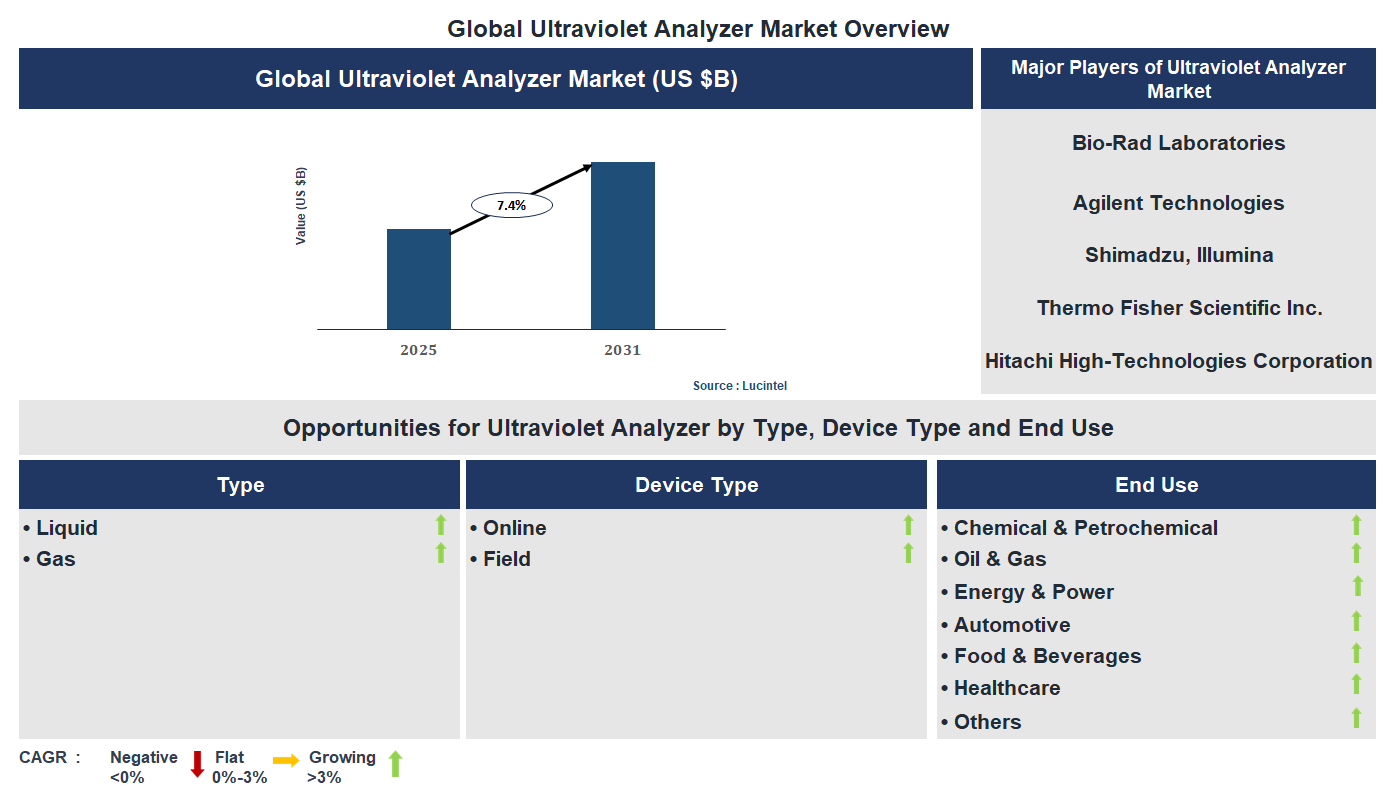
Key data points: The growth forecast = 7.4% annually for the next 7 years. Scroll below to get more insights. This market report covers trends, opportunities and forecasts in ultraviolet analyzer market to 2031 by type (liquid and gas), device type (online and field), end use (chemical & petrochemical, oil & gas, energy & power, automotive, food & beverages, healthcare, and others), and region (North America, Europe, Asia Pacific, and the Rest of the World)
We'll send your sample report shortly.
• Lucintel forecasts that, within the type category, gas is expected to witness higher growth over the forecast period.
• Within the end use category, oil & gas is expected to witness the highest growth.
• In terms of region, APAC is expected to witness the highest growth over the forecast period. Gain valuable insights for your business decisions with our comprehensive 150+ page report. Sample figures with some insights are shown below.
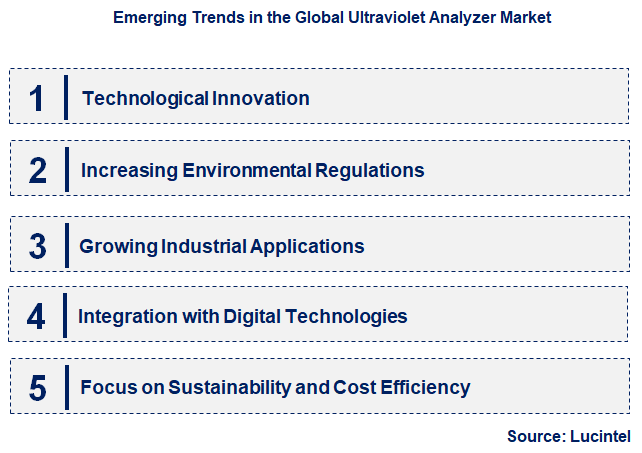
• Technological Innovation: The market is witnessing significant advancements in UV analyzer technology, including miniaturization, improved sensitivity, and real-time data processing. These innovations enable more accurate and faster measurements, making analyzers suitable for a broader range of applications. Enhanced user interfaces and automation features are also improving ease of operation, reducing the need for specialized training. As a result, industries can achieve higher efficiency and better compliance with regulatory standards, driving market growth and expanding the scope of UV analyzer applications.
• Increasing Environmental Regulations: Governments worldwide are implementing stricter environmental standards to control pollution and ensure public safety. UV analyzers play a crucial role in monitoring water quality, air emissions, and industrial effluents. The rising enforcement of regulations such as the Clean Water Act and Clean Air Act is prompting industries to adopt UV analysis for compliance. This trend is boosting demand for reliable, accurate analyzers capable of continuous monitoring, thereby expanding the market and encouraging innovation in regulatory-compliant solutions.
• Growing Industrial Applications: The adoption of UV analyzers is expanding across various industries, including pharmaceuticals, food and beverage, petrochemicals, and wastewater treatment. In pharmaceuticals, UV analyzers are used for quality control and process validation. In water treatment, they monitor contaminants and ensure safety standards. The versatility and precision of UV analyzers make them indispensable for maintaining product quality and environmental safety. As industries increasingly prioritize quality assurance and regulatory compliance, the demand for advanced UV analyzers continues to rise, fueling market expansion.
• Integration with Digital Technologies: The integration of UV analyzers with digital platforms, IoT, and data analytics is transforming the market. Connected analyzers enable remote monitoring, real-time data sharing, and predictive maintenance, reducing downtime and operational costs. Advanced software solutions facilitate data analysis, reporting, and compliance documentation. This digital transformation enhances decision-making, improves process control, and ensures higher accuracy. As industries adopt Industry 4.0 principles, the integration of UV analyzers with digital ecosystems is becoming a key trend, driving efficiency and innovation in the market.
• Focus on Sustainability and Cost Efficiency: Environmental concerns and economic pressures are pushing industries to adopt sustainable practices. UV analyzers help industries monitor and reduce harmful emissions and waste, supporting sustainability goals. Additionally, the development of cost-effective, energy-efficient analyzers is making advanced UV analysis accessible to small and medium-sized enterprises. This focus on sustainability and cost efficiency is encouraging widespread adoption, reducing operational costs, and minimizing environmental impact. Consequently, the market is shifting towards more eco-friendly and economical solutions, aligning with global sustainability initiatives. In summary, these emerging trends are reshaping the ultraviolet analyzer market by fostering technological innovation, expanding application areas, enhancing digital integration, and emphasizing sustainability. These developments are not only driving market growth but also enabling industries to meet stricter regulatory standards, improve operational efficiency, and contribute to environmental protection. As a result, the market is poised for continued evolution, with a focus on smarter, more sustainable, and versatile UV analysis solutions.
• Technological Advancement: Development of portable and handheld ultraviolet analyzers has improved on-site testing capabilities, enabling faster and more accurate results. This innovation enhances operational efficiency and broadens application scope, especially in remote or challenging environments. The increased adoption of miniaturized devices is expected to drive market growth and meet the demand for real-time analysis.
• Integration with Digital Technologies: The incorporation of IoT and data analytics into ultraviolet analyzers has improved data management and remote monitoring. These smart analyzers facilitate real-time data sharing, predictive maintenance, and enhanced accuracy, which are critical for industries requiring stringent quality control. This integration is transforming traditional analysis methods and increasing market competitiveness.
• Regulatory and Environmental Focus: Stricter environmental regulations and safety standards have increased the demand for ultraviolet analyzers in pollution monitoring and water quality assessment. Governments and regulatory bodies are mandating more rigorous testing, which boosts market growth. This trend underscores the importance of advanced analyzers in ensuring compliance and environmental protection.
• Expansion in Emerging Markets: Growing industrialization and infrastructure development in Asia-Pacific and Latin America are expanding the ultraviolet analyzer market. Local manufacturers are investing in advanced technologies to meet regional demand, leading to increased market penetration and competition. This expansion offers significant growth opportunities for global players.
• Product Portfolio Diversification: Companies are launching new products with enhanced sensitivity, broader spectral ranges, and improved durability. These diversified offerings cater to various industry needs, from pharmaceutical quality control to food safety testing. Such product innovation is crucial for capturing market share and addressing specific customer requirements. In summary, recent developments in the ultraviolet analyzer market—marked by technological innovation, digital integration, regulatory influence, regional expansion, and product diversification—are collectively driving market growth. These trends are leading to more efficient, accurate, and versatile analyzers, thereby expanding their application scope and reinforcing the markets upward trajectory.
• Environmental Monitoring: Enhanced UV analyzers enable precise detection of pollutants and contaminants in air and water, leading to improved regulatory compliance and public health safety. This growth opportunity supports sustainable development and environmental protection initiatives, expanding market reach in government and private sectors.
• Pharmaceutical Industry: Ultraviolet analyzers are crucial for quality control, ensuring the purity and stability of drugs and vaccines. The increasing focus on safety standards and regulatory compliance drives demand, fostering innovation in analytical techniques and expanding market share within healthcare.
• Food Safety: UV analyzers assist in detecting contaminants and ensuring product quality in food processing. Growing consumer awareness and stringent safety regulations propel market growth, encouraging the development of portable and user-friendly devices for on-site testing.
• Water Treatment: UV analyzers play a vital role in monitoring water quality and ensuring effective disinfection processes. Rising concerns over waterborne diseases and stricter regulations boost demand, leading to technological advancements and increased adoption in municipal and industrial water treatment facilities.
• Industrial Manufacturing: UV analyzers are used for process monitoring and quality assurance in manufacturing sectors such as chemicals, plastics, and textiles. The need for real-time analysis and process optimization drives growth, fostering innovation and operational efficiency. In summary, these key growth opportunities are significantly impacting the ultraviolet analyzer market by expanding its application scope, enhancing technological innovation, and increasing demand across diverse sectors. This evolution is fostering a competitive landscape, encouraging product development, and supporting sustainable industry practices, ultimately driving market growth and stability.
• Technological Advancements: The continuous development of more sensitive, accurate, and user-friendly UV analyzers has expanded their application scope across industries such as environmental monitoring, pharmaceuticals, and food safety. Innovations in miniaturization and integration with IoT enable real-time data collection and remote monitoring, increasing efficiency and reducing operational costs. These technological improvements attract new customers and encourage existing users to upgrade, fueling market growth.
• Increasing Environmental Regulations: Governments worldwide are implementing stricter environmental standards to control pollution and ensure public health. UV analyzers are vital for monitoring air and water quality, compliance with emission standards, and industrial effluent management. These regulations compel industries to adopt advanced analytical tools, thereby boosting demand for UV analyzers as essential compliance instruments.
• Industrial Automation and Digitalization: The shift towards automated processes in manufacturing, chemical analysis, and water treatment plants necessitates reliable, real-time analytical solutions. UV analyzers facilitate continuous monitoring, reducing manual sampling errors and enhancing process control. The integration of UV analyzers with digital platforms and data analytics further improves operational efficiency, encouraging industries to invest in these technologies.
• Growing Applications in Healthcare and Food Safety: The rising need for quality control in pharmaceuticals and food industries has increased reliance on UV analyzers for detecting contaminants, verifying product purity, and ensuring safety standards. The ability to perform rapid, non-destructive testing makes UV analyzers indispensable in these sectors, driving market expansion as these industries grow and tighten quality regulations. The challenges in the ultraviolet analyzer market are:
• High Equipment and Maintenance Costs: The initial investment for advanced UV analyzers can be substantial, especially for high-precision models used in critical applications. Ongoing maintenance, calibration, and technical support add to operational expenses, which may deter small and medium-sized enterprises from adopting these technologies. Cost barriers can slow down market penetration, particularly in developing regions with limited budgets.
• Technical Complexity and Expertise Requirements: Operating UV analyzers requires specialized knowledge and skilled personnel to ensure accurate readings and proper maintenance. The complexity of calibration procedures and troubleshooting can hinder widespread adoption, especially in industries lacking trained staff. This technical barrier may lead to reliance on external service providers, increasing overall costs and limiting market growth.
• Regulatory Compliance and Standardization Challenges: Variations in regulatory standards across different regions create complexities for manufacturers and users. Ensuring compliance with diverse certification requirements can delay product launches and increase costs. Additionally, the lack of universally accepted standards for UV analyzers hampers interoperability and market expansion, posing a significant challenge for global deployment. In summary, the ultraviolet analyzer market is driven by technological innovations, regulatory pressures, and expanding application areas, which collectively promote growth. However, high costs, technical complexities, and regulatory hurdles present notable challenges that could restrain market development. The overall impact of these drivers and challenges will shape the market’s evolution, requiring stakeholders to innovate cost-effective solutions and navigate regulatory landscapes effectively. Strategic investments in technology and compliance will be crucial for sustained growth and competitive advantage in this dynamic market.
• Bio-Rad Laboratories
• Agilent Technologies
• Shimadzu, Illumina
• Thermo Fisher Scientific Inc.
• Hitachi High-Technologies Corporation
• Waters Corporation
• JASCO
• Liquid
• Gas
• Online
• Field
• Chemical & Petrochemical
• Oil & Gas
• Energy & Power
• Automotive
• Food & Beverages
• Healthcare
• Others
• North America
• Europe
• Asia Pacific
• The Rest of the World
• United States: The US market for ultraviolet analyzers has seen rapid growth due to increased demand in environmental monitoring, water treatment, and healthcare sectors. Major companies are focusing on developing portable and high-precision devices, integrating IoT capabilities for real-time data collection. Regulatory agencies are adopting advanced analyzers to ensure compliance with environmental standards, boosting market expansion. Additionally, collaborations between tech firms and research institutions are fostering innovation in sensor technology and software integration, making ultraviolet analyzers more accessible and efficient.
• China: China is experiencing substantial growth in ultraviolet analyzer adoption, driven by rapid industrialization and environmental concerns. The government’s stringent regulations on pollution control have spurred investments in advanced analytical tools. Domestic manufacturers are expanding their product portfolios, emphasizing cost-effective and durable analyzers suitable for large-scale industrial applications. The market is also benefiting from increased R&D activities aimed at improving sensitivity and reducing costs. Moreover, China’s focus on environmental sustainability and pollution monitoring is propelling the demand for ultraviolet analyzers across various sectors.
• Germany: Germany’s ultraviolet analyzer market is characterized by high-quality, precision instruments used primarily in chemical, pharmaceutical, and environmental testing. The country’s strong emphasis on research and development has led to innovations in miniaturization and automation of analyzers. German companies are also integrating ultraviolet analyzers with digital platforms for enhanced data management and compliance reporting. The focus on sustainable practices and strict regulatory standards has further driven the adoption of advanced ultraviolet analysis solutions, positioning Germany as a leader in high-performance analytical technology within Europe.
• India: The Indian ultraviolet analyzer market is witnessing rapid growth due to increasing industrialization, urbanization, and environmental awareness. The government’s initiatives to improve water quality and pollution control are boosting demand for reliable analytical tools. Local manufacturers are expanding their product offerings, focusing on affordability and ease of use to cater to a diverse customer base. The healthcare sector’s expansion, especially in diagnostics and research, is also contributing to market growth. Additionally, rising investments in R&D and collaborations with international firms are fostering innovation and improving the overall quality of ultraviolet analyzers available in India.
• Japan: Japan’s market for ultraviolet analyzers is driven by advancements in environmental monitoring, manufacturing, and healthcare sectors. Japanese companies are focusing on developing highly sensitive, compact, and energy-efficient analyzers, often incorporating AI and IoT technologies. The country’s stringent environmental regulations and emphasis on sustainable practices are accelerating the adoption of sophisticated ultraviolet analysis tools. Japan’s strong R&D infrastructure supports continuous innovation, making its ultraviolet analyzers highly reliable and technologically advanced. The integration of these analyzers into smart city initiatives and industrial automation further underscores Japan’s leadership in this market.


• Bio-Rad Laboratories
• Agilent Technologies
• Shimadzu, Illumina
• Thermo Fisher Scientific Inc.
• Hitachi High-Technologies Corporation
• Waters Corporation
• JASCO Q5. Which ultraviolet analyzer market segment will be the largest in future? Answer: Lucintel forecasts that, within the type category, gas is expected to witness higher growth over the forecast period. Q6. In ultraviolet analyzer market, which region is expected to be the largest in next 5 years? Answer: In terms of region, APAC is expected to witness the highest growth over the forecast period. Q7. Do we receive customization in this report? Answer: Yes, Lucintel provides 10% customization without any additional cost.


Choose a license that fits your team. Instant PDF delivery.
Prices exclude taxes. Instant delivery. Custom licensing available on request.
Market Report · July 29, 2026
Market Report · July 20, 2026
Market Report · July 20, 2026
Trusted partner for strategic intelligence and business growth


Receive a complimentary market analysis tailored to your industry. Our analysts will identify key growth opportunities and competitive dynamics specific to your business.

Market size, growth rate, and key trend analysis for your specific sector.

Top competitor positioning and market share analysis.

Strategic recommendations backed by data-driven insights.
Get curated market intelligence and competitive moves straight to your inbox.
By subscribing, you agree to receive our monthly insights. Unsubscribe anytime.
Receive a complimentary market analysis tailored to your industry. Our analysts will identify key growth opportunities and competitive dynamics specific to your business.
Market size, growth rate, and key trend analysis for your specific sector.
Top competitor positioning and market share analysis.
Strategic recommendations backed by data-driven insights.
Get curated market intelligence, emerging trends, and competitive moves straight to your inbox each month.
By subscribing, you agree to receive our monthly insights. Unsubscribe anytime.
We'll send your sample report shortly.