
Market Report · July 22, 2026

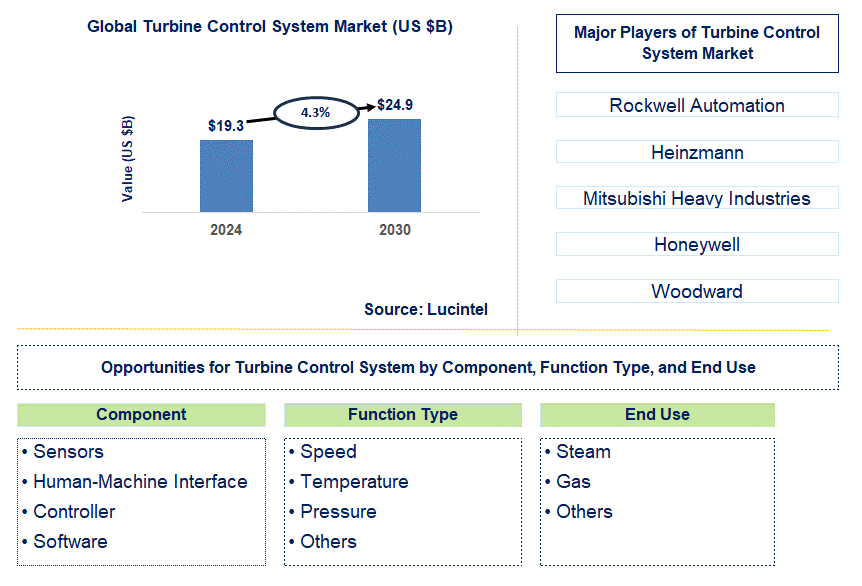
Key data points: The market size in 2030 = $24.9 billion, growth forecast = 4.3% annually next 7 years. Scroll below to get more insights. This market report covers trends, opportunities, and forecast in the global turbine control system market to 2030 by component (sensors, human-machine interface, controller, and software), function type (speed, temperature, pressure, and others), end use (steam, gas, and others), and region (North America, Europe, Asia Pacific, and the Rest of the World)
We'll send your sample report shortly.
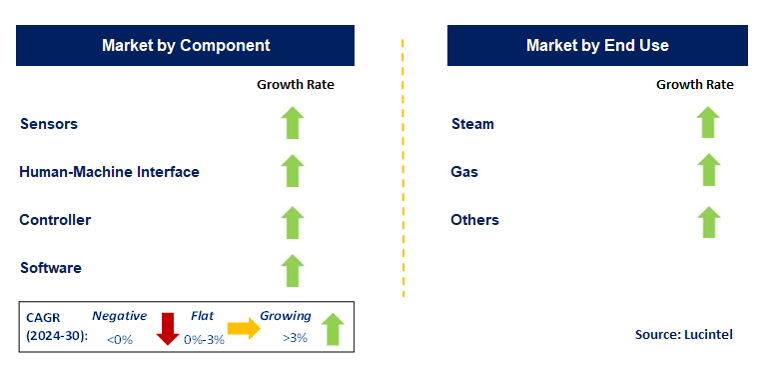
• Lucintel forecasts, within the component category, that sensor will remain the largest segment over the forecast period due to its critical role in data acquisition and its adoption in a wide range of applications.
• Within the end use category, steam is expected to witness a higher growth due to modernization and upgradation of existing steam power plants.
• In terms of regions, APAC is expected to witness highest growth over the forecast period due to rapidly developing economies and strong investment in infrastructure. Gain valuable insight for your business decisions with our comprehensive 150+ page report
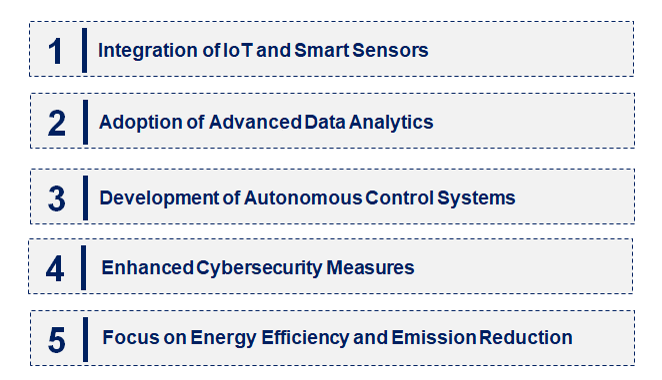
• Integration of IoT and Smart Sensors: The integration of the Internet of Things (IoT) and smart sensors in turbine control systems enhances real-time monitoring and data collection. IoT-enabled sensors provide continuous performance data, enabling predictive maintenance and immediate fault detection. This trend improves operational efficiency, reduces downtime, and extends the lifespan of turbine systems.
• Adoption of Advanced Data Analytics: Advanced data analytics are increasingly utilized to process and interpret vast amounts of turbine performance data. Machine learning algorithms and predictive analytics help in identifying patterns, optimizing performance, and preventing failures. This trend enhances decision-making and operational efficiency, allowing for more informed and proactive maintenance strategies.
• Development of Autonomous Control Systems: Autonomous control systems are gaining traction, with advancements in artificial intelligence and machine learning enabling turbines to operate with minimal human intervention. These systems automatically adjust parameters based on real-time data, optimizing performance and reducing the risk of human error. This trend leads to more reliable and efficient turbine operations.
• Enhanced Cybersecurity Measures: As turbine control systems become more connected, cybersecurity is increasingly critical. Enhanced cybersecurity measures are being implemented to protect against cyber threats and unauthorized access. Advanced encryption, intrusion detection systems, and secure communication protocols are essential for safeguarding sensitive turbine control data and ensuring operational integrity.
• Focus on Energy Efficiency and Emission Reduction: There is a growing emphasis on improving energy efficiency and reducing emissions in turbine control systems. Technologies that optimize fuel consumption, reduce waste, and lower greenhouse gas emissions are being developed and integrated. This trend aligns with global sustainability goals and regulatory requirements, contributing to cleaner and more efficient energy production. These emerging trends are profoundly reshaping the turbine control system market. The integration of IoT and smart sensors, advanced data analytics, autonomous control systems, enhanced cybersecurity measures, and a focus on energy efficiency are driving significant improvements in performance, safety, and operational efficiency. Together, they are transforming how turbines are managed, leading to more reliable, efficient, and sustainable energy solutions.
• Integration of Advanced Analytics: The modern turbine control systems integrate advanced analytics using machine learning algorithms. Predictive maintenance, performance optimization, and real-time monitoring can now be carried out because of this integration. These systems can anticipate potential problems by analyzing data from various sensors, thereby reducing downtime while also lowering maintenance costs and increasing overall efficiency.
• Enhanced Cybersecurity Measures: Turbine control systems are characterized by advanced cybersecurity measures as cyber threats grow. This has necessitated enhanced encryption, secure communication protocols, and real-time threat detection to protect sensitive operational data. It prevents attacks that may interrupt operations or lead to high financial losses due to turbine failures.
• Integration with IoT and Cloud Computing: Turbine controls are being changed by the Internet of Things (IoT) and cloud computing technologies. For example, these systems collect large amounts of data from IoT-enabled devices to be processed and analyzed in the cloud, allowing management to be conducted offline. This simplifies the remote monitoring and operation of wind turbines, making them more operationally flexible and providing deeper insights into their performance and maintenance needs.
• Development of Autonomous Control Systems: Developments in artificial intelligence (AI) and automation drive autonomous control systems, which find applications for controlling turbines across wide areas. Such settings allow for adjustments based on environmental conditions or performance metrics, thus enhancing efficiency and reducing manual interventions during processes, leading to more reliable yet cost-effective turbine operations.
• Increased Focus on Energy Efficiency: Innovations in turbine control systems aim to optimize fuel consumption and minimize emissions. They are also enhancing turbine design and control algorithms to maximize energy output while minimizing waste. This focus aligns with global sustainable objectives for cleaner energy production as dictated by current regulatory requirements. Through enhancing operational efficiency, security, and adaptability, these recent developments in turbine control systems have significantly influenced the market. Innovation is driven by advanced analytics, cybersecurity measures, IoT integration, autonomous control, and improvements in energy efficiency. These technologies promise to make turbine operations more reliable, cost-effective, and environmentally sustainable as they continue to evolve in the future.
• Renewable Energy Sector: The rise in renewable energy sources, particularly wind turbines, presents a significant opportunity for turbine control systems. Advanced control technologies improve turbine efficiency, maximize energy capture, and reduce maintenance costs. The integration of predictive analytics enhances performance monitoring, driving growth in this sector.
• Aerospace Industry: In aerospace, turbine control systems are crucial for optimizing engine performance and fuel efficiency. Innovations in control systems contribute to better thrust management, reduced emissions, and enhanced safety. Advanced systems enable real-time data analysis, supporting aircraft manufacturers in meeting stringent performance standards.
• Power Generation: The power generation sector benefits from turbine control systems through improved operational reliability and efficiency. Modern control systems enhance load management, grid stability, and response times. As utilities seek to integrate more diverse energy sources, sophisticated control systems become essential for maintaining stability and efficiency.
• Marine Applications: In marine environments, turbine control systems optimize propulsion and power generation for ships and offshore platforms. Enhanced control technologies improve fuel efficiency and reduce emissions, addressing regulatory demands. Reliable systems are crucial for long-term operation in challenging marine conditions, creating growth opportunities in this niche market.
• Industrial Processes: Industrial applications, including manufacturing and processing, leverage turbine control systems to improve process efficiency and reduce downtime. Enhanced control capabilities lead to better process optimization and energy savings. As industries adopt more automated and data-driven approaches, the demand for advanced control systems continues to rise. These strategic growth opportunities underscore the pivotal role of turbine control systems in various applications. By enhancing efficiency, performance, and reliability, these systems are driving innovation across renewable energy, aerospace, power generation, marine, and industrial sectors. The evolving demands and technological advancements in these applications continue to fuel growth and shape the future of the turbine control system market.
• Rising Demand for Home Décor Products: The rising interest in home decoration and ambience is responsible for the increasing demand for tea light candles. Tea light candles are used extensively by consumers to create a welcoming atmosphere in their homes, promoting market development. The beauty and adaptability of tea lights in different décor settings have made them very popular.
• Increased Adoption of Eco-Friendly Products: Consumers increasingly prefer eco-friendly or green products, such as tea lights made from natural waxes like soy or beeswax. This movement has been driven by customers' awareness of environmental issues and their desire for low-carbon-footprint solutions, leading to market expansion.
• Growing Popularity of Aromatherapy: Aromatherapy is becoming popular as people use scented tea lights infused with essential oils. Consequently, there is greater demand today than before for scented tea light candles, as most people want natural ways to enhance their well-being and relaxation, thereby expanding the market.
• Expanding E-Commerce Channels: The growth of e-commerce platforms has increased the accessibility of tea light candles to a wider target audience. Through e-commerce transactions, buyers can easily purchase candles instantly since it is convenient and offers an array of choices, enhancing market reach and sales volumes.
• Technological Advancements in Candle Production: Innovations such as automated production techniques and improved wax formulas have led to better quality and diversity in making tea light candles over time. These developments contribute to market growth by creating efficient designs that appeal to users. Challenges in the turbine control system market are:
• Regulatory Compliance Issues: Tea light candles must comply with various safety and emissions regulations that differ by region. Adhering to these rules adds expenses and complexities for manufacturers, ultimately influencing profitability and market entry.
• Volatility in Raw Material Prices: Raw material costs, such as wax and fragrance oils, can be unstable, leading to variations in production prices. Price changes drive higher consumer prices and squeeze margins for producers, raising competitive pricing challenges.
• Environmental Concerns: Traditional paraffin candles still present an environmental challenge because they are derived from petroleum-based products, unlike more eco-friendly options available today. Therefore, there is increased scrutiny and calls for more sustainable alternatives, which may prove difficult for brands that have not yet made the switch. Increased home décor demand, eco-friendly trends, technological advancements, and others are some drivers of the tea light candle market's growth. However, regulatory compliance requirements, raw material price volatility, and environmental issues represent significant challenges. As a result, these players need to find a balance between capitalizing on their comparative advantages and prevailing dynamics to seize opportunities while minimizing obstacles towards continuity and consumer satisfaction in a competitive landscape.
• Rockwell Automation
• Heinzmann
• Mitsubishi Heavy Industries
• Honeywell
• Woodward
• ABB
• Hitachi
• General Electric Company
• Emerson Electric
• Petrotech
• Sensors
• Human-Machine Interface
• Controller
• Software
• Speed
• Temperature
• Pressure
• Others
• Steam
• Gas
• Others
• North America
• Europe
• Asia Pacific
• The Rest of the World
• United States: The US is undergoing a digital transformation of turbine control systems to introduce AI and machine learning for improved predictive maintenance and efficiency. This transformation is necessary due to the transition to renewable sources, particularly for wind and gas turbines, which need to upgrade their current control systems.
• China: The focus in China is on integrating turbine control systems with renewable energy resources, mainly wind and solar. Innovations in grid stabilization and the employment of sophisticated control algorithms have improved the efficiency of turbines while reducing energy loss in its sprawling power infrastructure.
• Germany: Germany has pushed the technology of smart control systems for wind and gas turbines to align with its energy transition goals, which include an emphasis on Energiewende. Advanced automation and grid management tools allow turbines to be easily integrated into the renewable energy grid.
• India: India is investing in upgrading turbine control systems that support large-scale wind and solar projects. The country's focus areas include further enhancements regarding real-time monitoring and automation for better performance and longevity of turbine systems in both renewable and conventional power generation.
• Japan: Hybrid turbine control systems combining renewable and conventional energy sources are emerging in Japan. Advances in sensor technology and control algorithms are expected to optimize the performance of turbines, especially in the geothermal and wind energy sectors, which are critical to the nation's energy strategy.


• What is the turbine control system market size? Answer: The global turbine control system market is expected to reach an estimated $24.9 billion by 2030. Q2. What is the growth forecast for turbine control system market? Answer: The global turbine control system market is expected to grow with a CAGR of 4.3% from 2024 to 2030. Q3. What are the major drivers influencing the growth of the turbine control system market? Answer: The major drivers for this market are significantly growing renewable energy infrastructure, advancements in control technologies, and modernization and upgradation of existing power plants. Q4. What are the major segments for turbine control system market? Answer: The future of the turbine control system market looks promising with opportunities in the steam and gas markets. Q5. Who are the key turbine control system market companies? Answer: Some of the key turbine control system companies are as follows:
• Rockwell Automation
• Heinzmann
• Mitsubishi Heavy Industries
• Honeywell
• Woodward
• ABB
• Hitachi
• General Electric Company
• Emerson Electric
• Petrotech Q6. Which turbine control system market segment will be the largest in future? Answer: Lucintel forecasts that sensor will remain the largest segment over the forecast period due to its critical role in data acquisition and its adoption in a wide range of applications. Q7. In turbine control system market, which region is expected to be the largest in next 5 years? Answer:
• In terms of regions, APAC is expected to witness highest growth over the forecast period due to rapidly developing economies and strong investment in infrastructure. Q.8 Do we receive customization in this report? Answer: Yes, Lucintel provides 10% customization without any additional cost.


Choose a license that fits your team. Instant PDF delivery.
Prices exclude taxes. Instant delivery. Custom licensing available on request.
Market Report · July 22, 2026
Market Report · July 22, 2026
Market Report · July 17, 2026
Trusted partner for strategic intelligence and business growth


Receive a complimentary market analysis tailored to your industry. Our analysts will identify key growth opportunities and competitive dynamics specific to your business.

Market size, growth rate, and key trend analysis for your specific sector.

Top competitor positioning and market share analysis.

Strategic recommendations backed by data-driven insights.
Get curated market intelligence and competitive moves straight to your inbox.
By subscribing, you agree to receive our monthly insights. Unsubscribe anytime.
Receive a complimentary market analysis tailored to your industry. Our analysts will identify key growth opportunities and competitive dynamics specific to your business.
Market size, growth rate, and key trend analysis for your specific sector.
Top competitor positioning and market share analysis.
Strategic recommendations backed by data-driven insights.
Get curated market intelligence, emerging trends, and competitive moves straight to your inbox each month.
By subscribing, you agree to receive our monthly insights. Unsubscribe anytime.
We'll send your sample report shortly.