
Market Report · July 31, 2026

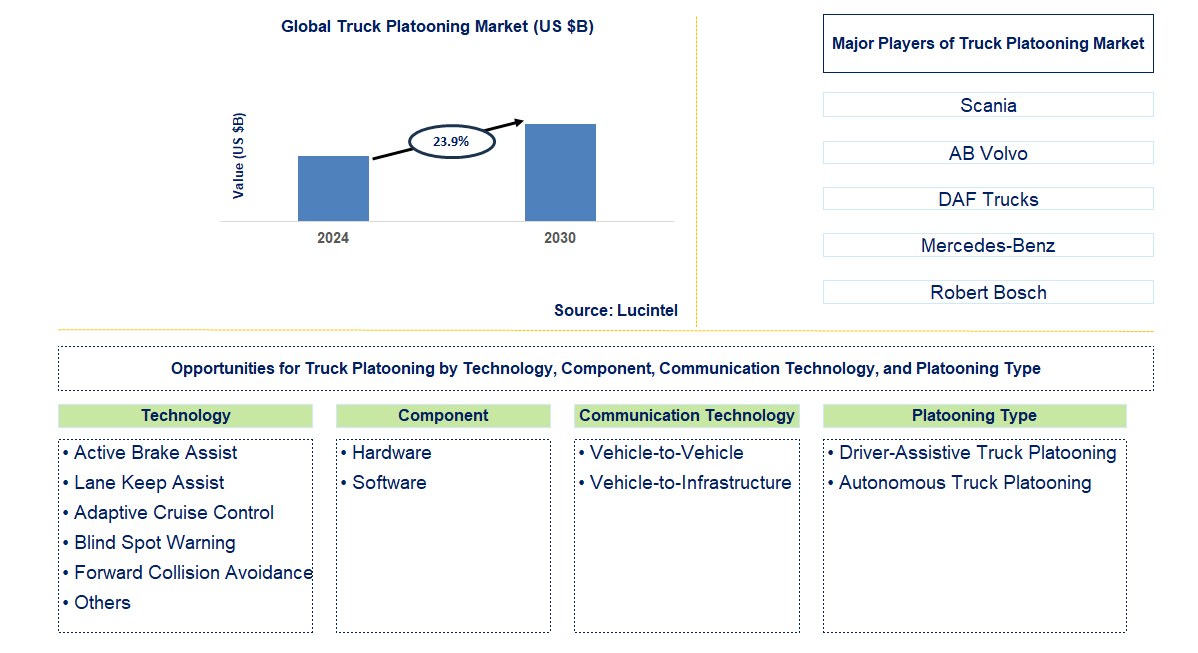
Key data points: The growth forecast = 23.9% annually for the next 6 years. Scroll below to get more insights. This market report covers trends, opportunities, and forecasts in the global truck platooning market to 2030 by technology (active brake assist, lane keep assist, adaptive cruise control, blind spot warning, forward collision avoidance, and others), component (hardware and software), communication technology (vehicle-to-vehicle and vehicle-to-infrastructure), platooning type (driver-assistive truck platooning and autonomous truck platooning), and region (North America, Europe, Asia Pacific, and the Rest of the World)
We'll send your sample report shortly.
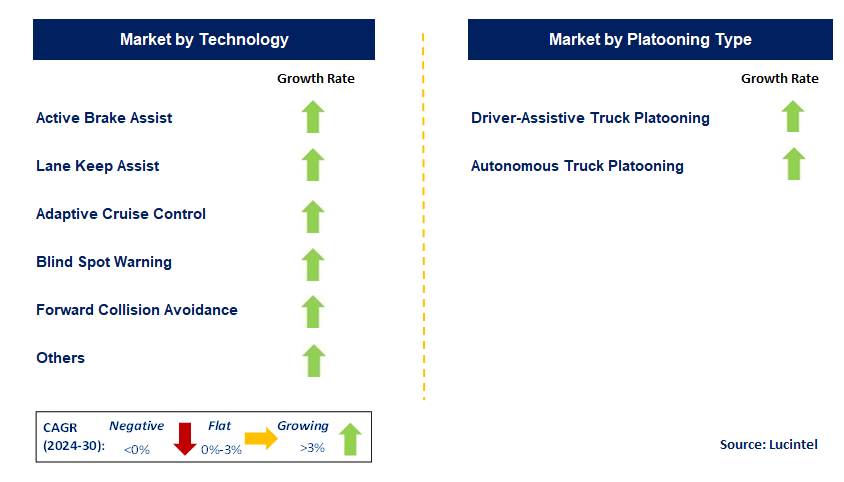
• Lucintel forecasts that, within the technology category, adaptive cruise control segment will remain the largest segment over the forecast period.
• Within the platooning type category, driver-assistive truck platooning will remain larger segment .
• In terms of regions, North America will remain the largest region over the forecast period due to substantial presence in the area of companies offering truck platooning services. Gain valuable insights for your business decissions with our comprehensive 150+ page report.
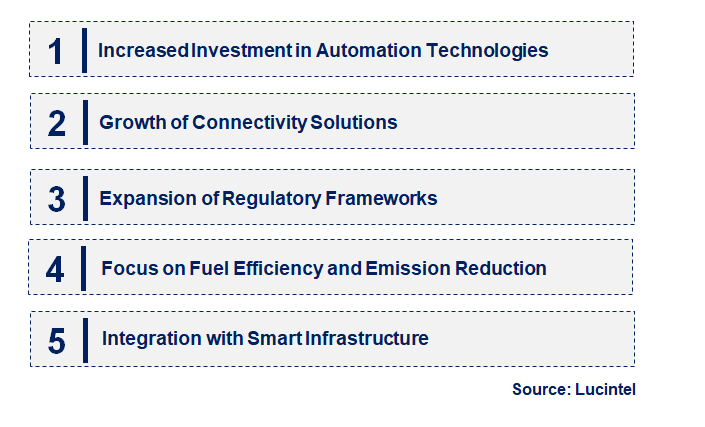
• Increased Investment in Automation Technologies: Investment in automation technologies, including advanced sensors and communication systems, is crucial for the development of effective truck platooning systems. This trend is driving innovations that improve safety and efficiency.
• Growth of Connectivity Solutions: Enhanced vehicle-to-vehicle (V2V) and vehicle-to-infrastructure (V2I) connectivity solutions are becoming integral to truck platooning. These technologies facilitate real-time communication between trucks and infrastructure, improving coordination and reducing collisions.
• Expansion of Regulatory Frameworks: Governments worldwide are developing and expanding regulatory frameworks to support truck platooning. This includes creating guidelines for safety standards and testing procedures, which help accelerate the deployment of platooning systems.
• Focus on Fuel Efficiency and Emission Reduction: Truck platooning is increasingly seen as a solution for improving fuel efficiency and reducing emissions. The technology enables trucks to travel closer together, reducing aerodynamic drag and lowering overall fuel consumption.
• Integration with Smart Infrastructure: The integration of truck platooning with smart infrastructure, such as advanced traffic management systems, is becoming more common. This integration helps optimize traffic flow and enhances the overall effectiveness of platooning. These trends are reshaping the truck platooning market by driving technological advancements, improving regulatory support, and enhancing connectivity. They contribute to the market's growth and the broader adoption of truck platooning technologies.
• Advancements in Vehicle Communication Systems: The development of sophisticated vehicle communication systems is crucial for effective truck platooning. These systems enable real-time data exchange between trucks, improving coordination and safety.
• Pilot Projects and Trials: Numerous pilot projects and trials are underway globally to test truck platooning technologies. These projects are providing valuable data on the performance and safety of platooning systems, paving the way for wider adoption.
• Regulatory Support and Frameworks: Governments are increasingly supportive of truck platooning, with new regulations and guidelines being established to facilitate testing and deployment. This regulatory support is helping to accelerate the adoption of platooning technology.
• Partnerships and Collaborations: There is a growing number of partnerships between automotive manufacturers, technology companies, and logistics firms. These collaborations are driving innovation and accelerating the development and implementation of truck platooning systems.
• Focus on Safety and Efficiency: The emphasis on improving safety and operational efficiency is driving advancements in truck platooning technology. This focus is leading to innovations that enhance the overall effectiveness and reliability of platooning systems. These developments are shaping the truck platooning market by advancing technology, supporting regulatory frameworks, and fostering industry collaborations. The market is evolving to meet the demands for improved safety, efficiency, and sustainability.
• Expansion into Emerging Markets: Emerging markets offer significant growth potential for truck platooning technology. Companies can leverage these opportunities by introducing solutions tailored to local infrastructure and regulatory conditions.
• Investment in R&D for Automation: Investing in research and development for advanced automation technologies presents opportunities for innovation. Enhanced automation can improve platooning efficiency and safety, offering a competitive edge in the market.
• Development of Connectivity Solutions: Developing advanced connectivity solutions for vehicle-to-vehicle (V2V) and vehicle-to-infrastructure (V2I) communication is a key growth opportunity. These solutions are critical for the successful implementation of truck platooning systems.
• Collaboration with Regulatory Bodies: Collaborating with regulatory bodies to shape and comply with new regulations provides opportunities to accelerate market entry and adoption. Engaging with policymakers can help streamline the approval process for truck platooning technologies.
• Integration with Smart Infrastructure: Integrating truck platooning with smart infrastructure, such as advanced traffic management systems, enhances overall effectiveness. This integration helps optimize traffic flow and supports the widespread adoption of platooning technologies. These growth opportunities are shaping the truck platooning market by driving innovation, expanding market reach, and enhancing connectivity. Companies that capitalize on these opportunities will be well-positioned for success in the evolving truck platooning industry.
• Advancements in Automation Technology: The development of advanced automation technologies is a major driver for truck platooning. Improved sensors, communication systems, and autonomous driving capabilities enhance the effectiveness of platooning.
• Government Support and Regulations: Supportive government policies and regulations facilitate the testing and deployment of truck platooning systems. This regulatory backing helps accelerate market adoption and implementation.
• Fuel Efficiency and Emission Reduction: Truck platooning technology improves fuel efficiency and reduces emissions by reducing aerodynamic drag. This environmental benefit aligns with global sustainability goals and drives demand for platooning systems.
• Improved Safety and Reduced Accidents: Platooning systems enhance safety by enabling precise vehicle coordination and reducing human error. This safety improvement is a key driver for the adoption of truck platooning technologies.
• Increased Industry Collaboration: Collaboration between automotive manufacturers, technology companies, and logistics firms drives innovation and accelerates the development of truck platooning solutions. Challenges in the truck platooning market are:
• High Development and Implementation Costs: The cost of developing and implementing truck platooning technology can be significant. This includes expenses related to research and development, infrastructure, and system integration.
• Regulatory and Legal Hurdles: Navigating regulatory and legal hurdles can be challenging. Different regions have varying regulations, which can affect the deployment and standardization of truck platooning systems.
• Technological Integration Issues: Integrating truck platooning technology with existing infrastructure and vehicle systems can be complex. Compatibility issues and technical challenges may hinder the adoption and effectiveness of platooning systems. The major drivers and challenges in the truck platooning market highlight the need for continued innovation, regulatory alignment, and industry collaboration. Addressing these factors effectively will be essential for the successful growth and adoption of truck platooning technologies.
• Scania
• AB Volvo
• DAF Trucks
• Mercedes-Benz
• Robert Bosch
• IVECO
• Continental
• TOYOTA MOTOR
• Bendix
• Peloton Technology
• Active Brake Assist
• Lane Keep Assist
• Adaptive Cruise Control
• Blind Spot Warning
• Forward Collision Avoidance
• Others
• Hardware
• Software
• Vehicle-to-Vehicle
• Vehicle-to-Infrastructure
• Driver-Assistive Truck Platooning
• Autonomous Truck Platooning
• North America
• Europe
• Asia Pacific
• The Rest of the World
• United States: Major trucking companies and tech firms are actively testing and deploying truck platooning systems. Recent advancements include improved vehicle-to-vehicle communication systems and regulatory support from the Department of Transportation, easing wider adoption.
• China: China is focusing on integrating truck platooning with its expanding smart transportation infrastructure. Developments include collaborations between tech companies and government agencies to enhance vehicle automation and communication technologies.
• Germany: Germany leads in truck platooning, with successful pilot projects and partnerships between automotive manufacturers and logistics companies. Advancing regulations and infrastructure aim to reduce congestion and improve fuel efficiency.
• India: India is in the early stages of exploring truck platooning technology. Pilot projects in collaboration with international tech firms are testing platooning systems on Indian highways, addressing infrastructure challenges.
• Japan: Japan integrates truck platooning with its advanced transportation systems. Collaborations between automakers and tech companies enhance platooning capabilities in urban areas and highways, improving efficiency and safety.


• Scania
• AB Volvo
• DAF Trucks
• Mercedes-Benz
• Robert Bosch
• IVECO
• Continental
• TOYOTA MOTOR
• Bendix
• Peloton Technology Q5. Which truck platooning market segment will be the largest in future? Answer: Lucintel forecasts that adaptive cruise control segment will remain the largest segment over the forecast period. Q6. In truck platooning market, which region is expected to be the largest in next 6 years? Answer: In terms of regions, North America will remain the largest region over the forecast period due to substantial presence in the area of companies offering truck platooning services. Q.7 Do we receive customization in this report? Answer: Yes, Lucintel provides 10% customization without any additional cost.


Choose a license that fits your team. Instant PDF delivery.
Prices exclude taxes. Instant delivery. Custom licensing available on request.
Market Report · July 31, 2026
Market Report · July 22, 2026
Market Report · July 17, 2026
Trusted partner for strategic intelligence and business growth


Receive a complimentary market analysis tailored to your industry. Our analysts will identify key growth opportunities and competitive dynamics specific to your business.

Market size, growth rate, and key trend analysis for your specific sector.

Top competitor positioning and market share analysis.

Strategic recommendations backed by data-driven insights.
Get curated market intelligence and competitive moves straight to your inbox.
By subscribing, you agree to receive our monthly insights. Unsubscribe anytime.
Receive a complimentary market analysis tailored to your industry. Our analysts will identify key growth opportunities and competitive dynamics specific to your business.
Market size, growth rate, and key trend analysis for your specific sector.
Top competitor positioning and market share analysis.
Strategic recommendations backed by data-driven insights.
Get curated market intelligence, emerging trends, and competitive moves straight to your inbox each month.
By subscribing, you agree to receive our monthly insights. Unsubscribe anytime.
We'll send your sample report shortly.