
Report Feature
Triangular Bandage Market Trends and Forecast
The future of the global triangular bandage market looks promising with opportunities in the limb supporting and dressing fixing markets. The global triangular bandage market is expected to reach an estimated $64.3 million by 2035 with a CAGR of 5.1% from 2026 to 2035. The major drivers for this market are the growing demand for healthcare expenditure in emerging economies and the increasing demand for hospital & clinic infrastructure development.• Lucintel forecasts that, within the type category, sterile triangular bandage is expected to witness higher growth over the forecast period.
• Within the application category, limb supporting is expected to witness higher growth.
• In terms of region, APAC is expected to witness the highest growth over the forecast period. Gain valuable insights for your business decisions with our comprehensive 150+ page report. Sample figures with some insights are shown below.
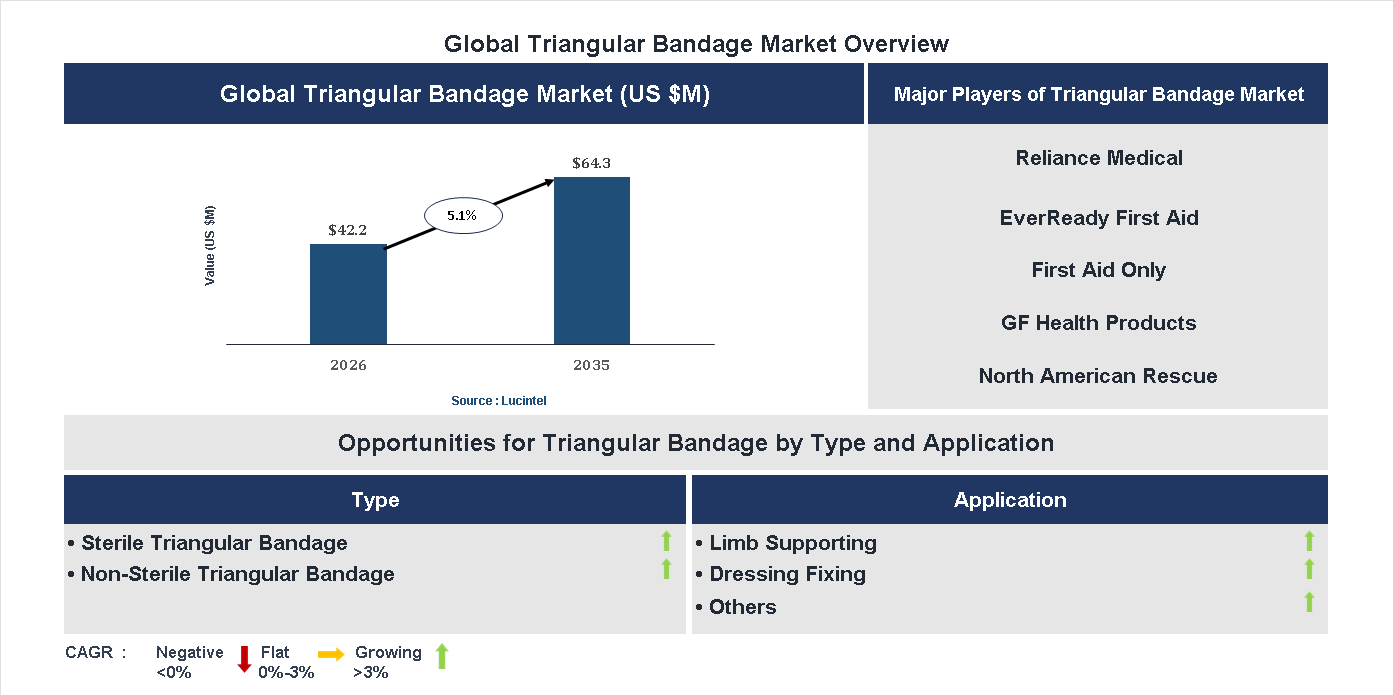
Emerging Trends in the Triangular Bandage Market
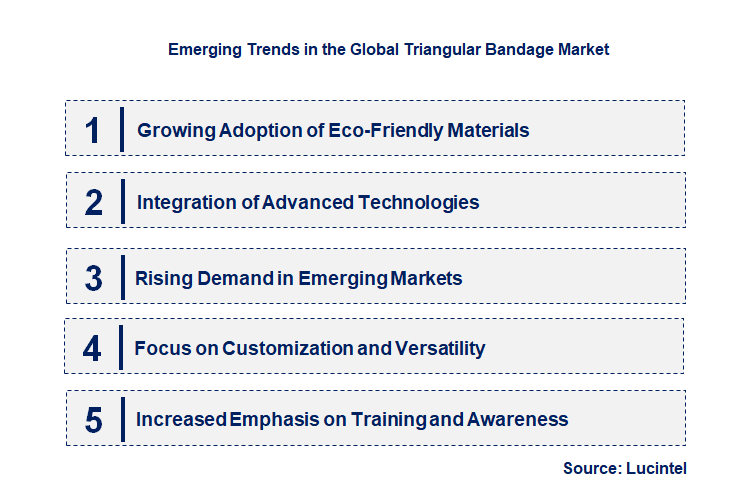
The triangular bandage market is experiencing significant evolution driven by advancements in healthcare, increasing demand for versatile wound care solutions, and a focus on patient comfort and safety. As medical practices become more sophisticated and patient-centered, the market is adapting to new materials, innovative designs, and expanding applications across various healthcare settings. These developments are not only improving treatment outcomes but also broadening the scope of triangular bandages beyond traditional uses. The following key trends highlight the major shifts shaping this market, reflecting its dynamic nature and future growth potential.• Growing Adoption of Eco-Friendly Materials: The market is witnessing a shift towards sustainable and biodegradable materials for manufacturing triangular bandages. This trend is driven by increasing environmental awareness among consumers and healthcare providers. Eco-friendly bandages reduce ecological footprints and align with global sustainability goals. Manufacturers are investing in research to develop biodegradable fabrics that maintain durability and sterility. This trend enhances brand reputation and meets regulatory standards, ultimately expanding market reach and consumer trust.
• Integration of Advanced Technologies: Incorporation of innovative technologies such as antimicrobial fabrics and moisture-wicking materials is transforming the market. These advancements improve wound healing, reduce infection risks, and enhance patient comfort. The use of nanotechnology and bioactive agents in bandages offers prolonged antimicrobial effects. Such technological integration not only elevates product efficacy but also opens new avenues for specialized applications in trauma care, sports injuries, and surgical settings, thereby broadening market opportunities.
• Rising Demand in Emerging Markets: Increasing healthcare infrastructure development and rising awareness about wound care are fueling demand for triangular bandages in emerging economies. Governments and the private sector are investing in healthcare facilities, which boosts the adoption of versatile wound management products. Affordability and accessibility are key factors driving growth in these regions. Local manufacturers are also entering the market, offering cost-effective solutions, which further accelerates market expansion and diversifies the supply chain.
• Focus on Customization and Versatility: The market is shifting towards customizable and multi-purpose triangular bandages tailored to specific medical needs. Manufacturers are offering products with adjustable sizes, different fabric textures, and specialized features such as elastic properties. This trend enhances clinical efficiency by providing versatile solutions suitable for various wound types and treatment scenarios. Customization improves patient outcomes and satisfaction, making these products more appealing to healthcare providers seeking adaptable wound care options.
• Increased Emphasis on Training and Awareness: As the use of triangular bandages expands, there is a growing focus on training healthcare professionals and caregivers in proper application techniques. Educational initiatives and awareness campaigns ensure correct usage, minimizing complications and improving healing outcomes. This trend supports market growth by fostering confidence in product efficacy and safety. It also encourages the adoption of triangular bandages in first aid, emergency response, and home care settings, broadening their application scope. In summary, these emerging trends are reshaping the triangular bandage market by promoting sustainability, technological innovation, regional expansion, product versatility, and education. Collectively, they are driving market growth, enhancing product performance, and expanding application areas, positioning the market for sustained future development.
Recent Development in the Triangular Bandage Market
The triangular bandage market has experienced significant growth driven by increasing demand in healthcare, emergency response, and sports medicine sectors. Innovations in materials and design have expanded applications, while rising awareness of first aid practices enhances market prospects. The integration of technology and expanding distribution channels further contribute to market expansion. These developments are shaping a dynamic landscape, offering new opportunities for manufacturers and healthcare providers alike, ultimately improving patient care and emergency preparedness worldwide.• Growing Demand in Emergency Medical Services: The rise in accidents and injuries globally has increased the need for reliable first aid supplies, including triangular bandages. Emergency responders and hospitals require high-quality, versatile bandages for quick application and effective wound management. This demand drives innovation and expansion in production capacity, fostering market growth. Additionally, increased training programs emphasize the importance of triage and first aid, further boosting market demand. The sectors growth enhances healthcare response efficiency and patient outcomes.
• Innovations in Material Technology: Advances in fabric and adhesive technologies have led to lighter, more durable, and hypoallergenic triangular bandages. These innovations improve comfort, ease of use, and sterilization processes, making bandages more suitable for diverse medical settings. The development of eco-friendly and biodegradable materials also aligns with sustainability goals. Such technological progress enhances product performance, broadens application scope, and attracts new customers, thereby expanding the market. It also encourages manufacturers to invest in R&D for next-generation solutions.
• Expansion Into Sports Medicine and Fitness Sectors: The increasing popularity of sports and fitness activities has created a new market segment for triangular bandages. Athletes and trainers seek reliable first aid supplies for quick injury management. The demand for lightweight, flexible, and easy-to-apply bandages has surged, prompting manufacturers to develop specialized products. This expansion opens new revenue streams and diversifies market applications. It also promotes awareness of injury prevention and first aid training, contributing to overall market growth and improved safety standards in sports.
• Rising Global Healthcare Infrastructure Development: Investments in healthcare infrastructure, especially in emerging economies, are fueling demand for medical supplies, including triangular bandages. Governments and the private sectors are expanding hospitals, clinics, and emergency services, creating a robust market environment. Improved logistics and distribution networks facilitate wider availability of products. This development supports increased adoption of first aid kits and emergency preparedness initiatives, boosting market size. It also encourages local manufacturing, reducing costs and increasing accessibility, which benefits healthcare delivery systems worldwide.
• Integration of Digital and Smart Solutions: The incorporation of digital technology into first aid products, such as QR codes for instructions or smart bandages with sensors, is emerging. These innovations enhance user engagement, provide real-time data, and improve wound management. The market is witnessing collaborations between healthcare providers and tech companies to develop such solutions. This integration increases product value, attracts tech-savvy consumers, and opens new revenue avenues. It also promotes better health outcomes through improved monitoring and guidance, driving overall market expansion. These developments are significantly transforming the triangular bandage market by enhancing product quality, expanding applications, and integrating innovative technologies. Increased demand from emergency services, sports sectors, and expanding healthcare infrastructure is driving growth. Technological advancements and sustainability initiatives further strengthen market prospects. Collectively, these trends are fostering a more dynamic, accessible, and efficient market, ultimately improving emergency response capabilities and healthcare outcomes worldwide.
Strategic Growth Opportunities in the Triangular Bandage Market
The triangular bandage market is experiencing significant growth driven by increasing healthcare needs, rising awareness of first aid, and expanding applications in emergency and surgical settings. Innovations in materials and design are enhancing usability and comfort, further boosting demand. Additionally, the growing prevalence of injuries and surgeries worldwide contributes to market expansion. Strategic collaborations and technological advancements are expected to unlock new opportunities, making the market highly dynamic and competitive in the coming years.• Growing Demand for First Aid Supplies in Emergency Care: The rising incidence of accidents and injuries worldwide has heightened the need for effective first aid products, including triangular bandages. Healthcare providers, emergency responders, and consumers are increasingly investing in reliable, easy-to-use bandages to ensure prompt wound management. This trend is supported by awareness campaigns and training programs, which emphasize the importance of immediate wound care, thereby expanding the market for triangular bandages across various sectors.
• Increasing Adoption in Surgical and Wound Dressing Applications: Triangular bandages are essential in surgical settings for immobilization, support, and dressing of wounds. The expanding number of surgical procedures globally, coupled with advancements in wound care management, is driving demand. Hospitals and clinics prefer versatile, sterile, and durable bandages, prompting manufacturers to innovate with materials that improve patient comfort and healing outcomes. This growth is further fueled by the rising prevalence of chronic wounds and trauma cases requiring effective bandaging solutions.
• Technological Innovations Enhancing Product Features and Usability: Manufacturers are investing in R&D to develop triangular bandages with improved materials, such as hypoallergenic fabrics and moisture-wicking properties. Innovations include pre-cut, sterile, and color-coded bandages for quick identification and ease of use. These advancements increase product efficiency, reduce application time, and improve patient comfort. As awareness of product quality and usability grows, demand for technologically advanced triangular bandages is expected to rise across the healthcare and emergency sectors.
• Expansion of Distribution Channels and Increasing Healthcare Infrastructure: The growth of retail pharmacies, online platforms, and healthcare distribution networks is broadening access to triangular bandages. Emerging markets are witnessing infrastructure development, which facilitates the wider availability of first aid and medical supplies. This expansion ensures timely procurement and distribution, especially in remote or underserved areas. Enhanced supply chain logistics and strategic partnerships are enabling manufacturers to meet rising demand efficiently, thereby supporting overall market growth.
• Rising Focus on Training and Awareness Programs for First Aid Preparedness: Governments, NGOs, and healthcare organizations are promoting first aid training to improve emergency response capabilities. These programs emphasize the importance of having accessible, effective bandaging supplies like triangular bandages. Increased awareness leads to higher demand in schools, workplaces, and community settings. This focus on preparedness not only boosts sales but also encourages product standardization and quality improvements, fostering a more resilient and responsive healthcare environment. The overall impact of these opportunities is a robust expansion of the triangular bandage market, driven by technological, infrastructural, and awareness factors. As demand for effective wound management solutions grows globally, market players are poised to innovate and expand their reach. This dynamic environment promises sustained growth, increased competition, and improved healthcare outcomes through better access to high-quality triangular bandages.
Triangular Bandage Market Driver and Challenges
The triangular bandage market is influenced by a variety of technological, economic, and regulatory factors that shape its growth and development. Advances in medical technology and materials have improved the quality and versatility of bandages, making them more effective for emergency and routine care. Economic factors such as increasing healthcare expenditure and rising awareness about first aid contribute to market expansion. Regulatory standards ensure product safety and efficacy, fostering consumer confidence. However, challenges like stringent regulations, supply chain disruptions, and competition from alternative wound care products pose hurdles. Understanding these drivers and challenges is essential for stakeholders to navigate the evolving landscape and capitalize on emerging opportunities. The factors responsible for driving the triangular bandage market include:• Technological Innovations: The development of advanced materials and manufacturing processes has led to more durable, flexible, and sterile triangular bandages. These innovations improve patient comfort and wound healing, encouraging healthcare providers and consumers to prefer modern bandages. Additionally, innovations such as antimicrobial coatings and biodegradable materials enhance product appeal, expanding their application scope. As technology continues to evolve, the market benefits from increased product efficacy and safety, driving demand across hospitals, clinics, and emergency services.
• Rising Healthcare Expenditure: Increasing investments in healthcare infrastructure and services globally are fueling demand for wound care products, including triangular bandages. Governments and the private sector are prioritizing healthcare improvements, leading to higher procurement of first aid supplies. The growing prevalence of chronic wounds, injuries, and accidents further amplifies the need for effective wound management solutions. This economic trend supports market growth by expanding distribution channels and encouraging innovation in product offerings.
• Growing Awareness and Training: Enhanced awareness about first aid and wound management among the general public and healthcare professionals is a significant driver. Educational campaigns, training programs, and emergency response initiatives promote the use of triangular bandages for various applications. As more individuals and organizations recognize the importance of immediate wound care, demand for reliable and easy-to-use bandages increases, fostering market expansion.
• Regulatory Approvals and Standards: Stringent regulatory frameworks ensure the safety, quality, and efficacy of triangular bandages. Compliance with standards set by health authorities such as the FDA or CE marking enhances product credibility and consumer trust. These regulations also encourage manufacturers to innovate and improve product standards, which in turn boosts market confidence and adoption across healthcare settings.
• Expansion in Emergency and Military Sectors: The increasing focus on emergency preparedness and military healthcare drives demand for versatile wound care products like triangular bandages. These bandages are essential in trauma management, disaster response, and military operations due to their adaptability and ease of use. The expansion of emergency services and military budgets worldwide directly contributes to market growth, as organizations seek reliable supplies for critical situations. The challenges facing this Market include:
• Stringent Regulatory Environment: Navigating complex regulatory requirements can delay product approval and increase compliance costs for manufacturers. Variations in standards across regions create additional hurdles, limiting market entry and expansion. This regulatory landscape demands significant investment in testing, documentation, and quality assurance, which can hinder innovation and increase prices, affecting competitiveness.
• Supply Chain Disruptions: The global supply chain has faced significant disruptions due to geopolitical tensions, pandemics, and logistical challenges. Shortages of raw materials, manufacturing delays, and transportation issues impact the timely availability of triangular bandages. These disruptions can lead to increased costs, reduced inventory, and lost sales opportunities, hampering overall market growth and reliability.
• Competition from Alternative Wound Care Products: The market faces stiff competition from advanced wound dressings, adhesives, and other innovative products that offer superior healing properties or convenience. These alternatives may be preferred in certain settings, reducing demand for traditional triangular bandages. Continuous innovation and differentiation are necessary for manufacturers to maintain market share amid evolving consumer preferences. In summary, the triangular bandage market is driven by technological advancements, increased healthcare spending, heightened awareness, regulatory standards, and expansion in emergency sectors. However, challenges such as regulatory complexities, supply chain issues, and competition from alternative products pose significant hurdles. Overall, these factors collectively influence market dynamics, requiring stakeholders to adapt strategies to sustain growth and capitalize on emerging opportunities in a competitive environment.
List of Triangular Bandage Companies
Companies in the market compete on the basis of product quality offered. Major players in this market focus on expanding their manufacturing facilities, R&D investments, infrastructural development, and leverage integration opportunities across the value chain. With these strategies triangular bandage companies cater increasing demand, ensure competitive effectiveness, develop innovative products & technologies, reduce production costs, and expand their customer base. Some of the triangular bandage companies profiled in this report include-• Reliance Medical
• EverReady First Aid
• First Aid Only
• GF Health Products
• North American Rescue
• Cardinal Health
• Dynarex
• McKesson Medical
• Curaplex(Bound Tree Medical)
• Aero Healthcare
Triangular Bandage Market by Segment
The study includes a forecast for the global triangular bandage market by type, application, and region.Triangular Bandage Market by Type [Value from 2019 to 2035]:
• Sterile Triangular Bandage
• Non-Sterile Triangular Bandage
Triangular Bandage Market by Application [Value from 2019 to 2035]:
• Limb Supporting
• Dressing Fixing
• Others
Triangular Bandage Market by Region [Value from 2019 to 2035]:
• North America
• Europe
• Asia Pacific
• The Rest of the World
Country Wise Outlook for the Triangular Bandage Market
The triangular bandage market has experienced notable shifts driven by technological innovations, increased healthcare demands, and evolving medical practices worldwide. As countries adapt to new health challenges and improve their medical infrastructure, the market dynamics are changing significantly. These developments reflect a focus on better patient care, cost efficiency, and the adoption of advanced materials. The United States, China, Germany, India, and Japan are key players, each contributing uniquely to the markets evolution through regulatory changes, manufacturing advancements, and increasing healthcare investments.• United States: The US market has seen increased adoption of eco-friendly and antimicrobial triangular bandages, driven by rising healthcare standards and technological innovations. The demand for customizable and sterile bandages has grown, supported by a robust healthcare infrastructure and research institutions. Regulatory agencies have streamlined approval processes, encouraging new product development. The market is also benefiting from a surge in emergency care and sports medicine applications, expanding the overall market size.
• China: China’s market is rapidly expanding due to increased healthcare spending and government initiatives to improve medical supplies. Local manufacturers are investing in advanced production techniques, leading to higher quality and more affordable products. The country is also witnessing a rise in domestic demand for triangular bandages in rural and urban healthcare settings. Additionally, exports of medical supplies, including bandages, are increasing, positioning China as a significant global supplier.
• Germany: Germany’s market is characterized by high-quality standards and innovative materials used in triangular bandages. The focus on infection control and patient safety has led to the development of antimicrobial and latex-free options. The country’s strong healthcare system and strict regulatory environment foster innovation and quality assurance. Germany also emphasizes sustainable manufacturing practices, aligning with European Union regulations and consumer preferences.
• India: India’s market is experiencing rapid growth due to expanding healthcare infrastructure and increasing awareness of wound care management. Local manufacturers are adopting cost-effective production methods while maintaining quality standards. The government’s initiatives to improve rural healthcare access are boosting demand for affordable and durable triangular bandages. The rise in medical tourism and private healthcare facilities further propels market growth, making India a key emerging market.
• Japan: Japan’s market is driven by technological advancements and a focus on minimally invasive treatments. The demand for high-performance, sterile, and biocompatible triangular bandages is increasing, especially in surgical and emergency care. The aging population has heightened the need for advanced wound care products, prompting innovation in materials and design. Japan’s strict regulatory environment ensures high standards, and the market is also influenced by a growing emphasis on eco-friendly and sustainable medical supplies.

Features of the Global Triangular Bandage Market
Market Size Estimates: Triangular bandage market size estimation in terms of value ($M). Trend and Forecast Analysis: Market trends (2019 to 2024) and forecast (2026 to 2035) by various segments and regions. Segmentation Analysis: Triangular bandage market size by type, application, and region in terms of value ($M). Regional Analysis: Triangular bandage market breakdown by North America, Europe, Asia Pacific, and Rest of the World. Growth Opportunities: Analysis of growth opportunities in different types, applications, and regions for the triangular bandage market. Strategic Analysis: This includes M&A, new product development, and competitive landscape of the triangular bandage market. Analysis of competitive intensity of the industry based on Porter’s Five Forces model.
FAQ
Q1. What is the triangular bandage market size? Answer: The global triangular bandage market is expected to reach an estimated $64.3 million by 2035. Q2. What is the growth forecast for triangular bandage market? Answer: The global triangular bandage market is expected to grow with a CAGR of 5.1% from 2026 to 2035. Q3. What are the major drivers influencing the growth of the triangular bandage market? Answer: The major drivers for this market are the growing demand for healthcare expenditure in emerging economies and the increasing demand for hospital & clinic infrastructure development. Q4. What are the major segments for triangular bandage market? Answer: The future of the triangular bandage market looks promising with opportunities in the limb supporting and dressing fixing markets. Q5. Who are the key triangular bandage market companies? Answer: Some of the key triangular bandage companies are as follows:• Reliance Medical
• EverReady First Aid
• First Aid Only
• GF Health Products
• North American Rescue
• Cardinal Health
• Dynarex
• McKesson Medical
• Curaplex(Bound Tree Medical)
• Aero Healthcare Q6. Which triangular bandage market segment will be the largest in future? Answer: Lucintel forecasts that, within the type category, sterile triangular bandage is expected to witness higher growth over the forecast period. Q7. In triangular bandage market, which region is expected to be the largest in next 5 years? Answer: In terms of region, APAC is expected to witness the highest growth over the forecast period. Q8. Do we receive customization in this report? Answer: Yes, Lucintel provides 10% customization without any additional cost.
Table of Contents
List of Figures
List of Tables
Methodology
- In-depth interviews of the major players in this market
- Detailed secondary research from competitors’ financial statements and published data
- Extensive searches of published works, market, and database information pertaining to industry news, company press releases, and customer intentions
- A compilation of the experiences, judgments, and insights of Lucintel’s professionals, who have analyzed and tracked this market over the years.


Buy Now
Choose a license that fits your team. Instant PDF delivery.
Prices exclude taxes. Instant delivery. Custom licensing available on request.
Key Questions
- • What are some of the most promising, high-growth opportunities for the triangular bandage market by type (sterile triangular bandage and non-sterile triangular bandage), application (limb supporting, dressing fixing, and others), and region (North America, Europe, Asia Pacific, and the Rest of the World)?
- • Which segments will grow at a faster pace and why?
- • Which region will grow at a faster pace and why?
- • What are the key factors affecting market dynamics? What are the key challenges and business risks in this market?
- • What are the business risks and competitive threats in this market?
- • What are the emerging trends in this market and the reasons behind them?
- • What are some of the changing demands of customers in the market?
- • What are the new developments in the market? Which companies are leading these developments?
- • Who are the major players in this market? What strategic initiatives are key players pursuing for business growth?
- • What are some of the competing products in this market and how big of a threat do they pose for loss of market share by material or product substitution?
- • What M&A activity has occurred in the last 6 years and what has its impact been on the industry? For any questions related to Triangular Bandage Market, Triangular Bandage Market Size, Triangular Bandage Market Growth, Triangular Bandage Market Analysis, Triangular Bandage Market Report, Triangular Bandage Market Share, Triangular Bandage Market Trends, Triangular Bandage Market Forecast, Triangular Bandage Companies, write Lucintel analyst at email: helpdesk@lucintel.com. We will be glad to get back to you soon.


