
Market Report · July 31, 2026

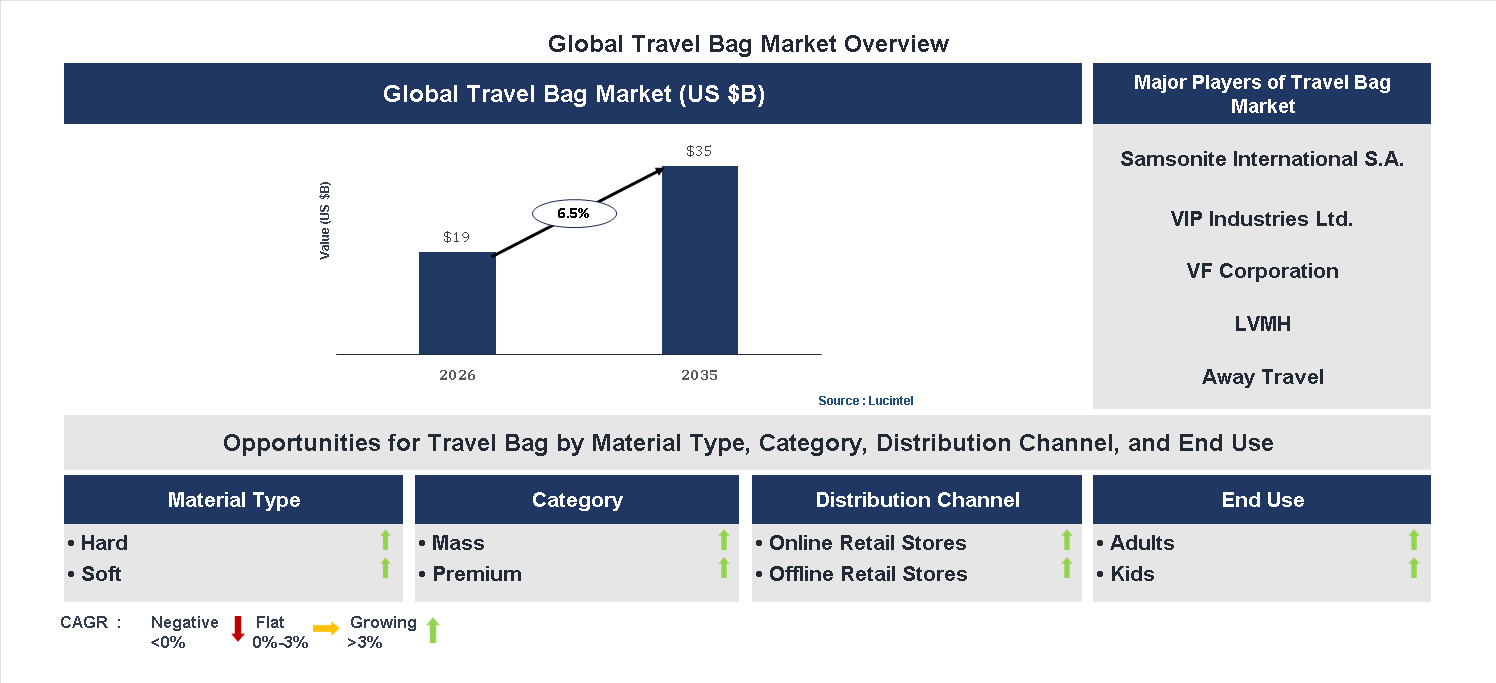
Key data points: The market size in 2035 = $35.0 billion, growth forecast = 6.5% annually for the next 8 years. Scroll below to get more insights. This market report covers trends, opportunities and forecasts in travel bag market to 2035 by material type (hard and soft), category (mass and premium), distribution channel (online retail stores and offline retail stores), end use (adults and kids), and region (North America, Europe, Asia Pacific, and the Rest of the World)
We'll send your sample report shortly.
• Lucintel forecasts that, within the material type category, soft is expected to witness higher growth over the forecast period.
• Within the end use category, adult is expected to witness higher growth.
• In terms of region, North America is expected to witness the highest growth over the forecast period. Gain valuable insights for your business decisions with our comprehensive 150+ page report. Sample figures with some insights are shown below.
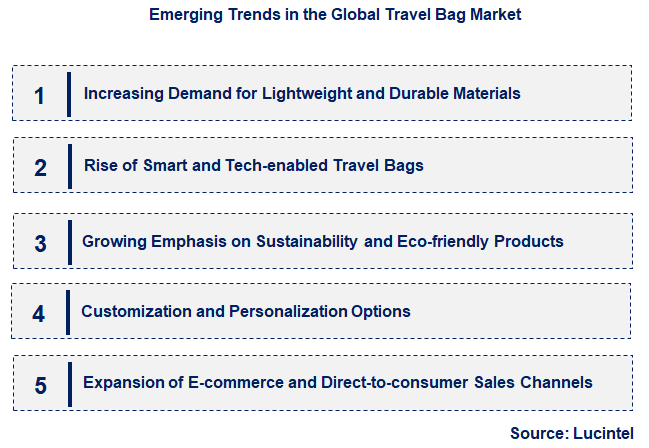
• Increasing Demand for Lightweight and Durable Materials: Consumers prioritize travel bags that are easy to carry yet sturdy enough to withstand rough handling. Innovations in materials like polycarbonate, high-denier nylon, and composite fabrics are making bags lighter without compromising strength. This trend enhances user convenience, reduces airline baggage fees, and encourages longer trips. Manufacturers are investing in research to develop advanced materials that balance weight, durability, and cost-effectiveness, thereby expanding market options and improving customer satisfaction.
• Rise of Smart and Tech-Enabled Travel Bags: Integration of technology into travel bags is transforming the market. Features such as GPS tracking, built-in USB charging ports, biometric locks, and RFID-blocking compartments are becoming standard. These smart bags offer enhanced security, convenience, and connectivity for travelers. The adoption of IoT (Internet of Things) technology allows for real-time tracking and remote management, appealing to tech-savvy consumers. This trend is driving innovation, creating premium product segments, and influencing consumer purchasing decisions.
• Growing Emphasis on Sustainability and Eco-friendly Products: Environmental concerns are prompting brands to develop sustainable travel bags using recycled, biodegradable, and eco-friendly materials. Consumers are increasingly seeking products that minimize environmental impact, leading to a surge in demand for vegan leather, recycled plastics, and natural fibers. Brands adopting sustainable practices are gaining a competitive edge, and regulations are encouraging eco-conscious manufacturing. This shift is fostering innovation in eco-materials and sustainable supply chains, ultimately reshaping the market toward greener options.
• Customization and Personalization Options: Consumers now prefer travel bags tailored to their individual needs and style preferences. Manufacturers are offering customizable features such as monogramming, modular compartments, and adjustable straps. Online platforms enable consumers to design their own bags, enhancing engagement and brand loyalty. Personalization not only improves customer satisfaction but also allows brands to differentiate themselves in a competitive market. This trend is fostering a more customer-centric approach, encouraging innovation in product design and marketing strategies.
• Expansion of E-commerce and Direct-to-consumer Sales Channels: The rise of online shopping has significantly impacted the travel bag market. Brands are increasingly adopting direct-to-consumer models, offering a wider range of products with detailed specifications and customer reviews. E-commerce platforms facilitate global reach, enabling brands to target diverse markets efficiently. Virtual try-on tools, augmented reality, and seamless logistics are enhancing the online shopping experience. This trend reduces reliance on traditional retail outlets, lowers costs, and accelerates product launches, making the market more dynamic and accessible for consumers worldwide. In summary, these emerging trends—lightweight materials, smart technology, sustainability, customization, and e-commerce expansion—are collectively reshaping the Travel Bag Market. They are driving innovation, enhancing consumer experience, and promoting sustainable practices, ultimately leading to a more competitive, customer-focused, and environmentally conscious industry landscape.
• Growing Demand for Smart Travel Bags: The integration of technology into travel bags, such as GPS tracking, USB charging ports, and biometric locks, is revolutionizing the market. Consumers seek convenience, security, and connectivity, prompting brands to develop innovative smart luggage options. This trend enhances user experience, reduces theft, and offers added functionality, making smart travel bags a significant growth driver. As technology advances, the market is expected to see increased adoption and new product launches.
• Rise of Sustainable and Eco-Friendly Materials: Consumers are increasingly prioritizing sustainability, prompting brands to adopt eco-friendly materials like recycled plastics, organic fabrics, and biodegradable components. This shift not only reduces environmental impact but also appeals to eco-conscious travelers. Companies investing in sustainable production methods are gaining a competitive advantage, fostering brand loyalty. The demand for green travel bags is expected to grow, influencing product development and supply chain practices across the industry.
• Expansion of E-Commerce and Direct-to-Consumer Sales: The surge in online shopping has transformed how consumers purchase travel bags. Brands are leveraging e-commerce platforms and direct-to-consumer models to reach wider audiences, offer personalized products, and reduce costs. This shift enables faster innovation cycles and better customer engagement. As digital channels expand, market penetration increases, and brands can gather valuable consumer data to tailor offerings, fueling overall market growth.
• Innovation in Design and Functionality: Modern travelers seek versatile, lightweight, and stylish bags with enhanced compartments and organizational features. Manufacturers are focusing on ergonomic designs, modular components, and customizable options to meet these needs. Such innovations improve user convenience and differentiate products in a competitive market. The emphasis on aesthetics combined with functionality is driving consumer interest and expanding market segments, including luxury and budget categories.
• Impact of Travel Trends and Demographics: The rise in adventure tourism, urban travel, and millennial travelers influences product offerings. Brands are developing specialized bags for different travel styles, incorporating features like anti-theft, hydration compatibility, and tech integration. Demographic shifts also lead to increased demand for trendy, affordable options. These evolving preferences are shaping product development, expanding market reach, and creating new growth opportunities across diverse consumer segments. The overall impact of these developments is a more innovative, sustainable, and consumer-centric travel bag market. Increased technological integration, eco-consciousness, and digital sales channels are driving growth, expanding market share, and enhancing customer satisfaction. As travel habits evolve, the market is poised for continued expansion, with brands adapting swiftly to meet emerging demands and preferences.
• Expanding E-commerce Channels for Travel Bag Sales: Online retail platforms are becoming primary shopping destinations, offering consumers convenience and a wider selection. Investing in digital marketing, user-friendly websites, and direct-to-consumer sales can boost brand visibility and sales. E-commerce also enables personalized shopping experiences and targeted advertising, attracting a broader customer base. As internet penetration increases globally, brands that optimize their online presence will capitalize on this growth, making e-commerce a vital channel for market expansion.
• Developing Eco-Friendly and Sustainable Travel Bags: Consumers are increasingly prioritizing sustainability, demanding eco-friendly products. Incorporating recycled materials, biodegradable fabrics, and sustainable manufacturing practices can differentiate brands. Eco-conscious travel bags appeal to environmentally aware travelers and can command premium pricing. Investing in sustainable innovation not only aligns with global environmental goals but also enhances brand reputation, fostering customer loyalty. This trend presents a significant growth avenue as sustainability becomes a key purchasing criterion.
• Introducing Smart and Tech-Integrated Travel Bags: The integration of technology into travel bags offers enhanced convenience and security. Features like GPS tracking, built-in chargers, biometric locks, and RFID-blocking compartments appeal to tech-savvy travelers. Smart bags improve travel experience and provide peace of mind, especially for frequent travelers. Developing innovative, connected products can open new revenue streams and strengthen brand positioning. As technology advances, the demand for intelligent travel solutions is expected to grow substantially.
• Customization and Personalization of Travel Bags: Consumers seek unique, personalized products that reflect their style and preferences. Offering customizable options such as monogramming, modular compartments, and color choices can attract niche markets. Personalization enhances customer engagement and loyalty, encouraging repeat purchases. Brands that leverage digital tools for customization can differentiate themselves in a competitive landscape. This opportunity caters to the growing demand for individualized products, fostering stronger emotional connections with consumers.
• Targeting Emerging Markets with Growing Travel Demand: Rapid economic growth and rising middle-class populations in emerging markets drive increased travel activity. Tailoring products to local preferences, offering affordable options, and establishing regional distribution channels can capture these expanding markets. Localized marketing strategies and partnerships with regional retailers enhance brand penetration. Investing in emerging markets allows companies to diversify revenue streams and capitalize on the expanding travel industry, positioning themselves for long-term growth in these high-potential regions. The overall market outlook is positively influenced by these strategic growth opportunities, enabling brands to innovate, expand their reach, and meet evolving consumer needs. Embracing digital transformation, sustainability, technology, customization, and emerging markets will be crucial for sustained success in the competitive travel bag industry.
• Technological Innovation: The integration of advanced materials such as lightweight, durable composites and smart features like GPS tracking and USB charging ports has revolutionized travel bags. These innovations improve user convenience, security, and durability, making products more attractive to consumers. As technology continues to evolve, manufacturers are able to offer more functional and stylish options, boosting market demand. The adoption of 3D printing and automation in manufacturing also reduces costs and accelerates product development cycles, further fueling growth.
• Rising Travel and Tourism: Increasing global travel, both leisure and business, significantly drives demand for travel bags. As disposable incomes rise and travel becomes more accessible, consumers seek high-quality, versatile luggage options. The growth of budget airlines and travel apps also encourages short trips, increasing the need for compact, lightweight bags. Moreover, the rise of experiential travel and adventure tourism prompts demand for specialized bags like backpacks and duffels, expanding market segments and boosting overall sales.
• E-commerce Expansion: The proliferation of online retail platforms has made travel bags more accessible to a broader audience. E-commerce offers consumers a wide variety of brands, styles, and price points, facilitating informed purchasing decisions. Digital marketing strategies, customer reviews, and easy return policies enhance consumer confidence and drive sales. The convenience of home delivery and targeted advertising further stimulates market growth, enabling brands to reach niche markets and expand their customer base globally.
• Sustainability and Eco-friendly Materials: Growing environmental awareness among consumers influences market trends toward sustainable products. Manufacturers are adopting eco-friendly materials such as recycled plastics, organic fabrics, and biodegradable components to meet demand. Certification standards and eco-labels also appeal to environmentally conscious buyers. This shift not only enhances brand reputation but also aligns with regulatory pressures to reduce carbon footprints, encouraging innovation in sustainable manufacturing practices and expanding eco-conscious product lines.
• Changing Consumer Preferences: Modern consumers prioritize style, functionality, and personalization in travel bags. The demand for trendy, customizable, and multi-functional bags influences product design and marketing strategies. Millennials and Gen Z travelers seek brands that reflect their lifestyle and values, including inclusivity and ethical production. This shift compels manufacturers to innovate in aesthetics and features, creating a competitive edge and expanding market share through targeted offerings that resonate with evolving consumer tastes. The challenges facing the travel bag market include:
• Regulatory Compliance and Standards: Stringent safety, quality, and environmental regulations pose significant hurdles for manufacturers. Compliance with international standards such as TSA approval, fire safety, and eco-label certifications requires substantial investment in testing and certification processes. Non-compliance can lead to product recalls, legal penalties, and damage to brand reputation. Navigating diverse regulatory landscapes across countries complicates market entry and expansion, demanding continuous adaptation to evolving standards and increasing operational costs.
• Supply Chain Disruptions: Global supply chains are vulnerable to disruptions caused by geopolitical tensions, pandemics, and natural disasters. Shortages of raw materials like plastics, textiles, and metals can delay production and increase costs. Logistic challenges, including port congestion and transportation delays, further impact delivery timelines and inventory management. These disruptions threaten to reduce product availability, diminish sales, and erode profit margins, requiring companies to develop resilient supply chain strategies and diversify sourcing options.
• Intense Market Competition: The Travel Bag Market is highly competitive, with numerous established brands and new entrants vying for consumer attention. Price wars, innovation races, and marketing battles intensify pressure on profit margins. Differentiating products through design, features, and branding becomes crucial but challenging. Additionally, counterfeit products and grey markets undermine genuine brands, complicating market positioning. Companies must continuously innovate and invest in branding to maintain market share amid this fierce competition, which can strain resources and strategic focus. In summary, the travel bag market is shaped by rapid technological advancements, increasing travel activity, and a shift toward sustainable and personalized products. However, regulatory complexities, supply chain vulnerabilities, and intense competition pose significant challenges. These drivers and obstacles collectively influence market dynamics, requiring industry players to innovate, adapt, and strategize effectively. Success in this evolving landscape depends on balancing innovation with compliance, resilience with agility, and differentiation with cost management, ultimately determining the markets growth trajectory and sustainability.
• Samsonite International S.A.
• VIP Industries Ltd.
• VF Corporation
• LVMH
• Away Travel
• Travelpro
• Delsey Paris
• Briggs & Riley
• Calpak
• Monos
• Hard
• Soft
• Mass
• Premium
• Online Retail Stores
• Offline Retail Stores
• Adults
• Kids
• North America
• Europe
• Asia Pacific
• The Rest of the World
• United States: The US market has seen a surge in smart travel bags equipped with GPS tracking and USB charging ports. Sustainability is a key focus, with brands adopting recycled materials and eco-friendly manufacturing processes. E-commerce sales continue to grow, driven by online retail giants and direct-to-consumer brands. Consumers favor lightweight, durable, and versatile designs, especially for business and leisure travel. Major brands are expanding their product lines to include modular and customizable options, catering to a diverse customer base. The US also witnesses increased adoption of premium and luxury travel bags, reflecting a shift towards quality and brand prestige.
• China: China’s travel bag market is rapidly expanding, fueled by rising domestic tourism and middle-class income growth. Innovative designs incorporating smart features, such as biometric locks and built-in chargers, are gaining popularity. Local brands are gaining market share by offering affordable, stylish, and functional products. E-commerce platforms like Tmall and JD.com play a crucial role in distribution, enabling quick access to new collections. Sustainability efforts are emerging, with brands exploring eco-friendly materials. The market also benefits from government initiatives promoting tourism, which boost demand for travel accessories, including high-capacity and lightweight luggage.
• Germany: The German market emphasizes quality, durability, and eco-consciousness. Many brands focus on sustainable production, using recycled and biodegradable materials. Technological integration, such as RFID-blocking compartments and smart locks, is increasingly common. The market favors functional, minimalist designs suitable for business travelers and frequent flyers. Germany’s strong e-commerce infrastructure supports online sales growth, complemented by brick-and-mortar stores emphasizing premium products. There is also a rising trend in modular and expandable travel bags, catering to versatile travel needs. Overall, German consumers prioritize longevity, craftsmanship, and environmental responsibility.
• India: The Indian travel bag market is experiencing rapid growth due to increasing outbound and domestic travel. Affordability and durability are key factors influencing consumer choices. Brands are introducing a wide range of products, from budget-friendly to premium options, with a focus on lightweight and spacious designs. E-commerce platforms like Flipkart and Amazon are vital distribution channels. There is a rising demand for trendy, vibrant, and culturally inspired designs. Sustainability is gradually gaining attention, with some brands exploring eco-friendly materials. The market is also witnessing innovations in lock security and multi-compartment features to cater to the evolving needs of Indian travelers.
• Japan: Japan’s market is characterized by a focus on high-quality, innovative, and compact travel bags. Smart features such as anti-theft systems and lightweight, ergonomic designs are popular. The emphasis on minimalism and functionality aligns with Japanese consumer preferences. Eco-friendly materials and sustainable manufacturing practices are increasingly adopted by brands. E-commerce sales are robust, supported by a tech-savvy population that values convenience and innovation. Premium and designer travel bags are in demand among affluent consumers. The market also sees a trend toward modular and versatile luggage that adapts to various travel scenarios, reflecting Japan’s meticulous approach to quality and design.


• Samsonite International S.A.
• VIP Industries Ltd.
• VF Corporation
• LVMH
• Away Travel
• Travelpro
• Delsey Paris
• Briggs & Riley
• Calpak
• Monos Q6. Which travel bag market segment will be the largest in future? Answer: Lucintel forecasts that, within the material type category, soft is expected to witness higher growth over the forecast period. Q7. In travel bag market, which region is expected to be the largest in next 5 years? Answer: In terms of region, North America is expected to witness the highest growth over the forecast period. Q8. Do we receive customization in this report? Answer: Yes, Lucintel provides 10% customization without any additional cost.


Choose a license that fits your team. Instant PDF delivery.
Prices exclude taxes. Instant delivery. Custom licensing available on request.
Market Report · July 31, 2026
Market Report · July 31, 2026
Market Report · July 31, 2026
Trusted partner for strategic intelligence and business growth


Receive a complimentary market analysis tailored to your industry. Our analysts will identify key growth opportunities and competitive dynamics specific to your business.

Market size, growth rate, and key trend analysis for your specific sector.

Top competitor positioning and market share analysis.

Strategic recommendations backed by data-driven insights.
Get curated market intelligence and competitive moves straight to your inbox.
By subscribing, you agree to receive our monthly insights. Unsubscribe anytime.
Receive a complimentary market analysis tailored to your industry. Our analysts will identify key growth opportunities and competitive dynamics specific to your business.
Market size, growth rate, and key trend analysis for your specific sector.
Top competitor positioning and market share analysis.
Strategic recommendations backed by data-driven insights.
Get curated market intelligence, emerging trends, and competitive moves straight to your inbox each month.
By subscribing, you agree to receive our monthly insights. Unsubscribe anytime.
We'll send your sample report shortly.