
Report Feature
Trauma Bag Market Trends and Forecast
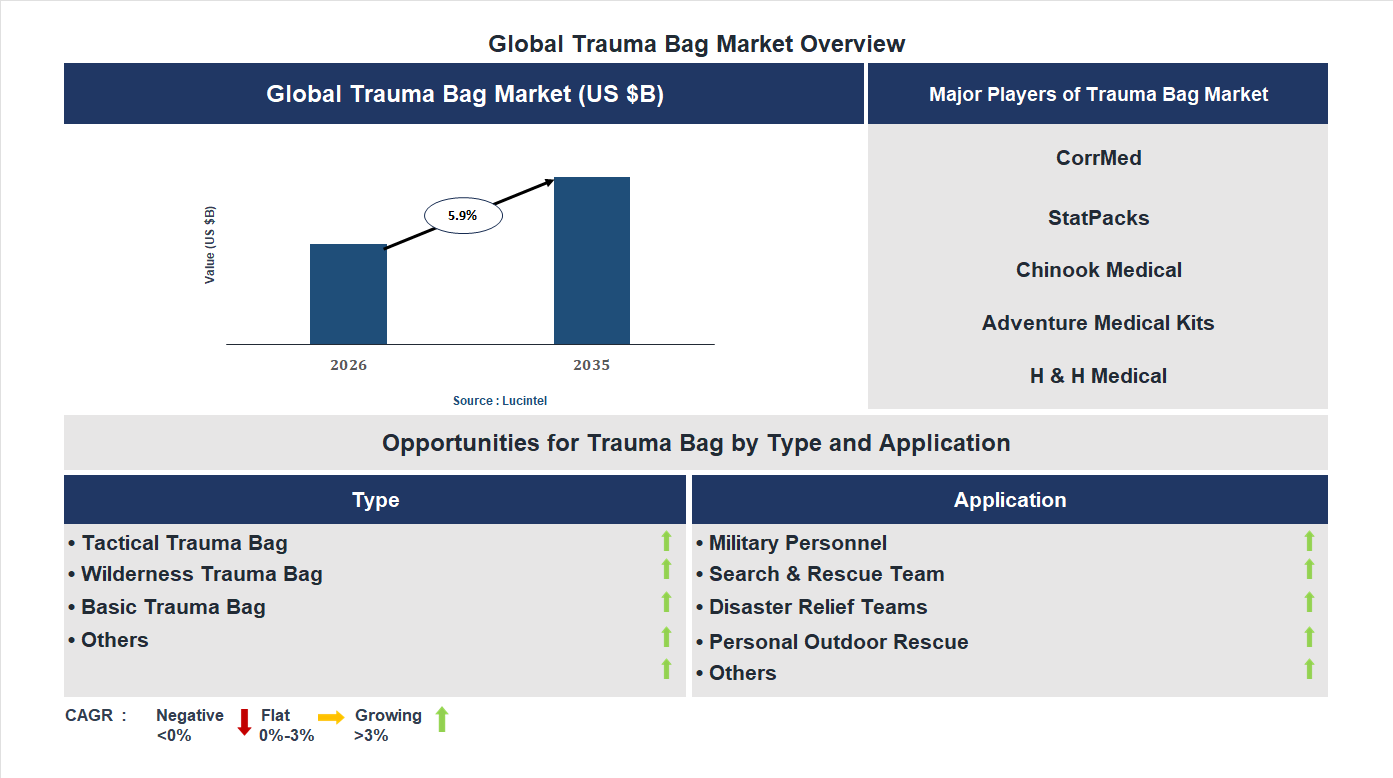
The future of the global trauma bag market looks promising with opportunities in the military personnel, search & rescue team, disaster relief teams, and personal outdoor rescue markets. The global trauma bag market is expected to reach an estimated $3 billion by 2035 with a CAGR of 7.9% from 2026 to 2035. The major drivers for this market are the increasing incidence of accidents & trauma cases, the rising demand for pre-hospital care, and the growing adoption of advanced trauma kits.• Lucintel forecasts that, within the type category, tactical trauma bag is expected to witness the highest growth over the forecast period.
• Within the application category, search & rescue team is expected to witness the highest growth.
• In terms of region, APAC is expected to witness the highest growth over the forecast period. Gain valuable insights for your business decisions with our comprehensive 150+ page report. Sample figures with some insights are shown below.
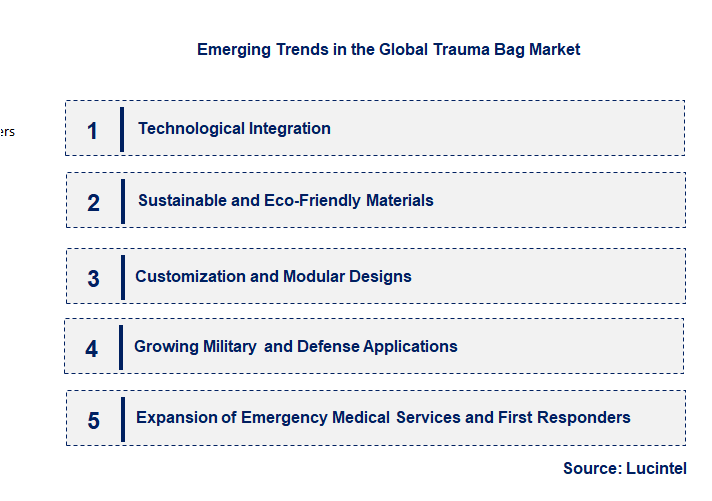
Emerging Trends in the Trauma Bag Market
The trauma bag market is experiencing rapid evolution driven by technological advancements, changing healthcare needs, and increasing awareness of emergency preparedness. As global health systems adapt to new challenges, the demand for innovative, efficient, and portable trauma bags is rising. Market players are focusing on product customization, sustainable materials, and integration of smart features to meet diverse user requirements. These developments are not only enhancing the functionality and safety of trauma bags but also expanding their applications across various sectors such as military, emergency services, and hospitals. The following key trends highlight the transformative shifts shaping this dynamic market landscape.• Technological Integration: Trauma bags are increasingly equipped with smart technology such as RFID tags, GPS tracking, and digital inventory systems. These features enable quick identification, real-time tracking, and efficient management of medical supplies, especially in emergencies. The integration of technology improves response times, reduces inventory errors, and enhances overall operational efficiency. As healthcare providers seek more connected solutions, smart trauma bags are becoming essential for modern emergency response teams, thereby driving market growth and innovation.
• Sustainable and Eco-Friendly Materials: There is a growing emphasis on using sustainable, biodegradable, and eco-friendly materials in trauma bag manufacturing. This trend aligns with global environmental concerns and the healthcare industry's push towards sustainability. Eco-conscious consumers and organizations prefer products that minimize environmental impact without compromising quality or durability. Manufacturers are adopting recycled fabrics, biodegradable plastics, and eco-friendly dyes, which not only appeal to environmentally aware customers but also meet regulatory standards. This shift is fostering innovation in material science and expanding the market for green trauma bags.
• Customization and Modular Designs: The demand for customizable trauma bags tailored to specific needs is rising. Modular designs allow users to configure compartments, pouches, and accessories based on the type of emergency or user preference. This flexibility enhances usability across different sectors such as the military, sports, and civilian emergency services. Customization improves efficiency, accessibility, and organization, making trauma bags more versatile and user-friendly. As end-users seek tailored solutions, manufacturers are investing in modular systems, thereby broadening market options and increasing customer satisfaction.
• Growing Military and Defense Applications: The increasing focus on military preparedness and defense strategies is significantly impacting the trauma bag market. Military personnel require durable, lightweight, and highly functional trauma kits for battlefield injuries. The demand for specialized trauma bags with advanced features such as ballistic resistance and quick-access compartments is rising. This trend is driven by government investments in defense and the need for rapid medical response in conflict zones. The military sectors growth is stimulating innovation and expanding the scope of trauma bag applications beyond civilian use, thus fueling overall market expansion.
• Expansion of Emergency Medical Services (EMS) and First Responders: The expansion and modernization of EMS and first responder units globally are propelling the demand for high-quality trauma bags. Increased investment in emergency infrastructure, training, and equipment enhances the capacity of first responders to deliver effective care. Portable, lightweight, and well-organized trauma bags are crucial for quick response and effective treatment. This trend is supported by rising awareness of emergency preparedness and disaster management. As EMS systems evolve, the market for specialized trauma bags is expected to grow, offering opportunities for innovation and increased market penetration. These trends are collectively reshaping the trauma bag market by fostering innovation, emphasizing sustainability, and expanding application areas. The integration of technology, focus on eco-friendly materials, customization options, military applications, and EMS expansion are driving growth and transforming how trauma care is delivered in emergencies. These developments are making trauma bags more efficient, versatile, and aligned with modern healthcare and security needs.
Recent Development in the Trauma Bag Market
The trauma bag market is experiencing rapid growth driven by increasing global healthcare needs, rising awareness of emergency preparedness, and technological advancements in medical equipment. As populations grow and urbanize, the demand for efficient trauma management solutions intensifies. Governments and healthcare providers are investing heavily in emergency response infrastructure. This evolving landscape presents significant opportunities for innovation and expansion, impacting manufacturers, distributors, and end-users alike. Staying abreast of these developments is crucial for stakeholders aiming to capitalize on emerging trends and improve trauma care outcomes worldwide.• Growing Demand for Emergency Medical Supplies: The increasing incidence of accidents and trauma cases worldwide is fueling demand for advanced trauma bags. Healthcare facilities, emergency responders, and military organizations seek reliable, portable, and durable solutions to ensure quick access to essential medical supplies. This surge is driven by urbanization, industrialization, and rising awareness of trauma management. As a result, manufacturers are innovating to meet diverse needs, expanding product portfolios, and enhancing distribution channels, which collectively boost market growth and improve emergency response efficiency.
• Technological Innovations in Trauma Bag Design: Recent developments include lightweight materials, modular compartments, and integrated safety features, enhancing usability and safety. Smart trauma bags equipped with sensors and tracking systems are emerging, enabling real-time inventory management and location tracking. These innovations improve response times, reduce errors, and optimize resource allocation during emergencies. As technology advances, the market is witnessing increased adoption of high-tech solutions, leading to better patient outcomes and setting new standards in trauma care.
• Rising Adoption in Military and Disaster Response: Governments and defense agencies are investing in specialized trauma bags for military and disaster scenarios. These bags are designed to withstand harsh environments, provide rapid access to critical supplies, and support field medical procedures. The focus on preparedness and rapid deployment has expanded the market, encouraging manufacturers to develop rugged, versatile products. This trend enhances emergency response capabilities, reduces casualties, and fosters collaboration between military, healthcare, and disaster management sectors.
• Increasing Focus on Customization and Personalization: Stakeholders are demanding trauma bags tailored to specific needs, such as pediatric, bariatric, or tactical applications. Customization improves efficiency, safety, and user comfort, leading to higher adoption rates. Manufacturers are offering personalized options, including branding, specialized compartments, and ergonomic designs. This trend caters to diverse end-user requirements, enhances user experience, and opens new revenue streams, ultimately strengthening market competitiveness and expanding the scope of trauma management solutions.
• Expansion of Market Through Strategic Partnerships and Mergers: Companies are forming alliances, joint ventures, and acquiring smaller firms to expand product offerings and geographic reach. These strategic moves facilitate innovation, improve supply chain efficiency, and enable entry into emerging markets. Collaborations with healthcare providers and emergency services enhance product development and distribution. Such partnerships accelerate market penetration, foster technological advancements, and support sustainable growth, positioning key players as leaders in the evolving trauma bag industry. The overall impact of these developments is a more dynamic, innovative, and responsive trauma bag market. Enhanced product offerings, technological integration, and strategic collaborations are improving emergency response capabilities globally. This growth not only benefits healthcare providers and emergency responders but also ensures better patient outcomes, increased safety, and expanded access to advanced trauma management solutions across diverse settings.
Strategic Growth Opportunities in the Trauma Bag Market
The trauma bag market is experiencing significant growth driven by increasing global healthcare needs, rising awareness of emergency preparedness, and expanding applications across hospitals, ambulances, and military sectors. Technological advancements and product innovations are further fueling demand. Market players are focusing on strategic collaborations and expanding distribution channels to capture emerging opportunities. As emergency response systems strengthen worldwide, the trauma bag market is poised for sustained expansion, offering substantial potential for manufacturers and stakeholders to innovate and meet evolving safety and medical needs.• Increasing Demand for Emergency Medical Supplies: The rising incidence of accidents, natural disasters, and trauma cases globally is boosting the need for efficient emergency medical supplies. Trauma bags, essential for quick response, are becoming a critical component in ambulances, hospitals, and military operations. Governments and private organizations are investing heavily in emergency preparedness, which directly correlates with increased procurement of trauma bags. This trend is expected to continue, driven by the need for rapid, organized medical response in critical situations.
• Technological Innovations in Trauma Bag Design: Advances in materials, ergonomic features, and modular designs are transforming trauma bags into more functional and user-friendly tools. Lightweight, durable, and customizable bags with integrated compartments for specific medical supplies are gaining popularity. Innovations such as antimicrobial fabrics and smart features like temperature control and RFID tagging enhance usability and safety. These technological improvements are expanding the market by meeting the evolving needs of emergency responders and healthcare providers.
• Growing Adoption in Military and Defense Sectors: The military sectors focus on enhancing battlefield medical response capabilities is a significant growth driver. Trauma bags designed for rugged environments, quick access, and comprehensive medical supplies are increasingly adopted by defense forces worldwide. Strategic military collaborations and procurement policies are fueling demand. As conflicts and security concerns persist, the military's reliance on advanced trauma bags is expected to grow, creating substantial opportunities for manufacturers specializing in tactical and durable medical kits.
• Expansion of Trauma Bag Applications in Hospitals and Clinics: Hospitals and clinics are expanding their trauma care capabilities, leading to increased procurement of specialized trauma bags. These bags are now tailored for specific departments such as emergency rooms, surgical units, and outpatient clinics. The rising focus on trauma training and preparedness programs further boosts demand. Additionally, the integration of trauma bags into routine emergency protocols enhances patient outcomes, encouraging healthcare facilities to invest in high-quality, versatile trauma management solutions.
• Rising Focus on Customization and Personalization: Customized trauma bags tailored to specific medical specialties, user preferences, and operational environments are gaining traction. Personalization options include branding, modular configurations, and specialized compartments. This trend caters to diverse needs across emergency services, military, and civilian sectors. Manufacturers are offering bespoke solutions to improve efficiency and user experience, which enhances customer loyalty and market differentiation. The demand for personalized trauma bags is expected to grow as organizations seek tailored, effective emergency response tools. The overall market outlook indicates that these growth opportunities will significantly enhance innovation, expand application scopes, and increase demand across various sectors. As stakeholders capitalize on technological advancements and strategic collaborations, the trauma bag market is set to experience sustained growth, ultimately improving emergency response effectiveness and saving more lives worldwide.
Trauma Bag Market Driver and Challenges
The trauma bag market is influenced by a variety of technological, economic, and regulatory factors that shape its growth and development. Advances in medical technology and portable emergency equipment have increased demand for efficient trauma bags. Economic factors such as rising healthcare expenditure and increased investment in emergency services further propel market expansion. Regulatory standards and safety protocols ensure product quality and compliance, influencing manufacturing and distribution. Additionally, demographic shifts, including aging populations and increased accident rates, contribute to market dynamics. Navigating these drivers and overcoming associated challenges is essential for stakeholders aiming to capitalize on emerging opportunities within this sector. The factors responsible for driving the trauma bag market include:-• Technological Advancements: The integration of innovative materials and design improvements in trauma bags enhances durability, portability, and functionality. Features like lightweight construction, modular compartments, and antimicrobial fabrics meet the evolving needs of emergency responders and healthcare providers. These technological innovations improve patient outcomes by enabling quicker access to essential supplies and ensuring the safety of both patients and medical personnel. As technology continues to evolve, trauma bags are becoming more sophisticated, which drives market growth by attracting new customers and expanding applications across various emergency scenarios.
• Increasing Healthcare Expenditure: Rising healthcare budgets worldwide, especially in developed countries, are fueling demand for advanced emergency medical equipment, including trauma bags. Governments and private healthcare providers are investing heavily in emergency preparedness and response infrastructure. This increased spending ensures the availability of high-quality trauma kits in hospitals, ambulances, and disaster management units. The growing emphasis on rapid response and improved patient care directly correlates with higher procurement of trauma bags, thereby expanding the market and encouraging manufacturers to innovate and diversify their product offerings.
• Growing Incidence of Accidents and Trauma Cases: The rising prevalence of road accidents, workplace injuries, and natural disasters globally has significantly increased the need for immediate medical intervention. This surge in trauma cases necessitates the widespread availability of well-equipped trauma bags in ambulances, rescue operations, and hospitals. The demand for portable, comprehensive trauma kits that can be quickly deployed in emergencies is thus on the rise. This trend not only boosts market growth but also encourages manufacturers to develop specialized trauma bags tailored to specific injury types and emergency scenarios.
• Regulatory and Safety Standards: Stringent regulatory frameworks and safety standards imposed by health authorities and government agencies ensure the quality and reliability of trauma bags. Compliance with standards such as ISO certifications and medical device regulations influences product design, manufacturing processes, and distribution channels. These regulations foster consumer confidence and promote market growth by ensuring that trauma bags meet essential safety and efficacy criteria. Manufacturers investing in compliance are better positioned to access global markets, thereby driving overall industry expansion.
• Increasing Adoption of Emergency Medical Services (EMS): The expansion and modernization of EMS infrastructure worldwide are pivotal drivers of the trauma bag market. Governments and private organizations are investing in ambulance services, rescue teams, and disaster response units to improve emergency care. The need for standardized, high-quality trauma kits in these services ensures rapid, effective treatment, reducing mortality and morbidity rates. As EMS systems become more sophisticated and widespread, the demand for reliable trauma bags increases, creating opportunities for innovation and market penetration across diverse regions. The challenges facing the trauma bag market include:-
• High Cost of Advanced Trauma Bags: The incorporation of cutting-edge materials and features in trauma bags often results in higher manufacturing costs. This can lead to increased prices, limiting accessibility for smaller healthcare providers and emergency services with constrained budgets. The high cost may hinder widespread adoption, especially in developing regions, thereby restricting market growth. Manufacturers must balance innovation with affordability to expand their customer base and ensure broader market penetration.
• Regulatory Complexity and Compliance: Navigating the complex landscape of international regulatory standards poses a significant challenge for market players. Variations in regulations across countries can delay product approval, increase compliance costs, and complicate distribution strategies. Non-compliance or delays in certification can result in market entry barriers, legal issues, and reputational damage. Staying abreast of evolving standards requires substantial investment in quality assurance and regulatory expertise, which can be resource-intensive for companies.
• Market Competition and Fragmentation: The trauma bag market is highly competitive, with numerous local and global players vying for market share. This fragmentation leads to price wars, reduced profit margins, and challenges in establishing brand loyalty. Additionally, the presence of counterfeit or substandard products can undermine market integrity and safety standards. Companies must invest in innovation, branding, and quality assurance to differentiate themselves and sustain growth amid intense competition. The trauma bag market is driven by technological innovations, increased healthcare spending, rising trauma incidences, regulatory standards, and expanding emergency medical services. However, high costs, regulatory hurdles, and intense competition pose significant challenges. These factors collectively influence market dynamics, requiring stakeholders to innovate strategically, ensure compliance, and focus on affordability to capitalize on growth opportunities. Overall, the markets future hinges on balancing technological progress with regulatory adherence and cost management to meet the growing global demand for effective trauma care solutions.
List of Trauma Bag Companies
Companies in the market compete on the basis of product quality offered. Major players in this market focus on expanding their manufacturing facilities, R&D investments, infrastructural development, and leverage integration opportunities across the value chain. With these strategies trauma bag companies cater increasing demand, ensure competitive effectiveness, develop innovative products & technologies, reduce production costs, and expand their customer base. Some of the trauma bag companies profiled in this report include-• CorrMed
• StatPacks
• Chinook Medical
• Adventure Medical Kits
• H & H Medical
• Surviveware
• Leonhard Lang USA, Inc
• North American Rescue
• Swiss Safety
• RISEN Medical
Trauma Bag Market by Segment
The study includes a forecast for the global trauma bag market by type, application, and region.Trauma Bag Market by Type [Value from 2019 to 2035]:
• Tactical Trauma Bag
• Wilderness Trauma Bag
• Basic Trauma Bag
• Others
Trauma Bag Market by Application [Value from 2019 to 2035]:
• Military Personnel
• Search & Rescue Team
• Disaster Relief Teams
• Personal Outdoor Rescue
• Others
Trauma Bag Market by Region [Value from 2019 to 2035]:
• North America
• Europe
• Asia Pacific
• The Rest of the World
Country Wise Outlook for the Trauma Bag Market
The trauma bag market has experienced significant growth driven by increasing awareness of emergency preparedness, advancements in medical technology, and rising incidences of accidents and trauma cases worldwide. Countries are investing in innovative products to improve emergency response capabilities, leading to rapid market expansion. Regulatory standards and healthcare infrastructure improvements further influence market dynamics. The following summaries highlight recent developments in the trauma bag market across the United States, China, Germany, India, and Japan, reflecting regional trends and innovations.• United States: The US trauma bag market has seen substantial growth due to rising emergency medical services (EMS) demand and technological innovations. Manufacturers are focusing on lightweight, durable, and multi-compartment designs to enhance portability and organization. The adoption of smart trauma bags with integrated sensors for inventory management is increasing. Additionally, government initiatives to improve disaster preparedness and trauma care standards are fueling market expansion. The US also emphasizes eco-friendly materials, aligning with sustainability goals.
• China: Chinas trauma bag market is rapidly expanding, driven by increasing urbanization and a surge in road accidents and industrial injuries. Local manufacturers are investing in cost-effective, high-quality products to meet domestic demand. The government’s focus on improving emergency medical infrastructure and disaster response capabilities is boosting market growth. Innovations include modular trauma bags with customizable compartments and advanced materials for durability. The rising awareness of first aid and emergency preparedness among the population also contributes to market development.
• Germany: Germanys trauma bag market is characterized by high-quality standards and technological innovation. The country’s strong healthcare infrastructure and strict regulatory environment promote the adoption of advanced trauma bags with enhanced features such as antimicrobial fabrics and ergonomic designs. There is a growing trend toward personalized trauma kits tailored to specific emergency scenarios. Germany also emphasizes sustainable manufacturing practices, incorporating eco-friendly materials and processes. The market benefits from collaborations between medical device companies and emergency services to develop specialized products.
• India: The trauma bag market in India is witnessing rapid growth due to increasing accidents, road traffic injuries, and a rising healthcare awareness. Local companies are developing affordable, durable trauma bags suitable for diverse environments, including rural areas. The government’s focus on improving emergency medical services and disaster management infrastructure is a key driver. Innovations include lightweight, portable designs with essential medical supplies. The expanding private healthcare sector and increased training in first aid are further propelling market growth, with a focus on affordability and accessibility.
• Japan: Japan's trauma bag market is driven by advanced healthcare systems and a high emphasis on disaster preparedness, given its susceptibility to earthquakes and tsunamis. The market features high-tech trauma bags with integrated communication devices and advanced medical supplies. Japanese manufacturers prioritize compact, lightweight, and highly durable products suitable for urban and remote emergency scenarios. The government’s initiatives for disaster readiness and the integration of smart technology into emergency equipment are significant factors. Sustainability and eco-friendly materials are also gaining importance in product development.

Features of the Global Trauma Bag Market
Market Size Estimates: Trauma bag market size estimation in terms of value ($B). Trend and Forecast Analysis: Market trends (2019 to 2025) and forecast (2026 to 2035) by various segments and regions. Segmentation Analysis: Trauma bag market size by type, application, and region in terms of value ($B). Regional Analysis: Trauma bag market breakdown by North America, Europe, Asia Pacific, and Rest of the World. Growth Opportunities: Analysis of growth opportunities in different types, applications, and regions for the trauma bag market. Strategic Analysis: This includes M&A, new product development, and competitive landscape of the trauma bag market. Analysis of competitive intensity of the industry based on Porter’s Five Forces model.
FAQ
Q1. What is the market size and growth forecast for trauma bag market? Answer: The global trauma bag market is expected to reach an estimated $3 billion by 2035 and grow with a CAGR of 7.9% from 2026 to 2035. Q2. What are the major drivers influencing the growth of the trauma bag market? Answer: The major drivers for this market are the increasing incidence of accidents & trauma cases, the rising demand for pre-hospital care, and the growing adoption of advanced trauma kits. Q3. What are the major segments for trauma bag market? Answer: The future of the trauma bag market looks promising with opportunities in the military personnel, search & rescue team, disaster relief teams, and personal outdoor rescue markets. Q4. Who are the key trauma bag market companies? Answer: Some of the key trauma bag companies are as follows:• CorrMed
• StatPacks
• Chinook Medical
• Adventure Medical Kits
• H & H Medical
• Surviveware
• Leonhard Lang USA, Inc
• North American Rescue
• Swiss Safety
• RISEN Medical Q5. Which trauma bag market segment will be the largest in future? Answer: Lucintel forecasts that, within the type category, tactical trauma bag is expected to witness the highest growth over the forecast period. Q6. In trauma bag market, which region is expected to be the largest in next 5 years? Answer: In terms of region, APAC is expected to witness the highest growth over the forecast period. Q7. Do we receive customization in this report? Answer: Yes, Lucintel provides 10% customization without any additional cost.
Table of Contents
List of Figures
List of Tables
Methodology
- In-depth interviews of the major players in this market
- Detailed secondary research from competitors’ financial statements and published data
- Extensive searches of published works, market, and database information pertaining to industry news, company press releases, and customer intentions
- A compilation of the experiences, judgments, and insights of Lucintel’s professionals, who have analyzed and tracked this market over the years.


Buy Now
Choose a license that fits your team. Instant PDF delivery.
Prices exclude taxes. Instant delivery. Custom licensing available on request.
Key Questions
- • What are some of the most promising, high-growth opportunities for the trauma bag market by type (tactical trauma bag, wilderness trauma bag, basic trauma bag, and others), application (military personnel, search & rescue team, disaster relief teams, personal outdoor rescue, and others), and region (North America, Europe, Asia Pacific, and the Rest of the World)?
- • Which segments will grow at a faster pace and why?
- • Which region will grow at a faster pace and why?
- • What are the key factors affecting market dynamics? What are the key challenges and business risks in this market?
- • What are the business risks and competitive threats in this market?
- • What are the emerging trends in this market and the reasons behind them?
- • What are some of the changing demands of customers in the market?
- • What are the new developments in the market? Which companies are leading these developments?
- • Who are the major players in this market? What strategic initiatives are key players pursuing for business growth?
- • What are some of the competing products in this market and how big of a threat do they pose for loss of market share by material or product substitution?
- • What M&A activity has occurred in the last 7 years and what has its impact been on the industry? For any questions related to Trauma Bag Market, Trauma Bag Market Size, Trauma Bag Market Growth, Trauma Bag Market Analysis, Trauma Bag Market Report, Trauma Bag Market Share, Trauma Bag Market Trends, Trauma Bag Market Forecast, Trauma Bag Companies, write Lucintel analyst at email: helpdesk@lucintel.com. We will be glad to get back to you soon.


