
Market Report · July 22, 2026

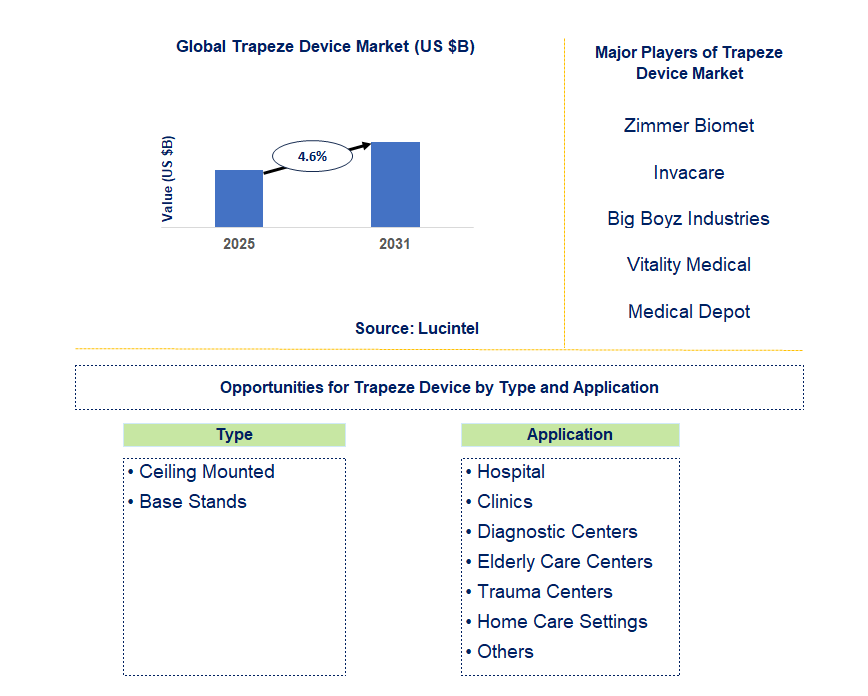
Key data points: The growth forecast = 4.6% annually for the next 7 years. Scroll below to get more insights. This market report covers Trends, opportunities and forecasts in trapeze device market to 2031 by type (ceiling mounted and base stands), application (hospital, clinics, diagnostic centers, elderly care centers, trauma centers, home care settings, and others), and region (North America, Europe, Asia Pacific, and the Rest of the World)
We'll send your sample report shortly.
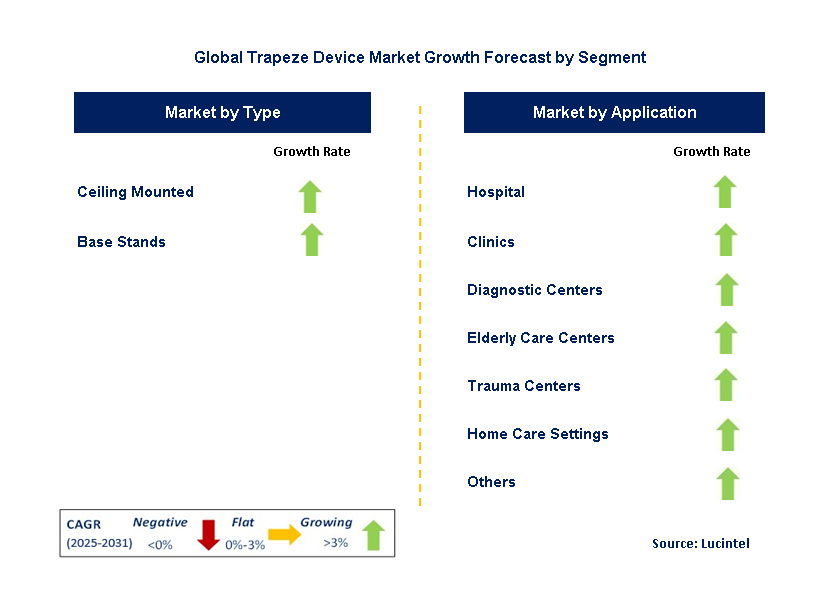
• Lucintel forecasts that, within the type category, ceiling mounted is expected to witness higher growth over the forecast period.
• Within the application category, hospital is expected to witness the highest growth.
• In terms of region, North America will remain the largest region over the forecast period.
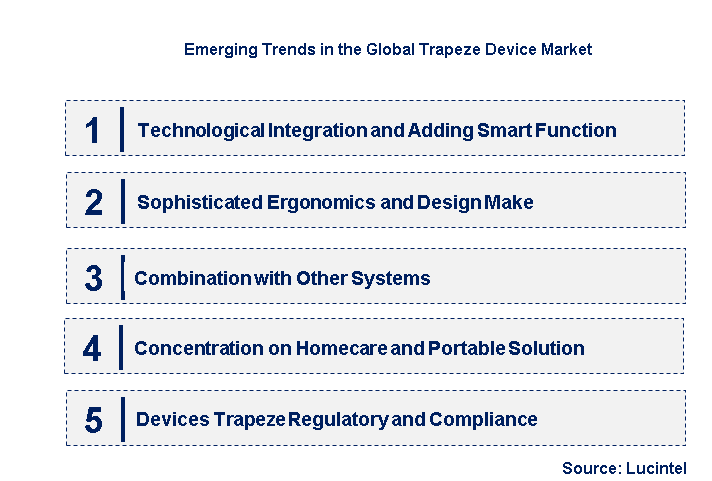
• Technological Integration and Adding Smart Function: Trapeze devices are being incorporated with smart technologies such as remote monitoring and automated adjustment. These innovations give caregivers the ability to monitor patient utilization and guarantee their safety. Patients using the trapeze device can be monitored for movement with sensors which can alert if some aid is required. Integration with hospital information systems enables better patient management by allowing sharing of real-time information. Such advancements enhance patient independence and lower the burden on caregivers, thus making trapeze devices more intelligent and adaptable.
• Sophisticated Ergonomics and Design Make: Modern trapeze devices consider the ergonomics and comfort of the patient. Newer lightweight models that are adjustable and easy to install have become popular for homecare, for example. There is a focus on design which minimizes the effort needed to operate the device and optimally supports the patient. Enhanced grips, flexible positioning, and customizable options are further improving patient autonomy. These improvements are vital for people with restricted mobility and for reducing caregiver workload.
• Combination with Other Systems: Some trapeze devices are being designed to operate and move in unison with other accessories, especially with hospital beds. This kind of combination allows for synchronized shifting of the patient to be done, therefore avoiding injuries during movements. There is now a market for trapeze devices that adjust their height and inclination to that of the bed. This trend improves ergonomics and increases safety while transferring or repositioning the patient. Such combinations reduce the number of other devices that are required in the room, and therefore enable better arrangement of sanatorium rooms.
• Concentration on Homecare and Portable Solution: The portable trapeze device is becoming more popular as a home healthcare service. Easy to transport trapeze devices that fold and are compact are used by patients who prefer rehabilitation at home. Homecare trapeze devices are often easy to put together and take apart which makes them perfect for temporary use. This is an example of the movement toward portable and easy to use solutions for healthcare.
• Devices Trapeze Regulatory and Compliance: A more important checkpoint is adherence with safety regulations and quality of trapeze devices. They use more expensive materials, sturdiness, and international medical grade standards. Regulatory bodies are enforcing certifications so that the patients are safe. Meeting regulations makes certain that the devices are dependable whether they are used in hospitals or homes which increases usage. Compliance improves the perception of patients and caregivers which is good for the market growth. Trends focused on patient safety, homecare, and agility in these devices are far more emphasized which reshapes the market for trapeze devices. Making these machines smarter, and user friendlier makes all other healthcare sectors jump on the sound devices. For patients seeking movable assistive devices, caregivers wanting to improve efficiency, further innovations in use of trapeze devices is critical.
• Introduction of New Electric and Height Adjustable Trapeze Device: The newest electric trapeze devices enable the patients to position themselves with little movement. These advancements assist caregivers, so there are less dependent on them. The usage of electric devices is increasing in hospitals and nursing homes for use in rehabilitation and extended care.
• Smart Telescopes With Remote Monitoring: Smart trapeze systems are being designed with the ability to cut off and monitor being basic but smart trapeze systems devote greater attention to security. These intelligent systems put an end to misuse and guarantee prompt action in emergency situations. Lack of contact enables caregivers to supervise their wards freely which reduces the risk of falling and enables quick help.
• Growth of Devices Suitable for Care at Home and on the Go: Trapeze devices that are both lightweight and foldable are now accessible for home use. Patients are now able to manage mobility at home, which aids in faster recovery and decreases the likelihood of hospital readmissions. Compact designs enhance the accessibility of trapeze devices.
• Innovations in Comfort and Durability Materials: Manufacturers are now using advanced materials such as high-strength plastics and composites that are much lighter, increasing the lifespan and safety of trapeze devices, with making them not only easy to maneuver but also safe for the users. Enhanced grips along with adjustable frames increase patient comfort, while material advancements shield devices from wear and tear, as well as corrosion.
• Integrated Healthcare Solutions Through Collaboration: Collaboration between medical device companies and hospitals aims at integrating trapeze devices into greater patient care systems. This method enhances efficient patient handling while reducing equipment redundancies in hospitals and care facilities. These changes improve the functionality, safety, and recovery care of patients, thus reshaping the trapeze device market. There is an increasing focus on innovation along with patient-centric design which makes these devices focal in contemporary healthcare.
• Hospitals and Acute Care Setting: Trapeze devices have been able to capture the market of trapeze devices integrated with beds in hospitals due to patients requiring safe mobility during post surgical recovery, sustained long term care. Enhanced mobility and reduction of hospital acquired injuries have forced hospitals to adopt smoother trapeze devices integrated with hospital beds. The growing number of elderly and immobile patients in acute care settings creates strong demand for these devices coupled with patient repositioning and movement features. Strict safety and ergonomic requirements make compliance a necessity and the key gap within the margins of the segment within these patients.
• Home Healthcare and Rehabilitation: Overall, home healthcare is becoming a popular application as many patients prefer receiving care at home. Trapezes designed for in-home use are gaining popularity because of their portability, ease of installation, and low costs. Patients recovering from surgeries, injuries, or those with chronic mobility problems benefit from trapeze devices that enable them to move freely. Homecare trapeze devices promote patient safety, reduce the strain on caregivers, and support patient safety. This pattern illustrates the global transitions towards decentralized systems of care that are distance from the patient care facilities. It also creates great opportunities for manufacturers to design compact trapeze devices for domestic use.
• Nursing Homes and Elderly Care Facilities: Increased elderly population serves as a great market for elderly care and long-term nursing facilities use. These devices assist patients with limited mobility with changing positions and preventing bed sores. Nursing homes are in search for trapeze devices that are more user friendly, durable, adjustable and enhance patient’s quality of life. Growing focus on patient care and getting caregivers for these patients ergonometric injuries have also increased demand for such devices. Expansion of elderly care facilities around the world will further increase the demand for assistive devices such as trapeze systems.
• Rehabilitation Centers: Rehabilitation centers are modernizing with the addition of trapeze devices that help patients regain strength and mobility after surgery, strokes, or accidents. Trapeze devices enable patients to perform self-surgery, self-exercise, and reposition themselves, which improves the recovery outcomes. These centers need trapeze systems that are more advanced and synergistic with the therapeutic equipment to enhance patient outcomes. There is a challenge for manufacturers to design motorized and adjustable trapeze systems with their communications structures mounted on them to improve rehabilitation outcomes and the therapeutic process during trapeze rehabilitation applications.
• Specialized Care Units for Chronic and Critical Patients: Specialized care units for patients suffering from chronic diseases or critical care patients require the use of trapeze devices to improve mobility and limit risks. These units require highly customizable and secure trapeze devices for managing patients who are bedridden or recovering. There is an increasing chronic disease case and critical care admission volume trend which makes specialized units adopt trapeze devices to handle patients better, minimize complications, and assist with rehabilitation. This particular segment is readily available for advanced trapeze systems that offer controlled medical care complexity with rich features like flexible geometry and precise structuring tools to address varied medical care complexity design needs. These strategic opportunities are expanding the trapeze device market within various healthcare segments. The innovative development of ergonomic trapeze devices is being propelled by heightened focus on patient care, rehabilitation, recovery care provided at home, and caregiving innovation. Thus, manufacturers are paying greater attention to designing specific products for hospitals, homecare, geriatric care, rehabiliation, and elderly care, which will subsequently widen market growth.
• Zimmer Biomet
• Invacare
• Big Boyz Industries
• Vitality Medical
• Medical Depot
• Herdegen
• Savion Industries
• Mespa
• Hermann Bock
• Betten Malsch
• Ceiling Mounted
• Base Stands
• Hospital
• Clinics
• Diagnostic Centers
• Elderly Care Centers
• Trauma Centers
• Home Care Settings
• Others
• North America
• Europe
• Asia Pacific
• The Rest of the World
• United State: Focus on remote control integration with hospital beds alongside user-friendly trapeze unit designs is boosting the United States market. Patients can now operate electrically powered trapeze units with increased comfort and safety. Higher demand for home healthcare adaptive devices due to the aging population has also been witnessed. Portable ergonomic trapeze devices are improving patient handling in assisted living facilities and hospitals. The presence of strong regulatory compliance and quality standards guarantees the availability of high-performance devices. The collaboration between the hospitals and medical device manufacturers is further fueling market growth.
• China: Due to the sharp rise in elderly citizens and chronic illnesses, the trapeze device market in China is expanding. The ongoing healthcare reforms and the construction of new hospitals are increasing the adoption of advanced equipment for patient handling. Innovative domestic manufacturers are designing cost-efficient trapeze devices for hospital and homecare use. There is also demand as awareness of the mobility solutions for patients is growing together with the development of rehabilitation centers in urban, as well as rural areas. The market is booming due to partnerships between local manufacturers and global healthcare providers that have made trapeze devices regionally available.
• Germany: An aging population, combined with an advanced healthcare system, has led to an increased demand for trapeze devices in Germany. The motorized and adjustable trapeze devices are being adopted by hospitals and nursing homes for enhanced patient mobility and safety. German manufacturers are working towards improving ergonomics, durability of materials, and compliance with EU medical standards. Innovations for rehabilitation and home care are increasing focus on lightweight, simple-to-install devices. There is also advancement of smarter trapeze systems that use sensors to monitor and prevent falls for enhanced patient use that are being developed from collaboration between healthcare providers and research institutions.
• India: The Indian trapeze device market is expanding due to elevated elderly care attention, rehabilitation, and hospital improvement attention. Indian manufacturers are emerging in this segment and are already producing cost effective trapeze devices for hospitals and homes. The government is promoting better healthcare infrastructure under various public health schemes which is motivating hospitals to invest in modern patient handling equipment. The increasing medical tourism along with the expanding private healthcare facilities also contributes to the growth of the market. Furthermore, heightened awareness among caregivers about patients' safety considering mobility aiding devices is increasing demand for trapeze devices in urban centers.
• Japan: Japan trapeze device market is augmented by the country's highly aged population and advanced healthcare requirements. Hospitals and nursing homes are working to incorporate advanced user friendly trapeze devices. Compact and space saving designs suitable for home care are under development by some manufacturers. In addition to these, collaboration of technology companies with the healthcare sector is propelling development of smart trapeze devices with remote observation features. There is also further support from the government for the elderly care and rehabilitation aides which made Japan the leading market for advanced trapeze systems.


• Zimmer Biomet
• Invacare
• Big Boyz Industries
• Vitality Medical
• Medical Depot
• Herdegen
• Savion Industries
• Mespa
• Hermann Bock
• Betten Malsch Q5. Which trapeze device market segment will be the largest in future? Answer: Lucintel forecasts that, within the type category, ceiling mounted is expected to witness higher growth over the forecast period. Q6. In trapeze device market, which region is expected to be the largest in next 5 years? Answer: In terms of region, North America will remain the largest region over the forecast period. Q7. Do we receive customization in this report? Answer: Yes, Lucintel provides 10% customization without any additional cost.


Choose a license that fits your team. Instant PDF delivery.
Prices exclude taxes. Instant delivery. Custom licensing available on request.
Market Report · July 22, 2026
Market Report · July 22, 2026
Market Report · July 22, 2026
Trusted partner for strategic intelligence and business growth


Receive a complimentary market analysis tailored to your industry. Our analysts will identify key growth opportunities and competitive dynamics specific to your business.

Market size, growth rate, and key trend analysis for your specific sector.

Top competitor positioning and market share analysis.

Strategic recommendations backed by data-driven insights.
Get curated market intelligence and competitive moves straight to your inbox.
By subscribing, you agree to receive our monthly insights. Unsubscribe anytime.
Receive a complimentary market analysis tailored to your industry. Our analysts will identify key growth opportunities and competitive dynamics specific to your business.
Market size, growth rate, and key trend analysis for your specific sector.
Top competitor positioning and market share analysis.
Strategic recommendations backed by data-driven insights.
Get curated market intelligence, emerging trends, and competitive moves straight to your inbox each month.
By subscribing, you agree to receive our monthly insights. Unsubscribe anytime.
We'll send your sample report shortly.