
Market Report · July 22, 2026

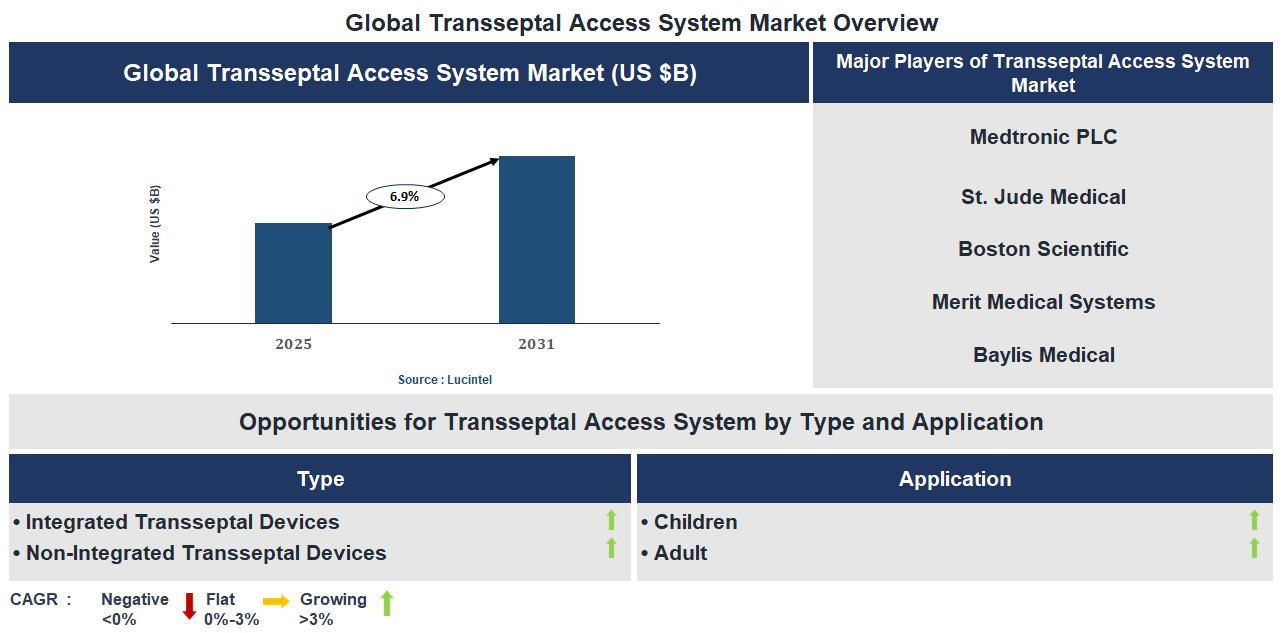
Key data points: The growth forecast = 6.9% annually for the next 7 years. Scroll below to get more insights. This market report covers trends, opportunities and forecasts in transseptal access system market to 2031 by type (integrated transseptal devices and non-integrated transseptal devices), application (children and adult), and region (North America, Europe, Asia Pacific, and the Rest of the World)
We'll send your sample report shortly.
• Lucintel forecasts that, within the application category, adult is expected to witness higher growth over the forecast period.
• Within the type category, integrated transseptal device is expected to witness higher growth.
• In terms of region, North America is expected to witness the highest growth over the forecast period. Gain valuable insights for your business decisions with our comprehensive 150+ page report. Sample figures with some insights are shown below.
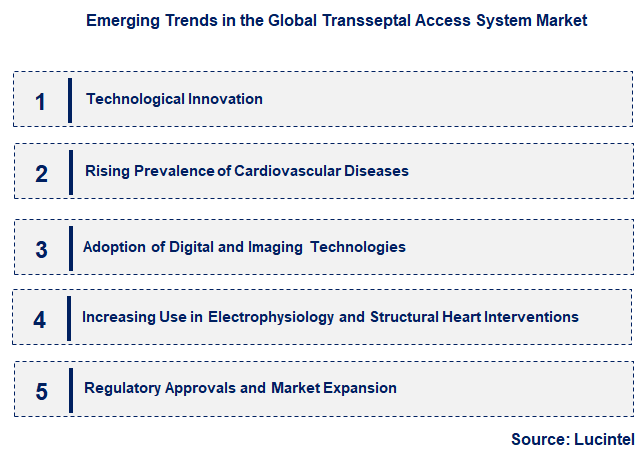
• Technological Innovation: Development of advanced transseptal access devices with improved safety features and ease of use. These innovations include steerable sheaths, integrated imaging, and single-use systems, which enhance procedural precision and reduce complications. The focus on miniaturization and compatibility with other cardiac devices is also prominent. This trend is driving market growth by enabling more complex procedures to be performed safely and efficiently, ultimately improving patient outcomes and expanding the scope of transseptal interventions.
• Rising Prevalence of Cardiovascular Diseases: Increasing incidence of atrial fibrillation, mitral valve disease, and other cardiac conditions requiring transseptal access. As these diseases become more common globally, the demand for minimally invasive procedures rises. This trend is significantly boosting the adoption of transseptal access systems, especially in aging populations. Healthcare systems are investing more in these technologies to meet the growing clinical needs, which in turn propels market expansion and innovation.
• Adoption of Digital and Imaging Technologies: Integration of real-time imaging modalities such as 3D echocardiography, intracardiac echocardiography (ICE), and fluoroscopy with transseptal systems. These technologies improve visualization, accuracy, and safety during procedures. The use of augmented reality and AI-driven guidance is also emerging. This trend enhances procedural success rates, reduces complications, and shortens procedure times, making transseptal access more accessible and reliable across various healthcare settings.
• Increasing Use in Electrophysiology and Structural Heart Interventions: Growing application of transseptal access in atrial fibrillation ablation, mitral valve repair, and other structural heart procedures. As these interventions become more prevalent, the demand for specialized access systems increases. This trend is expanding the market beyond traditional uses, encouraging manufacturers to develop tailored solutions. The broader application spectrum is driving innovation, competition, and market growth, ultimately benefiting patients through minimally invasive treatment options.
• Regulatory Approvals and Market Expansion: Enhanced regulatory support and approvals for new transseptal devices facilitate market entry and adoption. Emerging markets are witnessing increased investments and infrastructure development. This trend accelerates the global reach of transseptal systems, making advanced cardiac interventions accessible in developing regions. Regulatory clarity and market expansion efforts are crucial for fostering innovation, reducing costs, and increasing the availability of these systems worldwide. In summary, these trends are collectively reshaping the transseptal access system market by fostering innovation, expanding clinical applications, and increasing accessibility. They are driving a shift towards safer, more effective minimally invasive cardiac procedures, ultimately improving patient care and outcomes across the globe.
• Technological Innovations: Development of advanced transseptal sheaths and needles has improved procedural precision and safety, reducing complication rates and enabling more complex interventions. These innovations facilitate better navigation through cardiac tissues, leading to higher success rates and shorter procedure times, ultimately benefiting patient outcomes and healthcare providers.
• Integration of Imaging Technologies: The incorporation of real-time imaging modalities such as intracardiac echocardiography (ICE) and 3D mapping systems has enhanced visualization during procedures. This integration improves accuracy in septal puncture, minimizes risks, and shortens procedure durations, thereby increasing overall procedural success and safety.
• Growing Adoption in Electrophysiology: The rising prevalence of atrial fibrillation and other arrhythmias has led to increased use of transseptal access systems in electrophysiology procedures. This trend has expanded the market, encouraging manufacturers to develop specialized systems tailored for electrophysiological interventions, thus improving treatment outcomes.
• Focus on Minimally Invasive Procedures: The shift towards minimally invasive cardiac procedures has driven demand for transseptal access systems that are easier to deploy and require less recovery time. This focus has resulted in the development of user-friendly devices that reduce patient discomfort and hospital stays, boosting market growth.
• Regulatory Approvals and Strategic Collaborations: Recent approvals of innovative transseptal systems by regulatory bodies and collaborations between device manufacturers and healthcare providers have accelerated market expansion. These developments facilitate wider adoption, ensure compliance with safety standards, and foster innovation in device design. In summary, these key developments are significantly impacting the transseptal access system market by enhancing procedural safety, expanding application areas, and promoting minimally invasive techniques. The market is poised for continued growth driven by technological advancements, increasing procedural demand, and strategic industry collaborations, ultimately improving patient care and clinical outcomes.
• Cardiac Catheterization: Enhanced precision and safety in cardiac catheterization procedures are driving adoption of advanced transseptal access systems, reducing procedure time and complications, and improving patient outcomes.
• Structural Heart Disease Interventions: Growing use in procedures like atrial septal defect closures and mitral valve repairs is expanding the market, with innovative systems enabling minimally invasive approaches.
• Electrophysiology Procedures: Increasing use in electrophysiology labs for ablation therapies benefits from improved transseptal access, leading to more effective arrhythmia management.
• Congenital Heart Disease Treatment: Rising cases of congenital heart defects are boosting demand for specialized transseptal systems, facilitating safer and more effective interventions in pediatric and adult patients.
• Research and Development: Continuous innovation in transseptal technology, including robotic-assisted systems and improved imaging integration, is opening new avenues for clinical research and future applications. These growth opportunities are significantly impacting the transseptal access system market by expanding its application scope, enhancing procedural safety, and fostering technological innovation. As a result, the market is poised for sustained expansion, driven by increasing clinical adoption and ongoing research efforts.
• Technological Advancements: The development of innovative transseptal access devices and imaging technologies has significantly improved procedural safety and efficacy. Enhanced device design, such as steerable sheaths and integrated imaging, allows for more precise access, reducing complications. These innovations enable clinicians to perform complex procedures with higher success rates, thereby expanding the market. Continuous R&D efforts are expected to further refine these systems, making them more user-friendly and adaptable to various clinical settings. As a result, technological progress remains a primary driver, attracting investments and encouraging adoption across healthcare facilities worldwide.
• Rising Prevalence of Cardiovascular Diseases: The increasing incidence of atrial fibrillation, atrial septal defects, and other structural heart conditions is a major factor fueling demand for transseptal access systems. As cardiovascular diseases become more prevalent globally, the need for minimally invasive interventions grows. Transseptal procedures offer reduced recovery times and lower complication rates compared to traditional surgeries, making them preferable options. This rising disease burden, especially among aging populations, directly correlates with increased procedural volumes, thereby expanding the market. Healthcare systems are prioritizing such minimally invasive solutions, further propelling market growth driven by demographic shifts.
• Growing Adoption of Minimally Invasive Procedures: The shift towards less invasive treatment options is a key trend influencing the market. Transseptal access systems facilitate procedures like catheter ablation and structural heart interventions, which are increasingly preferred over open-heart surgeries. Benefits such as shorter hospital stays, reduced pain, and quicker recovery times are driving both patient demand and clinician preference. Hospitals and clinics are investing in advanced transseptal systems to meet this demand, supported by favorable reimbursement policies. This trend towards minimally invasive approaches is expected to continue, significantly contributing to market expansion and technological innovation.
• Regulatory Approvals and Reimbursement Policies: Favorable regulatory approvals from agencies like the FDA and EMA facilitate market entry and product adoption. Additionally, reimbursement policies that cover minimally invasive procedures incentivize healthcare providers to adopt transseptal systems. These regulatory and financial factors reduce barriers to market entry and encourage manufacturers to innovate and expand their product portfolios. As governments and insurance providers recognize the clinical and economic benefits of minimally invasive cardiac procedures, the market is poised for sustained growth driven by supportive policies and approvals.
• Increasing Investment in Cardiac Care Technologies: The rising investment from both public and private sectors in cardiac care innovation is a significant driver. Funding for research and development enables the creation of advanced transseptal systems with improved safety and efficacy profiles. Venture capital and strategic partnerships also facilitate market expansion by supporting startups and established players. This influx of capital accelerates technological breakthroughs and broadens access to cutting-edge solutions, ultimately enhancing patient outcomes. The focus on innovation and investment underscores the market’s potential for continued growth and technological evolution. The challenges facing this transseptal access system market include:
• High Procedural Costs: The cost of transseptal procedures remains a significant barrier, especially in developing regions. Advanced devices, imaging systems, and the need for specialized personnel contribute to high expenses. These costs can limit adoption among smaller healthcare facilities and in regions with constrained budgets. Additionally, reimbursement rates may not always cover the full procedure costs, discouraging widespread use. Overcoming cost barriers requires technological innovations to reduce expenses and policy adjustments to improve reimbursement frameworks, which are essential for broader market penetration.
• Stringent Regulatory Requirements: Navigating complex regulatory landscapes poses challenges for market players. Obtaining approvals involves extensive clinical trials, documentation, and compliance with safety standards, which can delay product launches and increase costs. Variability in regulatory processes across regions complicates global expansion strategies. Smaller companies may find these hurdles particularly daunting, limiting innovation and market entry. Streamlining regulatory pathways and fostering international harmonization are critical to overcoming these barriers and ensuring timely access to new transseptal systems.
• Need for Specialized Training and Expertise: The successful deployment of transseptal access systems requires highly skilled operators trained in complex procedures. The steep learning curve and limited availability of trained personnel can hinder adoption, especially in less developed healthcare settings. This challenge emphasizes the importance of comprehensive training programs and simulation-based education to ensure safety and efficacy. Addressing this need is vital for expanding the market, as increased training opportunities will facilitate wider adoption and improve procedural outcomes across diverse clinical environments. In summary, the transseptal access system market is driven by technological innovations, rising cardiovascular disease prevalence, and supportive regulatory and reimbursement policies. However, high costs, regulatory complexities, and the need for specialized training pose significant challenges. These factors collectively influence market growth, with technological progress and policy support likely to mitigate some barriers. Overall, the market is poised for expansion, provided stakeholders address these challenges through strategic investments, regulatory reforms, and training initiatives, ultimately improving patient access to minimally invasive cardiac interventions.
• Medtronic PLC
• St. Jude Medical
• Boston Scientific
• Merit Medical Systems
• Baylis Medical
• Biosense Webster, Inc
• Terumo Corporation
• Cook Medical
• Biomerics
• Transseptal Solutions
• Integrated Transseptal Devices
• Non-Integrated Transseptal Devices
• Children
• Adult
• North America
• Europe
• Asia Pacific
• The Rest of the World
• United States: The US market is leading with rapid adoption of advanced transseptal systems, driven by high procedural volumes and technological innovation. Major hospitals and research institutions are investing in new devices, and regulatory approvals are facilitating market growth. The focus is on improving safety and reducing procedure time, with increased use of 3D imaging and robotic assistance. The aging population and rising cardiovascular disease prevalence further boost demand for minimally invasive procedures, supporting sustained market expansion.
• China: China is experiencing rapid growth due to increasing cardiovascular disease incidence and expanding healthcare infrastructure. The government’s focus on healthcare reform and technological adoption is encouraging market development. Local manufacturers are emerging, offering cost-effective solutions, while international companies are expanding their presence. The adoption of transseptal systems is increasing in urban centers, supported by rising awareness and training programs. The market is expected to grow significantly as access to advanced cardiac care improves across the country.
• Germany: Germanys market is characterized by high healthcare standards and technological sophistication. The country emphasizes minimally invasive procedures, with widespread adoption of advanced transseptal access systems. Regulatory frameworks are supportive, and there is a strong focus on clinical research and innovation. Hospitals are investing in new imaging technologies and training to enhance procedural safety and efficacy. The aging population and increasing prevalence of atrial fibrillation are key drivers, ensuring steady market growth and technological advancements.
• India: India’s market is rapidly expanding due to increasing cardiovascular disease burden and improving healthcare infrastructure. The government’s initiatives to enhance cardiac care and the rising number of specialized cardiac centers are fueling demand. Cost-effective local solutions are gaining popularity alongside international devices. Awareness campaigns and training programs are improving adoption rates. The market is expected to grow substantially as access to advanced minimally invasive procedures increases, supported by rising healthcare expenditure and technological adoption.
• Japan: Japan exhibits a mature market with high adoption of advanced transseptal systems, driven by an aging population and high prevalence of cardiovascular conditions. The country emphasizes precision medicine and technological innovation, with widespread use of imaging and robotic systems. Regulatory approval processes are streamlined, facilitating rapid adoption of new devices. Japan’s focus on clinical research and collaboration with global companies enhances market growth. The demand for safer, more efficient transseptal procedures continues to propel technological advancements and market expansion.


• Medtronic PLC
• St. Jude Medical
• Boston Scientific
• Merit Medical Systems
• Baylis Medical
• Biosense Webster, Inc
• Terumo Corporation
• Cook Medical
• Biomerics
• Transseptal Solutions Q5. Which transseptal access system market segment will be the largest in future? Answer: Lucintel forecasts that, within the application category, adult is expected to witness higher growth over the forecast period. Q6. In transseptal access system market, which region is expected to be the largest in next 5 years? Answer: In terms of region, North America is expected to witness the highest growth over the forecast period. Q7. Do we receive customization in this report? Answer: Yes, Lucintel provides 10% customization without any additional cost.


Choose a license that fits your team. Instant PDF delivery.
Prices exclude taxes. Instant delivery. Custom licensing available on request.
Market Report · July 22, 2026
Market Report · July 22, 2026
Market Report · July 22, 2026
Trusted partner for strategic intelligence and business growth


Receive a complimentary market analysis tailored to your industry. Our analysts will identify key growth opportunities and competitive dynamics specific to your business.

Market size, growth rate, and key trend analysis for your specific sector.

Top competitor positioning and market share analysis.

Strategic recommendations backed by data-driven insights.
Get curated market intelligence and competitive moves straight to your inbox.
By subscribing, you agree to receive our monthly insights. Unsubscribe anytime.
Receive a complimentary market analysis tailored to your industry. Our analysts will identify key growth opportunities and competitive dynamics specific to your business.
Market size, growth rate, and key trend analysis for your specific sector.
Top competitor positioning and market share analysis.
Strategic recommendations backed by data-driven insights.
Get curated market intelligence, emerging trends, and competitive moves straight to your inbox each month.
By subscribing, you agree to receive our monthly insights. Unsubscribe anytime.
We'll send your sample report shortly.