
Market Report · July 31, 2026

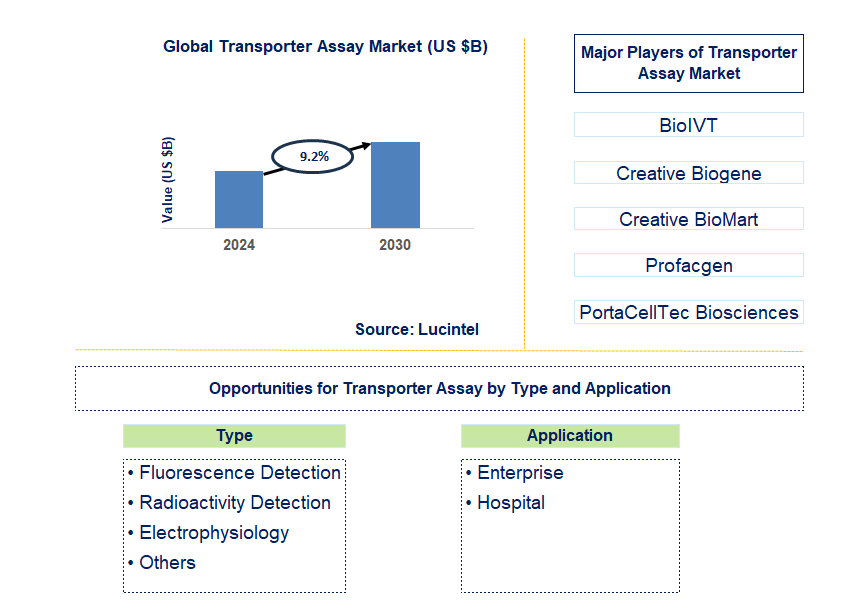
Key data points: The growth forecast = 9.2% annually for the next 6 years. Scroll below to get more insights. This market report covers trends, opportunities, and forecast in the global transporter assay market to 2030 by type (fluorescence detection, radioactivity detection, electrophysiology, and others), application (enterprise and hospital), and region (North America, Europe, Asia Pacific, and the Rest of the World)
We'll send your sample report shortly.
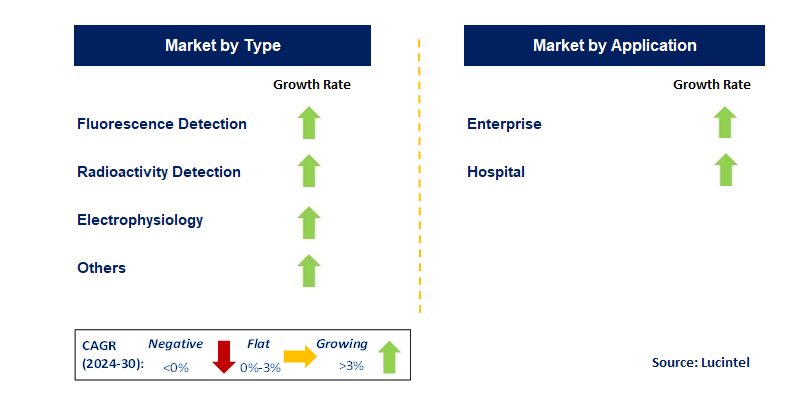
• Lucintel forecasts that, within the type category, fluorescence detection is expected to witness the highest growth over the forecast period.
• Within the application category, the enterprise is expected to witness a higher growth.
• In terms of regions, APAC is expected to witness the highest growth over the forecast period. A more than 150-page report is developed to help in your business decisions.
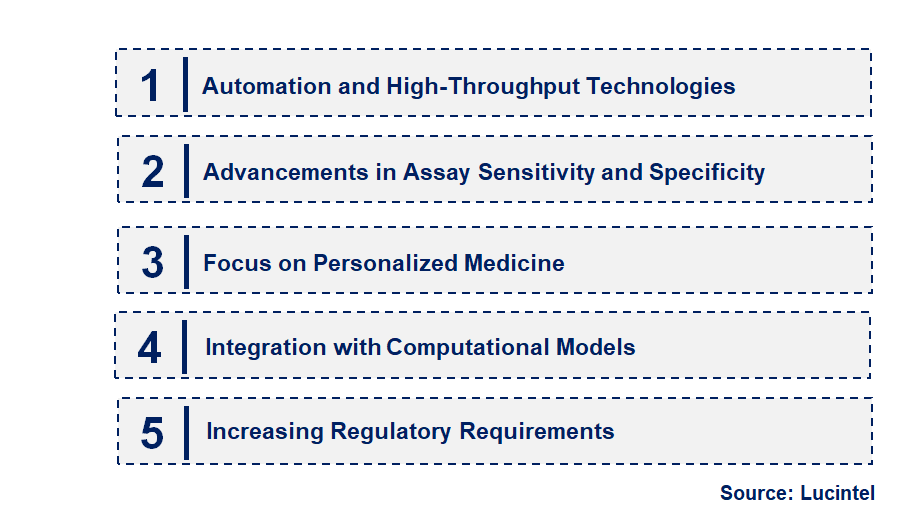
• Automation and High-Throughput Technologies: Automation and high-throughput technologies are transforming transporter assays by making them more efficient and faster. Assays are automated, reducing human errors during the process and enabling simultaneous analysis of several samples. This requires the establishment of innovative platforms capable of handling large amounts of data within short periods. High-throughput technologies allow a wider range of compounds to be screened, speeding up drug discovery and enhancing productivity in transporter assays.
• Advancements in Assay Sensitivity and Specificity: Advances in assay technology are leading to increased sensitivity and specificity, which are essential for accurate transporter studies. Using more reliable detection methods combined with enhanced assay formats achieves better results. Increased sensitivity enables the detection of low-abundance transporters and/or their interactions, while improved specificity reduces false negatives and positives. These technological advancements support better drug development and safety evaluation, leading to more efficient and well-targeted therapeutic interventions.
• Focus on Personalized Medicine: The movement toward personalized medicine has highlighted the need for patient-specific transporter assays. These assays should be developed to measure drug interactions as well as efficacy based on genetic or biochemical variability among individuals. In this context, they help develop customized therapy strategies, which strongly align with this trend. By adhering to the principles of personalized medicine, transporter assays address individual responses to treatments through optimized dosages, improving drug efficacy and advancing precision medicine, as well as enhancing patient outcomes.
• Integration with Computational Models: Over time, computational modeling has been increasingly integrated with transporter assays to improve data analysis and interpretation. Such models provide insights into transporter interactions, drug behavior, and potential adverse effects based on assay results. Integrating these models with computational tools enables comprehensive analysis and decision-making in drug development. This trend allows researchers to simulate complex interaction scenarios and optimize assay conditions for better predictions regarding the impact of drugs on an organism, as well as a more informed development process.
• Increasing Regulatory Requirements: There is increasing emphasis by regulators on safety and efficacy in drugs, necessitating transporter assays that adhere to strict guidelines. Regulatory agencies require more detailed information about drug-drug interactions and effects on transporters. This trend has driven the emergence of higher-quality assays that meet stringent quality benchmarks. Complying with regulatory requirements ensures that these assays produce valid information that can be acted upon, leading to the approval and successful commercialization of new therapeutics. The industry is changing due to rising trends in the transporter assay market, such as automation and high-throughput technologies, improvements in sensitivity and specificity, a focus on personalized medicine, integration with computational models, and increasing regulatory requirements. These trends foster innovation, improve test performance, and align with the changing needs of customers in this fast-moving industry. By embracing these trends, stakeholders can enhance the capabilities of their tests to support the effective creation of medications and remain competitive within a rapidly advancing market.
• Advancements in Detection Technologies: Recent technological advancements have had a significant impact on the transporter assay market. These include innovations such as high-resolution mass spectrometry, advanced fluorescence, and real-time PCR for better sensitivity and accuracy in tests. These methods ensure that researchers can observe transporter interactions with drugs more precisely, making the results more reliable. Assessing complex drug interactions using state-of-the-art detection systems leads to more efficient drug development and safety testing through higher-quality data.
• Integration with High-Throughput Screening: One of the key developments within this field is the inclusion of transporter assays in high-throughput screening (HTS) systems. High-throughput techniques allow simultaneous testing of large sample sizes, resulting in better assay productivity and throughput. This accelerates the identification of potential transporter interactions by enabling quick screening of numerous compounds. Additionally, such systems enhance data capture and processing, leading to more comprehensive and scalable transporter studies. This promotes innovative approaches toward efficiency gains in drug discovery processes.
• Focus on Personalized Medicine: Transporter assay development is increasingly focused on personalized medicine. Assays are being customized to evaluate individual patient profiles based on genetic and biochemical variability. This approach allows for more precise assessment of drug interactions and efficacy with respect to patient-specific determinants. Customized therapeutic strategies and optimized drug dosing are among the characteristics that personalized medicine principles have introduced in assay development. Under this development, transporter assays become more relevant and applicable in personalizing drugs during their development and treatment.
• Enhanced Regulatory Compliance: The transporter assay market is being shaped by enhanced regulatory compliance. Regulatory agencies are imposing higher requirements for drug safety and efficacy data, resulting in a rising demand for assays that meet these standards. Moreover, companies are developing robust, reliable assays that comply with changing regulations and provide the most current information possible. This emphasis on compliance ensures that successful drug approvals are supported by assays that meet industry standards. Companies investing in regulatory-compliant assays can better navigate the regulatory landscape to achieve success.
• Expansion of Market Applications: The expansion of market applications remains one of the most significant developments within the transporter assay market. Today, transporter assays are used in a much broader range of industries, including pharmaceuticals, biotechnology, and environmental testing, to name a few. This expansion reflects the increasing recognition across various fields—from drug discovery to safety testing—of the significance of transporter assays. By broadening their scope of applications, businesses are seizing new market opportunities and meeting the diverse specifications set by different industries. In effect, this advancement seeks to grow or diversify the transporter assay market. Developments such as technological advancements in detection systems, integration with high-throughput systems, a focus on personalized medicine, enhanced regulatory compliance, and expansion of market applications have fueled innovation and shaped industry practices in the transporter assay market. These developments have further improved assay performance, made drug discovery processes more efficient, and addressed changing market needs (Kwon et al., 2017). In addition, these advances ensure that transporter assays are more effective, making them more reliable for a growing industry.
• High-Throughput and Automation Technologies: The adoption of high-throughput and automated technologies represents a significant growth driver for the transporter assay market. These technologies enhance efficiency by enabling the simultaneous analysis of multiple samples without requiring manual intervention. Additionally, automation improves data accuracy while reducing turnaround times, thereby speeding up the drug discovery process. Therefore, businesses investing in scalable and efficient assay solutions, such as those required by automated platforms or high-throughput systems, will gain a competitive advantage in this field.
• Integration with Personalized Medicine: Combining transporter assays with personalized medicine can foster more precise drug development and treatment methods, creating potential for growth. Personalized medicine principles drive the need for assays that account for genetic and biochemical variations, leading to optimized drug dosing and improved patient outcomes. Assays designed to evaluate individual patient profiles support more precise and effective therapies. To capture emerging market opportunities and enhance their value proposition, companies should develop assays aligned with personalized medicine.
• Expansion into Emerging Markets: Expanding into emerging markets represents a significant growth opportunity for transporter assay providers. Increasing demand for advanced assay solutions is being observed in regions such as Asia Pacific, Latin America, and the Middle East due to the growing pharmaceutical and biotech industries. In these markets, which are experiencing increasing investments in drug development research, there are opportunities to enter through product customization. Market growth in these emerging economies could be facilitated by offering products that meet local requirements.
• Innovations in Assay Formats: Innovations in assay formats, such as miniaturized assays that are more compact and novel detection methods, offer growth opportunities by improving assay performance. These innovations make assays more flexible and versatile when evaluating drugs' interaction with transporters. New formats can enhance sensitivity, reduce costs during analysis, and produce reliable results that guide clinicians in determining the appropriate dosage for patients suffering from various diseases or ailments. By advancing this approach to testing drug transport proteins as molecular targets, businesses can differentiate themselves from competitors by offering higher-quality products.
• Strategic Partnerships with Pharmaceutical Companies: Collaborating with pharmaceutical companies presents growth opportunities by leveraging expertise, resources, and market access. Strategic partnerships can result in the joint development of advanced assay technologies with drug developers. These collaborations enhance product offerings and drive market penetration. Aligning with pharmaceutical companies enables providers of transporter assays to enter new markets and increase visibility by contributing to the invention of medicines used to cure diseases. Strategic growth opportunities in the transporter assay market include advancements in high-throughput and automation technologies, integration with personalized medicine, expansion into emerging markets, innovations in assay formats, and strategic partnerships with pharmaceutical companies. To improve competitiveness, address emerging needs, and contribute to the advancement of drug discovery and development, organizations should capitalize on these trends as the market evolves. By doing so, they will not only meet immediate customer requirements but also provide insights into how drugs can be developed further within this rapidly changing field, which has greatly benefited from technological advancements such as bioinformatics that have enabled researchers to better understand how molecular structures influence affinity between drugs, transporters, and target molecules.
• Technological Advancements: The rise of technology has been a major force behind this sector’s growth, enabling assays sensitive enough to detect even minute amounts of cellular proteins. For instance, innovations such as high-resolution mass spectrometry (HRMS), advanced fluorescence techniques, and automation have significantly enhanced assay capabilities. These technical improvements make it possible to conduct more precise drug interaction studies and speed up the drug discovery process. By implementing new approaches, companies can improve their assay offerings, making them adaptable to the changing needs of pharmaceutical and biotech industries.
• Regulatory Requirements: There is a growing need for transporter assays that meet industry standards due to stricter drug testing requirements imposed by regulatory authorities. More emphasis is being placed on accurate results when companies develop their assays, as required by regulatory bodies that enforce stricter guidelines for conducting drug tests. To achieve successful commercialization of drugs, businesses should design their assays accordingly, ensuring easier approvals from regulators and maintaining their market reputation.
• Demand for Personalized Medicine: The increasing demand for personalized medicine is driving the development of transporter assays for evaluating a patient’s personal profile. There is a need for more advanced assays that can identify and measure drug metabolism and its effects on gene and protein levels in individuals. This trend promotes the emergence of targeted therapies, which improve patient outcomes while making the drug development process more efficient. Therefore, assay providers whose products align with these trends can expect better market value.
• Need for Drug Safety and Efficacy Testing: The emphasis on drug safety has driven this market toward more reliable and accurate assay solutions. Assays help analyze how different drugs interact in terms of potential side effects or overall effectiveness. Consequently, firms that offer such solutions contribute positively to the drug design process while enforcing quality control measures related to product development and regulatory compliance, fueling growth within this sector. Challenges:
• High Initial Costs: The expensive nature of state-of-the-art techniques used in developing new assays is a challenge. High development and implementation costs for advanced transporter assay technologies can impede uptake, particularly for smaller companies or those in developing countries. These costs include research and development (R&D), equipment, and operating expenses. To expand market coverage and make advanced assay solutions affordable for all, cost challenges must be addressed, allowing for wider adoption.
• Complex Regulatory Environments: The multilayered regulatory environment makes it difficult for companies to develop assays that meet the required standards and guidelines. Regulations vary across regions and are subject to change, which affects development processes and approval timelines. To avoid delays in product development and market entry, firms need to invest in regulatory expertise and compliance management. The transporter assay market is driven by technological advancements, increasing regulatory requirements, the demand for personalized medicine, the expansion of the pharmaceuticals and biotechnology sectors, and the need for safety and efficacy testing in drug development. However, the market faces challenges such as high costs, complex regulatory environments, and technological limitations. Long-term, innovation-driven growth will continue to support the success of companies within this highly dynamic industry, which is shifting from a test-and-treat model to a treat-based-on-tests approach.
• BioIVT
• Creative Biogene
• Creative BioMart
• Profacgen
• PortaCellTec Biosciences
• Solvo Biotechnology
• Merck
• Fluorescence Detection
• Radioactivity Detection
• Electrophysiology
• Others
• Enterprise
• Hospital
• North America
• Europe
• Asia Pacific
• The Rest of the World
• United States: The transporter assay industry has experienced considerable technological progress, particularly in high-throughput screening and automation in the US. Sophisticated assay platforms offering improved sensitivity and reproducibility are being acquired. The integration of advanced detection technologies, including mass spectrometry and sophisticated fluorescence, has increased assay accuracy. Furthermore, regulatory pressures for drug safety and efficacy have been driving transporter assay innovation. Faced with increasingly complex drug interactions and personalized medicine demands, research institutions and pharmaceutical companies in the U.S. remain at the forefront of new assay technology development.
• China: China’s transporter assay market is rapidly growing due to the expansion of its pharmaceutical and biotechnology sectors. These developments include increased investments in R&D, resulting in advancements in assay technologies and methods. Chinese firms are focusing on affordable assays to meet growing domestic demand. Moreover, local companies working with overseas partners have led to the improved transfer and development of technology. This aligns with China's broader goal of advancing its biopharmaceutical sector by improving its drug discovery process, which it seeks to achieve by increasing assay throughput while reducing costs.
• Germany: Germany has been a pioneer in incorporating innovative technologies into transporter assays. Recent advances include the use of high-resolution mass spectrometry and novel assay formats. More sensitive and pharmacologically specific assays are being developed by German research institutes and biotech companies, which comply with stringent European regulations. Additionally, there is a focus on automating these assays to streamline processes and enhance efficiency while reducing costs. Consequently, efforts toward precision medicine, combined with drug safety requirements, have led to the development of next-generation transporter assays that support complex drug discovery programs in Germany. This shift towards precision diagnosis and prediction of drug response is influencing treatment strategies, moving from single-dose prescriptions (SDP) to individualized medication dosing (IVD).
• India: The transporter assay market in India is widely accepted. Pharmaceutical companies and research institutions have made significant investments in the discovery and development of drugs. This has led to the creation of affordable assay solutions and the local manufacturing of certain components. Efforts are focused on assays that accommodate various types of drug candidates at affordable costs while still providing reliable data for scientists. The growing pharmaceutical and biotech industries in India have resulted in an increased need for advanced transporter assays that can improve assay accuracy and reduce turnaround times. Collaborations with international institutions have also enhanced the technological capacity within the Indian market.
• Japan: Japan’s transporter assay market is known for being technically innovative and providing highly efficient solutions. Some of these developments include improvements in real-time PCR-based technologies and sophisticated imaging techniques. As Japanese companies continue to invest in research to develop assays with better sensitivity and precision, it is important to note that regulatory compliance cannot be overlooked when designing platforms for drug discovery systems. Thus, Japan’s efforts to enhance its pharmaceutical R&D will lead to significant progress in transporter assays, resulting in more effective drug design processes through an improved understanding of drug interactions.


• BioIVT
• Creative Biogene
• Creative BioMart
• Profacgen
• PortaCellTec Biosciences
• Solvo Biotechnology
• Merck Q5. Which transporter assay market segment will be the largest in the future? Answer: Lucintel forecasts that fluorescence detection is expected to witness the highest growth over the forecast period. Q6. In the transporter assay market, which region is expected to be the largest in the next 5 years? Answer: APAC is expected to witness the highest growth over the forecast period. Q.7 Do we receive customization in this report? Answer: Yes, Lucintel provides 10% customization without any additional cost.


Choose a license that fits your team. Instant PDF delivery.
Prices exclude taxes. Instant delivery. Custom licensing available on request.
Market Report · July 31, 2026
Market Report · July 31, 2026
Market Report · July 31, 2026
Trusted partner for strategic intelligence and business growth


Receive a complimentary market analysis tailored to your industry. Our analysts will identify key growth opportunities and competitive dynamics specific to your business.

Market size, growth rate, and key trend analysis for your specific sector.

Top competitor positioning and market share analysis.

Strategic recommendations backed by data-driven insights.
Get curated market intelligence and competitive moves straight to your inbox.
By subscribing, you agree to receive our monthly insights. Unsubscribe anytime.
Receive a complimentary market analysis tailored to your industry. Our analysts will identify key growth opportunities and competitive dynamics specific to your business.
Market size, growth rate, and key trend analysis for your specific sector.
Top competitor positioning and market share analysis.
Strategic recommendations backed by data-driven insights.
Get curated market intelligence, emerging trends, and competitive moves straight to your inbox each month.
By subscribing, you agree to receive our monthly insights. Unsubscribe anytime.
We'll send your sample report shortly.