
Market Report · May 18, 2026

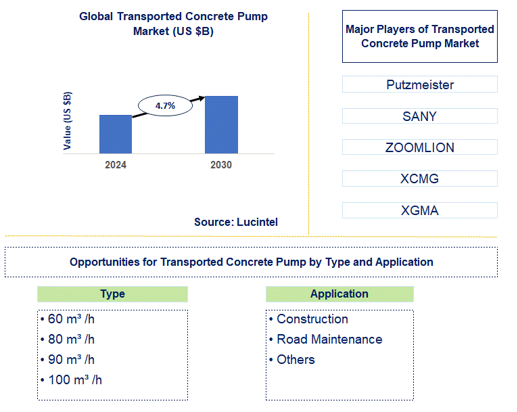
Key data points: The growth forecast = 4.7% annually for the next 6 years. Scroll below to get more insights. This market report covers trends, opportunities, and forecast in the global transported concrete pump market to 2030 by type (60 m³ /h, 80 m³ /h, 90 m³ /h, and 100 m³ /h), application (construction, road maintenance, and others), and region (North America, Europe, Asia Pacific, and the Rest of the World)
We'll send your sample report shortly.
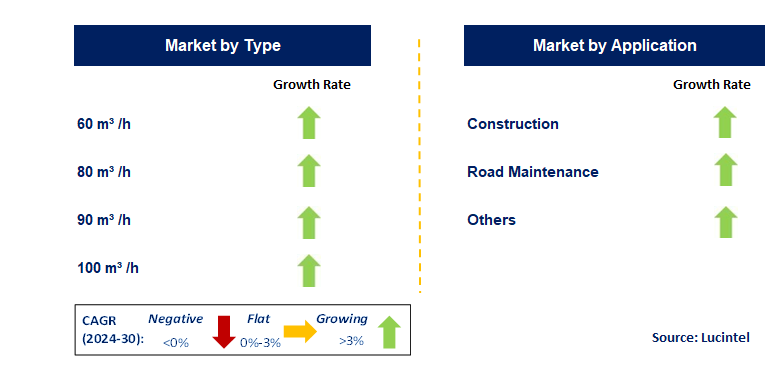
• Lucintel forecasts that, within the type category, 60 m³ /h is expected to witness the highest growth over the forecast period.
• Within the application category, construction is expected to witness a higher growth.
• In terms of regions, APAC is expected to witness the highest growth over the forecast period. A more than 150-page report is developed to help in your business decisions.
• Integration of Smart Technology: The integration of smart technology has brought a revolution to the transported concrete pump market, including advanced telematics systems as well as IoT (Internet of Things) connectivity that allow real-time monitoring and diagnostics of the pumps. These technologies provide important data for managing maintenance schedules, improving operational efficiency, and reducing downtime by enabling proactive measures when signs of malfunctioning are detected before they lead to major breakdowns. This also helps in mitigating risks and improving worker protection during operation, leading to overall improvements in plant productivity.
• Adoption of Electric and Hybrid Pumps: The industry’s move towards electric and hybrid-powered concrete pumps is gaining pace as it seeks to reduce its impact on the environment. With lower emissions, noise, and energy consumption than their diesel counterparts, electric pumps have become a more desirable option in modern times. However, a combination of both electricity and diesel, as seen in hybrid systems, provides the industry with flexibility while maintaining the environmental benefits of the machines. This trend aligns with the broader push for sustainability in construction and is expected to drive demand for environmentally friendly concrete pumping solutions.
• Focus on Automation and Robotics: Automation and robotics are changing how concrete pumps are operated and managed. There has been an increased reliance on automated systems and robotic technology, as they improve accuracy and efficiency during concrete pumping operations and reduce human errors that could lead to accidents, thus promoting workplace safety. Robotic systems have the capability to perform complex pumping tasks with high precision, ensuring quality control and uniformity in concrete placement. By introducing automation and robotics, the transported concrete pump market will see overall process optimization, which is expected to continue evolving in the near future.
• Development of High-Performance Materials: The development of high-performance materials is a key trend in the transported concrete pump market. To enhance the reliability and lifespan of concrete pumps, manufacturers are utilizing advanced materials such as strong steel and durable composites. These materials improve the structural integrity of pumps and allow them to withstand harsh operating conditions. The emphasis on high-performance materials is driving innovation and improving the overall quality of concrete pumping equipment, making it more durable and efficient.
• Customization and Modular Systems: As construction projects become more intricate and varied, the customization and modularization of concrete pump systems is gaining popularity. Modular systems make it easier for users to adapt their equipment to specific project requirements. Customizations can include variable components, substitutable parts, or customized features that enhance the functionalities and performance of the machines, such as the ability to choose between different mixers or chutes based on specific project needs. This trend is expected to drive growth in the market by offering solutions that address the unique needs of various construction projects. These emerging trends highlight the dynamic nature of the transported concrete pump market. The integration of smart technology, adoption of electric and hybrid pumps, focus on automation and robotics, development of high-performance materials, and customization of modular systems are reshaping the market and driving innovation. Companies that embrace these trends will be well-positioned to meet the evolving needs of the construction industry and capitalize on new opportunities in the concrete pumping sector.
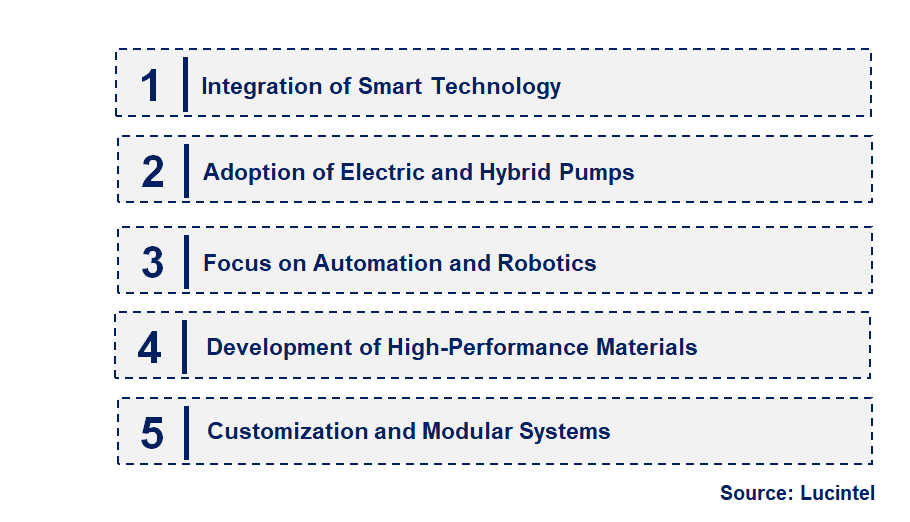
• Integration of Smart Technology: The integration of smart technology has revolutionized the transported concrete pump market, including advanced telematics systems and IoT (Internet of Things) connectivity that allow real-time monitoring and diagnostics of pumps. These technologies provide important data for managing maintenance schedules, improving operational efficiency, and reducing downtime by enabling proactive measures when signs of malfunction are detected before they lead to major breakdowns. This also helps mitigate risks and improve worker protection during operation, leading to overall improvements in plant productivity.
• Adoption of Electric and Hybrid Pumps: The industry’s move toward electric and hybrid-powered concrete pumps is gaining pace as it seeks to reduce its environmental impact. With lower emissions, noise, and energy consumption than their diesel counterparts, electric pumps have become a more desirable option in modern times. However, a combination of both electricity and diesel, as seen in hybrid systems, provides the industry with flexibility while maintaining the environmental benefits of the machines. This trend aligns with the broader push for sustainability in construction and is expected to drive demand for environmentally friendly concrete pumping solutions.
• Focus on Automation and Robotics: Automation and robotics are changing how concrete pumps are operated and managed. There has been an increased reliance on automated systems and robotic technology, as they improve accuracy and efficiency during concrete pumping operations and reduce human errors that could lead to accidents, thus promoting workplace safety. Robotic systems have the capability to perform complex pumping tasks with high precision, ensuring quality control and uniformity in concrete placement. By introducing automation and robotics, the transported concrete pump market will see overall process optimization, which is expected to continue evolving in the near future.
• Development of High-Performance Materials: The development of high-performance materials is a key trend in the transported concrete pump market. To enhance the reliability and lifespan of concrete pumps, manufacturers are utilizing advanced materials such as strong steel and durable composites. These materials improve the structural integrity of pumps and allow them to withstand harsh operating conditions. The emphasis on high-performance materials is driving innovation and improving the overall quality of concrete pumping equipment, making it more durable and efficient.
• Customization and Modular Systems: As construction projects become more intricate and varied, the customization and modularization of concrete pump systems are gaining popularity. Modular systems make it easier for users to adapt their equipment to specific project requirements. Customizations can include variable components, substitutable parts, or customized features that enhance the functionalities and performance of the machines, such as the ability to choose between different mixers or chutes based on specific project needs. This trend is expected to drive growth in the market by offering solutions that address the unique needs of various construction projects. These emerging trends highlight the dynamic nature of the transported concrete pump market. The integration of smart technology, adoption of electric and hybrid pumps, focus on automation and robotics, development of high-performance materials, and customization of modular systems are reshaping the market and driving innovation. Companies that embrace these trends will be well-positioned to meet the evolving needs of the construction industry and capitalize on new opportunities in the concrete pumping sector.
• Expansion into Emerging Markets: Expanding into emerging markets presents a significant growth opportunity for the transported concrete pump industry. Rapid urbanization, coupled with infrastructure development across regions such as Southeast Asia, Africa, and Latin America, has created demand for sophisticated solutions for cement pumping. Entering new geographies enables businesses to explore additional revenue streams by expanding their construction operations. Adapting products to meet distinct local requirements and standards will be crucial for successful entry and business expansion.
• Investment in Green Technologies: Investing in green technologies and eco-friendly solutions represents a strategic growth opportunity in the concrete pump market. The demand for pumps that reduce emissions, noise levels, and energy consumption, due to environmental obligations, is increasing. This means that developing electric and hybrid concrete pumps can help achieve these objectives while maintaining competitiveness in an industry where sustainability has become more important than ever before. Companies promoting green technology innovation will position themselves well in terms of market share.
• Development of Smart and Connected Pumps: The development of smart and connected concrete pumps offers a strategic growth opportunity by enhancing operational efficiency and safety. When such systems are incorporated into concrete pumps, they allow for real-time monitoring, diagnostics, and data analytics using IoT and telematics technology. This provides insights into how well the pump is performing, along with its maintenance needs and operational efficiency. Consequently, companies with smart technology investments will offer enhanced solutions, which are increasingly in demand for data-based optimization of the construction process cycle and output.
• Customization and Modular Solutions: There is a strategic opportunity for companies in the concrete pump solutions industry to offer customizable and modular services, as this allows them to meet different construction needs. These systems have modular structures that enable flexible configurations and adaptations to project requirements, thus providing versatility and scalability. To stand out in the market, companies should consider customizing products with adjustable parts and features that best respond to customers' needs and preferences. Many businesses, however, choose to offer clients modular or tailored options.
• Focus on Advanced Materials and Durability: Seizing growth opportunities related to the reliability of concrete pumps by developing advanced materials will increase long-term value. Companies that invest in more durable construction equipment, which takes into account material strength and longevity, will have a competitive edge. Some pumps are made from high-strength steel, while others are built with composite materials that can withstand tough construction conditions, lasting longer than traditional pumps. Manufacturers that develop innovative technologies related to materials and durability will produce better products than those who fail to apply such principles and fall behind. These strategies highlight key areas of expansion and innovation in the transported concrete pump market. Capturing new markets, investing in green technologies, creating smart pumps, offering customization and modular solutions, and focusing on advanced materials and durability are all necessary for companies desiring growth while maintaining a competitive advantage. Those firms that can effectively exploit these opportunities will lead the future of the concrete pumping industry.
• Technological Innovation: Innovation is a key driver of growth in the transported concrete pump market. Innovations such as smart technology, automation, and advanced materials are being used to improve the performance, efficiency, and safety of concrete pumps. The integration of telematics systems with IoT connectivity and robotics has improved operations. These improvements have led to increased demand for more sophisticated and reliable forms of concrete pumping solutions.
• Increasing Construction Activities: The growing global construction economy is a major driver of the transported concrete pump industry. Urbanization, infrastructure development, and large-scale projects are driving the need for efficient and reliable concrete pumping solutions. Consequently, there is a growing need for high-performance concrete pumps for different types of construction, fueling growth in this sector. Furthermore, increasing investments in infrastructure projects, such as bridges and roads, are driving the demand for these devices.
• Focus on Sustainable Green Technologies: The increased focus on sustainability and green technologies has generated interest in eco-friendly concrete pumps. Stringent regulations at both national and global levels are pushing for reduced emissions, noise pollution, and energy efficiency improvements. Electric or hybrid pumps, which align with sustainability objectives, exist alongside traditional diesel-based models, offering cleaner alternatives. This emphasis on sustainability influences trends within the industry, opening up opportunities for green-based businesses.
• Rising Infrastructure Investments: Investments in infrastructure, such as roads and bridges, are escalating, boosting the need for concrete pumps globally, including those used by builders. Both government and private sectors are investing heavily in infrastructure development, creating strong markets for equipment used in projects like slab casting. Since the concrete used in these structures must meet specific quality standards, there is a growing demand for efficient and reliable concrete pumps. Challenges in the transported concrete pump market include:
• High Costs of Advanced Technology: One challenge in the transported concrete pump market is the high costs associated with advanced technologies and innovations. The development and incorporation of smart technology, automation systems, and advanced materials can be very costly. The costs of researching, developing, and implementing these technologies can affect profit margins and market accessibility. Consequently, companies must weigh the benefits of technological innovations against the associated costs to remain competitive.
• Regulatory and Compliance Issues: The transported concrete pump market faces challenges regarding regulatory regimes and compliance requirements. Different regions have varying rules governing emissions, safety, and performance, among other factors. Therefore, understanding these regulations fully and adapting products accordingly is necessary for compliance. Regulatory issues can impact product development and hinder market entry or operational effectiveness.
• Market Competition and Price Pressure: There are numerous players competing for market share in the transported concrete pump market, leading to a highly competitive environment. Intense competition can also lead to price pressure, which negatively affects profits. To maintain competitiveness, companies need to differentiate through innovations in product design while ensuring that these innovations add value, rather than simply being different from competitors. Managing competition requires effective market positioning and strategic planning. Factors such as technological advancements, rising infrastructure investments, increased construction activities, and a focus on sustainability are driving the growth of the transported concrete pump market. However, challenges such as high costs of advanced technologies, regulatory and compliance issues, competition from other markets, and operational costs need to be addressed. Companies operating in this dynamic environment must work to address these factors to succeed in the market.
• Putzmeister
• SANY
• ZOOMLION
• XCMG
• XGMA
• Foton LOXA
• Tongya Auto
• 60 m³ /h
• 80 m³ /h
• 90 m³ /h
• 100 m³ /h
• Construction
• Road Maintenance
• Others
• North America
• Europe
• Asia Pacific
• The Rest of the World
• United States: In the United States, recent developments in the transported concrete pump market have focused on technological advancements and compliance with regulations. Some of these improvements feature smart technology integration, as well as telematics systems that allow real-time monitoring and diagnosis of concrete pumps. Their operation becomes more efficient thanks to these technologies, which provide information about pumping performance, maintenance requirements, and failure risks, among others. Furthermore, there has been a drive to satisfy strict environmental regulations by making pumps with reduced emission rates or improved energy consumption figures (Low et al., 2010). There is an increased shift toward electric and hybrid-driven models of transportation because they align with global norms supporting sustainable construction practices.
• China: China’s market for transported concrete pumps is projected to grow rapidly, supported by infrastructure development efforts and urbanization programs currently underway in the country (Kumar & Afonso, 2012). Recently, there has been the introduction of larger capacity equipment designed to cater to projects that demand technologically advanced systems capable of delivering large volumes of cement mixtures at faster rates than ever before. On the other hand, local pump manufacturers are focused on improving the performance of their pumps by using more advanced materials and engineering designs. Additionally, due to increased local production capabilities, costs have come down, making pumps more affordable to a wider section of society. Finally, automated or remotely operated features are being introduced, which enhance operating efficiency and ease of use.
• Germany: Regarding engineering excellence and environmental sustainability, the transported concrete pump market in Germany stands out. Advanced automation systems have been incorporated to improve the accuracy and efficiency of concrete pumping processes (Wang et al., 2012). Eco-friendly concrete pumps manufactured in Germany are more sustainable because they produce less noise and release fewer exhaust gases than those produced elsewhere. This gives their products a reputation for reliability and long life, due to the emphasis on high-quality construction materials and sturdy construction techniques. Additionally, modular customization for various projects can also be seen in these machines (Berk & Zohdy, 2009).
• India: The transported concrete pump market in India is experiencing significant growth, driven by an increase in construction activities and infrastructure development. Recent developments include inexpensive, high-performing concrete pumps that can be used for both large-scale and small-scale building projects. Indian producers are working to improve the efficiency and reliability of their existing machines with more sophisticated hydraulic systems and stronger materials. The market is also witnessing innovations like mobile and compact concrete pumps, which can be used in various locations around the country where conditions are difficult and diverse. There is further growth in demand for advanced concrete pumping solutions due to government efforts aimed at improving infrastructure.
• Japan: Precision and technological innovation define Japan’s transported concrete pump market. This has led to developments like advanced robotics and automation that enhance the accuracy and efficiency of operating concrete pumps. Another area that has received particular attention from Japanese manufacturers is improved resistance to earthquakes, to ensure safety using specialized seismic components. Furthermore, manufacturers of cement delivery machines have started integrating eco-friendly materials and more fuel-efficient technologies into their products. Concrete pumping equipment in Japan demonstrates high-quality standards, performance capabilities, and a focus on serviceability and durability.


• Putzmeister
• SANY
• ZOOMLION
• XCMG
• XGMA
• Foton LOXA
• Tongya Auto Q5. Which transported concrete pump market segment will be the largest in the future? Answer: Lucintel forecasts that 60 m³ /h is expected to witness the highest growth over the forecast period. Q6. In the transported concrete pump market, which region is expected to be the largest in the next 5 years? Answer: APAC is expected to witness the highest growth over the forecast period. Q.7 Do we receive customization in this report? Answer: Yes, Lucintel provides 10% customization without any additional cost.


Choose a license that fits your team. Instant PDF delivery.
Prices exclude taxes. Instant delivery. Custom licensing available on request.
Market Report · May 18, 2026
Market Report · May 18, 2026
Market Report · May 18, 2026
Trusted partner for strategic intelligence and business growth


Receive a complimentary market analysis tailored to your industry. Our analysts will identify key growth opportunities and competitive dynamics specific to your business.

Market size, growth rate, and key trend analysis for your specific sector.

Top competitor positioning and market share analysis.

Strategic recommendations backed by data-driven insights.
Get curated market intelligence and competitive moves straight to your inbox.
By subscribing, you agree to receive our monthly insights. Unsubscribe anytime.
Receive a complimentary market analysis tailored to your industry. Our analysts will identify key growth opportunities and competitive dynamics specific to your business.
Market size, growth rate, and key trend analysis for your specific sector.
Top competitor positioning and market share analysis.
Strategic recommendations backed by data-driven insights.
Get curated market intelligence, emerging trends, and competitive moves straight to your inbox each month.
By subscribing, you agree to receive our monthly insights. Unsubscribe anytime.
We'll send your sample report shortly.