
Market Report · May 18, 2026

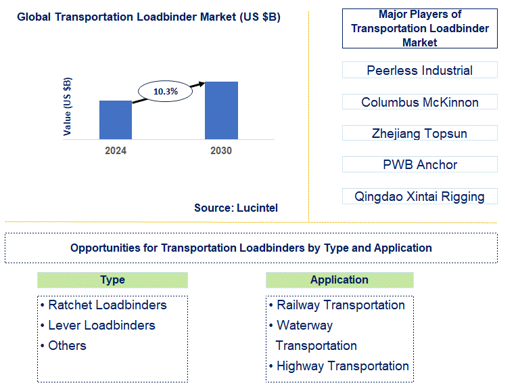
Key data points: The growth forecast = 10.3% annually for the next 6 years. Scroll below to get more insights. This market report covers trends, opportunities, and forecast in the global transportation loadbinder market to 2030 by type (ratchet loadbinders, lever loadbinders, and others), application (railway transportation, waterway transportation, and highway transportation), and region (North America, Europe, Asia Pacific, and the Rest of the World)
We'll send your sample report shortly.
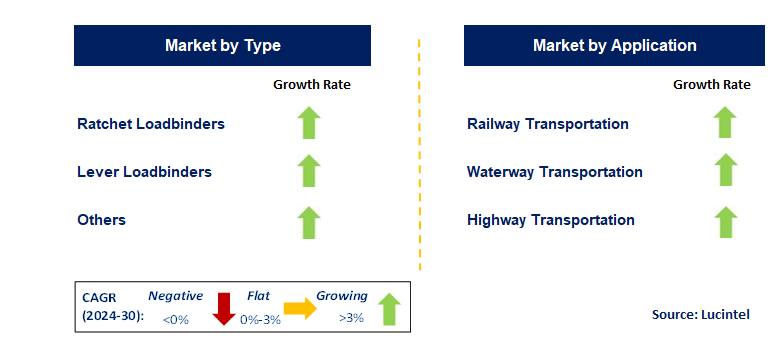
• Lucintel forecasts that, within the type category, ratchet is expected to witness a higher growth over the forecast period.
• Within the application category, the railway is expected to witness the highest growth.
• In terms of regions, APAC is expected to witness the highest growth over the forecast period. A more than 150-page report is developed to help in your business decisions.
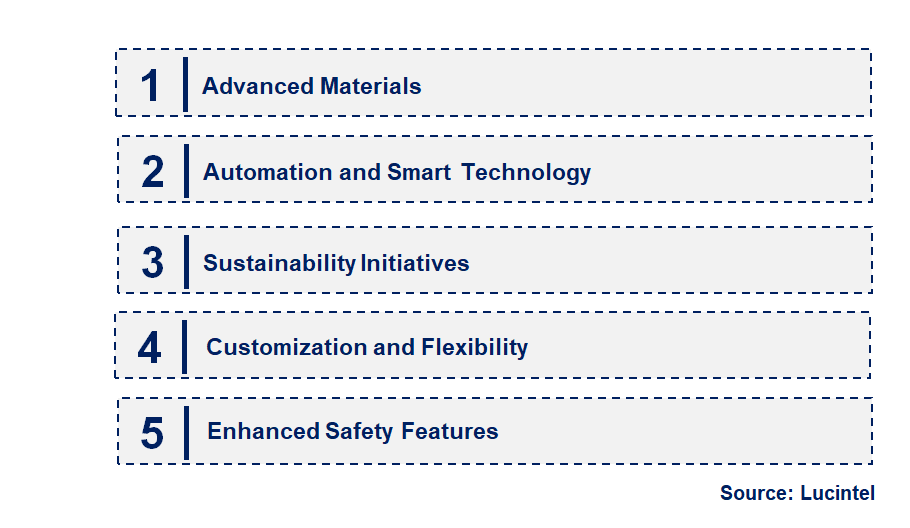
• Advanced Materials: The use of advanced materials, such as composites and high-strength alloys, is becoming more prevalent in the industry. These materials possess better performance characteristics, including higher strength-to-weight ratios, and can withstand environmental conditions better than traditional materials. For instance, carbon fiber composites or titanium alloys are more durable yet lightweight compared to older steel options. These materials help reduce the overall weight of loads while improving safety around loading docks by minimizing operational costs. Ultimately, this leads to the continuous evolution of new material types that drive innovation and competition in the manufacturing sector.
• Automation and Smart Technology: The transportation loadbinder market is undergoing a transformation through automation and the integration of smart technologies. Productivity has been improved by automated production lines and smart manufacturing methods that ensure consistency throughout the binder-making process. Another example is the development of smarter loadbinders with sensors and IoT connectivity, which allow for the instant monitoring of load security, much like any other electronic devices connected via the internet. This provides valuable data on how best to optimize operational activities, making them safer than before. Therefore, the increased efficiency and advanced levels of safety required within the logistics sector necessitate the transition from manual systems to robotics-driven operations that require minimal human intervention.
• Sustainability Initiatives: Sustainability is becoming a major focus in the transportation loadbinder market. Companies are increasingly adopting green materials and operations to minimize their ecological footprints. This includes the recycling of materials, energy-saving manufacturing methods, and sustainable packaging solutions. Regulatory pressures and increasing consumer demand for environmentally friendly products are driving this sustainability push. By integrating sustainable practices, companies can improve their market reputation while meeting changing environmental standards.
• Customization and Flexibility: There is a growing trend toward customization and flexibility in loadbinder designs to meet specific application needs. Manufacturers offer a variety of options, such as adjustable load limits, special locking mechanisms, and ergonomic designs, among others. This trend is driven by the need for loadbinders that address the varied requirements of different industries while enhancing usability. Customization facilitates addressing the unique challenges associated with various modes of transport, thereby improving overall load security.
• Enhanced Safety Features: Improved safety features have become an important trend in the transportation loadbinder market. These include better locking mechanisms, user-friendly designs with safety indicators to minimize accidents, and enhanced cargo protection against theft. Current concerns about safety, coupled with new regulatory requirements, call for the inclusion of enhanced safety features in future transport systems. The emphasis on secure operation improves the dependability of products while ensuring compliance with safety codes, thus contributing to the overall growth of markets where these products are sold. Emerging trends in the transportation loadbinder market highlight advancements in materials, technology, and safety features. The future looks promising with the adoption of improved materials, automation, and smart technologies, along with growing considerations around sustainability, customization, and increased load security standards. These trends reflect industries’ commitment to improved efficiency, safer working environments, eco-friendliness, and innovation—driving market expansion.
• Advanced Material Use: One of the key developments is the increasing use of advanced materials in loadbinder production. These include high-strength alloys, carbon fiber, and titanium composites, among others, which help improve performance and durability. These materials offer better strength-to-weight ratios and resistance to environmental factors, ensuring overall load security. This move toward advanced materials represents a larger trend across the industry toward greater innovation and quality improvement.
• Automation Integration: Automation is a key focus in recent developments, with manufacturers investing in automated production lines and smart technology. Automated systems have improved efficiency, accuracy, and uniformity throughout the manufacturing of loadbinders. New intelligent products are being introduced into the market, featuring built-in sensors for real-time monitoring of cargo safety (Internet of Things/IoT). The combination of automation and smart technology ensures operational effectiveness with each passing day, resulting in improved safety standards.
• Regulatory Compliance: Stricter regulatory requirements and standards are shaping the market, leading to advancements in loadbinder design and performance. To comply with new regulations on product safety and reliability, companies are striving to enhance the quality of their products. Conformance to global protocols has become essential for differentiation through design innovation, and manufacturing process transformations are also supporting this trend. Compliance with tougher regulations ensures that freight fasteners meet safety provisions while operating reliably under various conditions.
• Sustainability Focus: In the transportation loadbinder market, sustainability has become a focal point, with companies adopting green materials and practices. The trend toward the application of recyclable materials, energy-efficient production methods, and sustainable packaging solutions is gaining momentum. This focus on sustainability is driven by pressure from regulators and customers to be environmentally friendly in their purchasing decisions. By embracing sustainability, firms can reinforce their brand image in the market while also aligning with changing environmental requirements.
• Customization Trends: Customization is emerging as a prominent trend in the industry, with manufacturers offering tailor-made products that suit the particular needs of clients. Adjustable load limits and special locking mechanisms are among the key features that can be easily customized into the construction of loadbinders. This trend reflects the industry's demand for more versatile and adaptable solutions for different types of transportation. As a result, customization plays an important role in enhancing load safety while also improving the overall user experience. Recent developments within the transportation loadbinder sector emphasize progress in materials, technology, and sustainability. Advancements in materials, automation, regulatory compliance, and customization are driving innovation and product performance improvements. Importantly, these changes indicate how producers aim to enhance efficacy, safety, and responsibility over natural resources.
• Advanced Material Technology: Progress made so far in material technology represents significant growth prospects for the transportation loadbinder market. For example, the development of high-strength alloys like carbon fiber and titanium composites has resulted in improved functional properties, such as enhanced durability and reduced weight. With investment in R&D toward exploring novel materials, companies can gain a competitive edge through the production of best-performing products. Advanced material technology also aligns with industry-wide trends toward innovation and quality improvements, which are driving market growth.
• Expansion into Emerging Markets: For the transportation loadbinder industry, one of the major avenues of growth is entering emerging markets. Expanding economies and infrastructure development in regions like Asia-Pacific and Latin America support the demand for transport solutions. Load security and logistics efficiency are essential for companies entering these markets. To succeed in emerging markets, strategic alliances must be formed with local partners to ensure compliance with local regulations required by customers.
• Increased Focus on Sustainability: Another important direction for growth in the transportation loadbinder market is an increased focus on sustainability. Firms can differentiate themselves from competitors by using green materials, such as recyclable parts or energy-efficient manufacturing technologies. Regulatory pressures on sustainability are increasing, and sustainable product claims made by manufacturers address consumer demands for environmentally friendly solutions. Embracing sustainability not only enhances a company's reputation but also aligns with global trends toward environmental responsibility.
• Customization of Products: Manufacturers view customization as an attractive strategic opportunity to target specific application requirements within their respective industries. This includes custom features such as the adjustment of load limits or special types of locks incorporated in binders used for carrying goods on vehicle tops, among others. By offering a broad range of customizable products, companies can secure cargo more effectively while increasing customer satisfaction levels through an improved user experience. A differentiation strategy also works well, as it allows producers to serve niche customer segments while avoiding direct competition with other players operating in a similar marketplace. Strategic growth opportunities in the transportation loadbinder market include advancements in material technology, expansion into emerging markets, an increased focus on sustainability, product customization, and the integration of smart technology. By exploiting these opportunities, companies can be innovative, meet evolving market demands, and stay ahead in a competitive business environment.
• Technological Advancements: Technological advancements play an important role as a driver in the transportation loadbinder sector. Developments such as automation processes, smart technologies, and advanced materials boost product performance and efficiency. Advanced manufacturing techniques are implemented through automated production lines, while smart loadbinders fitted with sensors support real-time monitoring and control systems. These improvements aim at increasing safety levels, lowering operating costs, and improving quality.
• Regulatory Requirements: More stringent regulatory requirements have forced companies to seek high-quality loadbinders to ensure compliance with international standards, driving innovation in design and performance. Adhering to or surpassing these standards allows companies to gain a competitive advantage and enhance their brand positioning within their respective industries. Regulatory compliance also reduces the risk of penalties and legal suits, contributing to overall sector growth.
• Market Demand: The rise in demand for transportation solutions across various industries, including construction, manufacturing, and logistics, necessitates effective loadbinders. The growing industrial activity and infrastructure development create an increased need for proper loading security systems and improved means of transport. This market share will be significant for any company that can meet this growing demand and offer a consistent supply of load-binding products.
• Focus on Sustainability: Sustainability is a driving factor in the transportation loadbinder industry. Companies that use environmentally friendly materials and practices align with both regulatory requirements and consumer preferences. One example includes adopting recyclable materials and energy-efficient production methods, thereby boosting market reputation through sustainable growth. Additionally, this focus aligns with the broader trend in the industry, where firms strive to reduce their carbon footprints. Challenges in the Transportation Loadbinder Market Include:
• Regulatory Compliance: Operating within a complex and changing regulatory environment presents a challenge in the transportation loadbinder market. Complying with safety standards and environmental regulations may incur additional costs through documentation or audits. Organizations must stay current with regulatory changes by investing in control systems that ensure compliance and mitigate legal risks, thus avoiding financial penalties.
• Supply Chain Disruptions: Supply chain disruptions, such as raw material shortages or transportation delays, affect the availability and costs of loadbinders. Global supply chain issues, geopolitical tensions, and natural disasters can lead to increased production costs and delays in delivery. To manage these risks effectively and ensure continuity of operations, companies need contingency plans and resilient supply chains.
• Raw Material Prices in Flux: The volatility of raw material prices, such as steel and aluminum, can create uncertainty in the transportation loadbinder market. Fluctuating prices affect production costs, potentially reducing profit margins. To navigate price fluctuations and sustain financial stability, firms must implement strategic pricing strategies and cost management practices. By using strategic sourcing and long-term contracts, it is possible to reduce the impact of fluctuating raw material prices. The growth of railway, waterway, and highway transportation segments within the transportation loadbinder market demonstrates the increasing need for efficient and reliable logistics solutions. Each segment is critical to supply chain effectiveness, and it is evident that improvements in infrastructure, technology, and product design contribute to their growth.
• Peerless Industrial
• Columbus McKinnon
• Zhejiang Topsun
• PWB Anchor
• Qingdao Xintai Rigging
• Qinde
• Win Chance Metal
• All Lifting
• QingdaoPowerful Machinery
• Utkal Engineers
• Ratchet Loadbinders
• Lever Loadbinders
• Others
• Railway Transportation
• Waterway Transportation
• Highway Transportation
• North America
• Europe
• Asia Pacific
• The Rest of the World
• United States: Recent developments in the U.S. transportation loadbinder market have focused on improving safety features while also enhancing operational efficiencies. Examples include the adoption of new products, like high-strength alloys and composites, that deliver better performance and longevity.
• China: China has witnessed fast growth in its transportation loadbinder industry due to increased infrastructure development activities and industrialization. Recent advancements include expanding manufacturing capacities and integrating advanced materials, such as carbon fiber composites, to enhance performance and ensure safety standards.
• Germany: Germany’s transport loadbinder market typifies sustainability and precision engineering initiatives. The latest initiatives include the use of environmentally friendly substances and procedures adopted by German companies to reduce harmful effects caused by their operations.
• India: India’s transportation loadbinder sector is growing due to the increasing number of construction projects, driven by industrialization trends in the country. Not only that, but the rise in demand for affordable goods is also playing a significant part. Another important trend in this marketplace involves innovations in designs aimed at boosting cargo security and improving handling efficiency.
• Japan: Japan’s transport loadbinder industry embraces advanced technology and high-quality standards. Recent developments include the use of superior materials, such as titanium alloys and composites, for performance improvement and weight reduction. By employing precision engineering and innovative design approaches, Japanese manufacturers are increasing load security while simplifying usage.


• Peerless Industrial
• Columbus McKinnon
• Zhejiang Topsun
• PWB Anchor
• Qingdao Xintai Rigging
• Qinde
• Win Chance Metal
• All Lifting
• QingdaoPowerful Machinery
• Utkal Engineers Q5. Which transportation loadbinder market segment will be the largest in the future? Answer: Lucintel forecasts that Ratchet is expected to witness a higher growth over the forecast period. Q6. In the transportation loadbinder market, which region is expected to be the largest in the next 5 years? Answer: APAC is expected to witness the highest growth over the forecast period. Q.7 Do we receive customization in this report? Answer: Yes, Lucintel provides 10% customization without any additional cost.


Choose a license that fits your team. Instant PDF delivery.
Prices exclude taxes. Instant delivery. Custom licensing available on request.
Market Report · May 18, 2026
Market Report · May 18, 2026
Market Report · May 18, 2026
Trusted partner for strategic intelligence and business growth


Receive a complimentary market analysis tailored to your industry. Our analysts will identify key growth opportunities and competitive dynamics specific to your business.

Market size, growth rate, and key trend analysis for your specific sector.

Top competitor positioning and market share analysis.

Strategic recommendations backed by data-driven insights.
Get curated market intelligence and competitive moves straight to your inbox.
By subscribing, you agree to receive our monthly insights. Unsubscribe anytime.
Receive a complimentary market analysis tailored to your industry. Our analysts will identify key growth opportunities and competitive dynamics specific to your business.
Market size, growth rate, and key trend analysis for your specific sector.
Top competitor positioning and market share analysis.
Strategic recommendations backed by data-driven insights.
Get curated market intelligence, emerging trends, and competitive moves straight to your inbox each month.
By subscribing, you agree to receive our monthly insights. Unsubscribe anytime.
We'll send your sample report shortly.