
Report Feature
Transport Flooring Market Trends and Forecast
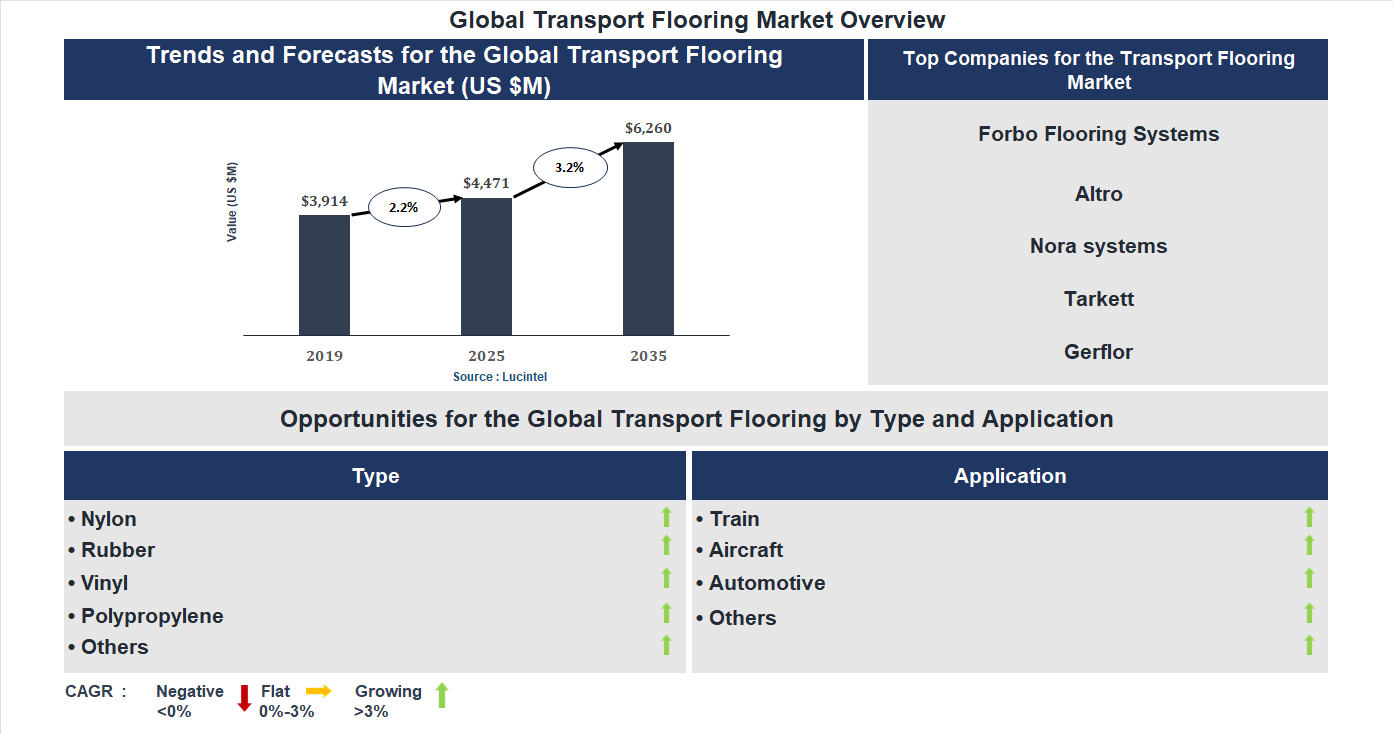
The future of the global transport flooring market looks promising with opportunities in the train, aircraft, and automotive markets. The global transport flooring market is expected to reach an estimated $6,260 million by 2035 with a CAGR of 3.2% from 2026 to 2035. The major drivers for this market are the increasing demand for public transport systems, the growing adoption of electric vehicles & modern fleets, and the rising demand for investment in railway infrastructure projects.• Lucintel forecasts that, within the type category, vinyl is expected to witness the highest growth over the forecast period.
• Within the application category, automotive is expected to witness the highest growth.
• In terms of region, APAC is expected to witness the highest growth over the forecast period. Gain valuable insights for your business decisions with our comprehensive 150+ page report. Sample figures with some insights are shown below.
Emerging Trends in the Transport Flooring Market
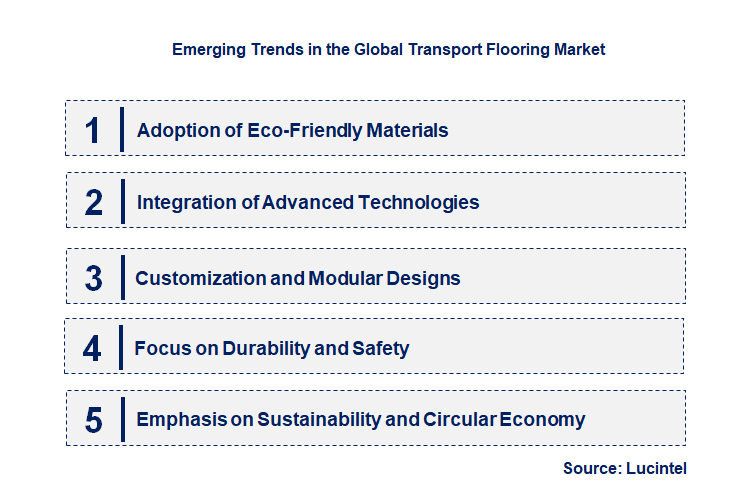
The transport flooring market is experiencing rapid evolution driven by technological advancements, environmental concerns, and changing consumer preferences. As industries seek more durable, sustainable, and cost-effective solutions, new trends are emerging that are reshaping the landscape. These developments are influencing product innovation, manufacturing processes, and market strategies, ultimately impacting transportation infrastructure and vehicle design. Stakeholders must adapt to these shifts to stay competitive and meet regulatory standards. The following five key trends highlight the most significant changes currently shaping the transport flooring industry, reflecting a move toward sustainability, customization, and technological integration.• Adoption of Eco-Friendly Materials: The market is increasingly shifting towards sustainable flooring options made from recycled, biodegradable, or low-emission materials. This trend is driven by stricter environmental regulations and growing consumer awareness about ecological impact. Manufacturers are investing in research to develop durable, eco-friendly flooring solutions that reduce carbon footprints and promote sustainability. These materials not only meet regulatory standards but also appeal to environmentally conscious clients, enhancing brand reputation and market competitiveness.
• Integration of Advanced Technologies: The use of innovative technologies such as anti-slip coatings, antimicrobial surfaces, and smart flooring systems is on the rise. These advancements improve safety, hygiene, and functionality in transportation environments. For example, antimicrobial coatings help prevent the spread of germs in public transport, while smart flooring can monitor wear and tear, enabling predictive maintenance. This technological integration enhances user safety, reduces maintenance costs, and extends the lifespan of flooring solutions, making them more attractive to industry stakeholders.
• Customization and Modular Designs: There is a growing demand for tailored flooring solutions that cater to specific transportation needs, including different vehicle types and infrastructure projects. Modular flooring systems allow for easy installation, replacement, and customization, reducing downtime and maintenance costs. This trend supports the development of versatile, adaptable flooring options that can be easily upgraded or modified, providing greater flexibility for operators and infrastructure managers. Customization also enables branding opportunities and aesthetic enhancements.
• Focus on Durability and Safety: As transportation environments face increased wear and tear, the market emphasizes durable, slip-resistant, and impact-resistant flooring options. These features are critical for ensuring safety and longevity in high-traffic areas such as airports, train stations, and buses. Manufacturers are developing high-performance materials that withstand heavy loads, chemical exposure, and extreme temperatures. Enhanced safety features not only protect passengers and staff but also reduce maintenance and replacement costs, making durability a key competitive factor.
• Emphasis on Sustainability and Circular Economy: The market is increasingly adopting circular economy principles, focusing on recyclability and reuse of flooring materials. Companies are designing products that can be disassembled and recycled at end-of-life, reducing waste and environmental impact. This trend aligns with global sustainability goals and regulatory pressures, encouraging innovation in material science and manufacturing processes. Emphasizing sustainability not only benefits the environment but also appeals to clients seeking eco-conscious solutions, thereby influencing purchasing decisions and market growth. These emerging trends are fundamentally transforming the transport flooring market by promoting sustainability, safety, technological innovation, and customization. They are driving the development of smarter, more durable, and environmentally friendly flooring solutions, which are reshaping industry standards and customer expectations. As these trends continue to evolve, stakeholders must adapt to stay competitive in a rapidly changing landscape.
Recent Development in the Transport Flooring Market
The transport flooring market is experiencing rapid innovation driven by technological advancements, sustainability demands, and evolving safety standards. As industries seek durable, eco-friendly, and cost-effective solutions, recent developments are shaping the future landscape. These changes are influencing manufacturing processes, product offerings, and market dynamics, creating new opportunities for stakeholders. Understanding these key developments is essential for businesses aiming to stay competitive and meet emerging customer needs in this dynamic sector.• Innovation in Material Technology: New composite materials and advanced polymers are enhancing durability and safety. These innovations reduce maintenance costs and extend product lifespan, making transport flooring more reliable across sectors like aviation, rail, and shipping. The adoption of lightweight, impact-resistant, and eco-friendly materials is also supporting sustainability goals. This development is driving market growth by offering superior performance and aligning with environmental regulations, attracting more clients seeking long-term, sustainable solutions.
• Adoption of Eco-Friendly Solutions: Increasing environmental awareness is pushing manufacturers toward sustainable flooring options. Biodegradable, recyclable, and low-emission materials are gaining popularity, reducing the carbon footprint of transport infrastructure. Governments and industry standards are incentivizing eco-friendly practices, which is expanding market opportunities. This shift not only enhances brand reputation but also helps companies comply with stricter regulations, ultimately fostering a greener, more sustainable transport flooring industry.
• Integration of Smart Technologies: The incorporation of IoT and sensor-based systems into flooring solutions is revolutionizing safety and maintenance. Smart flooring can monitor load, wear, and environmental conditions in real-time, enabling predictive maintenance and reducing downtime. This technological integration improves operational efficiency and safety standards, making transport environments safer and more reliable. As demand for intelligent infrastructure grows, this development is opening new revenue streams and elevating industry standards.
• Focus on Safety and Compliance Standards: Enhanced safety features and adherence to international standards are critical in transport flooring. Developments include slip-resistant surfaces, fire-retardant materials, and anti-static properties. These improvements ensure compliance with stringent safety regulations, reducing liability and enhancing passenger and cargo safety. The market is witnessing increased investment in safety innovations, which boosts consumer confidence and supports regulatory approval processes, ultimately strengthening the industry’s credibility and expanding its market reach.
• Expansion of Customization and Design Options: Customizable flooring solutions tailored to specific transport modes and client needs are gaining traction. Advanced manufacturing techniques enable bespoke designs, colors, and textures, improving aesthetic appeal and functional performance. This flexibility allows operators to differentiate their services and enhance user experience. The trend toward personalized solutions is driving market growth by attracting diverse customer segments and enabling companies to meet unique operational requirements more effectively. The transport flooring market is being reshaped by technological, environmental, and safety innovations, creating significant growth opportunities. These developments are fostering a more sustainable, efficient, and safe industry, attracting new investments and expanding market reach. As these trends continue, the market is poised for sustained growth, driven by demand for advanced, eco-friendly, and customizable flooring solutions that meet evolving industry standards and customer expectations.
Strategic Growth Opportunities in the Transport Flooring Market
The transport flooring market is experiencing rapid expansion driven by increasing demand for durable, safe, and cost-effective flooring solutions across various transportation sectors. Innovations in materials, rising safety standards, and the need for sustainable options are fueling growth opportunities. Market players are focusing on product development, strategic partnerships, and geographic expansion to capitalize on emerging opportunities. This dynamic environment offers significant potential for companies to enhance their market share and meet evolving customer needs effectively.• Growing Demand for Lightweight, Durable Flooring Solutions in Commercial Transportation: The need for lightweight yet robust flooring materials in buses, trains, and airplanes is increasing to improve fuel efficiency and passenger comfort. Advanced composites and high-performance polymers are being adopted to meet safety and durability standards, creating opportunities for manufacturers to innovate and capture market share in the commercial transport sector.
• Increasing Adoption of Eco-Friendly and Sustainable Flooring Materials: Environmental concerns and regulations are prompting the shift toward sustainable flooring options such as recycled rubber, bamboo, and bio-based composites. These materials offer durability, safety, and reduced environmental impact, opening avenues for market players to develop eco-conscious products and cater to environmentally aware clients across all transportation modes.
• Rising Focus on Safety and Slip Resistance in Transport Flooring: Safety standards are becoming more stringent, emphasizing slip resistance, fire retardancy, and impact absorption. Companies are investing in advanced coatings, textured surfaces, and innovative materials to enhance safety features. This focus on safety creates opportunities for product differentiation and helps meet regulatory compliance, especially in public transportation and freight sectors.
• Expansion of the transport flooring market in Emerging Economies: Rapid urbanization and infrastructure development in emerging markets are driving demand for transport flooring solutions. Local manufacturers are adopting global standards and technologies to meet increasing safety and durability requirements. This expansion offers growth prospects for international companies through strategic partnerships, local manufacturing, and tailored product offerings.
• Integration of Smart and Modular Flooring Systems for Enhanced Functionality: The development of smart flooring with embedded sensors for monitoring wear, temperature, and safety is gaining traction. Modular flooring systems that allow easy installation, maintenance, and customization are also emerging. These innovations improve operational efficiency and passenger experience, providing a competitive edge and opening new revenue streams for market participants. The overall market growth is poised to accelerate as these opportunities align with technological advancements, regulatory changes, and evolving customer preferences, fostering innovation and expanding the reach of transport flooring solutions globally.
Transport Flooring Market Driver and Challenges
The transport flooring market is influenced by a variety of technological, economic, and regulatory factors that shape its growth and development. Advances in material technology, increasing demand for durable and lightweight flooring solutions, and evolving safety standards are key drivers. Economic factors such as rising transportation volumes and infrastructure investments further propel market expansion. Conversely, regulatory challenges related to environmental compliance and safety standards pose hurdles. Market players must navigate these complex dynamics to capitalize on opportunities while addressing potential risks. Understanding these drivers and challenges is essential for strategic planning and sustainable growth in the transport flooring market. The factors responsible for driving the transport flooring market include:-• Technological Innovation: The development of advanced, lightweight, and durable materials such as high-performance polymers and composites enhances safety, longevity, and ease of installation. Innovations like anti-slip coatings and noise reduction technologies improve operational efficiency and safety standards, making transport flooring more attractive to logistics companies and vehicle manufacturers. These technological advancements enable the industry to meet evolving customer demands and regulatory requirements, fostering market growth.
• Increasing Transportation Volumes: The surge in global trade, e-commerce, and urbanization has led to increased transportation activities across sectors such as freight, passenger transit, and logistics. This growth necessitates robust, high-quality flooring solutions that can withstand heavy loads, frequent cleaning, and harsh environmental conditions. As transportation networks expand, the demand for specialized flooring materials that ensure safety and durability continues to rise, driving market expansion.
• Regulatory and Safety Standards: Governments and industry bodies are implementing stricter safety and environmental regulations. These include standards for slip resistance, fire safety, and emissions from materials used in transport flooring. Compliance with these regulations compels manufacturers to innovate and adopt eco-friendly, fire-retardant, and non-slip materials, which in turn stimulates market growth. Adherence to safety standards also reduces liability and enhances brand reputation.
• Economic Growth and Infrastructure Investment: Increased investments in transportation infrastructure, including railways, airports, and logistics hubs, contribute significantly to market growth. Economic development in emerging markets boosts demand for transport flooring solutions in new vehicles and infrastructure projects. These investments create opportunities for manufacturers to expand their product offerings and market reach, supporting overall industry growth. The challenges facing the transport flooring market include:-
• Environmental Regulations and Material Sustainability: Stricter environmental policies require the use of eco-friendly, recyclable, and low-emission materials. Developing sustainable flooring solutions that meet performance standards while complying with environmental regulations poses a significant challenge for manufacturers. The high costs associated with eco-friendly materials and the need for innovative manufacturing processes can hinder market growth and limit product options.
• Cost Constraints and Price Sensitivity: The high cost of advanced materials and innovative flooring solutions can be a barrier, especially for budget-conscious transportation companies and emerging markets. Price sensitivity limits the adoption of premium flooring options, forcing manufacturers to balance quality with affordability. This challenge impacts profit margins and market penetration, particularly in price-competitive regions.
• Supply Chain Disruptions: Global supply chain issues, including shortages of raw materials and logistical delays, affect the timely production and delivery of transport flooring products. These disruptions can lead to increased costs, project delays, and reduced customer satisfaction. Ensuring a resilient supply chain is critical for maintaining market stability and meeting growing demand. The transport flooring market is driven by technological advancements, increasing transportation activities, regulatory compliance, and infrastructure investments. However, it faces challenges such as environmental regulations, cost constraints, and supply chain disruptions. These factors collectively influence market dynamics, requiring stakeholders to innovate and adapt strategically. The overall impact is a market poised for growth, provided that companies effectively address regulatory and operational challenges while leveraging technological and economic opportunities for sustainable development.
List of Transport Flooring Companies
Companies in the market compete on the basis of product quality offered. Major players in this market focus on expanding their manufacturing facilities, R&D investments, infrastructural development, and leverage integration opportunities across the value chain. With these strategies transport flooring companies cater increasing demand, ensure competitive effectiveness, develop innovative products & technologies, reduce production costs, and expand their customer base. Some of the transport flooring companies profiled in this report include-• Forbo Flooring Systems
• Altro
• Nora systems
• Tarkett
• Gerflor
• Graboplast
• Responsive Industries
Transport Flooring Market by Segment
The study includes a forecast for the global transport flooring market by type, application, and region.Transport Flooring Market by Type [Value from 2019 to 2035]:
• Nylon
• Rubber
• Vinyl
• Polypropylene
• Others
Transport Flooring Market by Application [Value from 2019 to 2035]:
• Train
• Aircraft
• Automotive
• Others
Transport Flooring Market by Region [Value from 2019 to 2035]:
• North America
• Europe
• Asia Pacific
• The Rest of the World
Country Wise Outlook for the Transport Flooring Market
The transport flooring market has experienced significant growth driven by increasing demand for durable, sustainable, and cost-effective flooring solutions across various transportation sectors. Innovations in materials, technological advancements, and a focus on safety and environmental impact have shaped recent developments. Countries are adopting new standards and expanding infrastructure, influencing market dynamics globally. The United States, China, Germany, India, and Japan are key players, each contributing unique trends and advancements that reflect their economic priorities and technological capabilities.• United States: The US market has seen a surge in demand for eco-friendly and lightweight flooring materials, driven by the transportation industry‘s focus on sustainability and fuel efficiency. Innovations in rubber and composite materials have improved durability and safety standards. The adoption of smart flooring solutions with embedded sensors for maintenance and safety monitoring is also increasing, supported by government initiatives promoting green transportation infrastructure.
• China: China continues to lead in manufacturing and infrastructure expansion, with a focus on cost-effective, high-performance flooring solutions for high-speed trains, buses, and airports. The market is witnessing rapid adoption of advanced polymer-based materials that offer enhanced durability and resistance to wear and tear. Government policies promoting urbanization and transportation modernization are fueling market growth, alongside investments in innovative, lightweight flooring options.
• Germany: Known for its engineering excellence, Germany emphasizes high-quality, sustainable flooring solutions for rail and automotive applications. The market is characterized by the integration of recycled materials and eco-friendly manufacturing processes. Germany is also investing in research to develop fire-resistant and noise-reducing flooring options, aligning with stringent safety and environmental standards prevalent in the European Union.
• India: The Indian transport flooring market is expanding due to infrastructure development and increased urban mobility projects. There is a rising demand for affordable, durable, and easy-to-maintain flooring materials suitable for buses, metro systems, and airports. The market is witnessing growth in polymer and rubber-based flooring solutions, with a focus on quick installation and cost efficiency to meet the country‘s rapid urbanization needs.
• Japan: Japan‘s market is characterized by advanced technological integration, including anti-slip and shock-absorbing flooring solutions for trains and buses. The focus on safety, durability, and environmental sustainability is prominent, with innovations in lightweight composite materials and anti-microbial coatings. Japan is also investing in smart flooring systems that enhance passenger safety and operational efficiency, reflecting its commitment to technological innovation and safety standards.

Features of the Global Transport Flooring Market
Market Size Estimates: Transport flooring market size estimation in terms of value ($M). Trend and Forecast Analysis: Market trends (2019 to 2025) and forecast (2026 to 2035) by various segments and regions. Segmentation Analysis: Transport flooring market size by type, application, and region in terms of value ($M). Regional Analysis: Transport flooring market breakdown by North America, Europe, Asia Pacific, and Rest of the World. Growth Opportunities: Analysis of growth opportunities in different type, application, and regions for the transport flooring market. Strategic Analysis: This includes M&A, new product development, and competitive landscape of the transport flooring market. Analysis of competitive intensity of the industry based on Porter’s Five Forces model.
FAQ
Q1. What is the transport flooring market size? Answer: The global transport flooring market is expected to reach an estimated $6,260 million by 2035. Q2. What is the growth forecast for transport flooring market? Answer: The global transport flooring market is expected to grow with a CAGR of 3.2% from 2026 to 2035. Q3. What are the major drivers influencing the growth of the transport flooring market? Answer: The major drivers for this market are the increasing demand for public transport systems, the growing adoption of electric vehicles & modern fleets, and the rising demand for investment in railway infrastructure projects. Q4. What are the major segments for transport flooring market? Answer: The future of the transport flooring market looks promising with opportunities in the train, aircraft, and automotive markets. Q5. Who are the key transport flooring market companies? Answer: Some of the key transport flooring companies are as follows:• Forbo Flooring Systems
• Altro
• Nora systems
• Tarkett
• Gerflor
• Graboplast
• Responsive Industries Q6. Which transport flooring market segment will be the largest in future? Answer: Lucintel forecasts that, within the type category, vinyl is expected to witness the highest growth over the forecast period. Q7. In transport flooring market, which region is expected to be the largest in next 8 years? Answer: In terms of region, APAC is expected to witness the highest growth over the forecast period. Q8. Do we receive customization in this report? Answer: Yes, Lucintel provides 10% customization without any additional cost.
Table of Contents
List of Figures
List of Tables
Methodology
- In-depth interviews of the major players in this market
- Detailed secondary research from competitors’ financial statements and published data
- Extensive searches of published works, market, and database information pertaining to industry news, company press releases, and customer intentions
- A compilation of the experiences, judgments, and insights of Lucintel’s professionals, who have analyzed and tracked this market over the years.


Key Questions
- • What are some of the most promising, high-growth opportunities for the transport flooring market by type (nylon, rubber, vinyl , polypropylene, and others), application (train, aircraft, automotive, and others), and region (North America, Europe, Asia Pacific, and the Rest of the World)?
- • Which segments will grow at a faster pace and why?
- • Which region will grow at a faster pace and why?
- • What are the key factors affecting market dynamics? What are the key challenges and business risks in this market?
- • What are the business risks and competitive threats in this market?
- • What are the emerging trends in this market and the reasons behind them?
- • What are some of the changing demands of customers in the market?
- • What are the new developments in the market? Which companies are leading these developments?
- • Who are the major players in this market? What strategic initiatives are key players pursuing for business growth?
- • What are some of the competing products in this market and how big of a threat do they pose for loss of market share by material or product substitution?
- • What M&A activity has occurred in the last 5 years and what has its impact been on the industry? For any questions related to Transport Flooring Market, Transport Flooring Market Size, Transport Flooring Market Growth, Transport Flooring Market Analysis, Transport Flooring Market Report, Transport Flooring Market Share, Transport Flooring Market Trends, Transport Flooring Market Forecast, Transport Flooring Companies, write Lucintel analyst at email: helpdesk@lucintel.com. We will be glad to get back to you soon.


